Quick Answer: How to Use Shop Vac for Water Removal
Quick Answer: To use a shop vac for water removal, first convert it to wet mode by removing the paper cartridge filter and installing the included foam sleeve filter. Ensure the auto shut-off float valve is in place, then vacuum the water until the float rises and the motor stops automatically. Empty the tank frequently to maintain suction and prevent overflow.
Understanding the Critical Difference: Dry vs. Wet Mode
With the unit properly configured, you can begin water extraction. Always prioritize safety, especially when dealing with standing water near electrical outlets or appliances.
Initial Assessment and Safety
Before plugging in the vacuum, assess the water source and depth. If the water level is above the electrical outlets, do not enter the area until a qualified electrician has confirmed the power is off at the breaker. Ensure the shop vac’s power cord and plug are dry. Use a GFCI (Ground Fault Circuit Interrupter) outlet or extension cord if available, as this provides critical protection against electrical shock.
Vacuuming Technique
Plug in the vacuum and turn it on. Submerge the end of the hose into the water. For maximum efficiency, keep the hose opening fully submerged to maintain a solid column of water and prevent air from breaking the suction. Move the hose slowly across the floor, allowing the vacuum to pull water from the surrounding area. Avoid rapid, jerky movements which can cause the hose to come out of the water and lose prime.
Monitoring and Emptying the Wet Shop Vac Tank
You will hear a distinct change in the motor’s pitch when the auto shut-off float engages. The vacuum will lose suction and the motor may cycle on and off. This is your signal to stop immediately. Do not attempt to override this safety feature. Unplug the unit, open the latches, and carefully remove the motor head. The tank will be full of water. Carry the tank to a suitable drain (floor drain, utility sink, or outside) and empty it completely. Wipe the interior of the tank dry with old towels before reassembling and continuing. Frequent emptying maintains peak suction power and prevents the tank from becoming too heavy to handle safely.
Post-Operation Maintenance and Drying
Proper aftercare extends the life of your tool and prevents corrosion and odor.
Final Emptying and Rinsing
After the job is complete, empty the tank one final time. Rinse the interior of the tank with clean water to remove any remaining sediment or debris. This prevents rust and unpleasant smells from developing.
Drying the Components
Leave the latches open and remove the motor head. Allow the tank, motor head, foam sleeve filter, and float valve to air dry completely in a well-ventilated area before reassembling and storing. A damp foam sleeve is a breeding ground for mold and mildew. If it remains wet, remove it from the cage to dry separately.
Recommended Hardware & Essential Equipment
Using a shop vac rated specifically for wet/dry use with a robust auto shut-off system is non-negotiable for safety and efficiency. The following models are verified for their reliable wet-mode performance, durable construction, and effective float valve mechanisms, making them ideal for serious water removal tasks.

Pros
- Brushless motor; manufacturer lists speeds up to 7280 rpm
- Water pump aims to atomize dust during cutting
- Ergonomic handle for horizontal or vertical cuts
- Diamond chain listed for brick, granite, and concrete
Cons
- Speed and 2 meters in 3 minutes claims are manufacturer-stated
- Wet dust control requires a water supply setup
Pros
- Very high power output for heavy-duty concrete cutting applications
- Wet cutting system helps reduce dust and blade overheating
- Comes with extra chain and guide plate support for longer working sessions
Cons
- High-power operation requires proper 4 to 6 square wiring, which may need electrical preparation before use
- No weight, noise level, or included carrying case details are provided in the product data
- Best suited for experienced users or professional jobs rather than casual DIY use
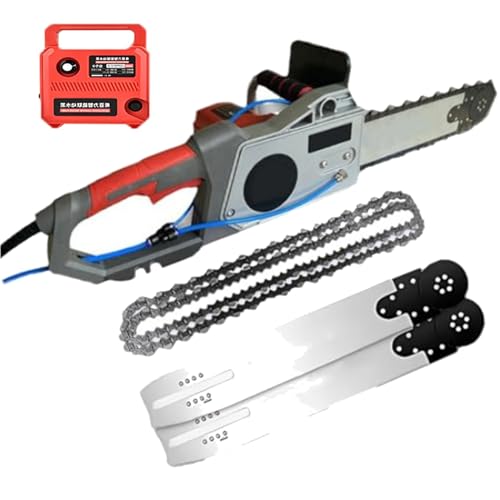
Overview & Design: The Generic 5800W/6500W Electric Concrete Saw is built as a heavy-duty concrete chain saw for wall cutting, slotting, and masonry work. Its pure copper motor, dual handle layout, and low-vibration design suggest a tool focused on control and sustained cutting performance.
Performance & Key Features: Based on the listed specifications, this concrete saw is designed to handle concrete, reinforced concrete, stone, granite, and ceramics. The wet water supply system, intelligent pump, and 3.5 m water pipe are practical additions for dust suppression and blade cooling, while the included diamond chains and guide plates improve versatility on demanding jobs.
Drawbacks & Considerations: This is a high-power machine, so proper electrical setup is important. The product notes recommend 4 to 6 square cable wiring, with 6 square wiring generally preferred. The listing also does not provide details such as weight, noise output, or all included accessories, which may matter for some buyers.
Verdict: This model is best suited to contractors, installers, and renovation teams that need a powerful wet concrete cutting solution with deep cutting capability. If you need a serious wall cutting machine for hard materials and can support its electrical requirements, it offers strong utility for professional work.

Pros
- High-power motor is suitable for tough construction and demolition-style cutting.
- Water-fed system helps control dust and extend chain life during wet cutting.
- Includes two diamond chains and two guide plates for added setup flexibility.
- Designed for both horizontal and vertical cutting applications.
Cons
- At this power level, it is a specialized tool that may be excessive for light DIY use.
- The product data does not list full specifications such as weight, included spare parts, or service details.
- Wet-cut operation requires a water source and setup, which may limit convenience on some job sites.
Overview: The JIANGYUXINLI electric concrete chainsaw is a heavy-duty wall cutter made for masonry work, grooving, and cutting hard building materials. Its 5800W/6500W pure copper motor and handheld layout give it the feel of a jobsite tool designed for demanding cutting tasks.
Performance: According to the product data, it reaches up to 6000 rpm and supports deep cutting with a maximum depth of up to 35 cm or 48 cm, depending on setup. The included diamond chains, guide plates, and water-fed dust suppression system are intended to improve cutting speed, cooling, and debris control when working on concrete, brick, stone, and reinforced surfaces.
Drawbacks: This is not a general-purpose saw. It depends on wet cutting for dust suppression, so users will need a water source and setup time. The listing also leaves out some useful ownership details such as full weight, exact accessory contents, and long-term service information.
Verdict: This model makes the most sense for contractors, masons, and renovation users who need a powerful concrete cutting solution with deep slotting capability. If you need a specialized wall cutter for tough materials, it offers strong spec value, but casual users may find it more machine than they need.

Pros
- Up to 75 days of hands-free cleaning, per manufacturer
- AutoEmpty dock bag listed to trap 99% of allergens
- ClearView LiDAR mapping with app keep-out zones
- Room scheduling, spot cleaning, and adjustable cleaning passes
- Voice control with Alexa, Siri, or Google Assistant devices
Cons
- Setup and operation use 2.4 GHz Wi-Fi networks only
- 70X suction claim is compared only to Roomba 600 series
Frequently Asked Questions (FAQ)
Can I use my shop vac for water without the foam filter?
No. The foam sleeve filter is essential. It prevents large debris from being sucked directly into the motor intake, which can cause immediate damage. Operating without it, even for clean water, risks introducing particles that can unbalance the motor fan or clog internal components.
Why does my shop vac stop picking up water before the tank is full?
This is almost always due to the auto shut-off float valve engaging prematurely. Check if the float is stuck in the “up” position due to debris or corrosion. Clean the float mechanism and ensure it moves freely. Also, ensure the foam filter is not overly saturated or clogged with fine sediment, which can restrict airflow and cause the float to rise faster. Readers comparing setup options can review our technical analysis on can robot vacuums cross high thresholds.
How do I empty a wet shop vac tank without making a mess?
Place the vacuum near your drain point before you start. When full, unplug it, remove the motor head, and carry the tank carefully to the drain. For larger tanks, you can use the drain plug (if equipped) at the bottom of the drum. Always have towels ready to catch drips during the transfer.
Can I vacuum up soapy water or water with cleaning chemicals?
It is not recommended. Soapy water can create excessive foam inside the tank, which can be sucked into the motor if the float valve is overwhelmed. Chemicals can degrade the foam filter, seals, and the tank material itself. If you must, rinse the tank and all components thoroughly with clean water immediately after use. For complementary field maintenance guidelines, examine our breakdown of robot vacuum not connecting to wifi.
What is the difference between the foam sleeve and the paper filter?
The paper cartridge filter is designed to capture fine dust and dry particles. It is not waterproof and will be ruined by water. The foam sleeve is a coarse, open-cell filter designed for wet use; it stops larger debris while allowing water to pass through to the collection tank. They are not interchangeable.
Wet Vacuum Safety Background
Shop vacs used on standing water should be unplugged before emptying, and the cord should stay dry. For broad electrical practice in workshops, American National Standards Institute (ANSI) offers a plain starting point, and pool owners may like the robotic pool cleaner comparison guide.