

Quick Answer: How to Use Starter Fluid on a Lawn Mower
Starter fluid is a highly flammable aerosol designed to help gas engines with carburetors start when they crank but won’t fire. To use it safely: remove the air filter to expose the carburetor throat, spray a short 1 to 2 second burst directly into the opening, reinstall the air filter, set the choke and primer as normal, then attempt to start the engine. Use only one brief burst per attempt, never spray near sparks or flames, and stop after a few failed attempts to diagnose the underlying problem.

Pros
- Listed for all gasoline and diesel engines
- Contains upper cylinder lube and corrosion inhibitor
- Manufacturer says safe for oxygen sensors and catalytic converters
- Listed uses include lawnmowers, snow blowers and construction equipment
Cons
- No customer reviews supplied to verify starting results
Pros
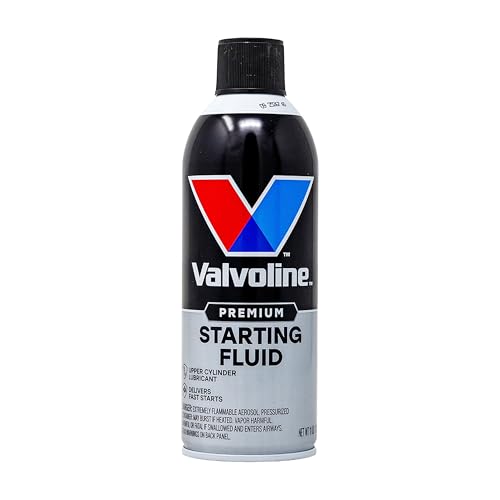
- 11 fl oz spray can, per listing
- Listed as suitable for cold starts and multiple equipment types
- Includes upper cylinder lubricant, per listing
- Weight listed as 0.86 pounds
Cons
- Lubrication and cleaning benefits are manufacturer-stated claims
- No usage or safety instructions are included in the listing data

Pros
- Premium 50% ether blend, per listing
- Manufacturer rates performance to -65°F
- Contains upper cylinder lubricant
- Manufacturer says it helps save batteries
Cons
- No customer reviews listed to verify claims
- Specific engine types are not named

Pros
- Listed for gasoline engines
- Manufacturer says it lubricates upper cylinders
- Manufacturer says it inhibits corrosion
- 11-ounce can, single pack
Cons
- Gasoline engines only, not diesel
- No customer reviews listed yet
When Should You Use Starter Fluid on a Lawn Mower?
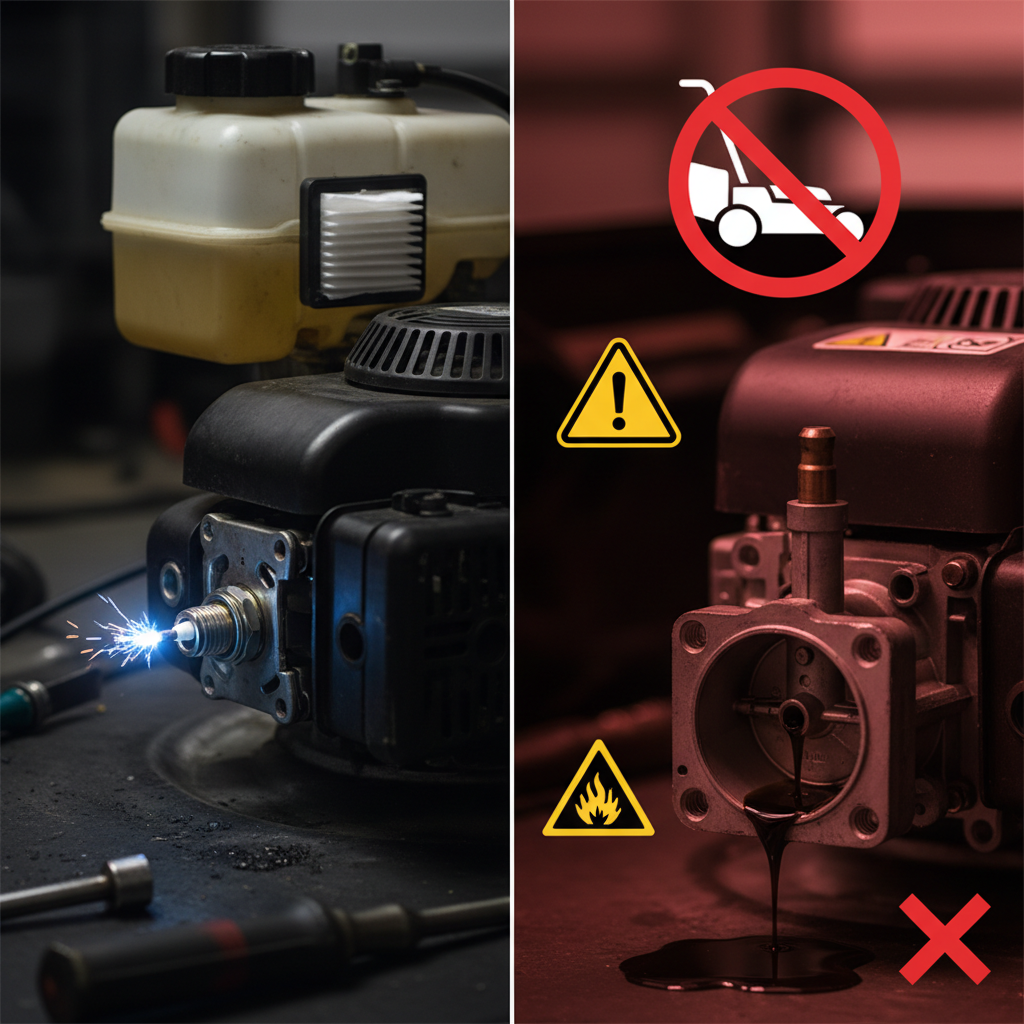
Starter fluid is only appropriate for specific situations and mower types. Understanding when to reach for it, and when not to, will save you time and prevent damage.
The Right Conditions for Starter Fluid
Starter fluid works best when:
- Your gas-powered lawn mower engine cranks but won’t start. The starter is turning the engine over, but it won’t fire.
- The mower has been sitting for several months and fuel may have degraded.
- You’ve confirmed the spark plug is firing (a bright spark visible in dim light).
- The fuel tank has fresh gasoline (less than 30 days old).
- You’re working with a carburetor-equipped engine, not a fuel-injected one.
When NOT to Use Starter Fluid
Do not use starter fluid if:
- Your mower is electric. Starter fluid serves no purpose and creates a fire hazard.
- The engine has fuel injection (common on newer equipment). Fuel-injected engines are designed to start without it.
- The mower is flooded (raw fuel smell coming from the exhaust or carburetor). Adding starter fluid will make this worse.
- There is no spark at the spark plug. Starter fluid won’t ignite without a spark.
- The fuel tank is empty or the fuel is obviously old, brown, or separated.
- The engine is extremely hot. Wait 10 to 15 minutes for it to cool.
Diagnosing the Real Problem First
Before using starter fluid, perform a quick diagnostic to confirm the issue:
- Check the spark plug: Remove the spark plug wire and pull the plug. In a dark room or outdoors on an overcast day, have someone crank the engine while you hold the plug near the metal engine block (gap of about ¼ inch). You should see a bright blue or white spark jumping the gap. No spark means a faulty plug or ignition system; starter fluid won’t help.
- Inspect the fuel: Look at the fuel in the tank. If it’s brown, smells like varnish, or has been stored for over six months, it’s likely stale. Stale fuel is a common cause of hard starting.
- Check the air filter: A severely clogged air filter restricts airflow and makes starting difficult. Hold it up to light; you should see light coming through.
Key Factors to Consider Before Spraying Starter Fluid
Why Your Mower Needs a Carburetor
Starter fluid only works on mowers with a carburetor because it sprays directly into the carburetor throat and vaporizes instantly when the engine cranks. Fuel-injected engines have pressurized fuel systems that meter fuel automatically; they don’t need starting aids. Carburetors mix air and fuel mechanically, making them ideal for this quick, temporary boost.
The Role of Choke, Primer, and Air Filter
Understanding these components helps you use starter fluid effectively:
- Choke: A choke restricts air intake to create a richer fuel mixture for cold starting. On manual-choke mowers, set it fully closed before cranking; on automatic-choke mowers, it engages when the engine is cold.
- Primer bulb: Many mowers have a rubber bulb that hand-primes fuel into the carburetor before pulling the starter cord. Press it 3 to 5 times to move fresh fuel into the fuel line.
- Air filter: You’ll remove this temporarily to access the carburetor. A clean air filter ensures good airflow for combustion.
Safety Precautions with Starter Fluid
Starter fluid is extremely flammable and requires careful handling:
- Keep away from open flames, sparks, and hot surfaces. The engine’s exhaust manifold, muffler, and spark plug can ignite vapor. Work outdoors or in a well-ventilated area.
- Do not smoke or use power tools nearby. Any ignition source can cause the aerosol can or vapors to ignite.
- Avoid skin contact. Starter fluid can cause frostbite if sprayed on skin. Always point the can away from yourself.
- Never spray a hot engine. Hot metal ignites starter fluid instantly. Let the engine cool for at least 10 minutes after the last start attempt.
- Store the can away from heat and sunlight. An unopened can stored improperly can rupture or leak.
Step-by-Step: How to Apply Starter Fluid Safely
Step 1: Prepare the Mower
Place the mower on a flat, level surface outdoors or in a well-ventilated garage. Ensure the engine is cool (at least 10 minutes since the last attempt). Check that the fuel tank has fresh gasoline and that the spark plug produces a spark. Locate the carburetor by identifying the air filter assembly on top of the engine. Users looking for related component recommendations can explore our marshall stanmore iii vs harman kardon onyx studio 8 breakdown.
Step 2: Remove the Air Filter and Cover
Unscrew or unbolt the air filter cover (usually held by one or two bolts). Carefully lift off the cover and remove the air filter element. Set both aside where they won’t get dirty. You now have a clear view of the carburetor throat, the opening directly below where the air filter sat.
Step 3: Apply the Starter Fluid
Hold the starter fluid can upright and aim the nozzle into the carburetor throat. Spray a short burst lasting 1, 2 seconds. You should see a fine mist entering the carburetor. Do not oversaturate; a brief burst is all that’s needed. If you spray too much, you risk flooding the engine or damaging internal components. Before finalizing equipment decisions, refer to our comprehensive dyson v8 cyclone vs bissell featherweight stick comparison.
Step 4: Reinstall the Air Filter and Cover
Immediately reinstall the air filter element and screw the cover back on. Do this before attempting to start so fuel vapor doesn’t accumulate.
Step 5: Set the Choke and Primer
Move the choke lever to the full-closed position (or confirm it’s set for cold start on automatic-choke mowers). If your mower has a primer bulb, press it 3, 5 times to prime the fuel line. For broader ecosystem context, read through our operational guide on bissell crosswave hydrosteam vs shark stainforce.
Step 6: Attempt to Start
Pull the starter cord firmly or turn the ignition key. The engine should fire up within 1 to 2 cranks if the starter fluid caught. If it starts, let it run for a few seconds to warm up, then move the choke to the open position once the engine is running smoothly.
When to Stop Trying
If the engine doesn’t start after 2 to 3 attempts with starter fluid, stop. Repeated spraying can flood the engine, foul the spark plug, or damage piston rings and cylinder walls. Let the engine rest for 10 minutes, then diagnose the problem.
What to Do If Starter Fluid Doesn’t Work
The Engine Still Won’t Start: Common Causes
If starter fluid fails to jump-start your mower, one of these issues is usually responsible:
Stale or Contaminated Fuel
Gasoline degrades after 30 days if not treated with fuel stabilizer. After six months, fuel develops varnish and gum that clogs the carburetor and fuel lines. Solution: Drain the old fuel, clean the carburetor, and refill with fresh gasoline. Use a fuel stabilizer in any gas you store longer than a month.
Flooded Engine
Too much fuel in the combustion chamber prevents ignition. Signs include a strong gas smell, wet spark plug, or raw fuel leaking from the carburetor. Solution: Remove the spark plug, crank the engine 10 to 15 times without the plug to clear excess fuel, then reinstall the plug and try again. Never use starter fluid on a flooded engine.
Faulty or Fouled Spark Plug
A spark plug with a wide gap, broken electrode, or carbon buildup won’t ignite fuel. Solution: Remove the plug and inspect it. If the gap is wider than 0.030 inches or the electrode is cracked, replace it. If it’s just dirty, clean it with a wire brush or replace it.
Weak Ignition System
A faulty magneto, coil, or ignition module can produce a weak spark that starter fluid can’t overcome. Solution: Have the ignition system tested at a small-engine repair shop.
Clogged Carburetor
Varnish and debris inside the carburetor block fuel flow. This is the most common reason mowers won’t start after sitting. Solution: Remove the carburetor and soak the jets and passages in carburetor cleaner overnight, then rinse with fresh gasoline. If buildup is severe, professional cleaning or replacement may be necessary.
Damaged or Cracked Fuel Lines
Cracked fuel lines leak gas and allow air into the system, preventing proper fuel delivery. Solution: Inspect fuel lines for cracks or splits. Replace any damaged lines.
Prevention: Stop Hard Starting Before It Starts
The best use of starter fluid is to avoid needing it:
- Use fuel stabilizer: Add a fuel stabilizer to any gasoline stored in your mower for more than 30 days. Stabilizer keeps fuel fresh for up to 12 months.
- Run the tank dry or use old fuel first: At the end of mowing season, either drain the fuel tank completely or run the mower until the tank is empty to prevent stale fuel from sitting over winter.
- Change the oil: Fresh oil supports better engine performance and combustion.
- Keep the air filter clean: Replace or clean the air filter at the start of each season.
- Inspect the spark plug: Replace the spark plug annually or every 25 to 50 hours of use.
- Store in a dry location: Keep your mower in a dry shed or garage to prevent rust and moisture in the fuel system.
Common Questions on How To Use Starter Fluid On Lawn Mower Answered
Can you use starter fluid on an electric lawn mower?
No. Starter fluid is designed only for gasoline engines with carburetors. Electric mowers have no combustion engine and no carburetor. Using starter fluid on an electric mower is a fire hazard and serves no purpose. If an electric mower won’t start, check the battery charge, power outlet, or wiring.
How much starter fluid should you spray into the carburetor?
A single burst lasting 1 to 2 seconds is sufficient. This delivers enough starter fluid to vaporize and ignite in the cylinder. Spraying more than this can flood the engine, damage internal components like piston rings, or create a fire hazard. If one short burst doesn’t work, stop and diagnose the underlying problem rather than spraying again.
Is it safe to use starter fluid in cold weather?
Yes, starter fluid is actually designed to help engines start in cold conditions when fuel vaporization is difficult. However, the same safety rules apply: work outdoors or in a well-ventilated space, keep away from flames and sparks, and never spray a hot engine. In winter, ensure your fuel is fresh and consider switching to a winter-grade gasoline blend.
Can repeated use of starter fluid damage a lawn mower engine?
Yes. Excessive or repeated use of starter fluid can damage pistons, piston rings, cylinder walls, and the carburetor. Starter fluid burns hotter and faster than gasoline, which can score cylinder walls and foul spark plugs. More importantly, repeated spraying indicates an underlying problem (fuel, spark, or air) that needs diagnosis and repair, not a quick fix. If starter fluid doesn’t work after 2 to 3 attempts, stop and address the real issue.
Conclusion
Starter fluid is a valuable emergency tool for getting a cranking gas engine with a carburetor to fire up, but it’s not a substitute for proper maintenance or diagnosis. Use it only when conditions are right, a cool engine, fresh fuel, good spark, and a clean air filter. Always follow safety precautions: work outdoors, keep away from flames, and never oversaturate. If starter fluid doesn’t work after a couple of brief attempts, the problem lies elsewhere: stale fuel, a clogged carburetor, a faulty spark plug, or weak ignition. Address the root cause rather than relying on starter fluid repeatedly. With regular maintenance, fresh fuel, fuel stabilizer, clean air filters, and annual spark plug replacement, you can prevent hard starting altogether and keep your lawn mower ready to run when you need it.
Related Maintenance and Operating Guides
To keep your equipment running at peak operating efficiency, explore our related technical walkthroughs and maintenance tutorials:
- Consult our detailed breakdown on heavy-duty chainsaw buyer guide.
- Consult our detailed breakdown on durable ride-on lawn tractor guide.
Technical Standards and Compliance
Mechanical safety standards, operational tolerances, and protective gear guidelines align with benchmark specifications established by the American National Standards Institute (ANSI).









