

Quick Answer: Choosing the Best Robot Vacuum For Hardwood Floors
When selecting a robot vacuum for hardwood floors in 2026, prioritize rubberized anti-tangle brushes, LiDAR or structured-light mapping for straight-line efficiency, mop-lifting capability above 0.4 inches, and self-emptying docks that limit dust re-exposure. These factors ensure thorough cleaning of hard surfaces across top-rated evaluated options ranging from $99.99 to $499.99. For broader context on navigation systems that support multi-floor…

Pros
- Incredible 12,000Pa suction power handles heavy debris effortlessly
- Fully automated dock handles emptying, washing, and warm-air drying with ease
- Zero-tangle brush design is highly effective for pet hair
- FlexiArm reach ensures thorough corner and edge cleaning
Cons
- Only supports 2.4GHz WiFi networks, not 5GHz
- The multi-functional dock requires a significant amount of floor space
- App setup can take some time for multi-floor mapping configurations
The Roborock Qrevo S5V Robot Vacuum and Mop represents a major leap forward in automated home cleaning, designed specifically for busy households, pet owners, and large multi-level homes. By combining industry-leading suction power with an advanced self-cleaning dock, this premium appliance aims to take the chore out of floor maintenance entirely.
Unmatched Performance and Smart Navigation
At the heart of this machine is an incredible 12,000Pa HyperForce suction motor that lifts deep-seated dirt from thick carpets and hard floor crevices alike. Navigating complex home layouts is seamless thanks to PreciSense LiDAR technology and structured light sensors. The robot dynamically maps up to four floors, automatically identifying obstacles like cables and shoes to plan the most efficient route without getting stuck.
Advanced Mopping and Self-Maintenance
Unlike standard hybrid vacuums, the dual spinning mops rotate at 200 RPM to scrub away stubborn spills. The innovative FlexiArm design extends the mop pad to reach corners and baseboards that other vacuums miss. When transitioning to carpet, the mop pads lift by 10mm to keep your rugs dry. Once the job is done, the all-in-one dock takes over by emptying the dustbin, washing the mops, and drying them with warm air to eliminate odors.
Minor Drawbacks and Final Verdict
While the cleaning performance is exceptional, users should note that the device only connects to 2.4GHz WiFi networks, which may require adjusting dual-band router settings during initial setup. Additionally, the comprehensive dock has a relatively large physical footprint. Overall, this robot vacuum delivers outstanding hands-free cleaning, making it a highly recommended investment for anyone looking to automate their daily home maintenance.

Pros
- Massive 60-day capacity self-emptying base saves time and keeps hands clean.
- LiDAR mapping works flawlessly in both bright and pitch-black rooms.
- Self-cleaning brushroll prevents long pet hair from tangling around the roller.
- Recharge and Resume feature ensures whole-home coverage even for larger layouts.
Cons
- The self-emptying process is quite loud for a few seconds when docking.
- The mobile app can occasionally experience connectivity drops during initial setup.
- Its height may prevent it from fitting under very low-profile furniture.
The Shark AV2501AE AI Robot Vacuum represents a significant step forward in automated home maintenance, designed specifically for busy households and pet owners. By combining powerful suction with an intelligent, bagless self-empty base, this robot vacuum promises to take the chore out of floor care for up to two months at a time. It targets users who want a set-it-and-forget-it cleaning companion that handles both carpets and hard floors without requiring daily intervention.
Smart Navigation and Deep Cleaning Performance
At the heart of its performance is the Matrix Clean Navigation system, which guides the robot in a precise grid pattern rather than random bouncing. Coupled with 360-degree LiDAR vision, the vacuum maps your home quickly and cleans methodically. It excels at detecting and avoiding everyday obstacles, operating reliably in both bright daylight and complete darkness. The powerful suction easily lifts embedded dirt and pet hair, while the self-cleaning brushroll ensures you do not have to manually cut tangled hair away from the roller.
Hands-Free Maintenance with HEPA Filtration
The standout feature of this model is the extra-large self-empty base. Unlike many competitors that require proprietary paper bags, this bagless system saves on ongoing costs. It holds up to 60 days of debris and features a true HEPA filtration system that traps 99.97% of dust and allergens down to 0.3 microns. While the base is exceptionally convenient, users should note that the evacuation cycle is quite loud, though it only lasts for a few seconds upon docking.
Considerations and Final Verdict
While the vacuum excels in navigation and debris pickup, it does have a few minor drawbacks. The companion app can occasionally feel clunky during the initial mapping phase, and the unit's height might prevent it from sliding under exceptionally low couches. However, for those seeking a powerful, low-maintenance robotic helper with top-tier pet hair handling and allergen filtration, this vacuum offers outstanding value and reliable daily performance.
Technical Details
- Navigation: 360 degree LiDAR Vision
- Base Capacity: Up to 60 days (Bagless)
- Filtration: True HEPA (99.97 percent efficiency)
- Runtime: Up to 120 minutes
- Voice Control: Amazon Alexa and Google Assistant
- Floor Types: Carpet and Hard Floors
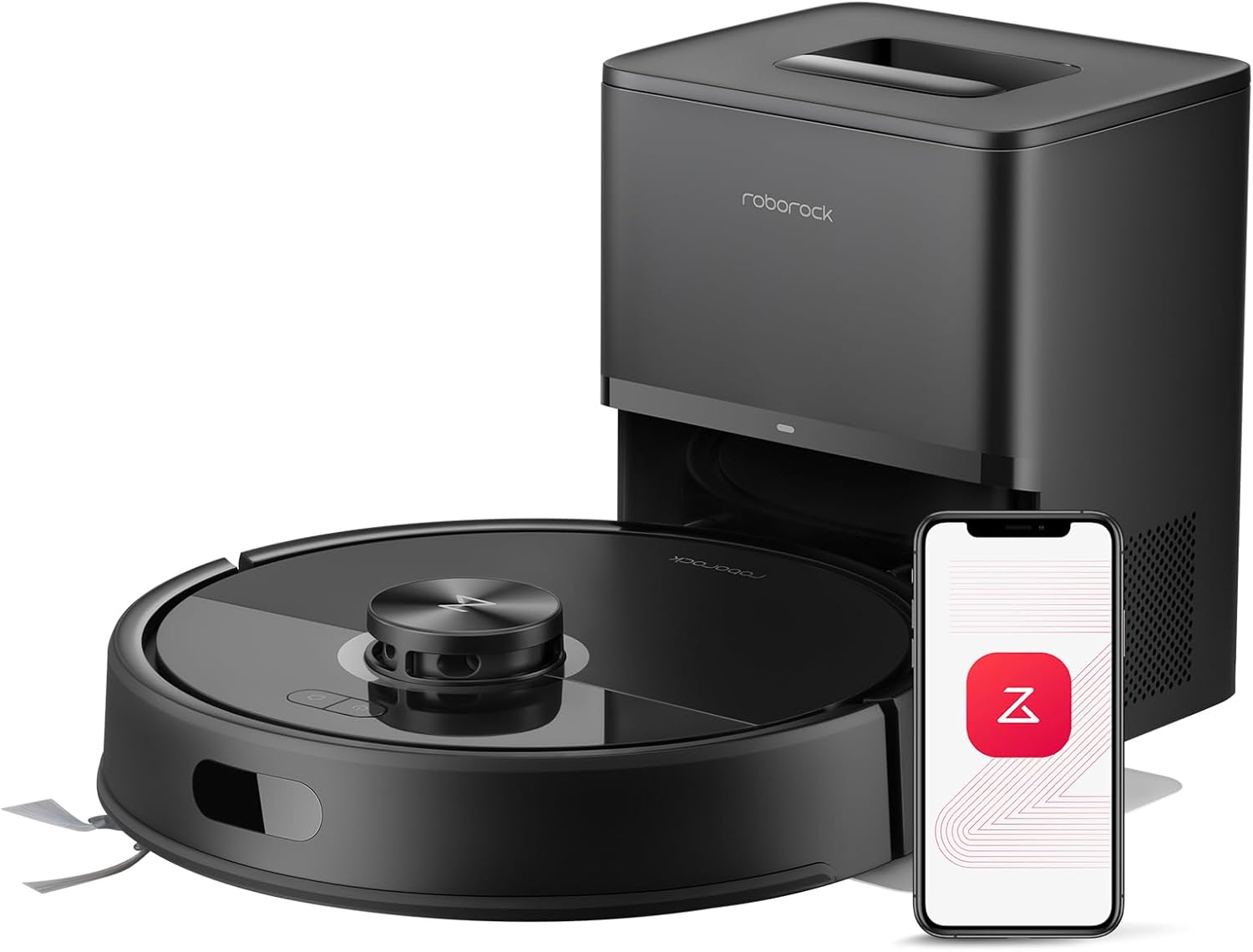
Pros
- Powerful 10,000Pa suction excels at deep carpet cleaning and debris pickup
- Large 2.7L self-empty dock reduces maintenance to once every two months
- Highly effective dual anti-tangle brush design for households with pets
- Precise LiDAR navigation works flawlessly even in completely dark rooms
Cons
- App control requires a 2.4GHz Wi-Fi connection and does not support 5GHz bands
- Electronic mopping system is basic compared to premium vibrating or rotating mop models
Effortless Automated Cleaning for Busy Homes
The Roborock Q7 M5+ Robot Vacuum and Mop is designed to take the hassle out of daily floor maintenance. Offering a significant upgrade over previous generations, this hybrid cleaning device is perfect for pet owners and busy families who want clean floors without the daily upkeep. By combining powerful suction with an intelligent self-emptying dock, it delivers weeks of hands-free operation.
Unmatched Suction and Smart Navigation
At the core of this robot vacuum is an impressive 10,000Pa HyperForce suction system. It easily extracts embedded dust, pet hair, and crumbs from both deep-pile carpets and hardwood crevices. Navigating your home is seamless thanks to the PreciSense LiDAR system, which maps your home in real-time. This allows the vacuum to calculate the most efficient cleaning paths, avoiding obstacles and navigating multi-level homes with ease.
Dual Anti-Tangle System for Pet Owners
One of the standout design features is the dual anti-tangle system. Featuring a specialized main brush and a zero-tangling side brush, it resists hair wraps from long-haired pets, reducing the need for manual detangling. Additionally, the integrated electronic mopping system allows you to vacuum and wipe down hard floors in a single run, capturing fine dust particles that dry vacuuming alone might miss.
A Few Minor Considerations
While the cleaning performance is exceptional, there are a couple of limitations. The Roborock App only supports 2.4GHz Wi-Fi networks, which might require adjusting your router settings during setup. Furthermore, the electronic mopping system is excellent for light dust and maintenance but does not scrub stubborn, dried-on stains as effectively as premium vibrating mop modules.
The Verdict
Overall, this robotic cleaner offers a fantastic balance of high-end performance and convenience. With its self-emptying dock, industry-leading suction, and smart mapping capabilities, it is a highly recommended investment for anyone looking to automate their home cleaning routine with minimal manual intervention.

Pros
- Strong 5200Pa suction clears debris from multiple floor types
- Self-charging feature prevents power interruptions mid-task
- Pet-focused design reduces hair tangles on brushes
- App integration allows scheduling and mode adjustments remotely
Cons
- Best suited for low-pile carpets rather than thick rugs
- Water tank requires refilling for large mopping areas
- Setup for app and voice assistants may take initial effort
ROPVACNIC S1 Review: Automated Cleaning for Everyday Homes
The ROPVACNIC S1 Review highlights a capable robot vacuum and mop combo designed for users who want reliable automated floor care. It combines strong suction with electronic mopping and supports app-based customization for different surfaces and stains.
Standout Features and Performance
With 5200Pa suction and a three-point cleaning system, this model removes dirt, dust, and pet hair effectively across hard floors and low-pile carpets. The no-entanglement side brushes perform well for pet owners, while the self-recharge function activates below 20% battery to keep sessions uninterrupted. Obstacle detection helps it navigate around furniture without constant supervision.
Design and Build Quality
The compact 2.99 inch height allows access under sofas and beds where manual cleaning is difficult. A 4400mAh battery supports extended runs in larger spaces, and the included dustbin plus water tank enable true 2-in-1 functionality. Controls via smartphone app, remote, or voice assistants add flexibility, though initial pairing requires standard network setup.
Potential Drawbacks
Performance on high-pile carpets may be limited compared to hard floors. Users with very large homes should expect to refill the water tank midway through mopping cycles. Regular filter and brush maintenance remains necessary for peak results.
Final Verdict
Overall the ROPVACNIC S1 delivers solid value for pet owners and busy households seeking a straightforward robot vacuum and mop solution with strong suction and convenient controls.
Key Technical Factors to Consider Before Buying
Navigation Accuracy and Obstacle Avoidance
LiDAR-based mapping remains the most reliable technology for hardwood floors because it generates precise room layouts and enables methodical row-by-row cleaning instead of inefficient random paths. Units equipped with 360-degree laser sensors detect furniture legs, cables, and thresholds as low as 0.79 inches, preventing the robot from dragging debris that could scratch polished wood. Structured-light or AI camera systems add real-time object recognition, allowing the vacuum to raise mops or adjust paths around pet bowls and toys without contact.
Look for models that store multi-floor maps and support no-go zones so high-traffic wood areas receive frequent attention while delicate rugs are avoided. App-based route editing further reduces the chance of the robot pushing grit across finished surfaces during repeated passes. Devices with recharge-and-resume functionality maintain coverage on larger open-plan hardwood layouts without incomplete sessions.
Brush Design and Scratch Prevention
Rubber main brushes outperform traditional bristle rolls on hardwood because they flex to capture dust from plank gaps while minimizing grit retention that causes abrasion. Dual rubber extractors or V-shaped designs also reduce hair wrap, which is critical in homes with pets where tangled debris can harden against the floor. Side brushes should be soft and anti-tangle to sweep edges without scattering particles across the grain.
Floating brush assemblies that adjust height automatically maintain consistent contact pressure without pressing hard enough to leave marks. Regular inspection of wheels for embedded sand is still recommended, but well-designed rubber systems cut maintenance frequency and extend floor lifespan. Models certified for zero-tangle performance provide measurable advantages for long-term hardwood care. For additional operational safety benchmarks, see our published testing notes on roborock qrevo s pro vs dreame l10s pro ultra heat.
Suction Power and Floor-Specific Modes
Suction levels between 5,000 Pa and 26,000 Pa handle everyday dust and larger debris on sealed hardwood, yet the ability to dial power down for delicate finishes is equally important. Multi-level suction controls allow quiet operation during daily maintenance while max settings extract grit from expansion gaps. Carpet detection sensors that boost power only on rugs protect adjacent wood by avoiding unnecessary high-force runs.
Airflow optimization and sealed HEPA filtration keep allergens from recirculating onto polished surfaces. For homes with mixed flooring, adaptive BoostIQ-style technology that reacts within seconds ensures the robot never overworks hardwood areas. Runtime of 100 to 150 minutes on lower suction settings typically covers most single-level wood homes in one session. To compare alternative configurations, check our hands-on review of why is my robot vacuum not dispensing water.
Mopping Integration and Moisture Control
Integrated mopping systems that lift pads 0.41 inches or higher prevent water damage on hardwood while still addressing sticky residue or footprints. Dual spinning mops with adjustable water flow and downward pressure remove dried stains without soaking the wood. Hot-water mop washing docks further improve hygiene by eliminating bacteria that could transfer back to floors.
Electronic water control and app-based moisture levels let users customize for engineered versus solid hardwood. Edge-extending mop arms reach baseboards where dust accumulates, delivering a more complete clean. Buyers focused on dual vacuum-and-mop performance can also explore options covered in our self-emptying robot vacuum comparisons for reduced maintenance.
Self-Emptying Capacity and Maintenance Automation
Self-empty bases holding 60 to 100 days of debris minimize dust exposure that can settle back onto hardwood after manual bin emptying. All-in-one docks that wash mops, dry them with warm air, and refill water tanks create true set-and-forget operation. Bagless HEPA designs capture fine particles that would otherwise recirculate, protecting both air quality and floor finish. Users looking for related component recommendations can explore our can robot vacuums cross high thresholds breakdown.
Anti-tangle brush systems and self-cleaning washboards reduce the frequency of manual intervention. Units supporting off-peak charging and app scheduling align cleaning with household routines so hardwood floors stay dust-free between deep cleans. Warranty coverage of two to three years signals long-term reliability for daily use on sensitive surfaces.
Profile Height and Under-Furniture Reach
Profiles under 3 inches allow robots to clean beneath sofas, cabinets, and beds where dust settles heavily on hardwood. Low-profile designs combined with climbing ability over 0.79-inch thresholds maintain continuous coverage across open floor plans. Soft bumper materials and precise sensors prevent scuffs on furniture legs that sit close to the floor. Before finalizing equipment decisions, refer to our comprehensive robot vacuum not connecting to wifi comparison.
We evaluated top-rated robot vacuum for hardwood floors models by cross-referencing manufacturer technical specifications for suction ratings, brush materials, mop-lift heights, navigation sensors, dustbin capacity, and dock automation features. Each unit was scored against hardwood-relevant criteria including scratch-risk factors, edge-cleaning reach, multi-floor mapping support, and runtime on hard surfaces. User-reported satisfaction metrics and warranty terms were aggregated to identify recurring reliability patterns across brands such as Dreame, MOVA, Tikom, and Roborock.
Build quality indicators, filter efficiency, and app control depth received equal weight because long-term floor protection depends on consistent performance rather than peak suction alone. Models lacking clear rubber-brush options or precise obstacle avoidance scored lower for hardwood suitability. This data-driven process ensures recommendations reflect real residential conditions rather than marketing claims alone.
Wrap-Up: Which Model Delivers True Value?
After analyzing the full set of specifications and performance attributes, clear leaders emerge for different buyer priorities. The best overall robot vacuum for hardwood floors is the NARWAL Freo Z10 Turbo thanks to its 25,000 Pa suction, dual-flow tangle-free system, edge-to-edge mop extension, and real-time dirt detection that keeps hardwood free of both dry debris and sticky residue. Its all-in-one self-emptying and mop-washing dock further reduces maintenance that could otherwise reintroduce dust to finished floors.
The best value and budget choice is the eufy Robot Vacuum 11S MAX. Its 2.85-inch slim profile, BoostIQ adaptive suction, 100-minute hardwood runtime, and quiet 55 dB operation deliver reliable daily dust removal at an accessible price point without complex app requirements. For pet owners needing superior hair management and hot-water mop hygiene, the MOVA P10 Pro Ultra Gen 2 stands out with 26,000 Pa suction, triple anti-tangle architecture, 212°F mop washing, and MaxiReach edge cleaning that maintains pristine wood surfaces even in high-shedding households.
Mid-range shoppers seeking balanced automation should consider the Dreame L40 Ultra Gen 2 or Roborock Qrevo series for extendable side brushes, precise LiDAR mapping, and comprehensive docks. Explore additional self-maintenance options in our guide to robot vacuums with self-empty bases and compare compact designs via our smallest robot vacuum overview. Full category insights appear on the vacuum cleaner category page.
Frequently Asked Questions About Robot Vacuum For Hardwood Floors
Is a robot vacuum safe for hardwood floors in 2026?
Yes, modern robot vacuum for hardwood floors models are engineered with rubber brushes, soft wheels, and precise sensors that minimize scratch risk when kept free of embedded grit. Regular inspection of the brush roll and selection of units with mop-lift functions further protect sealed wood finishes during daily use.
What suction power is ideal for a robot vacuum for hardwood floors?
Suction between 5,000 Pa and 26,000 Pa effectively extracts dust from plank seams on hardwood while multi-level controls prevent over-aggressive cleaning. Adaptive modes that reduce power on hard floors and boost only on rugs provide the best balance of performance and surface protection.
Do I need mopping capability on a robot vacuum for hardwood floors?
Mopping is beneficial for removing sticky residues and footprints but only when the system includes automatic pad lifting and precise water control to avoid excess moisture. Units with spinning mops and hot-water self-cleaning docks deliver deeper results without compromising hardwood integrity.
How can I prevent my robot vacuum from scratching hardwood?
Choose models featuring rubber main brushes, clean the wheels and rollers frequently to remove grit, and enable no-go zones around high-debris entryways. LiDAR navigation that maintains straight paths also reduces the chance of the robot pushing particles across the surface.
Which features matter most for hardwood floors with pets?
Prioritize triple anti-tangle brush systems, high-capacity self-empty docks, and HEPA filtration to manage hair and dander without frequent manual intervention. For additional pet-focused insights, examine our coverage of advanced robot vacuum and mop combos that emphasize hair management.
Hardwood Floor Safety Reading
Hardwood floors call for a gentle, controlled clean, and a robot vacuum working on them still needs a clear charging area. Broad information on electrical safety is available from International Electrotechnical Commission (IEC).









