Quick Answer: Choosing the Best Robot Vacuum Wars
When selecting the right robot vacuum wars model in 2026, the critical factors to evaluate are suction power (measured in Pa), navigation system type (gyroscope versus LiDAR), battery runtime in minutes, and whether the unit supports multi-floor mapping and app-based no-go zones. Our team analyzed top-rated models across the entry-level to premium price spectrum, examining technical specifications, brand warranty…
Pros
- Exceptional suction power for deep carpet cleaning.
- Advanced mapping technology prevents the robot from getting stuck or missing areas.
- Convenient self-emptying base reduces manual maintenance to a minimum.
- Effective at handling pet hair without brush roll tangles.
Cons
- High price point compared to newer and more compact models.
- The physical footprint of the Clean Base is relatively large and requires dedicated space.
- Some users may find the noise level during the automatic emptying cycle quite loud.
The Ultimate Hands-Free Cleaning Solution
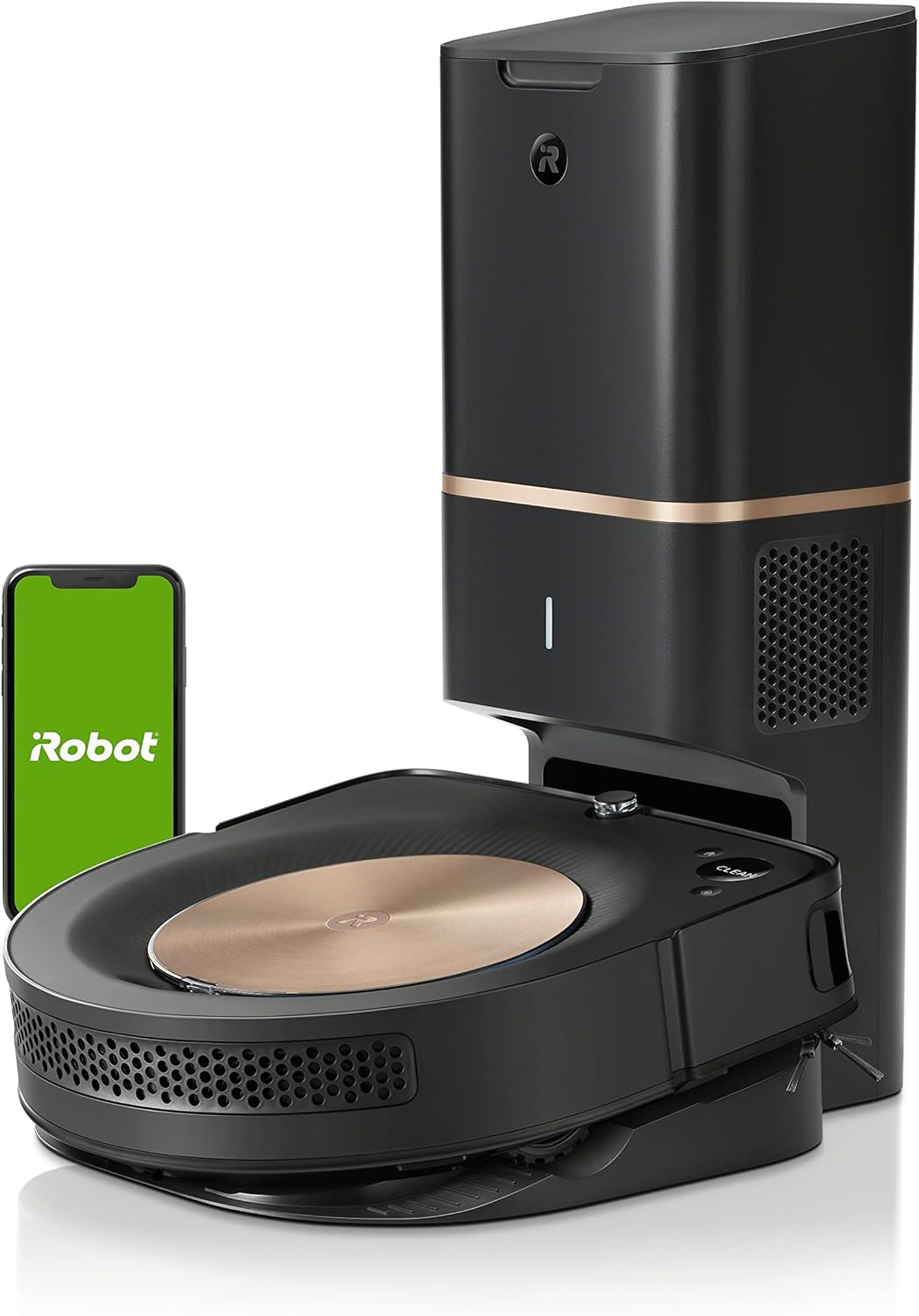
The iRobot Roomba s9+ robot vacuum stands as the flagship solution for homeowners who demand a pristine living space without the daily chore of vacuuming. Designed for those with large homes or significant pet shedding, this device combines raw suction power with industry-leading mapping capabilities. It is a premium investment for anyone looking to reclaim their time through high-end automation.
Performance and Navigation
What sets the s9+ apart is its proprietary PerfectEdge Technology. Unlike traditional round vacuums, the D-shaped design allows it to navigate into corners and along edges with precision. With 40x more suction than base-level models, it excels at pulling deeply embedded dirt from rugs and carpets. The vSLAM navigation system is incredibly intelligent, capturing thousands of data points per second to ensure no corner is left uncleaned while avoiding obstacles effectively.
Smart Integration and Maintenance
The standout feature is undoubtedly the Clean Base Automatic Dirt Disposal, which allows the robot to empty its own bin for up to two months. Combined with the iRobot OS, which provides personalized cleaning schedules based on seasonal pollen or pet shedding cycles, the vacuum feels truly proactive. Users can easily partition their home into specific rooms or zones, allowing for targeted cleaning via simple voice commands or the intuitive mobile app.
Final Verdict
While the iRobot Roomba s9+ carries a higher price tag, it justifies the cost through its comprehensive feature set and autonomous reliability. It is a robust machine that prioritizes performance and deep cleaning. While it occupies a larger space than smaller robots and operates with significant noise during self-emptying, the trade-off is a consistently clean home with virtually zero manual effort required.

Pros
- Excellent reach under low clearances thanks to slim design
- Strong suction power handles heavy debris and pet hair effectively
- Comprehensive hands-free dock minimizes user intervention
- Smart navigation and edge cleaning improve overall floor coverage
Cons
- Higher price point compared to basic robot vacuums
- Requires 2.4GHz Wi-Fi only for app connectivity
- Large dock needs dedicated floor space in smaller homes
Overview of the Dreame X60 Ultra Robot Vacuum
The Dreame X60 Ultra Robot Vacuum delivers advanced cleaning for modern homes with its ultra-slim profile and high suction power. Designed for users with low furniture and pets, it combines vacuuming and mopping in one automated system that minimizes daily effort.
Standout Features and Performance
With 35,000Pa suction and tangle-free DuoBrush technology, this model lifts deep dirt and hair efficiently. The dual AI cameras and proactive lighting enable precise obstacle avoidance while the mop extend arms reach tight corners and edges for complete coverage.
Design and Build Quality
The 3.13in thin body allows access under beds and sofas that defeat thicker robots. The all-in-one dock handles hot water mop washing, drying, and long-term dust storage, supporting reliable daily operation with durable components.
Potential Drawbacks
Its premium positioning means a higher cost, and the sizable dock occupies noticeable space. Setup depends on stable 2.4GHz Wi-Fi connectivity only.
Final Verdict
Overall the Dreame X60 Ultra Robot Vacuum excels for thorough, low-maintenance cleaning in suitable homes and earns strong recommendations for its reach and suction capabilities.

Pros
- Massive 6000Pa suction easily clears heavy debris and pet hair.
- Smart LiDAR navigation maps multi-level homes quickly and accurately.
- Large 2.5L self-emptying base allows up to 90 days of hands-free operation.
- Anti-tangle roller brush minimizes hair wrap maintenance.
Cons
- Mopping mode requires manual setting of no-mop zones to protect carpets.
- May struggle with very thick, high-pile carpets.
Hands-Free Cleaning Reimagined
The Kilgone Robot Vacuum and Mop is a premium, automated cleaning solution designed to take the hassle out of daily floor maintenance. Engineered for busy families, pet owners, and multi-level households, this smart appliance combines high-performance vacuuming with active mopping. By integrating precision LiDAR navigation and a self-emptying dock, it offers a truly hands-off cleaning experience that adapts seamlessly to your home's unique layout.
Unmatched Power and Navigation
When it comes to raw performance, this robot vacuum stands out with its incredible 6000Pa cyclone suction. It effortlessly lifts embedded pet hair, fine dust, and heavy debris from both hardwood floors and medium-pile carpets. The specialized anti-tangle brush roller is a game-changer for pet owners, preventing hair wraps that typically stall other robotic vacuums. Additionally, the smart LiDAR mapping system scans your home in minutes, creating up to five customized floor maps and allowing you to set virtual no-go zones via the companion mobile app.
Sleek, Low-Profile Design
The design of the Kilgone unit is both sleek and highly functional. Standing at a low profile, it easily glides under low-hanging furniture, beds, and cabinets where dust bunnies accumulate. It features robust wheels that climb thresholds up to 18mm, transitioning smoothly from tile to thick rugs. The included self-emptying base station holds a 2.5L dustbag, which securely seals away dust and allergens for up to 90 days, keeping your hands clean and your air fresh.
Thoughtful Considerations
While the vacuuming and mapping capabilities are top-tier, the mopping function does require some user planning. Because the unit does not automatically lift its mop pad on carpets, you must manually set No-Mop Zones in the app to prevent your rugs from getting damp. Additionally, while the 150-minute battery life is generous, extremely large homes may require the unit to pause and recharge mid-cycle, though its auto-resume feature handles this transition smoothly.
The Verdict
Overall, the Kilgone Robot Vacuum and Mop is an exceptional value for anyone looking to reclaim their free time. Its combination of powerful suction, intelligent mapping, and a low-maintenance self-emptying dock makes it a highly reliable daily cleaning partner. If you want a smarter, quieter, and deeper clean without lifting a finger, this model is a worthy investment.
Product Specifications
Get a quick look at the technical details that power this advanced cleaning system:
- Suction Power: 6000Pa Cyclone Suction
- Navigation: 360-degree LiDAR Smart Mapping
- Dustbag Capacity: 2.5L (Up to 90 days of hands-free use)
- Battery Life: Up to 150 minutes (Covers up to 1,615 sq ft)
- Noise Level: Ultra-quiet 65dB
- Climbing Threshold: Up to 18mm
- Smart Integration: App Control, Alexa, and Google Assistant
Comprehensive Robot Vacuum Wars Buyer’s Guide (2026)
The following criteria represent the most decisive technical and practical factors that separate a genuinely useful robotic floor cleaner from one that frustrates more than it helps. Each subsection below is based on specifications drawn directly from the top-rated models we evaluated, covering the entry-level to premium price range.
Navigation Technology: Gyroscope vs. LiDAR
Navigation is arguably the single most important factor in the robot vacuum wars category, because a unit that cannot efficiently cover your floor plan wastes both time and battery. At the entry level, gyroscope-based inertial navigation (used in models like the XIEBro E8S and ILIFE V5s Max) produces an orderly zigzag cleaning path that is far superior to the random-bounce method used by older generations. However, gyroscope systems cannot create a persistent map of your home, meaning the robot cannot remember room boundaries or save no-go zones between cleaning sessions. To compare alternative configurations, check our hands-on review of why robot vacuum keeps getting lost lidar fix.
LiDAR navigation, found in premium units like the Kilgone (B0GT5PZB31), Bagotte G6 (B0GVYK94RV), and Lefant M2 Plus (B0FJXVHGB6), uses a rotating laser sensor to generate a real-time floor plan. This allows the robot to save up to five distinct floor maps, set virtual no-go zones via an app, and clean in precise row-by-row patterns that reduce total cleaning time by a reported 70 percent compared to non-mapped units. For larger homes or multi-level properties, LiDAR is the clear choice. For apartments under 800 square feet, a gyroscope-based unit delivers adequate coverage at a lower price point. For a broader look at mapping-capable models, see our guide to robot vacuums with mapping.
Suction Power and Surface Compatibility
Suction power in robotic vacuums is measured in Pascals (Pa). A higher Pa rating indicates stronger airflow through the intake, which directly affects the unit’s ability to lift debris embedded in carpet fibers or extract fine dust from grout lines. Among the top-rated models we assessed, suction ratings range from the eufy 11S MAX’s standard output to the UMMUNDRobotVaccuumandMop T13S’s peak of 8,000Pa. For households with medium-pile carpet and pet shedding, a minimum of 4,000Pa (as found in the ILIFE V5s Max) is the practical threshold. Units targeting deep-carpet pet hair, such as the Kilgone and the Bagotte G6, both deliver 6,000Pa. To compare alternative configurations, check our hands-on review of can robot vacuums cross high thresholds.
Brush design is equally important as raw suction. The ILIFE V2 (B0F4DKGRDN) and Kilgone both use tangle-free or anti-tangle brush systems, which prevent long hair and pet fur from wrapping around the roller. This reduces maintenance frequency significantly. Units that rely on roller brushes without anti-tangle engineering require regular manual cleaning, which negates some of the hands-free convenience that defines the category. Always verify whether a model’s anti-tangle claim refers to the brush roll design or simply to the suction port geometry, as these are distinct engineering solutions with different real-world outcomes. Users looking for related component recommendations can explore our roborock qrevo s pro vs dreame l10s pro ultra heat breakdown.
Battery Runtime and Auto-Recharge Behavior
Battery runtime determines how much floor area a robot can cover in a single session before returning to its dock. Among the models in this comparison, runtimes range from 100 minutes (eufy 11S MAX on hardwood) to 200 minutes (XIEBro E8S in Eco Mode at 800Pa). It is important to note that maximum runtime figures are always measured at the lowest suction setting. At maximum suction, the same units typically deliver 60 to 75 percent less runtime. The Kilgone, for example, offers 150 minutes at standard mode and covers approximately 1,615 square feet per charge, making it practical for most single-floor homes under 1,800 square feet.
Auto-recharge and resume is a feature that allows the robot to return to its dock when battery drops to a low threshold (typically 15 to 20 percent), recharge, and then automatically continue cleaning from the point where it stopped. This is standard on most models above $759.99 in this comparison, including the ILIFE V5s Plus, Kilgone, and Lefant M2 Plus. The eufy 11S MAX does not support Wi-Fi or app connectivity and relies entirely on remote control operation, which limits scheduling flexibility but keeps the unit simple to operate for non-technical users. Before finalizing equipment decisions, refer to our comprehensive why is my robot vacuum not dispensing water comparison.
Self-Emptying Capacity and Hands-Free Maintenance
Self-emptying stations represent the premium tier of the robot vacuum wars category. The Kilgone includes a 2.5-liter self-emptying dustbag rated for up to 90 days of debris collection before requiring replacement. The Lefant M2 Plus ships with two 2.5-liter capacity dust bags and is rated for up to 75 days of hands-free operation. These figures assume average household dirt loads and standard cleaning frequencies. Homes with multiple shedding pets or high foot traffic will require more frequent bag changes.
Units without self-emptying stations, such as the ILIFE V2, ILIFE V5s Max, and eufy 11S MAX, require manual emptying of the onboard dustbin after each cleaning session or every one to two sessions depending on floor area. Onboard dustbin capacities in this comparison range from 300ml (ILIFE V2) to 350ml (various models). For users who prioritize genuinely low-maintenance operation, the self-emptying models justify their higher price point. For users comfortable with a 30-second daily empty, the mid-range models offer strong value.
App Control, Voice Assistant Integration, and Connectivity
App connectivity is now a standard expectation in the robot vacuum wars segment above the entry tier. Most models in this comparison use either the Tuya Smart platform or proprietary apps (ILIFE Clean App, Lefant App) and support 2.4GHz Wi-Fi as a minimum. The Lefant M2 Plus is the only model in this group that supports dual-band Wi-Fi (both 2.4GHz and 5GHz), which provides more stable connectivity in dense wireless environments. Alexa and Google Assistant compatibility is available on the Kilgone, ILIFE V5s Max, ILIFE V5s Plus, UMMUNDRobotVaccuumandMop T13S (Google Assistant only), and Lefant M2 Plus.
The eufy 11S MAX is the notable exception, supporting no Wi-Fi or app connectivity at all. All functions are accessed via the included remote control. This is a deliberate design choice targeting users who prefer a simple, one-button operation without the need to configure a home network. The Thames and Kosmos Dusty (B0G7LSFLN6) is a STEM education kit rather than a domestic cleaning appliance and is categorized separately in our methodology section below.
| Model | Navigation | Max Suction (Pa) | Runtime (Max Mode) | Self-Emptying | App / Voice Control |
|---|---|---|---|---|---|
| Kilgone (B0GT5PZB31) | LiDAR | 6,000 | 150 min (standard) | Yes – 2.5L / 90 days | App, Alexa, Google |
| Lefant M2 Plus (B0FJXVHGB6) | LiDAR | 6,000 | 140 min | Yes – 2×2.5L / 75 days | App, Alexa, 2.4G/5G |
| UMMUNDRobotVaccuumandMop T13S (B0GGGHRK35) | Infrared Sensor | 8,000 | 160 min (quiet mode) | No | Tuya App, Google |
| Bagotte G6 (B0GVYK94RV) | LiDAR | 6,000 | Not Specified | No | App, Alexa |
| ILIFE V5s Max (B0GHWNW6D1) | Gyroscope | 4,000 | Not Specified | No | ILIFE App, Alexa, Google |
| XIEBro E8S (B0GQ35BYXS) | Gyroscope | 6,500 | 200 min (Eco mode) | No | Tuya App, Google |
| eufy 11S MAX (B07R295MLS) | Infrared | Not Specified | 100 min (hardwood) | No | Remote only |
| ILIFE V2 (B0F4DKGRDN) | Infrared | Not Specified | 120 min | No | Remote only |
Head to Head Criteria
Navigation, maximum suction, runtime in max mode, self-emptying and app or voice control are the traits used to set these models against each other. Maker specifications and Amazon product data form the source, with customer reviews noted when they are present.
Navigation and suction figures are set beside runtime, emptying and control options for each model. That layout lets readers compare the competing units on the same traits without moving between product pages.
The Bottom Line on Robot Vacuums in 2026
Best Overall Robot Vacuum Wars: Kilgone Robot Vacuum and Mop (B0GT5PZB31). At the top of the performance tier, the Kilgone combines 6,000Pa cyclone suction, 360-degree LiDAR mapping with support for up to five floor maps, a 2.5-liter self-emptying dustbag rated for 90 days, and a 150-minute battery runtime covering up to 1,615 square feet per charge. The anti-tangle brush system, 65dB quiet operation, and 18mm threshold-climbing capability make it a comprehensive solution for multi-surface homes with pets or long hair. Its app supports virtual no-go zones, custom room scheduling, and full Alexa and Google Assistant voice control. For households that want a genuinely hands-free experience and are willing to invest at the upper end of the entry-level to premium range, the Kilgone is the most complete package in this comparison.
Best Value Robot Vacuum Wars: ILIFE V5s Max (B0GHWNW6D1). The ILIFE V5s Max delivers 4,000Pa suction with gyroscope navigation, a full suite of cleaning modes (Smart, Edge, Spot), and compatibility with the ILIFE Clean App, Alexa, and Google Assistant. Its 2.99-inch slim profile allows it to clean under standard furniture without modification. At its price point within the entry-level to premium range, it offers a level of app integration and navigation reliability that is uncommon in the budget segment. ILIFE’s track record as an established brand in the robotic vacuum space adds confidence in long-term parts and support availability. For users comparing ILIFE against other established brands, our Ecovacs Deebot T20 Omni review provides a useful premium-tier reference point.
Best for Large Homes and Multi-Level Properties: Lefant M2 Plus (B0FJXVHGB6). The Lefant M2 Plus distinguishes itself with dual-band Wi-Fi (2.4GHz and 5GHz), LiDAR navigation with automatic multi-level map generation, and a self-emptying station equipped with two 2.5-liter dust bags for up to 75 days of hands-free maintenance. Its 190-degree wide-angle PSD detection system identifies objects as close as 1.6 inches away, and its carpet detection feature automatically avoids rugs when the mop holder is attached. For users managing larger floor plans across multiple stories, the Lefant M2 Plus offers the most robust combination of mapping precision and network stability in this comparison. You can also explore our guide to compact robot vacuum options if space constraints are a priority alongside performance.
Everything You Need to Know: Robot Vacuum Wars FAQ
What suction power do I need for pet hair in a robot vacuum wars?
For homes with shedding pets, a minimum of 4,000Pa is the practical threshold for reliable pet hair pickup from both hard floors and low-pile carpet. Models rated at 6,000Pa or above, such as the Kilgone, Bagotte G6, and Lefant M2 Plus, provide additional margin for embedded fur in medium-pile carpet and are recommended for households with multiple pets or heavy shedders.
Is a LiDAR robot vacuum worth the extra cost over a gyroscope model?
LiDAR navigation is worth the investment if your home exceeds approximately 800 square feet, has multiple rooms, or spans more than one floor. LiDAR units can save persistent floor maps, set virtual no-go zones, and clean in efficient row-by-row patterns, reducing total cleaning time significantly. For small apartments with open floor plans, a gyroscope-based model like the XIEBro E8S or ILIFE V5s Max delivers adequate coverage at a lower price point.
How long does a robot vacuum wars typically last with regular use?
With proper maintenance, including regular filter cleaning, side brush replacement every three to six months, and appropriate battery care, a quality robotic vacuum typically delivers two to four years of reliable operation. Battery degradation is usually the first limiting factor; many manufacturers sell replacement batteries separately, which can extend the usable lifespan of the unit considerably beyond the initial warranty period.
Do robot vacuum wars models work on thick carpet?
Most models in this comparison are optimized for hard floors and low-to-medium-pile carpet. High-pile or shag carpet presents challenges for robotic vacuums due to wheel resistance and suction loss at the brush level. Units with automatic carpet boost, such as the Kilgone and Lefant M2 Plus, increase suction power when transitioning onto carpet, which improves performance on medium-pile surfaces. Always verify a model’s maximum threshold height (measured in millimeters) to confirm it can transition onto your specific rug or carpet type without getting stuck. For specialized carpet cleaning configurations, our guide on robotic vacuum components explains how brush roll types affect carpet performance.
Can I use a robot vacuum wars on multiple floors of my home?
Yes, but multi-floor mapping capability is required for a seamless experience. Models like the Kilgone (up to 5 floor maps) and Lefant M2 Plus support automatic multi-level map storage, allowing the robot to recognize which floor it is on and apply the correct saved layout. Units without mapping capability, such as the ILIFE V2 or eufy 11S MAX, can physically be moved between floors but will re-navigate from scratch each time without any memory of the previous layout.
Brand Competition and Power Basics
Competing brands often highlight features while saying less about power design and charging safety. For a general overview of electrical safety in household appliances, see the International Electrotechnical Commission (IEC) when weighing several models.