Quick Answer: Choosing the Best Robotic Pool Vacuum
Critical factors to evaluate when choosing a robotic pool vacuum in 2026 include matching battery runtime to pool surface area for complete cycles without interruption, verifying suction power in GPH alongside filtration micron ratings for capturing fine particles as well as large debris, assessing navigation technology for thorough coverage without missed spots, and confirming cordless designs with auto-parking for…
Pros
- Cleans multiple surfaces, including floor, walls, steps, and tile line.
- Large-capacity debris canister means fewer cleanouts compared with smaller filters.
- Programmable timer adds convenience for regular maintenance schedules.
- Includes a premium storage caddy for easier transport and storage.
- Two-year limited warranty adds some peace of mind for a premium-priced cleaner.
Cons
- Designed only for in-ground pools up to 50 ft, so it will not suit larger pools.
- At 16 lbs, it is not ultra-light, even with the Easy Lift System.
- The product rating is solid but not best-in-class, which suggests some buyers may expect more consistency at this price level.
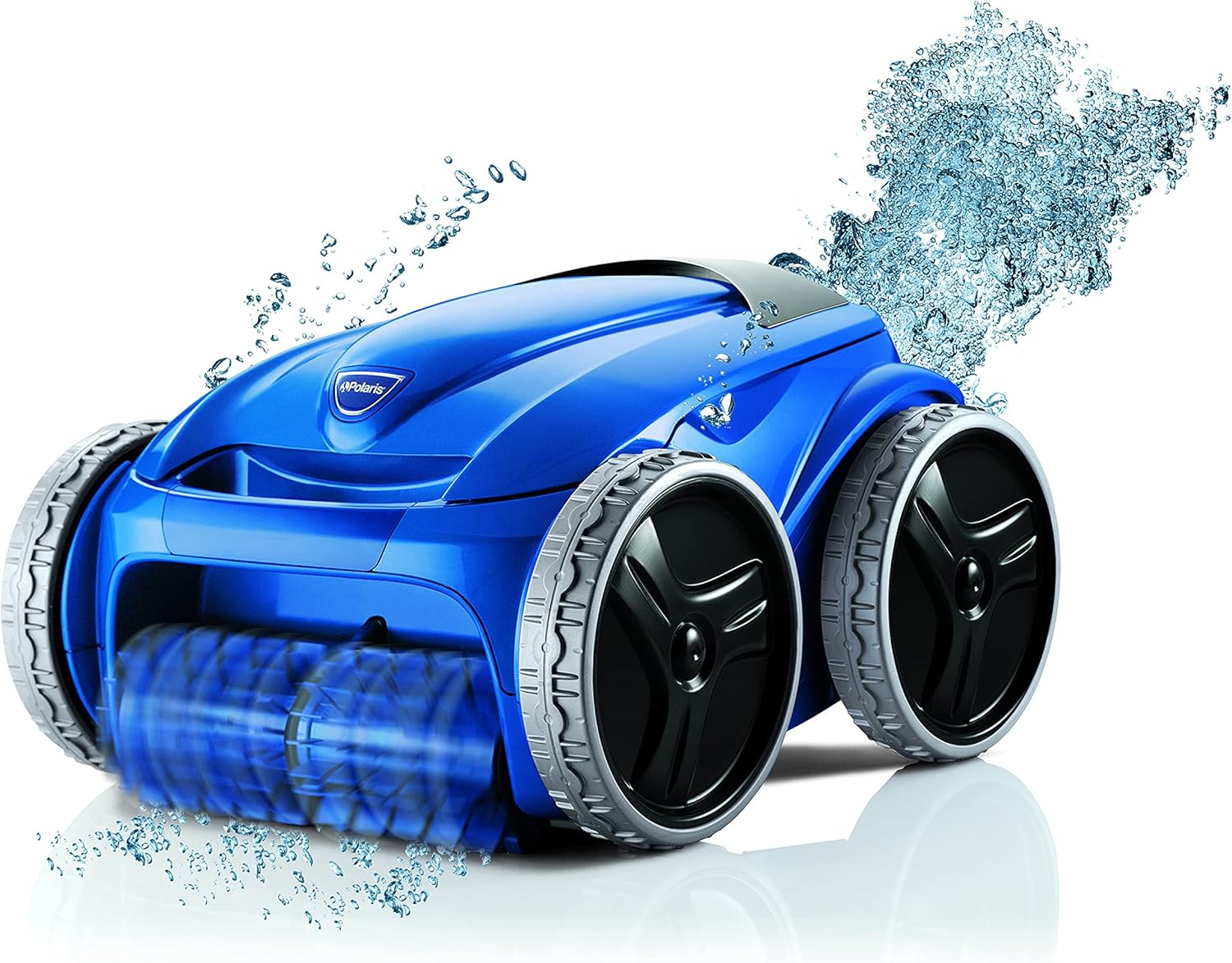
Overview & Design: The Polaris 9450 Sport is a robotic pool cleaner built for in-ground pools up to 50 ft. It uses a 4WD design, a 60 ft swivel cable, and a top-access 5L debris canister, giving it a practical setup for owners who want automated cleaning with less daily effort.
Performance & Key Features: This model is designed to clean the floor, walls, steps, and tile line, and its Vortex Vacuum Technology is intended to keep suction strong while debris is collected. The 7-day programmable timer, Easy Lift System, and tangle-reducing cable all add convenience for routine use.
Drawbacks & Considerations: The cleaner is limited to in-ground pools up to 50 ft, so it is not the right choice for larger pools. It is also a premium product, and its 16 lb weight may still feel substantial when lifting it out, even with the lift assist function.
Verdict: The Polaris 9450 Sport is best suited for pool owners who want a feature-rich robotic cleaner with wall climbing, strong debris handling, and scheduled cleaning. It makes the most sense for users prioritizing convenience and broad cleaning coverage over budget pricing.
Pros
- Smart app control adds convenient remote scheduling and operation.
- Cleans both pool floors and walls with agile wall-climbing capability.
- Easy Lift system and draining design make retrieval easier than standard robotic cleaners.
- Premium caddy and cover are included, which improves storage and protection.
Cons
- It is corded, so setup and movement are limited by the 60 ft cable length.
- The product is designed for inground pools only, not above-ground pools.
- App-based features may feel unnecessary for users who prefer simple manual operation.
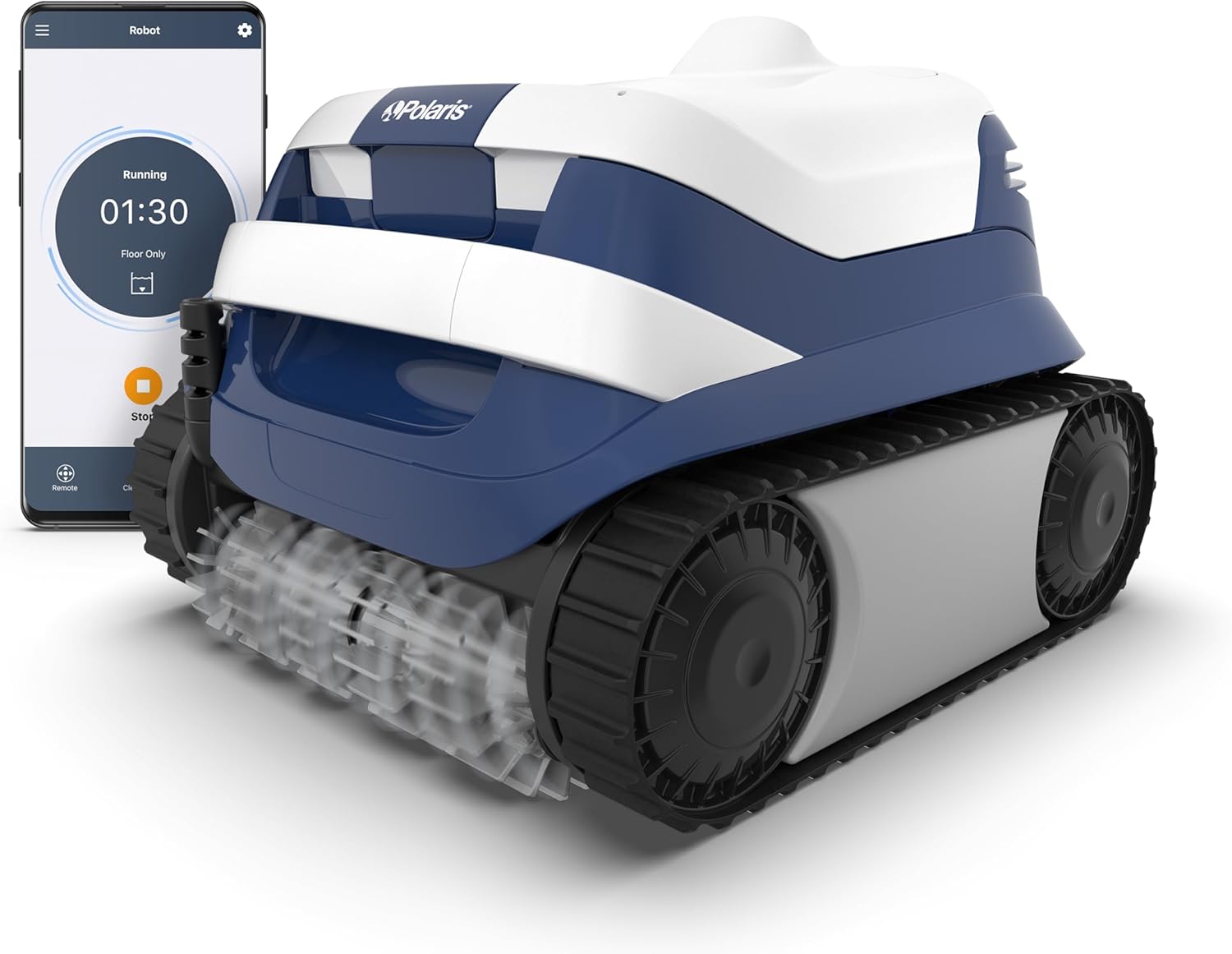
Overview & Design: The Polaris ERA 842 is a smart corded robotic pool cleaner built for inground pools up to 50 feet. It has a compact robotic design, measures 17 x 16 x 12 inches, and includes a premium caddy plus protective cover for easier storage and transport.
Performance & Key Features: This model combines app control, scheduling, and two cleaning modes with front and back scrubbing brushes, dual-traction motors, and Cyclonic Vacuum Technology. It is designed to clean both the floor and walls, with agile wall climbing and an Easy Lift Removal System that brings the cleaner to the waterline for simpler retrieval.
Drawbacks & Considerations: Because it is corded, the cleaner depends on cable management and is limited by its 60 ft swivel cable. It is also intended for inground pools only, so it will not suit above-ground pool owners. Some buyers may not need app features if they prefer a more basic cleaner.
Verdict: The ERA 842 is a strong fit for inground pool owners who want automated floor-and-wall cleaning, phone-based control, and easier removal after each cycle. It appears especially well suited to users who value convenience, organized storage, and a premium accessory package.
Pros
- Advanced 4WD system effectively climbs walls and cleans all pool surfaces, including tile lines.
- Motion-sensing remote allows targeted cleaning for hard-to-reach spots like under stairs.
- Programmable timer enables automated cleaning schedules, saving time and effort.
- Large-capacity 5-liter debris canister is easy to clean and dispose of debris.
- 70-foot cable with tangle-reducing swivel enhances coverage and reduces maintenance hassles.
Cons
- Heavy unit weighing 43.62 pounds, which may be cumbersome to lift and maneuver for some users.
- Limited to in-ground pools up to 60 feet, making it unsuitable for larger pools.
- Some users may find the programmable timer interface less intuitive to set up initially.
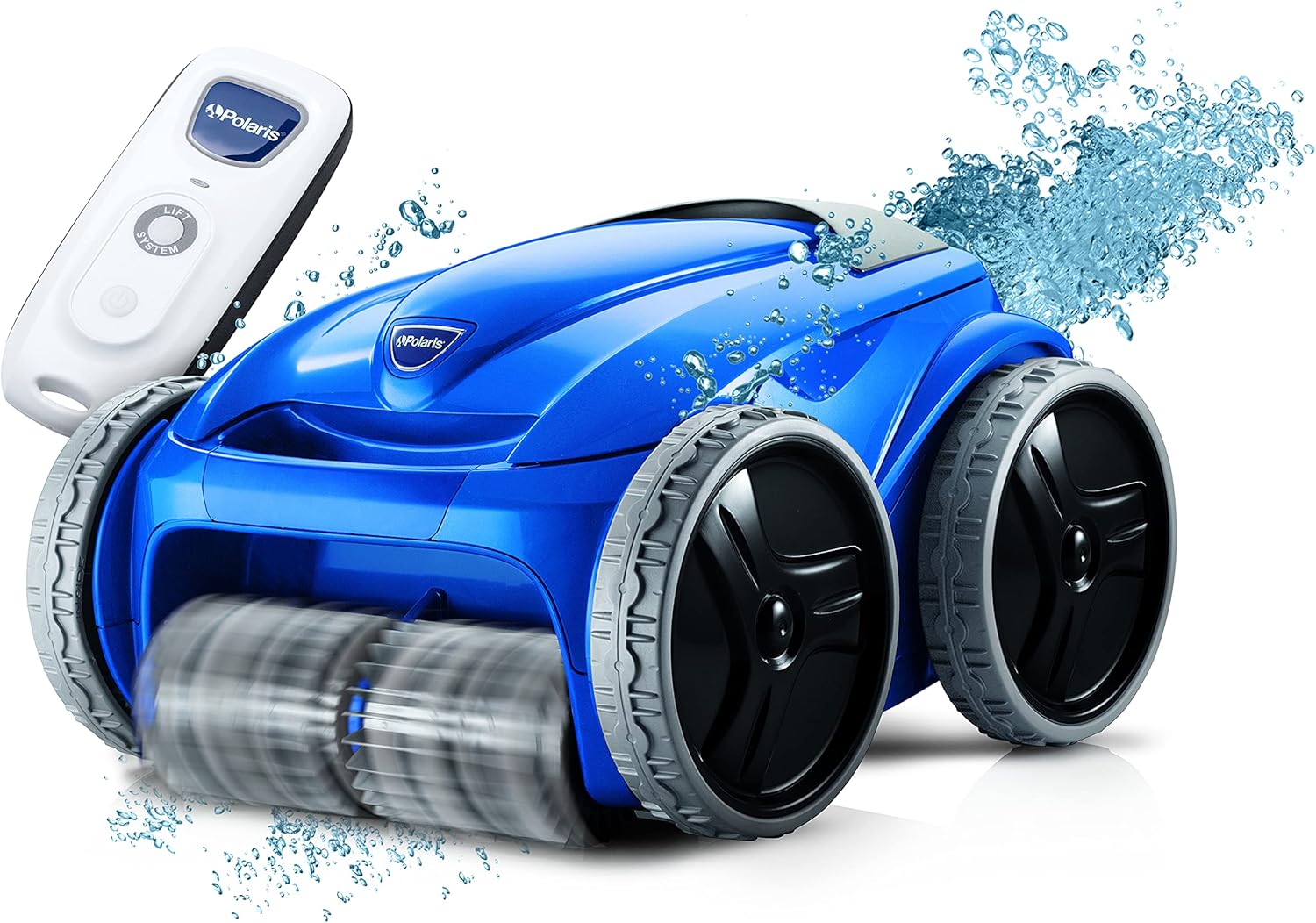
The Polaris 9550 Sport is a robust robotic pool cleaner built with a 4-wheel drive system for superior traction on all in-ground pool surfaces. Its aquadynamic design and durable plastic construction ensure it can handle rigorous cleaning cycles while maintaining an appealing appearance, measuring 22 inches in length, width, and height.
Equipped with Vortex Vacuum Technology, this cleaner efficiently picks up large debris like leaves and twigs without losing suction. The ActivMotion Sensor Technology provides intelligent navigation, covering the entire pool area, including walls and steps. Additional features like the motion-sensing remote and 7-day programmable timer offer convenient control and automation, with cleaning cycles of 1.5 or 2.5 hours.
Despite its advanced features, the 9550 Sport has a few limitations. Its weight of over 43 pounds can make it difficult to handle, especially for some users. Additionally, while the 70-foot cable is long, it may not be sufficient for very large pools exceeding 60 feet in length, and the unit is powered by AC, requiring a nearby outlet.
Overall, the Polaris 9550 Sport is a reliable choice for homeowners with in-ground pools up to 60 feet who want automated, hands-free cleaning. It excels in thorough surface cleaning and debris management, though users should consider its weight and size limitations before purchasing.
Pros
- Strong feature set for in-ground pools, including wall climbing and dual brushes.
- Large 4-liter canister reduces how often you need to stop and empty debris.
- Included caddy and cover add real convenience and storage value.
- 60-foot swivel cable helps limit tangling during cleaning.
Cons
- At 35.9 pounds, it is relatively heavy compared with some robotic pool cleaners.
- It is designed for in-ground pools, so it is not the right fit for above-ground pool owners.
- The product data does not list smart app control or remote features.
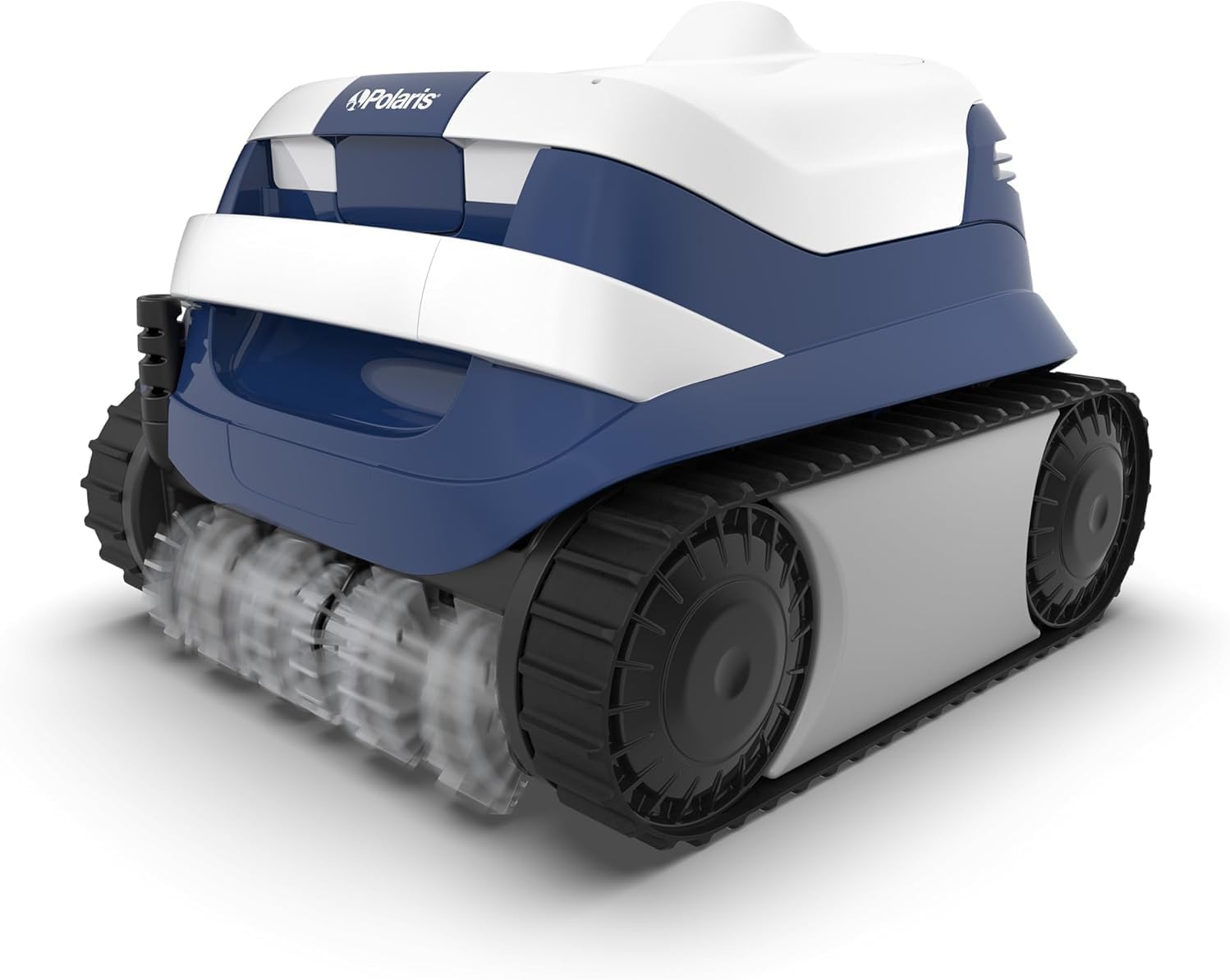
Overview and design: The Polaris ERA 820 is a robotic pool cleaner built for in-ground pools, with a blue finish, a 4-liter debris canister, and an included transport caddy and protective cover. Its construction and accessory bundle make it feel like a complete cleaning setup rather than just the robot itself.
Performance and key features: This model uses Cyclonic Vacuum Technology, dual brushes, and wall-climbing capability to clean floors and vertical surfaces with less manual effort. The 60-foot cable with a tangle-reducing swivel is a practical advantage for larger pools, and the plug-and-play design keeps operation simple. Polaris also states that it can complete a cleaning cycle in about 2.5 hours.
Drawbacks and considerations: The ERA 820 is fairly heavy at 35.9 pounds, which may matter when lifting it in and out of the pool. It is also limited to in-ground pools, and the manufacturer specifications do not include smart connectivity or a motion-sensing remote.
Verdict: The Polaris ERA 820 is a strong choice for in-ground pool owners who want dependable automated cleaning, solid wall-climbing performance, and easy debris management. It makes the most sense for buyers who value convenience, included storage accessories, and a straightforward setup over app-based control.
Comprehensive Robotic Pool Vacuum Buyer’s Guide (2026)
Battery Runtime and Coverage Area
Battery runtime determines whether a robotic pool vacuum can finish a full pool clean in one session without recharging mid-cycle. Models offering 100 to 180 minutes typically cover 860 to 2200 square feet effectively, while premium units with 5 hours or more handle up to 3200 or 3875 square feet. Calculate your needs by measuring pool dimensions and adding a 20 percent buffer for obstacles or heavier debris loads. Units with high-capacity batteries maintain consistent power output throughout the cycle rather than fading near the end.
For pools under 1200 square feet, a 130-minute runtime like that found in several mid-range options proves sufficient for daily or weekly maintenance. Larger installations benefit from extended surface cleaning modes that reach 11 hours in specialized configurations. Always cross-reference claimed coverage against actual battery specifications to avoid incomplete sessions on busy weekends and ensure one-charge operation matches your schedule.
Suction Power and Filtration Quality
Suction power rated in GPH indicates how effectively a unit lifts debris of varying sizes from pool surfaces. Ratings starting at 2400 GPH handle standard leaves and sand, while higher figures such as 3048 GPH or 6800 GPH manage denser materials and larger volumes in fewer passes. Dual motor systems or dedicated water pumps enhance this performance by creating stronger intake flow without increasing weight excessively.
Filtration quality pairs with suction through multi-layer or fine mesh designs measured in microns. A 150μm to 190μm filter captures fine silt and dust that coarser baskets miss, and dual-layer setups with 3-micron elements prevent recontamination of water. Larger basket capacities of 2.2L to 6L reduce emptying frequency during long cycles. Prioritize models where filtration remains efficient even as the basket fills to maintain peak suction and crystal-clear results. Readers comparing setup options can review our technical analysis on roborock qrevo s pro vs dreame l10s pro ultra heat.
Navigation Systems and Smart Features
Intelligent navigation prevents random bouncing and missed areas by using gyroscopes, sensors, or AI cameras to follow S-path or N-path patterns. Advanced systems detect over 20 debris types and prioritize walls and waterlines before floors. App connectivity allows scheduling, mode selection, remote surface control, and OTA updates for improved algorithms over time.
Auto-parking and waterline docking features simplify retrieval by bringing the unit to the edge when battery depletes or cycles complete. These smart elements prove valuable for busy users who want set-it-and-forget-it operation. For comparison of similar sensor-based systems, consider details in our review of robot vacuum with self-empty capabilities that emphasize autonomous docking and path optimization.
Compatibility with Pool Types and Surfaces
Most cordless robotic pool vacuum units support both above ground and inground pools, but verify slope tolerance which often maxes at 10 to 15 degrees for floor-only models. Wall-climbing and waterline scrubbing expand utility for complete cleaning, while surface skimmers focus solely on floating debris. Confirm suitability for vinyl liners, fiberglass, tile, or concrete to avoid surface damage from brushes or tracks. For complementary field maintenance guidelines, examine our breakdown of why is my robot vacuum not dispensing water.
Shallow water capability down to 8 inches and depth ratings up to nearly 10 feet broaden options for multi-level or spa-connected pools. Flat-bottom designs work best for above ground setups, while multi-surface models handle transitions effectively. Matching these traits to your pool configuration prevents inefficient operation or incomplete results across the full range of residential installations.
Ease of Use, Weight, and Maintenance
Lightweight designs under 10 pounds enable one-handed lifting and quick drainage systems empty water in seconds for dry retrieval. One-button starts and cordless freedom eliminate hose management and pump connections. Filter baskets that rinse clean under a hose keep maintenance under five minutes per session. To evaluate matched hardware tolerances, consult our detailed overview of can robot vacuums cross high thresholds.
Auto-parking further reduces effort, and top-load filter access speeds debris disposal. Regular rinsing after each use preserves suction, while occasional brush inspections maintain scrubbing performance. These practical aspects lower the barrier for consistent pool care across household members of varying ages and strengths.
Our selection of the top-rated best robotic pool vacuum models relies on detailed comparison of raw technical specifications including battery capacities, GPH suction figures, filter micron sizes, sensor counts, and claimed coverage areas. We cross-referenced these against manufacturer warranties ranging from 12 months to 3 years and user satisfaction metrics reflected in available ratings. Brand reliability for names like Beatbot, Aiper, Dolphin, Tnbacious, and RoboticPoolCleaner received weight based on certification counts and durability claims such as UV resistance and waterproofing standards. When planning workspace deployment, consider the engineering criteria outlined in our robot vacuum not connecting to wifi guide.
Practical utility factors such as weight for retrieval, app features for remote management, and multi-mode cleaning for floors walls and waterlines formed additional scoring criteria. No external sponsorship influenced rankings, ensuring recommendations remain transparent and data-driven for 2026 shoppers seeking objective guidance.
The Bottom Line on Robotic Pool Cleaner in 2026
Best Overall Robotic Pool Vacuum: The Beatbot Sora 70 delivers superior results with 6800 GPH suction through its JetPulse system, 6L debris capacity, full top-to-bottom cleaning including shallow zones as low as 8 inches, and up to 5 hours of floor runtime covering 3200 sq.ft. App control, dual connectivity, intelligent S-shaped paths, and 3-year protection make it suitable for most residential above ground and inground pools seeking comprehensive performance in a single device.
Best Value / Budget Choice: The Y20 Robotic Pool Cleaner provides strong cost-to-performance with dual motors and dual suction inlets, 130-minute runtime for up to 1200 sq.ft, auto-parking, 2.2L basket with 180μm filtration, and lightweight 6.6 lb design at the accessible end of entry-level to premium. It handles flat pools with slopes under 15 degrees effectively for routine maintenance without advanced extras while remaining safe for vinyl, fiberglass, and tile surfaces.
Best for Large Pools and Advanced Features: The Beatbot AquaSense 2 Pro excels with 5-in-1 cleaning that covers surface, waterline, walls, floor, and water clarification for pools up to 3875 sq.ft. Its up to 11-hour surface runtime, CleverNav pathing with 4-core CPU and 22 sensors, dual-layer 150μm filtration, smart parking with drainage, and clarifying agents support extensive installations. For related smart home automation options, review Ecovacs Deebot T20 Omni robot vacuum and mop systems that integrate similar multi-function approaches. Additional vacuum insights appear in our Vacuum cleaner overview for broader category comparisons.
Everything You Need to Know: Robotic Pool Vacuum FAQ
How do I choose the right robotic pool vacuum for my pool?
Match the unit runtime and coverage rating to your pool square footage first, then confirm slope tolerance and surface compatibility. Select higher GPH suction for debris-heavy environments and app features if remote scheduling is preferred. This approach ensures efficient cleaning without overspending on unused capabilities for your specific setup.
Is a cordless robotic pool vacuum better than corded models in 2026?
Cordless models eliminate hose tangles and installation hassles while offering comparable suction through advanced batteries. They provide unrestricted movement ideal for irregular shapes, though runtime requires matching to pool size. Most modern robotic pool vacuum options favor cordless designs for convenience and reduced setup time.
What filtration micron level works best for robotic pool vacuum units?
Filters between 150μm and 190μm capture everyday leaves, sand, and silt effectively, while multi-layer systems adding 3μm layers trap finer particles for clearer water. Larger baskets of 3L or more minimize interruptions during longer cycles. Rinse after every use to sustain peak suction performance over time.
Can these cleaners handle walls and waterlines on all pool types?
Many models include wall climbing or waterline scrubbing modes suitable for both above ground and inground pools, though some remain floor-focused with slope limits around 15 degrees. Verify product specifications for your surface type such as vinyl or tile. Full-coverage units with dual brushes deliver more complete results across multiple surfaces.
How much maintenance does a robotic pool vacuum require?
Primary care involves rinsing the filter basket after each session and checking brushes periodically for wear. Auto-parking models reduce handling effort, and most need no more than occasional inspections of tracks or sensors. For broader maintenance tips on related devices, consult our guide to shark robotic vacuum parts which covers similar component care practices for long-term reliability.
Pool Robot Electrical Safety Notes
A robotic pool cleaner works submerged, which makes power supply placement and electrical isolation essential. For a neutral overview of electrical safety principles, the material at International Electrotechnical Commission (IEC) is worth reading.