Quick Answer: Choosing the Best Small Robot Vacuum
When evaluating a small robot vacuum in 2026, the most critical factors are chassis height (under 3 inches clears most furniture), suction power (2,000 Pa or more for carpets, 4,000 Pa or more for pet hair), and navigation type (gyroscope for mid-range, LiDAR for systematic room mapping). Battery runtime, dustbin volume, and tangle-free brush design round out the essential…

Pros
- Strong suction power for thorough carpet and hard floor cleaning
- Comprehensive self-maintenance station reduces daily involvement
- Effective edge and corner reach minimizes missed spots
- Tangle-resistant brushes suit households with pets
- Quiet operation under 61 dB during use
Cons
- Requires 2.4 GHz Wi-Fi only, limiting some network setups
- 125-minute runtime may require recharging for very large single-floor spaces
- All-in-one station takes up dedicated floor space
What the eufy E25 Review Reveals About Performance
The eufy E25 Review highlights a capable robot vacuum and mop designed for users seeking minimal intervention in daily floor care. It combines strong suction with an always-clean roller mop system to handle pet hair, embedded dirt, and stains across hard floors and short carpets.
Standout Features and Real-World Results
Its HydroJet system refreshes the mop twice per second to avoid cross-contamination while the 20000 Pa suction lifts debris from carpets effectively. The CornerRover arm extends for baseboard and corner scrubbing, and the DuoSpiral brushes limit hair tangles substantially. Laser mapping supports multiple floor plans with smooth transitions between vacuum and mop modes.
Design, Build, and Practical Considerations
The unit features a compact station for auto-emptying, mop washing, and hot-air drying, promoting true hands-free operation. Build quality supports reliable navigation and threshold climbing, though the station requires dedicated space. Voice control works via common assistants, and setup completes quickly without tools.
Drawbacks to Note
Limitations include exclusive 2.4 GHz Wi-Fi compatibility and a runtime that suits most homes but may prompt mid-session charging in expansive layouts. These factors are typical for the category and do not detract from core cleaning strengths.
Final Verdict
Overall the eufy E25 suits households wanting reliable automated cleaning with strong edge performance and low maintenance. It delivers consistent results for pet owners and multi-room homes willing to accommodate the docking station.

Pros
- All-in-one dock auto-empties dust and washes mops with 167°F water
- Warm air drying at 113°F prevents damp mop odors
- Up to 18,500Pa rated suction power lifts stubborn debris
- Anti-tangle rubber roller and side brush reduce pet hair wrap
- 10 mm automatic mop lifting protects carpets from moisture
Cons
- Supports only 2.4 GHz Wi-Fi networks
- Dock footprint requires substantial floor clearance
Pros
- Delivers up to a manufacturer-stated 20,000Pa of suction power
- AutoWash dock empties dust, refills water, and heat-dries pads
- Mop pads automatically lift 10mm to keep low rugs dry
- Slim 3.29-inch profile reaches under low-clearance furniture
- LiDAR navigation accurately detects and avoids household obstacles
Cons
- Large dock footprint adds bulk to your living space
- 10mm mop lift height may still touch deep or high-pile carpeting

Pros
- AutoEmpty dock holds debris for up to 75 days
- ClearView LiDAR provides precise mapping and navigation
- Automatically detects and avoids rugs while mopping
- Customizable suction levels and mopping liquid flow
- SmartScrub mode provides deeper floor scrubbing
Cons
- Requires a 2.4 GHz Wi-Fi network for operation
- Stands over 4 inches tall, which may limit low-clearance reach

Pros
- Self-emptying dock holds debris in a 3L sealed dust bag
- LiDAR navigation stores up to 5 multi-floor maps
- Boosts suction up to a claimed 6,000Pa on carpets
- Up to 150-minute runtime in gentle mode with auto-resume
- Supports both 2.4 GHz and 5 GHz Wi-Fi connections
Cons
- Requires manual removal of mop holder or no-mop zones on rugs
- Max runtime is rated under the lowest suction setting

Pros
- 3L self-emptying base minimizes manual dustbin disposal
- Four suction levels up to 6000Pa adjust for different floor types
- LiDAR system scans layouts to create multi-room maps and no-go zones
- Three electronic water flow settings prevent over-wetting hard floors
Cons
- App integration and Alexa commands depend solely on 2.4GHz Wi-Fi
- Mopping requires setting no-go zones to prevent contact with rugs

Pros
- Strong suction and sonic mopping handle pet hair and stuck-on messes effectively in one cycle.
- LiDAR navigation creates accurate maps for methodical cleaning even in low light.
- Self-emptying base reduces frequent interventions for busy households.
- Edge and corner detection improves perimeter cleaning performance.
Cons
- Average 3.5 rating suggests occasional navigation or reliability inconsistencies.
- Reusable mop pads require regular washing to maintain effectiveness.
- App features may need updates for smoother multi-room scheduling.
The Shark Matrix Plus Review highlights a capable 2-in-1 robot vacuum and mop designed for carpets and hard floors in homes with pets. It combines powerful suction with sonic mopping to deliver efficient whole-home cleaning while the self-empty base minimizes upkeep.
Standout Features and Performance
Matrix Clean technology drives the robot in a grid pattern for multiple passes that improve dirt removal. Sonic mopping scrubs at 100 times per minute, and CleanEdge Detect blasts air to pull debris from edges. Users gain reliable pet hair pickup thanks to the self-cleaning brushroll that avoids wraps.
Design and Build Quality
The unit uses 360-degree LiDAR for precise mapping and obstacle avoidance day or night. The bagless XL base features true HEPA filtration to contain allergens effectively after each cycle.
Drawbacks to Consider
Some owners report mixed long-term durability and occasional app connectivity issues that can interrupt scheduled cleans. Reusable pads add a small maintenance step compared to disposable options.
Final Verdict
This model suits pet owners seeking automated floor care with minimal intervention. It balances suction power, mopping action, and self-maintenance well for most households despite average user ratings.

Pros
- Self-emptying dock holds up to 90 days of debris
- Simultaneous vacuuming and mopping with 15,000Pa suction
- LiDAR navigation enables precise row cleaning and obstacle avoidance
- Anti-hair-wrap brushes reduce tangles from pet fur
- Customizable cleaning with No Mop Zones and SmartScrub settings
Cons
- 900 sq ft per charge limit may require recharges for large homes
- Requires a 2.4 GHz Wi-Fi network for setup

Pros
- AutoEmpty dock holds up to 75 days of debris in a sealed bag
- Simultaneous vacuuming and active micro-pump mopping saves time
- LiDAR mapping navigates efficiently in neat rows day or night
- Automatically avoids mopping over carpets and rugs
- Customizable suction, water flow, and no-go zones via app
Cons
- At 4.1 inches tall, it may not fit under low-profile furniture
- Requires a 2.4 GHz Wi-Fi network for setup and operation
What to Look for When Choosing Small Robot Vacuum
The small robot vacuum market spans a wide performance spectrum from $199.99 to $599.98. Understanding the specifications behind each price tier prevents costly mismatches between what a unit promises on the box and what it actually delivers on your floor type. For broader ecosystem context, read through our operational guide on why robot vacuum keeps getting lost lidar fix.
Chassis Height and Furniture Clearance
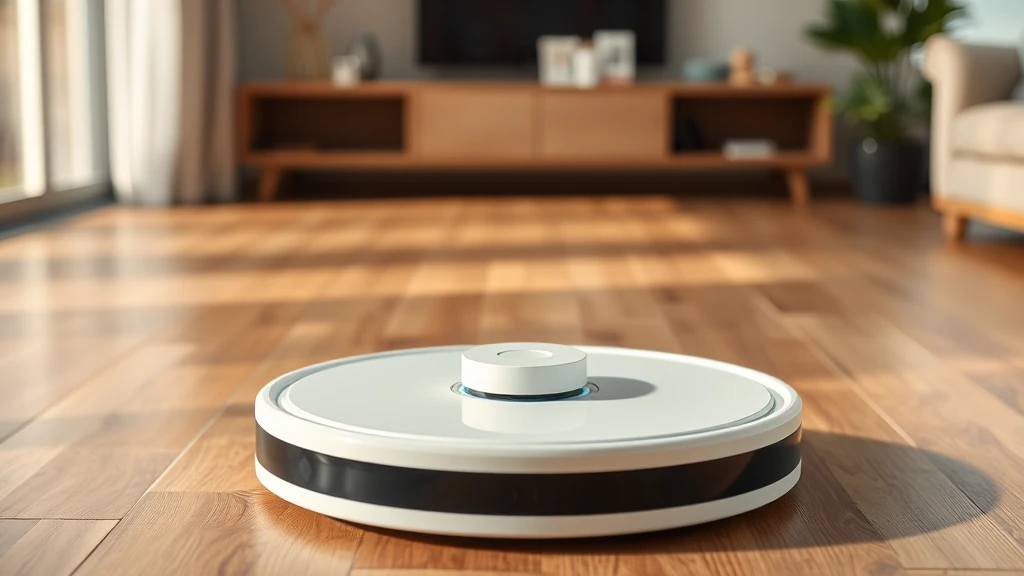
The defining characteristic of a small robot vacuum is its ability to slide beneath furniture that stops a standard robot vacuum cold. The benchmark height is 3 inches (76 mm) or less. Several models in this comparison achieve 2.85 to 2.99 inches, which clears most North American sofas (typical clearance: 4 to 5 inches) and platform beds (clearance as low as 3.5 inches). The Lefant M330 Pro is slightly taller at 95 mm (3.74 inches), which trades ultra-slim clearance for a more robust LiDAR sensor tower. Measure the lowest clearance point in your home before purchasing; a unit that gets stuck defeats its primary purpose.
Anti-drop sensors are equally important. All reviewed models include infrared drop-sensing technology that detects stair edges and elevated thresholds, preventing falls. Anti-collision infrared sensors complement this by reducing hard impacts against chair legs and wall baseboards, which protects both the unit and your furniture finish. For troubleshooting and reliability insights, consult our in-depth roborock qrevo s pro vs dreame l10s pro ultra heat report.
Suction Power in Pascals (Pa)
Suction power, measured in Pascals, is the single most important performance metric for a small robot vacuum. For hard floors and light dust, 1,500 to 2,200 Pa is sufficient. For low-pile carpets and pet hair, target 4,000 Pa or above. The ILIFE V5s Max delivers up to 4,000 Pa in Spot Mode, while the ILIFE A30s reaches 10,000 Pa in Spot Mode, making it the most powerful unit in this group. Budget models like the Fdit sweeper do not publish a Pa rating, which typically indicates they are best suited for light daily maintenance on smooth hard floors only. If your household includes cats or dogs, prioritize units with tangle-free suction ports or anti-tangle brush designs, such as the ILIFE V2 and Lefant M210 Pro, to avoid mid-cycle brush jams.
Navigation Technology and Cleaning Efficiency
Navigation type directly determines how thoroughly a small robot vacuum covers your floor. Three tiers exist in this price range. Random bounce navigation (used by entry-level models) covers space eventually but misses spots and re-cleans others. Gyroscope navigation (ILIFE V5s Max) improves path efficiency and reduces stuck incidents significantly. LiDAR navigation (ILIFE A30s, Lefant M330 Pro) uses laser scanning to build a real-time room map, enabling systematic row-by-row cleaning, no-go zones, virtual walls, and multi-floor map storage. For homes over 800 square feet or with complex layouts, LiDAR navigation is worth the price premium. You can explore how mapping performance compares across categories in our guide to robot vacuums with mapping technology.
Battery Runtime and Auto-Recharge
Runtime for small robot vacuum models in this comparison ranges from approximately 90 minutes to 150 minutes per charge. The ILIFE A30s and Lefant M330 Pro both achieve 150 minutes in quiet mode, covering roughly 1,500 to 2,000 square feet on a single charge. The eufy 11S MAX runs up to 100 minutes, which is adequate for apartments or single-floor homes under 1,000 square feet. Auto-recharge, where the unit docks itself when the battery drops below a threshold and then resumes cleaning, is available on most mid-range and premium models. Budget units like the Fdit sweeper use USB charging and do not feature auto-recharge or resume functionality. Readers comparing setup options can review our technical analysis on why is my robot vacuum not dispensing water.
App, Voice Control, and Smart Home Integration
App connectivity transforms a small robot vacuum from a scheduled appliance into a remotely managed cleaning system. ILIFE models use the ILIFE Clean App (2.4 GHz Wi-Fi only) for scheduling, suction adjustment, no-go zones, and cleaning history. Lefant models support dual-band Wi-Fi (2.4 GHz and 5 GHz) via the Lefant App, plus Apple Watch integration. Both ILIFE and Lefant support Amazon Alexa and Google Assistant voice commands. The eufy 11S MAX and its certified renewed variant (Amazon Renewed) are notable exceptions: they operate exclusively via remote control and physical buttons, with no Wi-Fi or app support. This is not a flaw for users who prefer simplicity, but it eliminates scheduling and remote start capabilities.
Dustbin Capacity and Filtration
Dustbin volume in a small robot vacuum is constrained by chassis size. The Lefant M330 Pro leads this group with a 450 ml visible dustbin, which reduces emptying frequency in high-debris households. The ILIFE V2 includes a 300 ml dustbin. Smaller models may require emptying after every one or two cleaning cycles. Multi-stage filtration, cited by the Fdit and Lefant M210 Pro, captures fine particulate matter and is relevant for allergy-sensitive households. HEPA-grade filtration is not universally specified across this price range, so verify filtration grade in the product listing if air quality is a priority. For complementary field maintenance guidelines, examine our breakdown of can robot vacuums cross high thresholds.
| Model | Height | Max Suction | Runtime | Navigation | App Control |
|---|---|---|---|---|---|
| ILIFE A30s | Not Specified | 10,000 Pa | 150 min | LiDAR | Yes (2.4 GHz) |
| ILIFE V5s Max | 2.99 in | 4,000 Pa | Not Specified | Gyroscope | Yes (2.4 GHz) |
| Lefant M330 Pro | 95 mm (3.74 in) | Not Specified | 150 min | dToF LiDAR | Yes (2.4/5 GHz) |
| eufy 11S MAX | 2.85 in | Not Specified | 100 min | Random/Infrared | No (Remote only) |
| ILIFE V2 | 2.99 in | Not Specified | 120 min | Random/Infrared | No (Remote only) |
| Lefant M210 Pro | 2.99 in | 2,200 Pa | 120 min | FreeMove 3.0 IR | Yes (2.4 GHz) |
| Fdit Sweeper | Not Specified | Not Specified | Not Specified | Random | No |
Sizing Factors for Slim Units
Slim and compact units are compared using manufacturer specifications and the product data in their Amazon listings. Height is the first trait to check when a body is small, so the table places it beside maximum suction, runtime, navigation and app control. Those columns help a reader see whether a low body comes with any loss in cleaning power or convenience.
Our Final Editorial Take on Slim Robot Vacuum
Best Overall Small Robot Vacuum: ILIFE A30s. The A30s earns the top position through a combination of 10,000 Pa maximum suction (the highest in this comparison), LiDAR-based room mapping with the SLAM algorithm, dual anti-tangle brush design, and 150-minute runtime with auto-recharge and resume. No-go zone configuration and room-specific cleaning via the ILIFE Clean App add practical daily utility. At its price point, it delivers capabilities typically found in significantly more expensive units. It is the most capable all-around small robot vacuum for homes with mixed flooring, pets, and complex layouts. For users interested in how this compares against other premium self-emptying systems, our robot vacuum with self-empty base review covers that next tier of automation.
Best Value Small Robot Vacuum: ILIFE V2. The V2 hits a practical balance between price and function. Its 2.99-inch slim profile, tangle-free suction port, 120-minute runtime, auto-recharge, and multiple cleaning modes (auto, spot, edge) cover the needs of most single-floor apartments or smaller homes. It operates via remote control without app connectivity, which keeps the setup process simple. The 300 ml dustbin is adequate for regular maintenance cycles. For households without pets or heavy debris loads, the V2 delivers dependable daily cleaning at a budget-friendly price within the entry-level to premium spectrum.
Best Small Robot Vacuum for Pet Owners: Lefant M210 Pro. The M210 Pro’s large-opening suction port design, which removes the roller brush entirely, is specifically engineered to prevent hair tangles, a persistent failure point in robot vacuums used in pet households. Its 11-inch diameter and 2.99-inch height navigate tight spaces effectively, while FreeMove 3.0 omnidirectional infrared sensing reduces stuck incidents. Six cleaning modes, Alexa and Google Assistant compatibility, and a quieter operating profile make it a practical daily driver for cat and dog owners. For broader pet-hair-focused comparisons across robot vacuum categories, see our dedicated analysis of robotic vacuums for pet hair.
What height qualifies as a small robot vacuum?
A small robot vacuum is generally defined as any robotic vacuum cleaner with a chassis height of 3 inches (76 mm) or less, enabling it to pass beneath low-clearance furniture. Models in this comparison range from 2.85 inches (eufy 11S MAX) to 95 mm (Lefant M330 Pro), with most ILIFE units at 2.99 inches. Measure your furniture clearance before purchasing to confirm compatibility.
Is a small robot vacuum effective on carpet?
A small robot vacuum can clean low-pile and medium-pile carpet effectively when suction power reaches 2,000 Pa or above. The ILIFE A30s at 10,000 Pa and the ILIFE V5s Max at 4,000 Pa both include automatic carpet boost modes that increase suction when transitioning from hard floors. Ultra-budget models without a published Pa rating are better suited to hard floor maintenance only.
How long does a small robot vacuum battery last?
Battery runtime for small robot vacuum models in 2026 typically ranges from 90 to 150 minutes per charge depending on suction mode and floor type. Higher suction modes drain the battery faster; quiet or gentle modes extend runtime to the published maximum. Most mid-range and premium units automatically dock and recharge when battery drops below a set threshold, then resume cleaning from where they stopped.
Do small robot vacuums work without a smartphone app?
Yes, several small robot vacuum models operate entirely without a smartphone app. The eufy 11S MAX and ILIFE V2 are controlled via included remote controls and physical device buttons, with no Wi-Fi or app requirement. This makes setup straightforward and removes dependency on router compatibility. App-enabled models like the ILIFE A30s and Lefant M330 Pro offer additional scheduling, no-go zones, and cleaning history features that app-free models cannot replicate. For a comparison of app-connected models specifically, our Xiaomi robot vacuum review covers a strong app-integrated alternative.
How do I maintain a small robot vacuum to extend its lifespan?
Routine maintenance for a small robot vacuum involves three tasks: empty the dustbin after every one to two cleaning cycles to maintain suction efficiency, clean or replace the filter every two to four weeks depending on debris volume, and inspect the brush or suction port weekly for hair and thread accumulation. Tangle-free suction port designs (ILIFE V2, Lefant M210 Pro) reduce brush maintenance frequency. Wipe the charging contacts and infrared sensors monthly with a dry cloth to prevent docking and navigation errors.
Safety Notes for Compact Robot Vacuums
Compact robot vacuums slide under furniture, yet the charging dock and battery still need sensible care. Readers who want a general electrical reference for home devices can open International Electrotechnical Commission (IEC) first. Compare product details separately once the basics are clear.