

Quick Answer: Choosing the Best Spray Starter Fluid Lawn Mower
To start a stubborn lawn mower, spray starter fluid into the air intake or carburetor throat. Remove the air filter cover and filter to access the opening, then spray a short burst (1-2 seconds) directly into the intake while the engine is off. For pull-start mowers, pull the cord immediately after spraying.

Pros
- CRC part number 05671 is listed in the product name
- Product name states a lubricity feature
- 11-ounce aerosol can per the listing
- Listed color is clear liquid
Cons
- No customer reviews to verify lubricity or starting claims
Pros
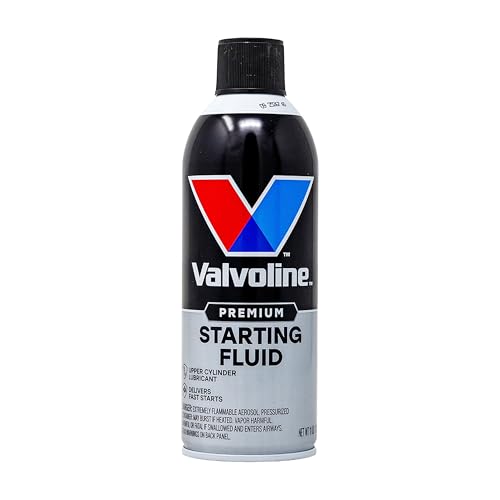
- 11 fl oz spray can, per listing
- Listed as suitable for cold starts and multiple equipment types
- Includes upper cylinder lubricant, per listing
- Weight listed as 0.86 pounds
Cons
- Lubrication and cleaning benefits are manufacturer-stated claims
- No usage or safety instructions are included in the listing data

Pros
- Listed for gasoline engines
- Manufacturer says it lubricates upper cylinders
- Manufacturer says it inhibits corrosion
- 11-ounce can, single pack
Cons
- Gasoline engines only, not diesel
- No customer reviews listed yet
Locating the Air Intake
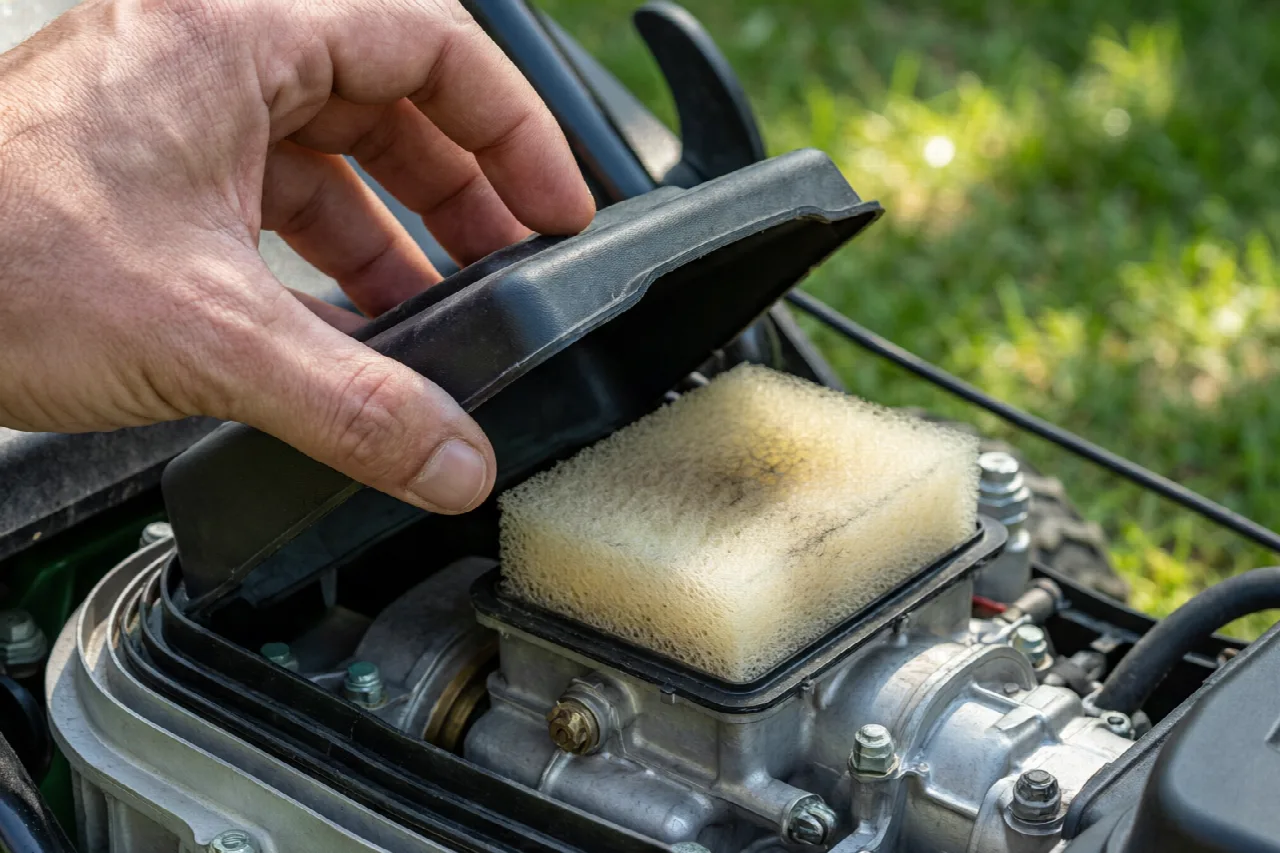
The air intake is the entry point where your mower draws in air for combustion, and it is the correct place to spray starter fluid. On most walk-behind and push mowers, the air intake sits on the side of the engine, usually beneath a plastic or metal cover that protects the air filter. This assembly is typically positioned near the carburetor and is easy to spot because it has a visible filter element inside.
To access the carburetor intake, you generally need to remove the air filter cover first. On many mowers, this cover is held in place by a single wing nut, a clip, or a small screw. Loosen the fastener, lift the cover off, and you will see the air filter, often a foam or paper element. Remove the filter carefully to reveal the throat of the carburetor, which is the opening where fuel and air mix before entering the engine. This opening is your target for spraying starter fluid.
On some engines, particularly those with a primer bulb or a choke, the intake may be positioned slightly differently. If you cannot locate the air intake easily, consult your mower’s owner’s manual for a diagram of the engine components. The manual will show you exactly where the air filter housing and carburetor are located on your specific model.
It is worth noting that the air intake is not the same as the fuel tank or the oil fill port. Spraying starter fluid into either of those areas can cause serious damage. Always confirm you are working with the air intake before proceeding.
Preparation and Safety Steps
Before you spray starter fluid, take a few moments to prepare both the mower and yourself. Safety is important because starter fluid is highly flammable and can be dangerous if mishandled.
First, make sure the mower is on a flat, level surface and that the engine is off and cool. Never spray starter fluid onto a hot engine, as the fluid can ignite instantly. If you have just run the mower, wait for the engine to cool down completely before attempting this task.
Work in a well-ventilated area, preferably outdoors. Starter fluid produces fumes that can be irritating if inhaled in large amounts. Avoid spraying near open flames, sparks, or pilot lights, and keep the fluid away from children and pets.
Regarding the air filter, yes, you should remove it before spraying. The filter is designed to trap dirt and debris, and it will also absorb starter fluid. If you spray through the filter, the fluid may not reach the carburetor effectively, and you risk saturating the filter with a flammable liquid. Remove the filter and set it aside in a clean, dry place while you work. Before finalizing equipment decisions, refer to our comprehensive marshall stanmore iii vs harman kardon onyx studio 8 comparison.
Wear safety glasses to protect your eyes from any fluid that might splash back, and consider wearing gloves to keep the fluid off your skin. Starter fluid can be drying to the skin, and prolonged exposure is not recommended.
Application Technique
Applying starter fluid correctly is the key to getting your mower running without causing damage. The technique is straightforward, but timing and quantity matter. For broader ecosystem context, read through our operational guide on dyson v8 cyclone vs bissell featherweight stick.
How much starter fluid should you spray? A short burst of one to two seconds is usually sufficient. You want to coat the inside of the carburetor throat lightly, not flood it. Over-spraying can cause the engine to flood, which makes starting more difficult and can damage internal components. If the mower does not start on the first attempt, wait a few seconds and try again with another short burst rather than spraying a large amount at once.
When should you pull the starter cord relative to spraying? For a pull-start mower, spray the fluid directly into the carburetor throat and then pull the cord immediately. The fluid evaporates quickly, so you want to attempt the start while it is still present in the intake. For an electric-start mower, turn the key or press the start button right after spraying. For troubleshooting and reliability insights, consult our in-depth bissell crosswave hydrosteam vs shark stainforce report.
Should the engine be running or off? The engine should be off when you spray. Starter fluid is meant to help the engine start from a cold or stalled condition, not to be introduced into a running engine. Spraying into a running engine can cause a sudden surge in RPM and potentially damage the engine or the starter mechanism.
After spraying, replace the air filter and cover before attempting to start the mower. Running the engine without the air filter allows dirt and debris to enter the carburetor, which can cause wear over time. Reinstall the filter, secure the cover, and then pull the cord.
Engine Type Considerations
The basic process of spraying starter fluid into the air intake applies to most small engines, but there are some differences worth noting between engine types and mower styles.
Does the process differ for 2-stroke versus 4-stroke engines? The location of the air intake is similar on both types, and you spray into the carburetor throat in the same way. However, 2-stroke engines run on a mixture of gasoline and oil, and they tend to be more sensitive to flooding. Use a shorter burst, around one second, and be conservative with the amount of fluid. Four-stroke engines, which are more common on modern lawn mowers, can typically handle a slightly longer burst of one to two seconds.
Are there differences between push mowers and riding mowers? The principle is the same, but the access can differ. On a push mower, the air filter housing is usually easy to reach on the side of the engine. On a riding mower, the engine is often larger and may be enclosed, so you might need to open a hood or panel to reach the air intake. The carburetor throat is still your target, but give yourself more time to access it and be careful not to disturb other engine components.
Some newer mowers have fuel-injected engines rather than carburetors. On these models, there is no carburetor throat to spray into, and using starter fluid is generally not recommended. If your mower has fuel injection, refer to the owner’s manual for starting procedures and avoid using starter fluid altogether.
Troubleshooting If the Mower Won’t Start
If your mower still will not start after using starter fluid, the problem may be more serious than a simple hard start. Starter fluid is a diagnostic tool as much as a starting aid, and its results can point you toward the underlying issue.
What if the mower still won’t start after using starter fluid? If the engine fires briefly and then dies, the problem is likely a fuel delivery issue, the engine is getting the starter fluid but not enough gasoline. Check the fuel tank to ensure it has fresh fuel, and inspect the fuel lines and filter for clogs or cracks. Old or stale fuel is a common cause of hard starting, and draining the tank and refilling it with fresh gasoline often resolves the issue.
If the engine does not fire at all even with starter fluid, the problem may be ignition-related. Check the spark plug for wear or fouling, and verify that the spark plug wire is securely connected. A dirty or worn spark plug can prevent the engine from igniting the fuel-air mixture. Cleaning or replacing the spark plug is a simple fix that resolves many starting problems.
Another possibility is a clogged carburetor. If the mower has sat for a long period, the carburetor jets can become blocked by dried fuel residue. In this case, the starter fluid may not reach the combustion chamber because the carburetor is obstructed. Cleaning the carburetor or using a fuel system cleaner may be necessary.
When should you seek professional service? If you have checked the fuel, spark plug, and air filter and the mower still will not start, it is time to consult a professional. A qualified small-engine technician can diagnose issues that are not easily addressed at home, such as valve problems, compression loss, or internal engine damage. Attempting major repairs without experience can cause further damage, so professional service is the safer choice when basic troubleshooting fails.
Remember that starter fluid is a temporary aid, not a long-term solution. If you find yourself relying on it regularly, address the underlying cause of the hard starting. Regular maintenance, fresh fuel, a clean air filter, and a properly gapped spark plug, will keep your mower starting reliably without the need for starter fluid.
Technical Standards and Compliance
Mechanical safety standards, operational tolerances, and protective gear guidelines align with benchmark specifications established by the American National Standards Institute (ANSI).









