Quick Answer: What Does a Tiller Do?
A garden tiller (rototiller) breaks hard, compacted ground and turns virgin soil up to 8 to 10 inches deep. Powered by heavy steel tines, tillers perform primary tillage to prepare new planting beds, aerate dense clay, and incorporate thick organic matter before initial spring planting.

Pros
- Manufacturer-stated 15 Amp corded power
- 18-inch size listed in the title
- Six steel tines per the listing
- Adjustable wheels included in the listing
Cons
- Corded design limits range to nearby outlets
- Power and tilling claims are unverified

Pros
- 13.5 Amp corded electric power stated
- 16-inch size listed in the title
- Steel tines per the listing
- Model SUJ-TJ604E identified
Cons
- Corded design limits range to nearby outlets
- Power and performance claims are unverified
Pros
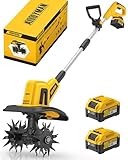
- Two 4.0Ah batteries and charger listed
- 360 RPM speed per the manufacturer
- 9-inch tilling width stated
- 6.6-inch tilling depth stated
Cons
- RPM, width and depth figures are unverified claims

Pros
- Foldable handle listed for portable storage
- 10 Amp corded electric power per the listing
- Four steel tines and adjustable wheels listed
Cons
- Corded design requires nearby outlet access
- Power and tilling claims are unverified
Soil preparation with a tiller is important for several key reasons:
- Aeration: Compacted soil lacks the air pockets necessary for root respiration and microbial activity. Tilling introduces air into the soil.
- Drainage Improvement: Breaking up dense soil allows water to infiltrate more evenly, reducing runoff and waterlogging.
- Weed Control: Tilling can uproot and disrupt the growth cycles of existing weeds before planting.
- Incorporation of Amendments: It allows you to thoroughly mix compost, fertilizer, lime, or other soil conditioners into the planting area.
- Seedbed Creation: It creates a fine, loose tilth ideal for seed germination and transplant establishment.
How Does a Tiller Work on Soil?
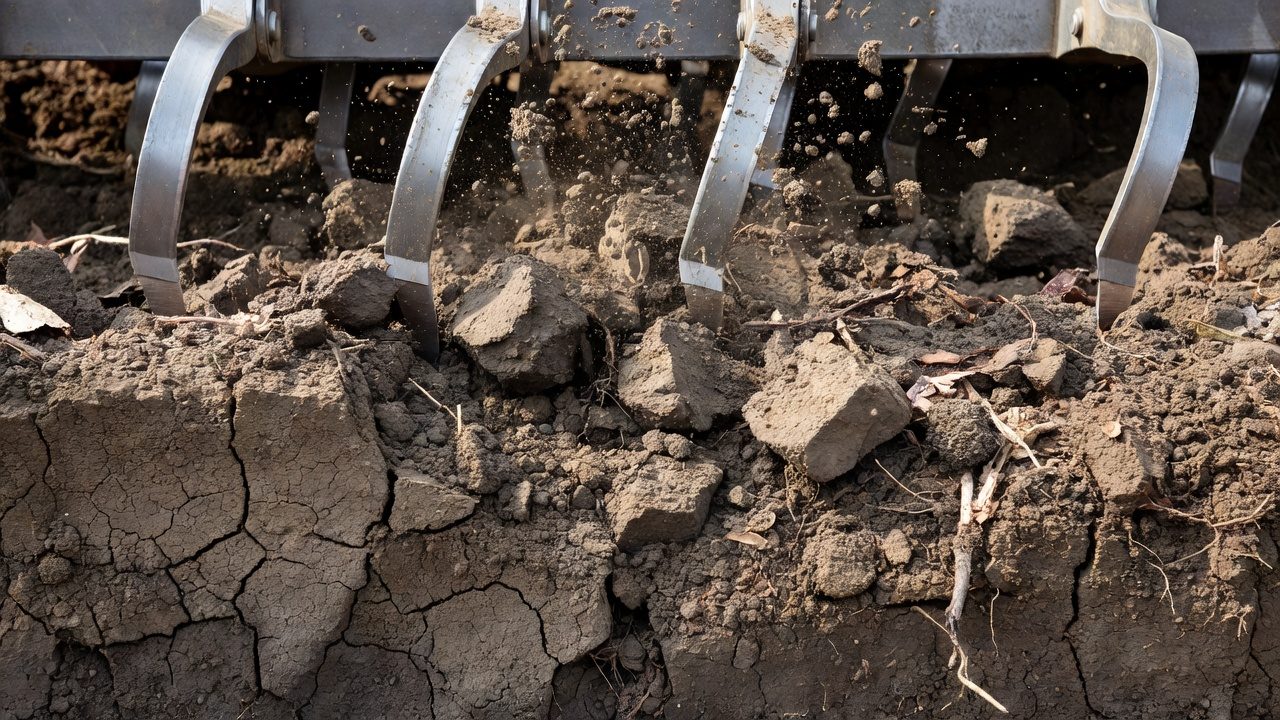
The basic mechanism of a tiller involves a set of rotating metal tines or blades attached to a power source (manual, electric, or gas engine). As the tines spin, they dig into the soil, lifting, turning, and crumbling it. The process typically follows these steps:
- Assessment: The user evaluates soil conditions. Ideal tilling occurs when soil is moist but not wet, often described as the “crumble test,” where a handful of soil holds its shape briefly then breaks apart easily.
- Operation: The tiller is started and guided across the planting area. The operator controls the depth and speed, allowing the tines to penetrate the soil to the desired level (often 6-8 inches for new beds).
- Cultivation: The rotating action breaks up clods, turns the soil, and mixes layers. For established gardens, a shallower pass may be used to incorporate surface amendments or control weeds.
- Finishing: After the initial pass, the soil may be raked smooth to create a level seedbed ready for planting.
What Are the Different Types of Tillers?
The term “tiller” can refer to various equipment types, categorized primarily by scale and power source. Understanding the differences helps in choosing the right tool for your needs.
Manual Tillers (Hand Tillers/Cultivators)
These are small, handheld tools with curved tines or claws operated by pushing and pulling. They are best for small gardens, raised beds, or working in tight spaces. They offer excellent control and are quiet but require significant physical effort.
Electric Tillers
Powered by a corded or cordless electric motor, these are lightweight and ideal for small to medium-sized gardens. Cordless models offer greater mobility but have limited runtime. They produce no emissions and are quieter than gas models but may struggle with very hard or rocky soil.
Gas-Powered Tillers
These are more powerful and come in two main designs:
- Front-Tine Tillers: The tines are located in front of the engine. They are more maneuverable and suitable for lighter soil and maintaining existing beds.
- Rear-Tine Tillers: The tines are behind the engine, and the wheels are driven separately. They are heavier, more powerful, and designed for breaking new ground, large areas, or compacted soil. They are easier to control as the wheels propel the machine.
What Are Key Considerations When Using a Tiller?
Effective and appropriate use of a tiller requires attention to soil conditions and an understanding of its limitations.
Ideal Soil Conditions: Tilling is most effective when soil moisture is optimal. Soil that is too wet will form hard clods when it dries, damaging soil structure. Soil that is too dry is difficult to penetrate and creates excessive dust. The “squeeze test” is a reliable guide. For additional operational safety benchmarks, see our published testing notes on marshall stanmore iii vs harman kardon onyx studio 8.
Potential Downsides and Limitations:
- Soil Structure Disruption: Frequent, deep tilling can break down soil aggregates and harm beneficial soil organisms over time. Many experts recommend minimal tillage once a bed is established.
- Weed Seed Bank: Tilling can bring dormant weed seeds to the surface, where they can germinate.
- Depth and Power: Not all tillers can penetrate hardpan or rocky soil. A rear-tine tiller may be necessary for challenging ground.
- Safety: Tiller tines are sharp and powerful. Proper protective gear (boots, gloves, eye protection) and careful operation are essential.
Buyer FAQs: What Does A Tiller Do Solved
What is the difference between a tiller and a cultivator?
While the terms are often used interchangeably, there is a technical distinction. A tiller (especially a rear-tine model) is designed for breaking new ground and deep soil preparation. A cultivator is typically a smaller, lighter machine (often front-tine) used for shallower work in established gardens, such as mixing in fertilizer or controlling weeds between rows. Many modern machines blur this line. To compare alternative configurations, check our hands-on review of dyson v8 cyclone vs bissell featherweight stick.
How often should I till my garden?
For a new garden bed, tilling is essential to prepare the initial seedbed. For established beds, the frequency depends on your soil type and gardening method. Many experts recommend tilling only when necessary, for example, when incorporating large amounts of compost or when soil has become severely compacted. Over-tilling can degrade soil health. Alternatives like no-till gardening, mulching, and using broadforks are popular for maintaining soil structure.
Can I use a tiller to remove grass or sod?
Yes, a powerful tiller (typically a gas-powered rear-tine model) can be used to break up and remove sod when establishing a new garden area. The process involves making several passes to thoroughly pulverize the grass and roots. However, this is a labor-intensive task, and using a sod cutter may be more efficient for large areas. The tilled grass material can then be composted or removed. Users looking for related component recommendations can explore our bissell crosswave hydrosteam vs shark stainforce breakdown.
What safety precautions should I take when operating a tiller?
Always wear sturdy closed-toe shoes, long pants, and eye protection. Keep hands and feet clear of the rotating tines at all times. Start the tiller on a flat surface and ensure the area is clear of rocks, debris, and hidden obstacles. Read and follow the manufacturer’s manual for specific operation and maintenance instructions. Never leave a running tiller unattended.
Related Maintenance and Operating Guides
To keep your equipment running at peak operating efficiency, explore our related technical walkthroughs and maintenance tutorials:
- Consult our detailed breakdown on how to refill a string trimmer.
- Consult our detailed breakdown on how to remove a STIHL trimmer head.
- Consult our detailed breakdown on what size file for a 3/8 chain.
- Consult our detailed breakdown on leaf blower CFM meaning.
- Consult our detailed breakdown on what a Sawzall is used for.
Technical Standards and Safety Guidelines
For general background on voluntary safety standards, see the American National Standards Institute (ANSI).