

Quick Answer: What Does Lawn Mower Carburetor Look Like?
A lawn mower carburetor is a small metal device, typically 2 to 4 inches long, located between the air filter and the engine intake. It has a distinct appearance with an aluminum or zinc body, a round air intake opening, fuel line connections, and a visible bowl-shaped reservoir underneath. You will typically find it mounted on the side or top…

Pros
- Large-size design named in product title
- Sharpening and balancing functions listed
- Listed as a new upgraded version

Pros
- Adjustable 15-to-45-degree range in title
- Sharpening and balancing functions listed
Pros
- Includes replacement gaskets and a 98079-55846 spark plug
- Matches Honda HRR216 and HRS216 lawn mower models
- Designed around the 16100-Z8B-901 carburetor specification
Cons
- Restricted to select Honda GCV160 mower applications
- Installation requires basic mechanical tools and skills
Carburetor Location on a Lawn Mower Engine
Finding the carburetor is the first step in understanding what it looks like. On most push mowers, the carburetor sits on the side of the engine, tucked between the air filter housing and the cylinder. You can usually see it without removing any major components, though the air filter cover may partially block your view. On riding mowers, the carburetor is often positioned on the top or side of the engine, sometimes beneath a plastic shroud or engine cover.
To get a clear look, remove the air filter cover and the foam or paper filter element. This exposes the carburetor’s intake opening and gives you a direct view of the body. On some engines, you may also need to remove a plastic blower housing or engine shroud to see the carburetor fully. Always disconnect the spark plug wire before working near the engine to prevent accidental starting.
Location differs slightly between engine brands. On Briggs & Stratton engines, the carburetor is typically mounted horizontally on the side of the block. On Honda and Kohler engines, it may sit at a slight angle or be positioned more vertically. Regardless of the brand, the carburetor is always located between the air intake and the intake manifold, which connects it to the cylinder.
Physical Appearance and Key Components
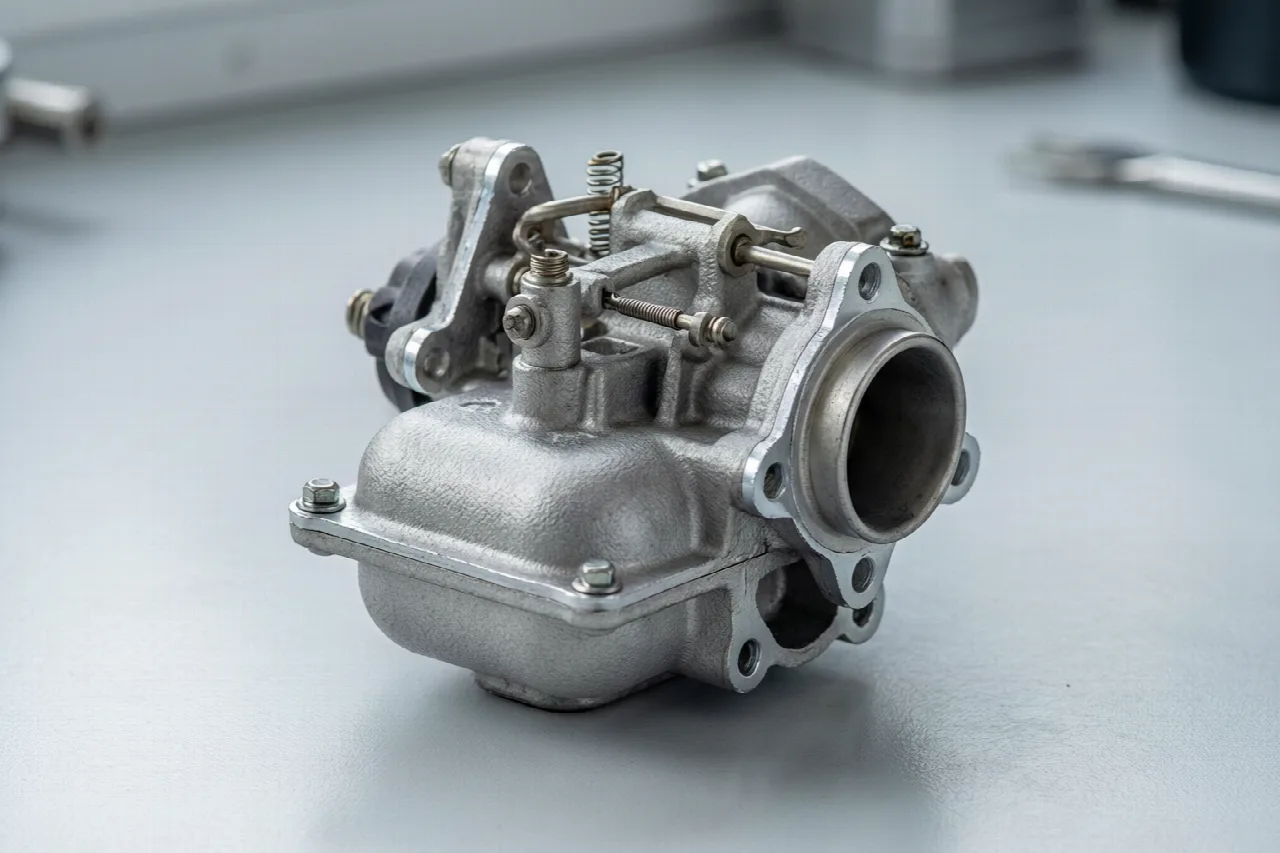
The carburetor body is usually made of cast aluminum or zinc, giving it a silver, gray, or sometimes slightly darker metallic finish. It is a compact, blocky component with several distinct features that make it recognizable. The most obvious is the round or oval air intake opening, which faces the air filter and draws in air for the engine.
Below the main body, you will typically see a bowl-shaped reservoir called the float bowl. This small metal cup holds fuel before it is mixed with air and delivered to the engine. The float bowl is often secured by a single screw or bolt at its center. On many carburetors, this bowl is visible from the side, and its presence is one of the clearest signs you are looking at a carburetor rather than another engine component.
Several other visible parts help with identification. Fuel line connections, usually small brass or plastic fittings, attach to the side of the carburetor. A throttle linkage, typically a spring-loaded metal rod or cable, connects to a lever on the carburetor body. A choke plate or choke lever may be visible near the intake opening. You will also see small adjustment screws, often with slotted or Phillips heads, protruding from the body. These screws control the idle speed and fuel mixture. Gasket surfaces, where the carburetor meets the engine or air filter housing, appear as flat machined areas on the body.
What the Air Intake and Fuel Bowl Look Like
The air intake is a circular or slightly oval opening, usually about 1 to 2 inches in diameter, on the side of the carburetor facing the air filter. Inside this opening, you may see a metal plate or butterfly valve, which is the choke plate. When the choke is closed, this plate covers the opening to restrict airflow and help the engine start cold.
The float bowl is a small cylindrical or slightly tapered cup, typically 1 to 2 inches in diameter and about half an inch deep. It is made of the same metal as the carburetor body and sits directly beneath the main body. On some carburetors, the bowl is held in place by a single screw in the center; on others, it may be secured by a retaining ring or clip.
Which Visible Parts Indicate It’s a Carburetor?
If you are unsure whether a component is a carburetor, look for the combination of features. A metal body with a round intake opening, a fuel line attached to it, and a small bowl underneath is almost certainly a carburetor. The presence of adjustment screws and a throttle linkage further confirms it. An air filter housing, by contrast, is usually a larger plastic or metal box with a removable cover. The intake manifold is a short metal or plastic tube that connects the carburetor to the engine, and it does not have a fuel bowl or adjustment screws. For complementary field maintenance guidelines, examine our breakdown of marshall stanmore iii vs harman kardon onyx studio 8.
Common Carburetor Types and Variations
Lawn mower carburetors come in two main types: float bowl carburetors and diaphragm carburetors. Their appearance differs in ways that are easy to spot once you know what to look for.
Float bowl carburetors are the most common on larger push mowers and riding mowers. They have a visible metal bowl underneath the main body, as described above. This bowl houses a float and a needle valve that regulate fuel flow. These carburetors are usually larger and heavier, with more visible metal components. To evaluate matched hardware tolerances, consult our detailed overview of dyson v8 cyclone vs bissell featherweight stick.
Diaphragm carburetors are often found on smaller or handheld equipment, but they also appear on some lightweight push mowers. They do not have a visible float bowl. Instead, they use a flat diaphragm inside the body to regulate fuel flow. These carburetors are typically smaller, flatter, and more compact, with a rectangular or square shape. They may have a small primer bulb attached to the side, which is a rubber dome you press to prime the engine before starting.
Brand Differences in Appearance
Different engine manufacturers design their carburetors with slightly different visual characteristics. Briggs & Stratton carburetors are often recognizable by their blocky, square-shaped bodies and the prominent float bowl underneath. They frequently use a plastic or metal primer bulb mounted directly on the carburetor body. Honda carburetors tend to be more compact and neatly designed, with a smooth aluminum body and a smaller float bowl. Kohler carburetors are often larger, especially on riding mowers, and may have a more complex arrangement of linkages and fuel lines. When planning workspace deployment, consider the engineering criteria outlined in our bissell crosswave hydrosteam vs shark stainforce guide.
Older mowers may have carburetors that look different from newer models. Vintage carburetors from the 1970s and 1980s are often larger, with more exposed metal parts and simpler designs. Newer carburetors are frequently more compact, with integrated plastic components and fewer visible adjustment screws, partly due to emissions regulations that limit user adjustment.
Identifying Worn or Dirty Carburetors
Knowing what a carburetor looks like also helps you spot signs of wear or contamination. A clean, healthy carburetor has a relatively bright metal surface with no obvious buildup. A carburetor that needs attention often shows clear visual clues.
One common sign is a varnished or gummed-up appearance. Old fuel leaves a sticky, brownish or amber residue on the carburetor body, especially around the float bowl and fuel line connections. This varnish can also appear as a dark coating inside the air intake opening. If you see this residue, the carburetor likely needs cleaning.
Corrosion is another indicator. White or greenish powdery deposits on the aluminum body suggest oxidation, which can occur from moisture exposure. Rust-colored deposits may indicate that water has gotten into the fuel system. Corrosion around the fuel fittings or the float bowl gasket area can lead to leaks.
Fuel leaks are often visible as wet spots, staining, or a strong fuel odor around the carburetor. Check the area where the float bowl meets the main body, as the gasket can fail over time. Cracks in the carburetor body, though less common, are a serious problem. Look for hairline fractures, especially around mounting points and the fuel inlet.
Damage to the adjustment screws can also signal trouble. Stripped or damaged screw heads suggest that someone has attempted adjustments with the wrong tools. A missing or broken throttle linkage or choke plate can prevent the carburetor from functioning correctly. If the carburetor body is heavily corroded, cracked, or warped, replacement is often more practical than repair.
It is worth noting that a dirty carburetor is not always visible from the outside. Internal passages can become clogged with varnish even when the exterior looks clean. If the engine runs poorly but the carburetor appears normal, internal cleaning may still be necessary.
Related Maintenance and Operating Guides
To keep your equipment running at peak operating efficiency, explore our related technical walkthroughs and maintenance tutorials:
- Consult our detailed breakdown on durable ride-on lawn tractor guide.
Technical Standards and Compliance
Mechanical safety standards, operational tolerances, and protective gear guidelines align with benchmark specifications established by the American National Standards Institute (ANSI).









