Quick Answer: What Is Cfm In Leaf Blower
CFM stands for Cubic Feet per Minute, measuring the volume of air a blower moves. It dictates clearing capacity: 200-400 CFM handles small yards, 400-700 CFM suits average residential properties, and 700+ CFM is required for commercial or heavy wet debris. CFM determines how many leaves you move per pass.
Pros
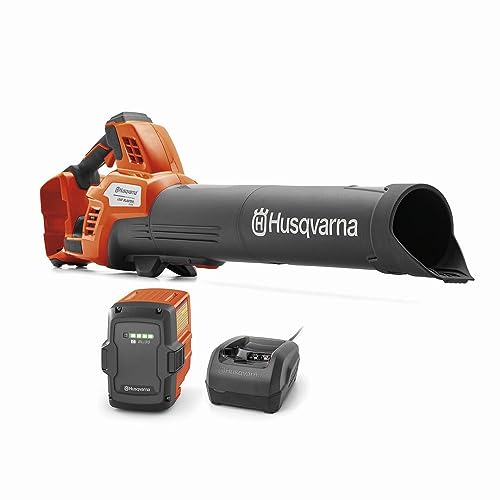
- Produces up to a rated 765 CFM of blowing power
- Variable-speed trigger offers customizable air delivery
- Includes a 56V 5.0Ah battery and matching charger
Cons
- High-output operation can significantly reduce runtime per charge
- 5.0Ah battery adds noticeable weight for single-handed work
Pros
- M18 FUEL system utilizes dual battery power for high output
- Cordless design offers unrestricted portability across large areas
- Integrates with the Milwaukee M18 tool ecosystem
Cons
- Tool only; requires two M18 batteries and a charger sold separately
- Dual batteries increase overall handheld carrying weight
Pros
- Offers up to a manufacturer-rated 700 CFM air volume
- Brushless motor ensures efficient power delivery
- Includes a 4.0Ah battery and rapid charger
Cons
- The 60V battery pack adds weight during extended handheld use
Understanding the Physics of Air Volume in Outdoor Power Equipment
When evaluating outdoor power equipment, specifically cordless leaf blowers, two metrics dominate the specification sheets: CFM (Cubic Feet per Minute) and MPH (Miles Per Hour). While MPH measures the velocity of the air exiting the nozzle, CFM measures the total volume of air displaced within a sixty-second interval.
In fluid dynamics terms, CFM represents the mass flow rate required to overcome the static friction of debris against turf or pavement. A high-velocity stream (high MPH) with low volume (low CFM) may dislodge a single wet leaf but lacks the “push” to move a pile. Conversely, high CFM creates a broad wall of air that transports large volumes of material efficiently.
The CFM vs. MPH Diagnostic Matrix
To determine the correct tool for your application, you must analyze the relationship between air volume and velocity. Think of CFM as the number of punches thrown in a minute, and MPH as the force of each individual punch.
CFM Sizing Guide: Matching Air Volume to Yard Conditions
Selecting the wrong CFM rating results in inefficient clearing and operator fatigue. Below is a diagnostic breakdown of air volume requirements based on debris type and surface area.
Residential and Light Duty (150 – 400 CFM)
This range is suitable for hard surfaces (concrete, asphalt) and dry, light debris like pine needles or grass clippings. Handheld units in this class are lightweight but will struggle with wet leaves or deep piles on grass.
Standard Residential (400 – 700 CFM)
This is the “sweet spot” for most suburban homeowners. A unit rated at 500+ CFM can move wet leaves across a lawn effectively. If your property has mature deciduous trees, you require a minimum of 500 CFM to maintain efficiency.
Commercial and Heavy Duty (700 – 1,200+ CFM)
Commercial landscapers and properties with extensive acreage require backpack blowers in this range. These units utilize axial fans to displace massive air volumes, essential for clearing wet, heavy debris or gravel from turf without direct contact.
Technical Breakdown: How CFM is Measured and Rated
Manufacturers measure CFM using anemometers at the nozzle exit. However, it is critical to understand the difference between “free air CFM” and “restricted CFM.”
Nozzle Diameter and Air Velocity
A blower’s CFM rating is directly tied to its nozzle diameter. A wider nozzle allows for greater air volume at lower velocities, while a narrow nozzle increases velocity but restricts volume. When troubleshooting a blower that seems “weak,” check for nozzle obstructions or aftermarket attachments that restrict airflow, effectively lowering the CFM.
Practical Applications and Maintenance Intervals
Understanding CFM is only half the battle; maintaining the airflow path is essential for performance longevity. For comprehensive care of your outdoor fleet, refer to our guide on chainsaw and outdoor tool maintenance.
Diagnostic Steps for Reduced Airflow
If your blower is rated for 600 CFM but fails to move debris, perform the following checks:
- Intake Inspection: Remove the air filter cover. A clogged filter restricts the air intake, starving the impeller and reducing output volume by up to 30%.
- Impeller Clearance: For centrifugal blowers, check the fan housing for debris buildup. Even small obstructions disrupt the laminar flow required for high CFM.
- Nozzle Integrity: Ensure the nozzle is free of cracks. Air escaping from the side of the tube reduces the pressure at the exit point.
Choosing Between Gas and Electric for Maximum CFM
Power source dictates the potential CFM ceiling. Gas engines generally offer higher sustained CFM for heavy loads, while electric motors provide instant torque but may taper off under heavy resistance. For a detailed analysis of power delivery, see our gas or electric leaf blower comparison.
Backpack vs. Handheld Form Factors
Handheld units are limited by the user’s wrist strength and motor size, typically capping out around 700 CFM. Backpack units utilize larger impellers and harness systems to support motors capable of 1,000+ CFM. Review the ergonomic trade-offs in our backpack vs handheld blowers guide.
For practical maintenance advice and setup requirements, check our guide on are gas leaf blowers illegal in california.
Safety and Compliance
High-CFM blowers generate significant noise levels and particulate displacement. Operators must adhere to local noise ordinances and utilize appropriate hearing protection. For workplace standards, consult OSHA equipment safety regulations.