

Direct Answer: What Makes a Riding Lawn Mower Good?
A good riding lawn mower delivers reliable cutting performance matched to your specific yard conditions, offers adequate deck width (42 to 60 inches for most residential properties), maintains proper cutting height control, and balances fuel efficiency with durability. The best choice depends on yard size, terrain type, and how frequently you mow, zero-turn mowers excel on large, flat lawns; garden tractors handle varied or hilly terrain; compact models work for smaller properties or tight spaces.

Pros
- Commercial-grade electric performance with instant torque and no gas engine maintenance.
- Large included battery package and fast charger improve runtime and turnaround time.
- Heavy-duty 54-inch fabricated deck is built for durability and wider coverage per pass.
- Comfort-focused operator features are better than many basic riding mowers in this class.
- Backed by a 4-year limited warranty for added purchase confidence.
Cons
- At 848.78 pounds, it is very heavy and will be difficult to move manually or transport without proper equipment.
- The large footprint, with dimensions of 76.77 x 73.23 x 56.3 inches, requires substantial storage space.
- The premium feature set and battery system may be more than many small-yard owners need.
Overview & Design: The Greenworks 80V 54" MaximusZ Zero Turn Riding Lawn Mower is a commercial-style electric mower built for large residential properties. Its 54-inch 10-gauge fabricated steel deck, zero-turn layout, and premium operator seat give it a serious, heavy-duty feel right away.
Performance & Key Features: This model is positioned as a 41HP gas-equivalent machine with instant torque, a constant 17,900 FPM blade speed, and SmartCut technology that adapts to changing grass conditions. The included battery kit with (2) 16.0Ah and (4) 6.0Ah batteries is designed to support up to 4+ acres per charge, while the 1.5kW fast charger helps reduce downtime.
Drawbacks & Considerations: The mower is extremely heavy at 848.78 pounds, so it is not easy to move or store in tight spaces. It is also a major investment and may be excessive for smaller yards or users who do not need the runtime and power of a large battery-electric zero-turn.
Verdict: This is a strong fit for homeowners with large lawns who want powerful, low-maintenance mowing performance and premium comfort features. Buyers who need a wide cutting deck, long runtime, and electric operation will likely get the most value from it.

Pros
- Gas-equivalent power from electric Peak Power system with no emissions or fuel needs
- Long runtime covering up to 3 acres per charge with included high-capacity batteries
- Highly maneuverable 52-inch zero-turn deck with customizable blade speeds from 2300 to 3200 RPM
- User-friendly digital interface and app integration for real-time customization and monitoring
- Strong warranty coverage up to 5 years on mower and batteries with registration
Cons
- Runtime limited to approximately 3 acres per full charge, requiring recharges for larger properties
- Depends on multiple large 56V batteries which must be managed and recharged using the included charger
- No independent customer reviews available yet to confirm long-term real-world reliability
The EGO POWER+ Z6 Zero Turn Riding Lawn Mower model ZT5216L is a premium electric zero-turn rider built for efficient large-area mowing. It features a robust 52-inch 10-gauge fabricated steel deck, wide frame for slope stability, and durable IPX5-rated weather-resistant construction that creates an immediate impression of professional-grade quality without the noise or fumes of gas models.
In performance, Peak Power technology draws from up to six included 56V 10.0Ah ARC Lithium batteries to deliver power equal to a 27-horsepower gas engine while covering up to 3.0 acres per charge. The dual-blade system offers adjustable speeds from 2300 to 3200 RPM and 10 cutting heights between 1.5 and 4.5 inches. Three driving modes support speeds up to 8 MPH, and the color digital screen plus EGO Connect app allow full customization of speed, cruise control, and battery monitoring for real-world efficiency on varied terrain.
Considerations include the finite runtime of about 3 acres before recharging is needed, reliance on managing six batteries with the 880W charger, and the absence of extensive user feedback at launch that leaves long-term durability still to be proven in the field.
Overall, the EGO POWER+ Z6 ZT5216L delivers the most value to homeowners with mid-to-large lawns seeking quiet, powerful electric zero-turn performance, advanced controls, and reduced maintenance. Those with properties exceeding 3 acres or preferring simpler traditional mowers may want to evaluate battery logistics carefully.

Pros
- Powerful 24hp Kawasaki V-Twin engine handles demanding mowing conditions effectively
- Large 54-inch fabricated 3-blade deck enables faster coverage of big lawns
- Differential lock enhances grip and control on uneven surfaces
- Durable engineered components support long-term residential use
Cons
- Large size and deck width may reduce maneuverability in tight or small yard spaces
- Gas-powered design requires ongoing fuel and maintenance compared to electric options
- Sparse additional specifications limit insight into extras like height adjustments or attachments
The Husqvarna TS 375XD is a riding lawn mower engineered for substantial residential lawns, built around a strong frame with a focus on power and cutting width. Its primary design emphasizes durability through a fabricated deck and a commercial-leaning engine setup, creating an immediate impression of a capable tractor for regular heavy-duty mowing.
Performance centers on the 24hp 726cc FR Series Kawasaki V-Twin engine, which supplies consistent torque for thick grass and slopes, paired with the 54-inch 3-blade fabricated deck that delivers even cuts across wide areas. The differential lock adds practical value by boosting traction in real-world conditions like wet or uneven ground, helping maintain control without excessive wheel spin.
Drawbacks to consider include the overall bulk, which can make the machine less agile in confined spaces or smaller properties, along with the typical needs of a gas engine such as fueling and routine servicing. Limited further specifications mean buyers should verify fit for specific accessories or fine adjustments independently.
This mower offers the most value to homeowners with large open lawns who prioritize engine strength, wide coverage, and solid traction features for efficient seasonal maintenance.
What Makes a Riding Lawn Mower ‘Good’?
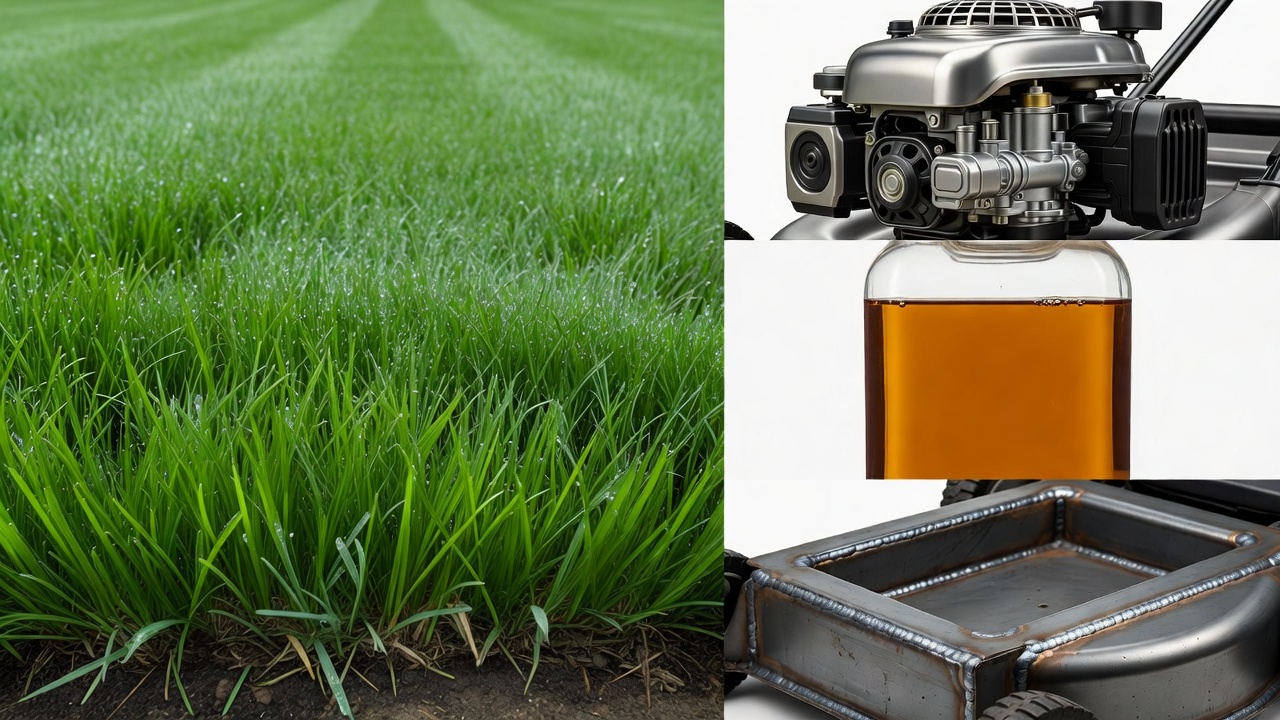
Quality in a riding lawn mower comes down to how well it performs the core task, cutting grass efficiently and evenly, while requiring reasonable maintenance and operating predictably over years of use. Several measurable factors separate effective mowers from poor ones:
- Cutting consistency: Even blade contact across the entire deck width prevents scalping (cutting too short) and missed patches.
- Adequate power: Engine horsepower directly affects how quickly you can cut, your ability to handle thick or wet grass, and performance on inclines.
- Transmission reliability: Smooth acceleration and deceleration, without jerking or stalling, reduces wear on components and improves operator safety.
- Maneuverability: A tight turning radius saves time on small properties and reduces fatigue when navigating around obstacles.
- Build quality: Welded decks, sealed bearings, and corrosion-resistant materials extend mower life beyond five seasons of regular use.
Understanding Riding Mower Types
Riding mowers fall into three main categories, each designed for different lawn conditions and user priorities:
Zero-Turn Mowers
Zero-turn mowers feature dual independent hydrostatic transmissions that allow each rear wheel to move at different speeds, or in opposite directions, enabling the mower to pivot 360 degrees without forward or backward motion. These mowers typically have a 42- to 60-inch deck and are fastest for large, open, relatively flat lawns. They excel at reducing mowing time by 30, 40% compared to traditional riding mowers on similar acreage. For additional operational safety benchmarks, see our published testing notes on jbl partybox club 120 vs sony srs xv500.
Best for: Properties of 1 acre or larger; flat terrain with open mowing paths; homeowners who value speed and operator comfort.
Trade-offs: Higher initial cost ($2,500-$6,000+); less suited to hilly terrain due to stability concerns; hydrostatic transmissions require more frequent servicing than mechanical alternatives.
Garden Tractors
Garden tractors (also called conventional riding mowers) use a single rear-axle design with front-wheel steering, similar to small farm tractors. Deck widths range from 38 to 54 inches. These mowers are more stable on slopes, offer better visibility, and often accommodate attachments (tillers, spreaders, snow blades) for year-round yard work. To compare alternative configurations, check our hands-on review of z890 vs x870e motherboard.
Best for: Hilly or uneven terrain; homeowners who want multi-use capability; properties of 0.5 to 2 acres.
Trade-offs: Slower than zero-turn models on flat lawns; larger turning radius requires more maneuvering; typically mid-range pricing ($1,500, $4,000). Users looking for related component recommendations can explore our marshall stanmore iii vs harman kardon onyx studio 8 breakdown.
Compact Riding Mowers
Compact models have decks under 42 inches and lower seat heights, making them easier to mount and store. They’re designed for small yards (under 0.5 acre) or properties with narrow gates and tight landscaping.
Best for: Small residential lots; cluttered yards with many obstacles; users seeking simple operation and low storage demands.
Trade-offs: Slower mowing pace; may struggle with thick or overgrown grass; limited attachment compatibility.
Key Performance Factors to Evaluate
Cutting Width (Deck Size)
Cutting width directly affects how many passes you need to mow your lawn. A 48-inch deck covers 1 acre in roughly 2 to 3 hours of continuous mowing; a 60-inch deck covers the same area in 1.5 to 2 hours. However, wider decks are heavier, more difficult to maneuver, and overkill for lawns under 0.5 acre.
Guidance: Match deck width to yard size, under 0.5 acre: 38 to 42 inches; 0.5 to 1 acre: 42 to 48 inches; 1+ acres: 48 to 60 inches.
Engine Horsepower
Most residential riding mowers range from 12 to 26 HP. More horsepower improves performance on hills, in thick grass, and at higher blade speeds. However, excess power wastes fuel and adds unnecessary weight and maintenance cost.
General recommendations:
- Flat terrain, well-maintained lawn: 12 to 15 HP
- Hilly terrain or occasional overgrown patches: 16 to 20 HP
- Frequently neglected or thick grass, significant slopes: 20+ HP
Transmission Type
Transmission choice affects acceleration, durability, and maintenance needs:
| Transmission Type | How It Works | Durability | Maintenance |
|---|---|---|---|
| Hydrostatic | Fluid-powered; smooth, infinitely variable speed control | Generally reliable but requires regular fluid checks and occasional seal replacement | Moderate; fluid changes every 50 to 100 hours |
| Mechanical (gear) | Fixed gears; you shift between speeds like a car | Very durable; simple design, fewer failure points | Low; mainly lubrication and occasional clutch adjustment |
| CVT (Continuously Variable) | Belt-driven; smooth speed transitions without shifting | Reliable in light-duty use; belt wear is a potential failure point | Moderate; belt inspection and fluid maintenance |
Cutting Height Adjustment
Quality mowers offer cutting height adjustment from roughly 0.75 to 4 inches, with independent wheel controls or a single lever. Proper cutting height prevents stress on grass (too short) and reduces mowing frequency (too tall). Adjustable height also lets you mulch leaves or adjust for overgrown patches.
Turning Radius
Turning radius affects maneuverability around flower beds, trees, and fence lines. Zero-turn mowers have a near-zero radius (0 to 3 feet); conventional garden tractors typically require 8 to 15 feet to complete a 180-degree turn. Smaller radius saves time and reduces operator fatigue on cluttered properties.
Matching a Mower to Your Yard and Terrain
Yard Size
Acreage is the primary driver of mower selection:
- Under 0.5 acre: Compact riding mower or garden tractor with 38 to 42-inch deck; mowing takes 45 minutes to 1.5 hours.
- 0.5 to 1 acre: Garden tractor (42 to 48 inches) or entry-level zero-turn; mowing takes 1.5 to 3 hours.
- 1 to 2 acres: Zero-turn or mid-size garden tractor (48 to 54 inches); efficiency gains from zero-turn justify the cost.
- 2+ acres: Zero-turn mower (54 to 60 inches) or commercial-grade equipment; mowing takes 2 to 4 hours.
Terrain Type
Flat lawns: Zero-turn mowers maximize speed and minimize mowing time. Hydrostatic transmission handles smooth, level ground well.
Hilly terrain: Garden tractors offer better stability. Look for mowers with wider wheelbases and lower center of gravity. Avoid extreme zero-turn performance on slopes exceeding 15 degrees.
Uneven or wet ground: Wider tires (23 to 26 inches) provide better traction. All-wheel drive (AWD) is beneficial but adds cost and complexity; front-wheel drive suffices for mild slopes.
Soil Conditions
Wet or clay soils demand wider tires and better traction to prevent wheel slip and compaction. Sandy or loamy soils are more forgiving. Mowers with dual rear wheels (wider stance) perform better in soft or muddy conditions.
Reliability and Maintenance Considerations
Build Quality Indicators
- Welded deck: Stronger and longer-lasting than stamped or bolted construction; resists vibration and rust.
- Sealed bearings: Reduce dust and debris entry; improve longevity of wheel and spindle bearings.
- Reinforced frame: Mowers with diagonal bracing or thicker gauge steel withstand rough terrain better.
- Rust-resistant coating: Paint quality and underside protection extend deck life, especially in humid climates.
Expected Lifespan
A well-maintained residential riding mower typically lasts 10 to 15 years, or 1,500 to 2,500 hours of operation. Commercial-grade mowers can exceed 5,000 hours with proper care. Regular maintenance, oil changes every 40 to 50 hours, blade sharpening, belt inspection, and seasonal storage, significantly extends service life.
Warranty and Support
Quality manufacturers offer 2 to 3 year engine warranties and 1 to 2 year frame/transmission warranties. Dealer network availability matters; rural areas may have limited repair options. Consider fuel type (gasoline vs. diesel) based on local availability and dealer service.
Budget and Value: What to Expect at Different Price Points
Entry-Level ($800-$1,500)
Basic garden tractors with 38 to 42-inch decks, 12 to 16 HP engines, mechanical transmissions, and simple controls. Reliable for small lawns with infrequent mowing. Limited comfort features and fewer attachment options.
Mid-Range ($1,500-$3,500)
Well-featured garden tractors (42 to 50 inches, 16 to 20 HP) or affordable zero-turn mowers (42 to 48 inches). Better build quality, hydrostatic or CVT transmissions, adjustable seats, and multiple cutting height settings. Good durability for regular homeowner use.
Premium ($3,500-$6,000+)
Higher-end zero-turn mowers (54 to 60 inches, 20 to 26 HP) with advanced comfort features (suspension, heated seats, cruise control), mulching systems, and commercial-grade construction. Justify cost through faster mowing, extended warranties, and superior durability.
Buyer FAQs: What Is A Good Riding Lawn Mower Solved
Q: How often should I sharpen the mower blades?
Sharp blades cut cleanly and reduce stress on grass; dull blades tear, leaving brown-tipped grass prone to disease. Sharpen blades every 20 to 40 hours of mowing (roughly every 4 to 8 weeks for regular homeowners), or whenever you notice tearing or uneven cutting. Replace blades if they’re cracked or severely bent.
Q: What’s the difference between mulching and bagging?
Mulching mowers chop grass into fine pieces and redistribute them on the lawn, returning nitrogen to soil and reducing bagging chores. Bagging systems collect clippings in a bin for removal or composting. Many modern mowers offer both options via a chute diverter. Mulching works best on healthy, infrequently mowed lawns; bagging is necessary for overgrown grass or leaves.
Q: Can I use a riding mower on wet grass?
Mowing wet grass is possible but not ideal. Wet clippings clump and clog the chute, reducing cut quality and requiring frequent stops to clear debris. Wet ground increases compaction and mud tracking. Wait 12 to 24 hours after rain or heavy irrigation for best results. If you must mow wet grass, use mulching mode (no collection) and reduce mowing speed.
Q: Do I need a zero-turn mower for a 1-acre lawn?
Not necessarily. A mid-size garden tractor (48-inch deck, 18 HP) will mow 1 acre in 2 to 3 hours and cost significantly less than a zero-turn. Choose zero-turn if the lawn is flat and open (few obstacles), and if mowing time is your priority. If terrain is hilly or the yard has many trees and landscaping, a garden tractor offers better stability and versatility.
Key Takeaways
- A good riding mower matches your yard size, terrain, and maintenance expectations, there is no universal ‘best’ model.
- Cutting width, horsepower, transmission type, and turning radius are the primary performance factors; prioritize based on your specific conditions.
- Zero-turn mowers excel on large, flat lawns; garden tractors handle hills and mixed terrain; compact mowers work for small properties.
- Build quality (welded decks, sealed bearings, rust protection) directly affects durability and long-term ownership cost.
- Regular maintenance, oil changes, blade sharpening, and seasonal storage, extends mower life to 10 to 15 years and prevents costly repairs.
Picking a Riding Mower
A good riding mower fits the size of the property, the slope of the lawn, and the operator’s comfort on longer jobs. Deck width and engine power both influence cutting speed. A related post on when should i start mowing my lawn looks at timing for the first cut of the season. For general ride-on safety information, consult American National Standards Institute (ANSI).









