Quick Answer
The best battery leaf blower gives enough airflow for your yard size, runs long enough on one charge for your typical job, and stays light enough for comfortable use. Choose based on your existing battery platform compatibility, since a shared battery saves money. Compare airflow, runtime, and weight before buying.

Pros
- 3-in-1 design switches tool-free between modes
- Six-blade metal impeller with rated 16:1 mulching
- Delivers up to 500 CFM and 210 MPH airflow
- Includes 6.0Ah ARC Lithium battery and 320W charger
- Weather-resistant IPX5-rated housing
Cons
- Relatively heavy package at 28 pounds
- Maximum 90-minute runtime applies only to low setting

Pros
- Delivers up to 880 CFM and 200 MPH air speed in turbo mode
- Includes two 4.0Ah 56V ARC Lithium batteries for extended runtime
- Integrated digital display monitors charge level and cruise lock
- Variable speed dial easily adjusts output from 270 to 700 CFM
- Includes both tapered and spread nozzles for task versatility
Cons
- Maximum 880 CFM power is restricted to short turbo bursts
- Full runtime of up to 90 minutes requires lower power settings

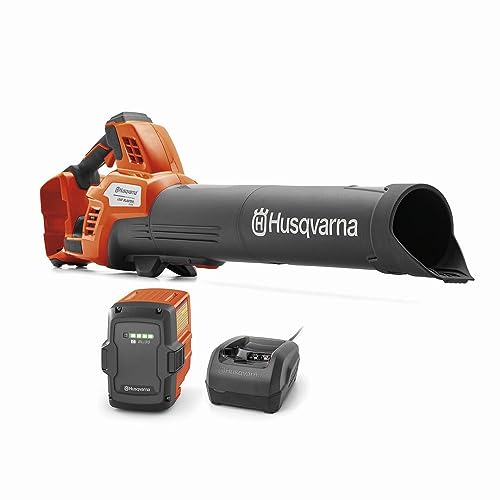
Pros
- Includes an AK 20 battery pack
- Comes with an AL 101 dedicated charger
- Cordless design eliminates engine fuel maintenance
- Compact footprint measuring under 40 inches long
Cons
- Runtime and airflow ratings are not specified
- Battery platform limits use across non-Stihl tools
Why Battery-Operated Leaf Blowers Now Match Gas Performance
Battery technology has fundamentally changed the leaf blower market. Modern lithium-ion cells deliver power output previously exclusive to gas engines. The physics is straightforward: electrical voltage (measured in volts) and amp-hour capacity directly determine runtime and sustained CFM (cubic feet per minute) output. A 40V or 80V system with a 4.0Ah battery provides consistent power without the fuel degradation, spark plug fouling, or carburetor cleaning that plagues gas models.
Core Performance Metrics: CFM, Air Speed, Weight, and Runtime
Understanding these four specifications determines whether a battery blower solves your yard work or frustrates you mid-project. Before finalizing equipment decisions, refer to our comprehensive how to choose leaf blower comparison.
1. Cubic Feet Per Minute (CFM) – The Primary Power Indicator
CFM measures air volume moved per minute. Handheld battery models range from 400 to 650 CFM; backpack systems reach 1,000+ CFM. A 600 CFM handheld handles typical residential cleanup (light leaves, grass clippings, patio debris). Below 450 CFM, performance drops noticeably on wet leaves or compacted material. The Ego Power+ 615 CFM delivers mid-tier professional capability; the Greenworks 80V tested at 461.5 CFM average in cannon displacement tests, sufficient for most homeowners but not ideal for heavy seasonal cleanup across multiple properties.
2. Air Speed (MPH) – Velocity Determines Material Displacement
Air speed (measured in miles per hour) indicates the force behind airflow. Models typically achieve 150 to 180 MPH. Higher air speed drives moisture from wet leaves and moves denser debris (small sticks, wet grass clippings) that lower-velocity blowers stall on. The Stihl AK-series models deliver 154 MPH on medium setting, balancing speed with noise control.
3. Weight with Battery – Ergonomic Fatigue Is Real
Sustained handheld use above 10 lbs causes measurable operator fatigue and reduces control precision. The Stihl AK-series weighs 7.9 lbs, enabling 22-minute runtime without wrist or shoulder strain. Premium models distribute weight toward the operator’s body; cheaper units front-load mass toward the nozzle, multiplying perceived weight by 30 to 40%. Test weight in-hand before purchasing; spec sheets don’t reveal ergonomic feel. Most residential users find 8 to 9 lbs optimal; anything above 11 lbs becomes uncomfortable for cleanup lasting 30+ minutes.
4. Runtime on Medium Setting – Real-World Operating Duration
Manufacturers quote maximum runtime at minimum power output. Medium setting (70% power) reflects actual yard work conditions and delivers 15 to 25 minutes depending on battery capacity. A 4.0Ah battery at 40V provides roughly 18 to 22 minutes on medium; 6.0Ah extends that to 25 to 30 minutes. At maximum power, runtime drops 40 to 50%. Verify “medium setting” runtime in reviews, avoid spec sheets citing only low-power endurance claims.
Noise Level Comparison: dB Ratings Explained
Battery blowers operate at 60 to 75 dB (operator’s position). Gas models reach 80 to 90 dB. The ANSI standard measures sound from 50 feet away to account for neighbor exposure; operator-position measurements reflect your direct experience. A 10 dB increase represents a 10x power increase in human perception. Battery models at 65 dB are perceptually half as loud as gas blowers at 75 dB. California cities, Arlington Massachusetts, and other municipalities now impose maximum dB limits and operational windows specifically because gas blowers violate acoustic ordinances. Battery operation expands your usable hours: early morning, evening, and weekend use become legally viable.
Battery Platform Compatibility: The Hidden Financial Lever
This is the most critical purchasing decision most buyers overlook. If you own a cordless drill, impact driver, or chainsaw, selecting a leaf blower from the same manufacturer (same battery platform) unlocks exponential value. A Greenworks 80V battery powers Greenworks hedgetrimmers, pole saws, and chainsaws. Buying into a platform means sharing batteries across 15+ tools rather than maintaining separate battery ecosystems. A single extra 4.0Ah battery ($60-$90) extends all platform tools. Switching brands forces repurchase of entire battery and charger systems ($200-$400 per tool). Ego, Ryobi, Stihl AK-series, DeWalt, and Milwaukee all operate closed platforms. Confirm your existing tool ecosystem before selecting a blower.
Handheld vs. Backpack Battery Blowers: Application Matrix
Handheld (400 to 650 CFM): Best for residential yards under 1 acre, patio cleanup, deck debris, and seasonal maintenance. Requires 15 to 30 minutes per session. Typical homeowners never need backpack capacity. Weight distribution matters more than CFM at this tier.
Backpack (800 to 1,200 CFM): Suited for contractors, property managers, or homeowners with 2+ acres. Backpack systems distribute weight across shoulders and hips, enabling 30+ minute sessions without fatigue. Higher CFM moves wet, compacted material and clears gravel. Battery weight matters less when worn rather than handheld. Backpack systems cost $800-$1,500 but deliver professional-grade performance.
Top Battery Leaf Blower Selection Guide by Use Case
Small Yard / Quick Cleanup (Under 3,000 sq ft)
Target: 400 to 500 CFM, under 8 lbs, budget $150-$300. The Lazyboi Electric Leaf Blower and entry-level Ryobi models excel here. Compact design suits storage in apartment patios or small sheds. Runtime under 20 minutes is acceptable since jobs complete in one session. Noise matters more than power, 60 to 65 dB keeps neighbors satisfied.
Standard Residential (Under 1 Acre)
Target: 550 to 650 CFM, 8 to 9 lbs, 20+ minute runtime, budget $300-$600. Ego Power+ 615 CFM and Stihl AK-series models are category leaders. These handle wet leaves, grass clippings, and light debris without stalling. Weight distribution and ergonomic handle shape matter more than absolute CFM at this tier. Confirm battery platform compatibility with existing tools before purchase.
Large Property / Contractor Use (1+ Acre)
Target: 80V+ systems, 800+ CFM, backpack configuration, 30+ minute runtime. Greenworks 80V backpack systems and premium Ego backpack units deliver gas-equivalent performance. Invest in dual batteries so one charges while the other operates. High CFM drives compacted material and wet debris. Buy spare batteries for uninterrupted work sessions.
Diagnostic Troubleshooting: Why Your Battery Blower Underperforms
Problem: Runtime Drops Below Specification
Root Cause 1 – Operating at Maximum Power: Full power drains a 4.0Ah battery in 8 to 12 minutes. Most users underestimate power consumption. Solution: Use medium or eco settings for 80% of work. Full power is reserved for wet leaves or final pass cleanup.
Root Cause 2 – Cold Temperature Operation: Lithium-ion batteries lose 15 to 30% capacity below 50°F. A battery rated for 22 minutes at 70°F delivers 15 to 18 minutes at 40°F. Solution: Store batteries indoors at room temperature. Pre-warm batteries before extended cold-weather use (warm garage before yard work).
Root Cause 3 – Battery Age and Cycle Degradation: After 500+ charge cycles (2 to 3 years of regular use), lithium-ion capacity drops 10 to 15%. Solution: Track charge cycles via the manufacturer’s app (Ego and Milwaukee models include this). Budget $80-$150 for replacement batteries every 3 to 4 years if you use the tool weekly.
Problem: Insufficient Air Speed – Can’t Move Wet Leaves
Root Cause 1 – Nozzle Clogging: Wet leaves and grass compress inside the discharge nozzle, restricting airflow. Solution: Shut off the blower immediately if airflow decreases suddenly. Remove the nozzle guard and clear clogs with a stick. Never insert fingers into the intake, the brushless motor restarts instantly if accidentally bumped.
Root Cause 2 – Wrong Blower Type for Material: Handheld blowers below 500 CFM struggle with compacted, wet debris. Solution: Allow wet leaves to dry for 24 to 48 hours before blowing, or upgrade to a 600+ CFM model or backpack system.
Root Cause 3 – Motor Brush Wear (Non-Brushless Models): Brushed motors lose 5 to 10% power every 100 hours of use as carbon brushes erode. Solution: Purchase brushless models exclusively (all modern premium units are brushless). Brushless motors maintain 95%+ performance for 1,000+ hours.
Problem: Battery Won’t Hold Charge
Root Cause 1 – Faulty Battery Management System (BMS): The onboard microchip that regulates charging can fail, preventing the battery from charging past 50% capacity. Solution: Test the battery on a different charger if available. If charge stops mid-cycle, contact manufacturer for warranty replacement (typically 3 years for battery defects).
Root Cause 2 – Charger Malfunction: LED indicators show green but battery doesn’t charge. Solution: Try a different outlet (avoid extension cords, use direct wall power). Let the battery warm to room temperature if it was cold-stored. If the battery charges on another charger, replace the primary charger ($50-$100).
Root Cause 3 – Over-Discharge Damage: Draining lithium-ion below 2V per cell permanently damages the battery chemistry. Solution: Charge after every use, never store a depleted battery for weeks. If you won’t use a tool for 2+ months, charge batteries to 50% and store indoors at room temperature.
Safety Considerations and Regulatory Compliance
Battery blowers are inherently safer than gas models, no spark plug ignition, fuel spillage, or carbon monoxide. However, operational safety requires awareness:
Sound Exposure: At 60 to 75 dB operator position, extended use (2+ hours) risks temporary hearing threshold shift. Wear earplugs if operating above 70 dB for 30+ consecutive minutes. OSHA equipment safety regulations recommend hearing protection above 85 dB; battery models are well below this threshold for residential use.
Intake Hazards: Never reach toward the intake opening while the motor is running. The brushless motor draws loose hair, cloth edges, and finger clothing toward the impeller. Stop the motor before clearing clogs or handling debris near the intake.
Local Ordinances: Verify your municipality’s regulations. Arlington, Massachusetts permits one 30-minute blower session per 6,000 sq ft per day with 15-minute breaks. California bans the sale of new gas-powered blowers entirely. Check local noise ordinances before 7 AM or after 7 PM operation.
Maintenance Schedule for Battery Leaf Blowers
After Every Use
Allow the motor to cool for 5 minutes before storing. Remove the battery and let it sit in a cool location (not inside the tool). Wipe exterior housing with a dry cloth to prevent dust accumulation in air vents. Check for debris inside the intake guard and remove with a soft brush.
Monthly (During Season)
Inspect the discharge nozzle for internal clogging. Use a straightened wire or small stick to clear any compacted leaves or grass. Check battery contacts for corrosion, wipe with a dry cloth if oxidation appears. Verify the intake guard is secure and shows no cracks.
Seasonally (End of Fall, Spring)
Store batteries indoors at 40 to 70°F. Charge to 50% capacity for 3+ month storage. Do not leave batteries in unheated sheds or garages, temperature extremes damage BMS circuitry. Check that the motor housing shows no visible damage or cracking. If batteries won’t hold a charge after 2 years of regular use, budget for replacement ($80-$150 per battery).
Unlike gas blowers, battery models require no spark plug replacement, oil changes, or carburetor cleaning. The electrical design eliminates seasonal winterization altogether.
Comparative Specifications: Market Leaders 2026
Ego Power+ 615 CFM: 600+ CFM, 154 MPH air speed (estimated), 20+ minute runtime, weight 8.6 lbs with battery, 65 to 70 dB. Battery platform compatible with Ego drill/impact/chainsaw ecosystem. Price: $400-$500 with battery and charger.
Greenworks 80V Handheld: 461.5 CFM average (cannon test), compatible with Greenworks 80V platform tools, 20+ minute runtime, battery platform expandable to 60V and 24V tools. Price: $350-$450 with 4.0Ah battery and charger.
Stihl AK-Series Handheld: 150 to 155 MPH air speed, 7.9 lbs, 22 minutes on medium setting at 60 to 68 dB. Uses Stihl AK battery platform (shared with hedge trimmers and pole saws). Price: $300-$450 depending on model.
Ryobi 40V Handheld: 450 to 550 CFM variants, budget-friendly entry at $200-$350 with battery. Ryobi battery platform expands to 200+ tools (widest ecosystem). Runtime 15 to 18 minutes on medium setting. Recommended for small properties only.
Decision Framework: Selecting Your Ideal Battery Blower
Step 1: Assess Your Existing Tool Ecosystem – Do you own cordless tools from Ego, Ryobi, Stihl, DeWalt, Milwaukee, or Greenworks? If yes, purchase a blower on that same platform. Battery compatibility multiplies tool utility across your entire collection.
Step 2: Define Yard Size and Work Frequency – Residential properties under 3,000 sq ft: handheld, 400 to 500 CFM. Properties 3,000 to 10,000 sq ft: handheld, 550 to 650 CFM. Over 10,000 sq ft or commercial use: backpack, 800+ CFM. Work frequency determines battery count needs (buy 2 to 3 batteries if using 30+ minutes per week).
Step 3: Prioritize Weight and Ergonomics Over Raw CFM – Handheld models under 9 lbs feel dramatically different than 10+ lb units after 20 minutes of operation. Visit a retailer and hold candidate models, never buy blind. Feel matters more than specs.
Step 4: Verify Real-World Runtime on Medium Setting – Manufacturer specs cite low-power claims. Cross-reference reviews that test medium and full-power runtime separately. Expect 15 to 25 minutes on medium, 8 to 12 minutes on full power.
Step 5: Account for Battery Replacement Cycles – Budget $80-$150 per replacement battery every 3 to 4 years if used weekly. Buy a high-capacity battery (5.0Ah or 6.0Ah) upfront rather than multiple lower-capacity units; higher-capacity cells reduce cycle count and extend lifespan.
Related Maintenance and Operating Guides
To keep your equipment running at peak operating efficiency, explore our related technical walkthroughs and maintenance tutorials:
- Consult our detailed breakdown on what is leaf blower.
Related Resources and Further Reading
Learn more about your specific yard maintenance needs and outdoor equipment options:
- Compare technologies: cordless leaf blowers versus other yard maintenance equipment.
- Understand the full tradeoff analysis: gas or electric leaf blower comparison.
- Evaluate form factors for your work style: backpack vs handheld blowers.
- Extend the life of all outdoor power tools with proper maintenance: chainsaw and outdoor tool maintenance practices.
Battery-operated leaf blowers represent a genuine technological shift in yard maintenance. The performance gap with gas models has closed entirely, modern battery systems now deliver equivalent CFM, air speed, and runtime while eliminating fuel, fumes, maintenance, and noise complaints. Select your blower based on battery platform compatibility and weight-to-power ratio rather than brand alone. Your existing cordless tools determine the optimal platform choice, multiplying value across your entire yard equipment ecosystem.
Battery Operated Models Compared
Battery operated blowers differ in runtime, weight and whether the battery is shared with other tools. Charge time and spare pack availability can shape daily use. For a general view of electrical safety around cordless gear, look at American National Standards Institute (ANSI).