Quick Answer: What Oil Should You Use?
Most lawn mowers run on either SAE 30 oil (for warm climates) or 10W-30 multi-grade oil (for varying temperatures). The best choice depends on your climate and your mower’s manufacturer specifications. Always consult your owner’s manual first—different engines have different requirements. Synthetic options offer extended protection but cost more than conventional oils.
Understanding Oil Grades and Viscosity
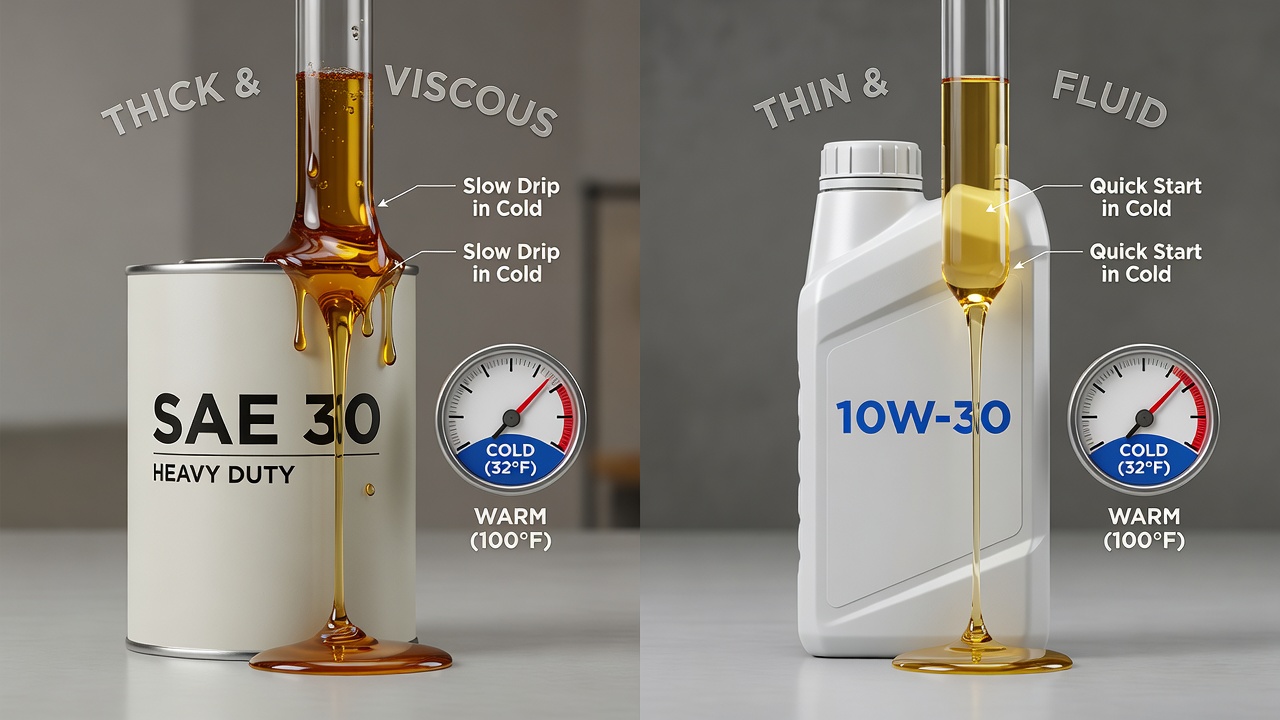
Before selecting lawn mower oil, you need to understand what the numbers and letters mean. Oil grade refers to viscosity, which is how thick or thin the oil is at different temperatures.
What Do SAE Numbers Mean?
SAE stands for Society of Automotive Engineers. The number that follows indicates the oil’s viscosity at 100°C (212°F). A higher number means thicker oil:
- SAE 30: Single-grade oil, thicker, suitable for warmer weather
- 10W-30: Multi-grade oil, the “W” stands for “winter,” meaning it performs at colder temperatures while maintaining viscosity at higher temperatures
- 5W-30: Even better for cold climates, though less common in lawn mowers
The “W” number indicates how the oil flows in cold conditions. A lower number (5W vs. 10W) means better cold-start performance in winter.
Why Does Viscosity Matter for Lawn Mower Engines?
Proper oil viscosity ensures:
- Adequate lubrication: Oil that’s too thin won’t protect engine parts; oil that’s too thick won’t flow properly
- Engine protection: Correct viscosity maintains a protective film between moving parts, reducing wear and extending engine life
- Fuel efficiency: Thinner oils reduce internal friction, improving performance
- Cold starting: Multi-grade oils flow better in cold weather, making spring startup easier
- Temperature stability: Quality oil maintains consistent performance across temperature ranges
SAE 30 vs. 10W-30: What’s the Difference?
SAE 30 is a single-grade oil designed primarily for warm weather operation. It’s thicker and provides good protection in hot conditions but may be difficult to pour and start in cold weather.
10W-30 is a multi-grade oil that flows like 10-weight oil in cold conditions but maintains 30-weight protection at operating temperature. This versatility makes it suitable for spring, summer, and fall use in most climates.
How to Find Your Mower’s Oil Requirements
Not all lawn mowers use the same oil. Engine size, design, and manufacturer specifications determine the correct grade.
Where to Find Recommended Oil Type
Check these sources in order of reliability:
- Owner’s manual: The definitive source. Look in the maintenance or specifications section
- Engine manufacturer specifications: If your manual is lost, contact the engine maker (Briggs & Stratton, Kohler, Honda, etc.)
- Filler cap label: Many mowers have an oil grade stamped or printed on the dipstick or under the filler cap
- Mower manufacturer website: Most brands provide downloadable manuals with oil specifications
Does Oil Type Vary by Engine Size?
Yes. Small push mowers (typically 5-7 horsepower) and large riding mowers (15+ horsepower) may have different requirements. Larger engines often tolerate multi-grade oils better, while small engines sometimes specify single-grade SAE 30 or 10W-30 specifically. Always verify your mower’s specifications rather than assuming.
Are Push Mowers and Riding Mowers Different?
Generally, both use similar oil grades (SAE 30 or 10W-30), but riding mowers may require larger oil capacities. Some commercial-grade riding mowers use 15W-40 or heavier oils. Check your specific model’s manual.
Seasonal Oil Selection
Climate plays a significant role in choosing between single-grade and multi-grade oils.
Should You Use Different Oil in Winter vs. Summer?
Not necessarily with 10W-30 multi-grade oil, which works year-round in most climates. However, if you live in a region with extreme seasonal temperatures, you might consider switching oils. If you store your mower for winter and restart it in spring, 10W-30 is ideal for spring-through-fall operation.
When to Use SAE 30
SAE 30 is best for:
- Warm climates where temperatures stay above 50°F consistently
- Summer-only mower operation
- Regions with minimal temperature fluctuation
- Older mower engines specifically requiring single-grade oil
In cold conditions, SAE 30 becomes thick and difficult to flow, which can cause hard starts and inadequate lubrication during initial engine rotation.
When to Use 10W-30
10W-30 is recommended for:
- Temperate climates with spring, summer, and fall use
- Regions where temperatures range from 40°F to 85°F during the mowing season
- Year-round mower use in mild climates
- Most modern lawn mowers, unless the manual specifies otherwise
The multi-grade formulation provides superior cold-start performance while maintaining engine protection at normal operating temperatures.
Conventional vs. Synthetic Lawn Mower Oil
Two main oil types exist for lawn mower engines: conventional and synthetic. Each offers distinct advantages and trade-offs.
Conventional Oil
Conventional oil is refined from crude oil and contains natural additives for basic protection. It’s the standard choice for most lawn mowers:
- Lower cost than synthetic
- Adequate protection for typical residential use
- Shorter change intervals (typically 50-100 hours of operation)
- Sufficient viscosity stability for moderate climates
Synthetic Oil
Synthetic oil is chemically engineered to provide superior performance:
- Extended protection and longer change intervals (up to 200+ hours)
- Better viscosity stability across temperature extremes
- Improved engine cleanliness and reduced sludge buildup
- Higher cost per quart (but may offset through longer intervals)
- Ideal for extreme climates or heavily used commercial mowers
Is Synthetic Oil Worth It for Lawn Mowers?
For most residential homeowners who mow weekly during the season, conventional SAE 30 or 10W-30 is sufficient and economical. However, synthetic oil makes sense if you:
- Operate in very cold or very hot climates
- Use your mower intensively (commercial or large property)
- Prefer extended maintenance intervals
- Want maximum engine protection and longevity
For casual weekend mowing, the cost-benefit ratio typically favors conventional oil.
Can You Mix Conventional and Synthetic Oil?
Yes, mixing is generally safe if necessary in an emergency. However, it’s not ideal because you’ll lose some synthetic oil benefits. Once mixed, the oil blend is neither fully conventional nor fully synthetic. Drain and refill with the correct oil type at your next scheduled change.
Basic Lawn Mower Oil Change Steps
Proper maintenance keeps your mower running smoothly. Oil changes are the most important preventive maintenance task.
How Often Should You Change Lawn Mower Oil?
Follow these guidelines:
- Conventional oil: Every 50-100 operating hours or at least once per season
- Synthetic oil: Every 100-200 operating hours or as specified in your manual
- New mowers: Change oil after the first 5 hours of operation to remove metal particles from manufacturing
- Heavily used mowers: Check oil level every 8-10 hours of operation
How Much Oil Does a Lawn Mower Need?
Capacity varies widely by engine size:
- Small push mowers: 0.5 to 1 quart
- Medium push mowers: 1 to 2 quarts
- Riding mowers: 2 to 4 quarts
- Check your manual for exact capacity
Never overfill or underfill. Use the dipstick to verify the level reaches the “full” mark after adding oil.
Oil Change Process
- Warm the engine: Run the mower for a few minutes to warm the oil, making it flow better
- Stop the engine and let it cool for 2-3 minutes
- Locate the drain plug or oil drain cap
- Place a drain pan underneath and remove the plug or cap
- Allow oil to drain completely (5-10 minutes)
- Replace the drain plug or reinstall the cap
- Add new oil slowly, checking the dipstick frequently
- Check the level when the engine is cold, adding small amounts until the mark is reached
- Run the engine briefly to circulate new oil
- Stop and recheck the level after a few minutes to verify it’s correct
Dispose of old oil properly by taking it to a recycling center or auto parts store—never pour it down drains.
Frequently Asked Questions
Can I use car oil in my lawn mower?
Technically, yes, if the grade matches your mower’s specifications. However, lawn mower engines are smaller and operate differently than car engines. Car oil often contains detergents designed for larger engines and longer drain intervals. For best results, use oil specifically formulated for small engines, which costs similarly and is optimized for your equipment.
What happens if I use the wrong oil grade?
Using oil that’s too thick can cause hard starting, poor lubrication at cold temperatures, and excess wear on engine components. Oil that’s too thin may not provide adequate protection, leading to increased wear, overheating, and potential engine damage. Always follow manufacturer specifications to ensure proper engine protection and performance.
Is it bad to leave old oil in my mower over winter?
Yes. Leaving oil in your mower over winter allows contaminants to accumulate and can cause sludge formation. Change the oil before storing your mower for the season, and run the engine briefly on fresh oil to circulate it through the system. This ensures your mower starts reliably when you begin mowing in spring.
What oil brand should I buy?
Reputable brands include Briggs & Stratton, Kohler, Mobil, Shell, and Valvoline. Most lawn mower manufacturers produce their own branded oils. Check your manual for recommended brands, but any quality oil meeting the specified SAE grade will work. Premium or synthetic brands offer better protection but cost more. For budget-conscious homeowners, conventional oil from major retailers is adequate.