As an Amazon Associate we earn from qualifying purchases. When you buy through our links, we may earn a commission at no extra cost to you. Prices and availability are subject to change on Amazon. Affiliate disclosure ›
When to Mow Lawn Spring?
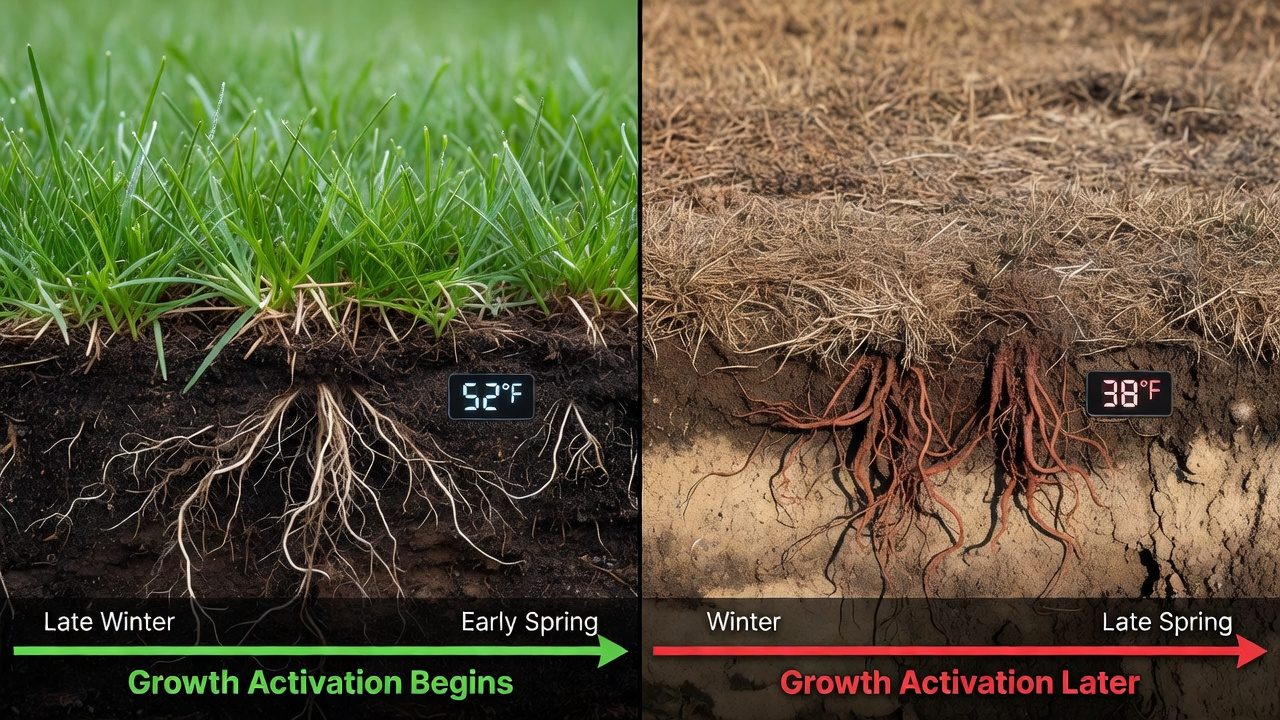
Start spring mowing when grass reaches 3-4 inches tall, soil temperature consistently stays above 50°F, and soil is firm enough that mower wheels don't leave ruts. Timing varies by region and grass type: cool-season grasses typically green up in late March to early May, while warm-season grasses require waiting until late April to June.
Begin your first spring mow when grass reaches 3 to 4 inches tall, soil temperature consistently stays above 50°F, and soil is firm enough that your mower wheels don’t leave deep ruts. For cool-season grasses in northern regions, this typically occurs between late March and early May. For warm-season grasses in the South, wait until late April through June when soil has fully warmed. Always set your mower to its highest blade setting for the first mow to avoid scalping dormant grass.
Understanding Spring Lawn Growth Patterns
Knowing when to mow starts with understanding how grass responds to seasonal changes. Lawns don’t wake up on the same schedule everywhere, regional climate differences, grass species, and local microclimates all affect when your lawn is ready for its first cut of the season.
Cool-Season vs. Warm-Season Grasses
The type of grass in your lawn determines when it actively grows in spring. Cool-season grasses (Kentucky bluegrass, perennial ryegrass, fescue) thrive in northern and transitional zones and begin breaking dormancy as soon as soil temperatures reach the mid-40s Fahrenheit. These grasses have their peak growth in spring and fall.
Warm-season grasses (Bermuda, zoysia, St. Augustine grass) dominate southern lawns and remain dormant until soil warms to 60 to 70°F. These grasses won’t show active green growth until late spring or early summer, so mowing too early wastes effort and stresses dormant tissue.
Why Timing Matters
Mowing too early in spring damages emerging grass and invites disease. Soil that’s still wet from winter snowmelt becomes compacted by mower wheels, reducing oxygen availability to roots. Dormant or semi-dormant grass cut too short (scalped) struggles to recover and becomes vulnerable to weeds and disease. Waiting until grass is actively growing and soil is firm ensures your first mow supports rather than stresses your lawn.
Key Indicators It’s Time for Your First Spring Mow
Rather than relying solely on a calendar date, watch for these measurable conditions:
Grass Height: The 3-4 Inch Benchmark
The most reliable indicator is grass height. When your lawn reaches 3 to 4 inches tall, it’s actively growing and resilient enough to mow. This height typically indicates the grass has moved past early dormancy and is putting energy into leaf and root development. Don’t mow if grass is shorter than this, you’ll remove too much leaf tissue and stress the plant.
Soil Temperature: The 50°F Threshold
Soil temperature is the second critical factor. Purchase an inexpensive soil thermometer from a garden center, or check your local cooperative extension’s soil temperature data online. Aim for soil temperatures of 50°F or warmer for at least a few consecutive days before your first mow. This temperature indicates biological activity in the soil and active grass growth.
Cool-season grass can tolerate mowing at 40, 50°F, but growth is slow and mower stress is higher. Warm-season grass shouldn’t be mowed until soil reaches 60, 70°F. If you mow when soil is colder, you’re cutting dormant or barely-active grass that won’t recover quickly. Before finalizing equipment decisions, refer to our comprehensive marshall stanmore iii vs harman kardon onyx studio 8 comparison.
Soil Firmness: The Rut Test
Before mowing, walk across your lawn. If your footprints leave deep indentations that don’t quickly spring back, or if you sink noticeably into the grass, soil moisture is too high. Wait another week or two. Mowing wet soil compacts it permanently, harming root development and drainage for the rest of the season.
When soil is ready, you should be able to walk normally without leaving visible ruts. If you’re uncertain, mow a small test area, if your mower wheels leave 1-inch-deep tracks, postpone mowing until soil dries further. For broader ecosystem context, read through our operational guide on dyson v8 cyclone vs bissell featherweight stick.
Regional Spring Mowing Timeline
Northern Regions (Cool-Season Grass Zones)
In northern states and Canada, cool-season grasses begin active growth as soon as soil thaws. Expect to begin mowing between late March and mid-April, depending on latitude and local weather patterns.
Upper Midwest and Northeast (Minnesota, Wisconsin, New York, Pennsylvania): Late March to early April
Mid-Atlantic and lower Midwest (Ohio, Indiana, Illinois): Mid-March to early April
Canada: Late April to early May
Check your local soil temperature during the first warm spell in March. If it’s above 50°F for 3, 4 consecutive days and grass has started greening up, you can begin mowing. For troubleshooting and reliability insights, consult our in-depth bissell crosswave hydrosteam vs shark stainforce report.
Transitional Zones (Mixed Grass Types)
Transitional zones (Missouri, Kansas, Kentucky, Maryland, Virginia) are tricky because both cool- and warm-season grasses grow there. If you have cool-season grass, follow northern guidelines and mow in late March or April. If your lawn is warm-season grass, wait until late April or early May. If you have a mixed lawn, mow when the majority of your grass shows active growth and reaches 3 to 4 inches.
Southern Regions (Warm-Season Grass Zones)
Warm-season grasses in southern states require patience. These grasses remain dormant (and often brown) through winter and don’t green up until soil warms significantly. Begin mowing between late April and early June, depending on your location and spring weather.
Upper South (Texas, Arkansas, Oklahoma, North Carolina): Late April to mid-May
Deep South (Louisiana, Mississippi, Alabama, Georgia): Mid-May to early June
Florida and coastal regions: Late April to early May (earlier start than inland South)
Southern lawns may look brown and dormant through April. This is normal. Mowing dormant warm-season grass wastes fuel and damages the plant. Wait until you see visible green growth and soil temperature reaches at least 60°F.
First Spring Mow: Special Considerations
The High-Setting Rule
Set your mower blade to its highest setting for your first mow of the season. If your mower has settings from 1 to 5, use setting 5. This typically cuts grass to 3.5 to 4 inches, which protects emerging growth.
Why? Winter dormancy leaves grass tissue weakened. Cutting too short removes the leaf area needed for photosynthesis and stresses plants recovering from cold damage. A high first cut allows grass to stabilize and establish strong root growth before you lower the blade to normal maintenance height (typically 2.5 to 3 inches for most lawn types).
Avoiding Scalping Damage
Scalping occurs when you remove more than one-third of the grass blade in a single mow. Scalped grass turns brown, recovers slowly, and becomes vulnerable to weeds, disease, and insect stress. The first spring mow is highest-risk for scalping because winter dormancy leaves grass shorter and weaker than during peak growing season.
If your lawn is particularly long after winter (4+ inches due to late-season growth in fall), make two passes: one at the highest setting, then a second pass a week later at a slightly lower setting. This gradual reduction prevents shock.
Bagging vs. Mulching Clippings
After your first spring mow, you can mulch clippings back into the lawn (leave them to decompose). Mulching returns nitrogen to soil and reduces the need for fertilizer. However, if winter damage or disease affected your lawn, you may want to bag clippings to prevent spreading fungal spores or diseased material.
If clippings are excessively long (more than 2 to 3 inches in a single windrow), bag them to prevent creating dead patches where clippings smother underlying grass. Once clippings are manageable size, switch to mulching.
Transitioning to Regular Spring Mowing Schedule
The One-Third Rule
Once your lawn is established into the regular growing season (typically 2 to 3 weeks after your first mow), follow the one-third rule: never cut more than one-third of the grass blade in a single mowing. This means:
If you want grass at 2.5 inches (your target height), mow when grass reaches 3.75 inches
If you prefer 3-inch grass, mow when it reaches 4.5 inches
If grass reaches 5+ inches between mowings, make two passes rather than one aggressive cut
This rule reduces stress, prevents disease, and maintains stronger root systems.
Spring Mowing Frequency
During peak spring growth (April and May for cool-season grasses, May-June for warm-season), you may need to mow every 5 to 7 days. Some weeks, you might mow twice if weather is particularly wet and warm.
Don’t skip weeks. Mowing frequently at proper height is far better than mowing sporadically at excessive length. Frequent mowing also grinds clippings finer, improving mulching effectiveness and reducing thatch buildup.
Lowering Blade Height Gradually
If your first mow was at the highest setting (3.5 to 4 inches), gradually lower your blade over 3 to 4 weeks to reach your desired maintenance height. Lower by 0.5 inches per week. This gradual reduction prevents stress and allows grass to adjust.
Most cool-season lawns are maintained at 2.5 to 3.5 inches; warm-season lawns at 1.5 to 2.5 inches. Check your grass type’s recommendations, as cutting too short invites disease and weeds regardless of region.
Weather-Related Adjustments
Heavy Rain or Wet Conditions
If spring brings excessive rain and soil remains soggy, delay mowing even if grass is tall. Mowing wet soil compacts it and damages root zones. If you must mow, use a mulching mower (which handles wet clippings better) rather than a bagging mower. Alternatively, bag clippings to prevent clumping.
Unexpected Late Frost or Cold Snap
If temperatures drop back into the 20s or 30s after you’ve begun mowing, don’t panic. Cool-season grass is cold-hardy and recovers quickly. However, avoid mowing for 2 to 3 days after a hard freeze if possible, as frost-stressed grass is brittle and susceptible to tearing. If you must mow, use your highest blade setting and ensure your mower blade is sharp (a dull blade tears rather than cuts, compounding cold stress).
Dry or Drought Conditions
If spring is unusually dry, don’t assume your lawn won’t need mowing. Growth may slow, but mowing less frequently doesn’t help dry lawns, it stresses them. Instead, mow at a slightly higher setting (raise by 0.5 inches) to reduce evaporative stress and maintain shade over soil.
Frequently Asked Questions About When To Mow Lawn In Spring
Q: Can I mow my lawn in early March?
A: Only if soil temperature is consistently above 50°F, grass has actively greened up, and reaches 3 to 4 inches tall. In most northern regions, early March is too early, soil is still cold and wet. Wait until late March or April. In southern regions, March is definitely premature for warm-season grasses.
Q: My lawn is still brown in April. Should I mow it?
A: If grass is brown and dormant, do not mow. This indicates soil temperature is too low or it’s still early for your grass type. Wait until grass actively greens and reaches mowing height. Mowing dormant grass wastes energy and damages the plant without benefit.
Q: How often should I sharpen my mower blade before spring mowing?
A: Sharpen your blade before your first spring mow and every 20 to 50 mowing hours after that (typically every 4 to 6 weeks during peak season). A dull blade tears grass instead of cutting cleanly, opening tissue to disease and slowing recovery. Spring is the most stress-prone season, so a sharp blade is especially important.
Q: Is it okay to mow when grass is wet from dew or light rain?
A: Avoid mowing when grass is visibly wet if possible. Wet grass clogs the mower, creates uneven cuts, and can compact soil. However, morning dew is usually acceptable if grass itself is dry (dew evaporates quickly in sun). Postpone mowing only if soil is actually soggy or waterlogged.
Related Maintenance and Operating Guides
To keep your equipment running at peak operating efficiency, explore our related technical walkthroughs and maintenance tutorials:
Early season growth can be rapid and uneven, so take extra care around hidden debris such as rocks and sticks. For broader lawn care safety information, American National Standards Institute (ANSI) offers general reference material.