Direct Answer: Where Is the Carburetor on a Lawn Mower?
The carburetor is typically located on the side or top of the engine, between the air filter housing and the engine intake manifold. It is often a small, metal component with fuel lines attached. On most walk-behind push mowers, you will find it near the top of the engine under the air filter cover; on riding mowers, it is usually mounted on the side of the engine block, often beneath or behind the air filter assembly.
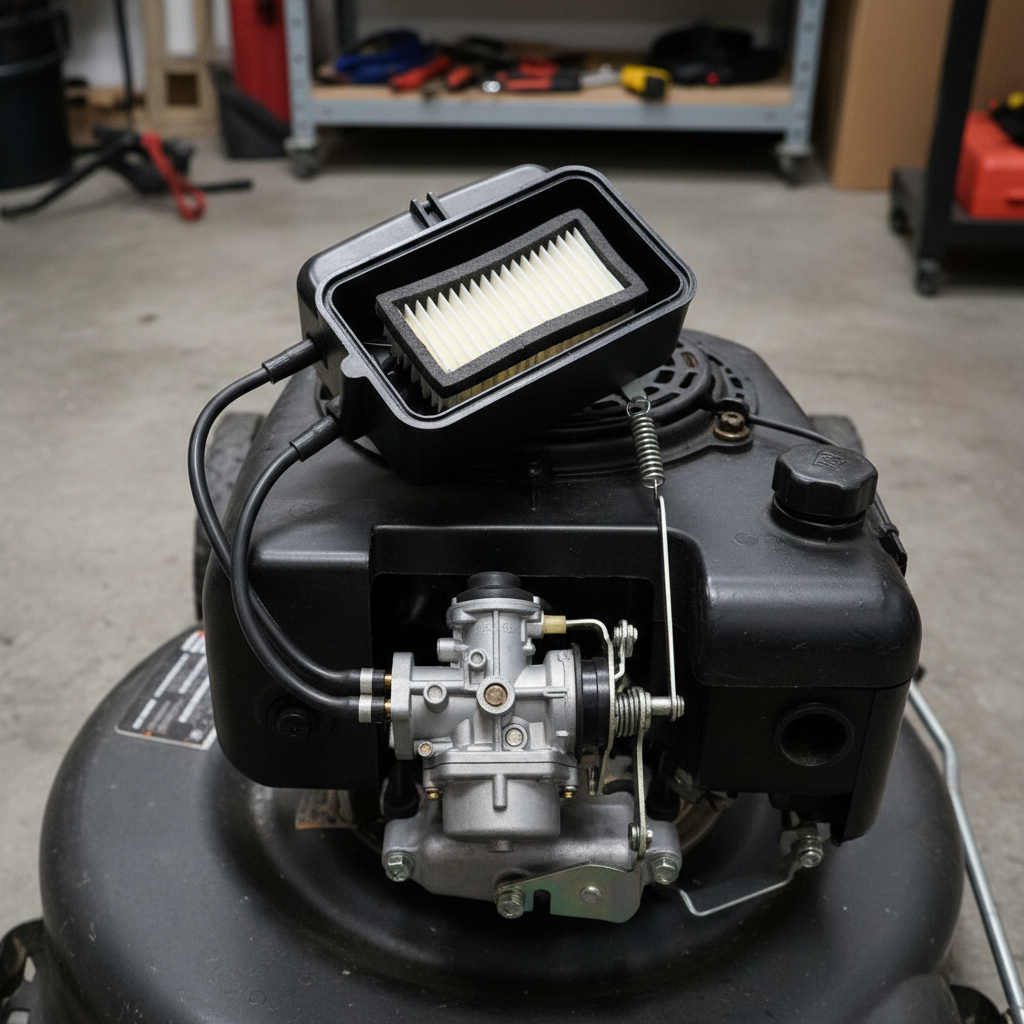
Because the exact position varies by brand, model, and engine type, consult your mower’s owner’s manual for the precise location. Note that some modern lawn mowers use electronic fuel injection and do not have a carburetor at all.
Understanding the Carburetor’s Role in a Lawn Mower Engine
Before locating the carburetor, it helps to understand its function. The carburetor is a critical component responsible for mixing air and fuel in the correct ratio to create a combustible mixture that powers the engine. Its specific placement is not arbitrary; it is positioned between the air filter and the engine’s intake manifold to ensure a clean, controlled flow of the air-fuel mixture into the engine cylinders.
Knowing this helps in identification. You are looking for the component that connects the air intake system (the air filter housing) to the engine itself. Symptoms that indicate the carburetor may need servicing include difficulty starting, rough idling, poor acceleration, or the engine stalling. Locating it is the first step in troubleshooting these common issues.
Where to Look: Common Carburetor Locations by Mower Type
The location can differ significantly based on the mower’s design. Here are the most common scenarios:
Walk-Behind Push Mowers
On most standard push mowers with a vertical-shaft engine, the carburetor is located near the top of the engine, directly under the air filter housing. To find it:
- Locate the air filter housing: This is typically a black plastic or metal box on the side or top of the engine.
- Remove the air filter cover: This often involves unscrewing a knob or releasing a clip.
- Look behind the air filter: Once the filter is exposed, the carburetor is the metal component directly behind it, connected by a short tube or gasket.
Riding Lawn Mowers and Zero-Turn Mowers
On riding mowers with horizontal-shaft engines, the carburetor is usually mounted on the side of the engine block, often beneath or behind the air filter assembly. You may need to: For broader ecosystem context, read through our operational guide on z890 vs x870e motherboard.
- Remove an engine hood or side panel to access the engine compartment.
- Follow the air intake path: Find the air filter housing, which is often a large canister on the side of the engine. The carburetor will be attached to the engine intake manifold, which is connected to this housing.
Visual Cues to Identify the Carburetor
Once you are in the general area, look for these telltale signs:
- Fuel Lines: Small rubber or plastic hoses carrying gasoline will connect directly to the carburetor.
- Primer Bulb: Many carburetors have a clear, rubber primer bulb on them for cold starts.
- Throttle Linkage: A metal rod or cable connected to the throttle control on the handle or dashboard will attach to the carburetor’s throttle lever.
- Material and Size: It is typically a small, cast metal (aluminum or zinc) component, often with adjustment screws.
Step-by-Step Guide to Locating the Carburetor Safely
Follow these steps for a safe and methodical search: For troubleshooting and reliability insights, consult our in-depth marshall stanmore iii vs harman kardon onyx studio 8 report.
- Safety First: Disconnect the spark plug wire to prevent accidental engine start. Allow the engine to cool completely if it has been running.
- Consult the Manual: This is the most reliable step. The owner’s manual will have a diagram labeling all engine components, including the carburetor.
- Identify the Air Filter Housing: Start here. It is the most obvious landmark. Remove its cover and filter element.
- Trace the Airflow: The carburetor will be the next component in the path from the air filter to the engine block. It is bolted to the engine’s intake manifold.
- Look for Fuel Lines: Follow the fuel line from the fuel tank; it will lead directly to the carburetor’s fuel inlet.
- Check Under Covers: On some models, the carburetor may be hidden under a plastic engine shroud or even beneath the fuel tank. You may need to remove these covers for full access.
Key Factors That Affect Carburetor Location
Understanding these factors explains why a single universal location doesn’t exist:
- Engine Brand and Design: Engines from Briggs & Stratton, Honda, Kohler, and others have different layouts. For example, many Briggs & Stratton engines on push mowers have the carburetor prominently on top, while some Honda engines may have it more to the side.
- Engine Type: Overhead-valve (OHV) engines, common on modern mowers, often have the carburetor mounted more accessibly on the side or front. Older side-valve (flathead) engines may have it in a different position.
- Mower Size and Complexity: Larger riding mowers have more complex engine bays, and the carburetor may be less immediately visible than on a simple push mower.
- Age and Technology: As noted, some newer mowers use electronic fuel injection (EFI) instead of a carburetor. These systems do not have a traditional carburetor to locate.
Frequently Asked Questions About Where Is The Carburetor On A Lawn Mower
How can I tell if my lawn mower has a carburetor or fuel injection?
Check your owner’s manual or look for a fuel rail and injectors on the engine intake manifold. A carburetor is a single, central metal component with a fuel line attached. Fuel injection systems have individual injectors for each cylinder and are controlled electronically. Most mowers over 10-15 years old and most standard models today still use carburetors. Readers comparing setup options can review our technical analysis on dyson v8 cyclone vs bissell featherweight stick.
What should I do if I can’t find the carburetor after following these steps?
If you cannot locate it, stop and consult a professional or your owner’s manual. Forcing covers or components off can cause damage. The manual’s exploded parts diagram is definitive. Alternatively, take a clear photo of your engine and consult with a small engine repair shop.
Is it safe to remove the carburetor for cleaning?
For basic cleaning of the exterior, yes, with the engine off and spark plug disconnected. However, disassembling the carburetor for internal cleaning or rebuilding requires mechanical knowledge, proper tools, and a clean workspace. If you are unsure, it is best to have it serviced by a professional to avoid damaging delicate components like gaskets and diaphragms.
Locating Parts Safely
The carburetor sits near the engine air intake, so let the engine cool before reaching in. Fuel residue can be flammable, so keep sparks and open flames away. Readers who want general small engine safety context may look to American National Standards Institute (ANSI).