

Where to Buy a Lawn Mower: Direct Answer
You can purchase lawn mowers from Home Depot, Lowe’s, Walmart, Amazon, Tractor Supply Co., local equipment dealers, and directly from manufacturers like John Deere, Husqvarna, and Toro. The best option depends on your mower type (push, riding, robotic, or zero-turn), budget tier, preferred brands, and whether you prioritize local service and support or online convenience and delivery options.

Pros
- Brushless motor provides superior power, longer runtime, and 10X longer life versus brushed motors
- Includes two 4.0Ah batteries, dual charger, bag, and mulch plug for ready-to-use operation
- Quiet 96-decibel operation and quick-start push button eliminate gas mower noise and pull-cord hassle
- Specialty mulch blade ensures fine clippings for better mulching efficiency and bagging performance
- Compatible PowerShare platform expands usability across the WORX ecosystem of tools
Cons
- Push-only design requires manual effort with no self-propelled assistance for larger or sloped areas
- Limited to lawns up to 1/4 acre, making it less ideal for bigger properties needing more coverage
- Cutting height range of 1.5 to 3.5 inches may not suit very tall grass or specialized lawn preferences
The WORX Nitro WG737 is a 16-inch cordless push lawn mower from the Nitro series, built with a high-strength polymer cutting deck for a lightweight and compact design. It impresses immediately as an easy-to-handle electric option ideal for smaller yards, featuring a quick-start push button and quiet operation that stands out against traditional gas models.
Performance shines through the brushless motor 2.0 which delivers boosted power and runtime, paired with patented IntelliCut sensors that auto-adjust speed for thick or sparse grass. Real-world use benefits from the dual 20V 4.0Ah batteries enabling up to 1/4 acre coverage, the specialty mulch blade for fine clippings, and seamless 2-in-1 bagging or mulching with the 1.1-bushel bag and plug. Single-lever height adjustment from 1.5 to 3.5 inches adds convenience, while PowerShare compatibility multiplies the value across other tools.
Considerations include its push-only nature which demands more physical effort on uneven terrain, and the focus on smaller lawns up to 1/4 acre that may leave larger properties needing something more robust. The cutting width and height range are practical for standard homes but could feel limiting in specialized conditions.
Overall, the WORX Nitro WG737 offers strong value for homeowners with compact yards seeking a quiet, battery-powered mower with smart features and expandable batteries. It is best suited for users prioritizing ease of use, mulching efficiency, and a cordless system without the mess of gas.

Pros
- Ultra-light 12-pound build enables effortless pushing and storage for seniors and users of all strengths
- Two 4.0Ah batteries provide reliable 60-minute runtime covering typical small-to-medium yards in one go
- Quiet high-speed brushless motor cuts cleanly without the noise of traditional gas or brushed models
- Mulching action returns nutrients to the soil and removes the need for extra bagging or raking steps
- Ready-to-use package supplies spare blades and a handy grass shovel right out of the box
Cons
- Only three fixed cutting heights may feel limited for users wanting finer or higher adjustments
- Compact mini design suits small yards best and may require more passes on larger properties
- Mulch-only operation means no collection bag option for those who prefer to remove all clippings
The V-MODEST Cordless Lawn Mower is a compact electric walk-behind model built for straightforward garden and yard care. Its lightweight 12-pound frame and mini profile create an immediate impression of easy handling and simple storage, making it approachable for seniors, women, or anyone who wants low-strain mowing without the bulk of larger machines.
In real-world use the 6500 RPM brushless motor paired with two 21V 4.0Ah batteries delivers strong performance through thick grass for a full 60 minutes of runtime. Users can select from three cutting heights of 1 inch, 1.6 inches or 2.2 inches and enjoy clean mulching that returns clippings as natural fertilizer, eliminating bagging while keeping noise low enough to avoid disturbing neighbors.
Potential drawbacks include the restricted range of only three height settings and the mini size that works best on smaller lawns rather than expansive properties. Because the mower relies solely on mulching there is no grass collection bag, which may not suit those who prefer to remove clippings completely.
Overall this cordless electric lawn mower offers excellent value for owners of modest yards who prioritize light weight, quiet operation and quick setup. It is especially well suited to seniors and casual users seeking an eco-friendly tool that frees up weekend time without sacrificing cutting quality.
Pros
- Zero emissions and silent operation for eco-friendly quiet mowing
- Durable heat-treated alloy steel blades stay sharp long-term
- Excellent maneuverability with polymer wheels and lightweight build
- Simple low-maintenance design without engines or power sources
- Precise scissor-action cut supports healthier denser lawn growth
Cons
- Manual push design demands physical effort making it less ideal for large or hilly lawns
- Limited height range of 1-2.25 inches and max 4-inch grass capacity restricts use on overgrown areas
- Narrow 14-inch width requires additional passes on bigger properties
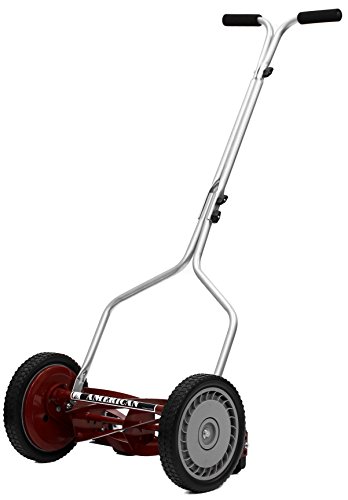
The American Lawn Mower Company 1304-14 is a mechanical push reel lawn mower built for reliable everyday use. Its 5-blade reel system 14-inch cutting width and durable 10-inch polymer wheels create a lightweight sturdy design that feels solid and simple right out of the box making it suitable for small to medium residential lawns.
Performance centers on the scissor action cut with heat-treated alloy steel blades that stay sharp for years. The adjustable height of 1 to 2.25 inches and ability to handle grass up to 4 inches tall deliver clean results while the completely pollution-free noise-free operation and low maintenance needs eliminate fuel oil and battery concerns for convenient quiet mowing sessions.
Key considerations include the physical effort required for pushing which can tire users on expansive or uneven terrain. The restricted cutting height and narrow width also mean it performs best on regularly maintained lawns rather than heavily overgrown or large areas where more power or coverage would help.
This model is best for environmentally focused homeowners with modest flat yards who prioritize quiet clean cutting and minimal upkeep. It offers strong value as a traditional effective tool that avoids the noise mess and costs of powered mowers while delivering consistent results for the right user.
Major Home Improvement Retailers
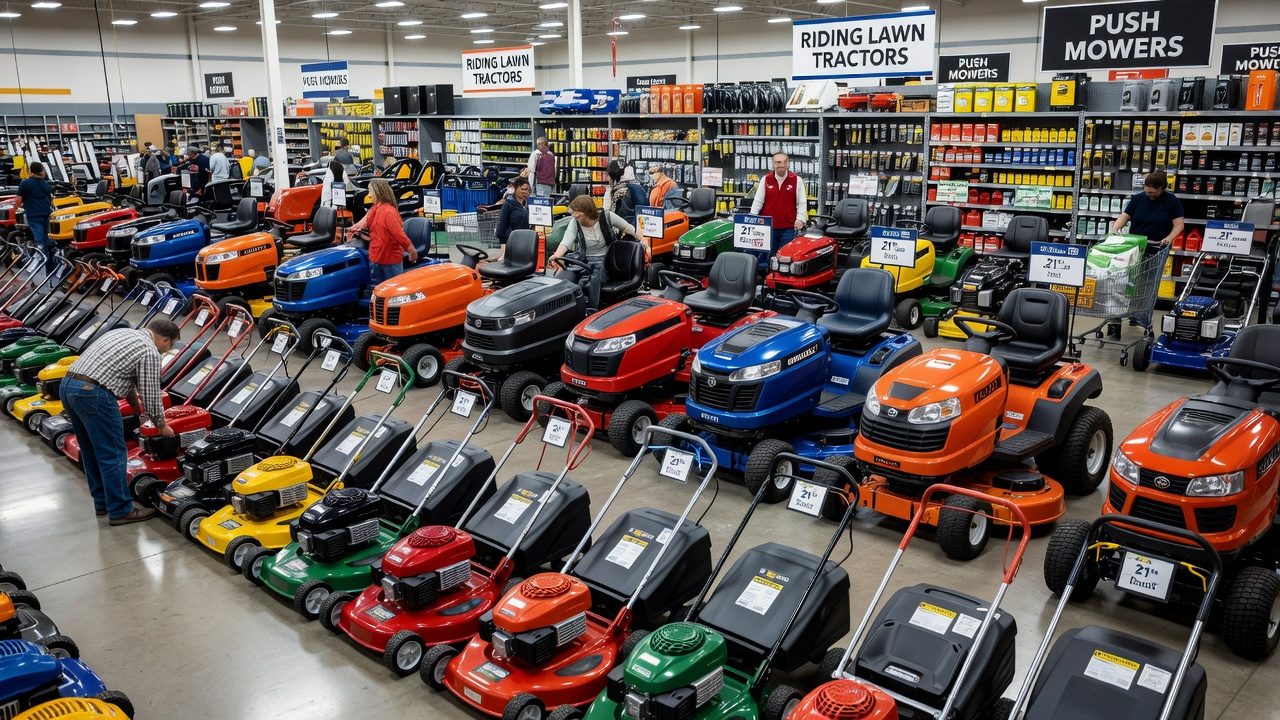
Home Depot and Lowe’s are the largest sources for lawn mowers in North America, offering in-store and online purchasing with broad inventory across all mower categories.
- Home Depot and Lowe’s: Stock push mowers, riding mowers, robotic mowers, and accessories across budget to premium price points. Both offer in-store pickup, delivery, and assembly services. Online reviews and ratings help compare models before purchase. Return policies typically allow 30 to 90 days for returns.
- Why shop here: Convenient locations, wide selection, competitive pricing, financing options (often 0% APR for 12 to 24 months on purchases over $299), and robust customer service. Many locations have lawn equipment specialists available for advice.
- Walmart and Amazon: General marketplaces with growing lawn equipment selection, particularly strong in budget-friendly and battery-powered options. Amazon offers Prime shipping and easy returns; Walmart provides in-store pickup and competitive pricing.
Specialty Equipment and Farm Retailers
Specialty retailers cater to buyers seeking deeper expertise, service support, and equipment maintenance options unavailable at general retailers.
- Tractor Supply Co.: A national chain specializing in outdoor equipment, carrying professional-grade and consumer-level mowers, particularly riding mowers and zero-turn equipment. Staff typically have equipment expertise. Many locations offer seasonal sales and loyalty programs.
- Local equipment dealers: Independent or small-chain dealers representing specific brands (John Deere, Husqvarna, Toro). These retailers often provide on-site service, repair, maintenance, and parts availability. Purchasing locally supports warranty claims and seasonal maintenance. Dealers frequently offer trade-in programs for old equipment.
- Garden centers and landscape suppliers: Smaller retailers often stock consumer mowers and premium commercial-grade equipment. Staff expertise varies but can include landscape professionals who understand equipment durability and performance.
Buying Directly from Manufacturers
Many mower manufacturers now offer direct-to-consumer sales through their websites, bypassing traditional retail channels.
- Manufacturer websites: John Deere, Husqvarna, Toro, Ryobi, and Craftsman sell directly online. Direct purchase often includes competitive pricing, bundle deals, and sometimes exclusive models or configurations unavailable through retailers.
- Advantages of buying direct: Manufacturer warranty support, access to customer service lines specific to your equipment, potential financing programs, and sometimes free or discounted shipping. Some manufacturers offer seasonal promotions and early access to new models.
- Trade-offs: Delivery may take longer; assembly responsibility falls on the buyer (though many offer assembly guides or in-home setup for a fee). Repair and maintenance support may be remote or require authorized local service centers.
Where to Find Specific Mower Types
Purchasing location often depends on the mower category you need.
Push Mowers (Gas and Electric)
- Widely available at all major retailers, Home Depot, Lowe’s, Walmart, Amazon, Tractor Supply.
- Battery-powered push mowers are increasingly common at big-box retailers due to rising consumer demand for quieter, lower-maintenance equipment.
- Gas models remain standard at equipment dealers and Tractor Supply, which often stock professional-grade brands.
Riding Mowers and Zero-Turn Equipment
- Specialty dealers and Tractor Supply Co. offer the widest selection of riding and zero-turn mowers, particularly commercial-grade and premium consumer models.
- Home Depot and Lowe’s stock entry-level and mid-range riding mowers; selection varies by location.
- High-end zero-turn equipment (Hustler, Exmark, Kubota) typically available only through dedicated equipment dealers.
Robotic Lawn Mowers
- Amazon, Walmart, and online specialty retailers lead in robotic mower availability. Models include Husqvarna Automower, WORX, and smaller brands.
- Some Home Depot and Lowe’s locations stock entry-level robotic models.
- Best selection and technical support available directly from manufacturer websites (Husqvarna, WORX).
Budget Considerations and Retailer Selection
Price points vary significantly across retailers and purchasing channels. Understanding where to shop for your budget tier saves time and money.
| Budget Tier | Best Purchasing Options | Typical Price Range |
|---|---|---|
| Budget-Friendly ($150-$400) | Walmart, Amazon, Home Depot, Lowe’s | Entry-level push mowers; battery-powered options; basic gas mowers |
| Mid-Range ($400-$1,500) | All major retailers; equipment dealers | Quality push mowers; riding mowers; robotic entry-level models |
| Premium ($1,500-$3,000+) | Equipment dealers; manufacturer direct; Tractor Supply | High-performance riding mowers; zero-turn equipment; commercial-grade consumer models |
| Professional/Commercial ($3,000+) | Dedicated equipment dealers; commercial suppliers | Professional zero-turn mowers; commercial-grade equipment |
Online vs. Local Purchase: Key Tradeoffs
When to Buy Online
- Broader selection and easier price comparison across retailers.
- Access to detailed customer reviews and product comparisons.
- Convenience for delivery to home (particularly large equipment like riding mowers).
- Often competitive pricing with in-store options.
- Ability to research and purchase outside business hours.
When to Buy Locally
- Hands-on inspection and testing before purchase (ride comfort on riding mowers, weight/balance on push models).
- Immediate availability, no shipping delays; use equipment same or next day.
- Local dealer support for repairs, maintenance, seasonal tune-ups, and parts.
- Trade-in and upgrade options; dealers often accept old equipment as credit toward new purchases.
- Expert advice from knowledgeable staff familiar with local conditions (terrain, grass types).
Buying Used Lawn Mowers: Secondary Markets
Budget-conscious buyers can find significant savings on used equipment through secondary markets, though careful evaluation is essential.
- Facebook Marketplace, Craigslist, and local classified ads: Largest secondary markets for used residential mowers. Prices typically 30 to 60% below retail for comparable used condition.
- Estate sales, auctions, and pawn shops: Occasional sources for quality used equipment; condition varies widely.
- Rental equipment companies: Some rent to own or sell off fleet equipment at season end.
- Pros: Significant cost savings; access to quality older models that may be more repairable than newer electronics-heavy designs.
- Cons: No manufacturer warranty; repair history unknown; risk of hidden mechanical issues; no seller support. Inspect thoroughly, test-run gas mowers, check battery condition on electric models, examine wear on blades and belts.
Delivery, Assembly, and Setup Considerations
How you purchase affects delivery, assembly, and setup costs.
- Big-box retailers: Typically offer free delivery on orders over $50-$99 (varies by location); in-store pickup often available same day. Assembly services available for riding mowers (often $50-$150 extra). Push mowers usually ship ready to use or require minimal assembly.
- Equipment dealers: Often include delivery and on-site assembly in the purchase price or for a small fee. Some perform pre-delivery maintenance and fuel system setup.
- Manufacturer direct: Shipping costs vary; assembly responsibility typically falls on buyer unless premium delivery service is selected (often $75-$200 additional).
- Used purchases: Buyer responsible for transport and assembly. Budget extra time for inspection and potential repairs.
Warranty and After-Sale Support
Consider warranty coverage and support availability when choosing where to purchase. Readers comparing setup options can review our technical analysis on marshall stanmore iii vs harman kardon onyx studio 8.
- Retailer purchases: Manufacturer warranty applies; retailer return policies provide additional protection (typically 30 to 90 days).
- Equipment dealers: Often extend or enhance manufacturer warranties; local support for repairs and parts.
- Manufacturer direct: Standard manufacturer warranty; support through dedicated customer service lines.
- Used equipment: No warranty; as-is purchase. Some dealers offer limited used equipment warranties (verify before purchase).
Seasonal Buying: Timing Your Purchase
Timing your purchase can affect availability, pricing, and inventory.
- Spring (March-May): Peak season. Full inventory but highest prices. Best selection of all models and brands.
- Summer (June-August): Lower prices as peak season ends. Clearance models available. Reduced inventory on popular items.
- Fall (September-November): Excellent deals on remaining inventory; retailers reducing stock before winter. Equipment dealers may have trade-in models at reduced prices.
- Winter (December-February): Lowest prices and quietest shopping environment. Limited inventory; specific models may be unavailable until spring stock arrives. Manufacturer and equipment dealer promotions often peak in January.
Financing Options
Many retailers and manufacturers offer financing to reduce upfront cost. For complementary field maintenance guidelines, examine our breakdown of dyson v8 cyclone vs bissell featherweight stick.
- Major retailers: 0% APR financing typically available on purchases $299+ for 12 to 24 months (terms vary).
- Equipment dealers: Often partner with finance companies for custom terms; may offer lease or rent-to-own programs.
- Manufacturer programs: Direct financing available through some brands; terms competitive with retailer offers.
- Credit cards: Some retailers offer store credit cards with promotional financing periods (verify terms and interest rates).
Common Questions on Where To Buy Lawn Mower Answered
Which retailer has the best selection of lawn mowers?
Home Depot and Lowe’s offer the widest general selection, with inventory across all mower types and price points. For specialty equipment (commercial-grade zero-turn mowers, professional riding equipment), dedicated equipment dealers and Tractor Supply Co. offer deeper expertise and selection. Online marketplaces like Amazon are strongest for battery-powered and robotic models.
Is it cheaper to buy a lawn mower online or in-store?
Prices are typically competitive between online and in-store channels at the same retailer. Online shopping offers easier price comparison and broader selection; in-store purchases provide immediate availability and hands-on inspection. Local equipment dealers may have higher sticker prices but include service and support that offset the difference for high-value purchases. Consider total cost of ownership (including warranty, repairs, and maintenance) rather than price alone. To evaluate matched hardware tolerances, consult our detailed overview of bissell crosswave hydrosteam vs shark stainforce.
Should I buy a new or used lawn mower?
Buy new if you want warranty coverage, current technology (battery-powered options, modern robotic models), and manufacturer support. Used equipment suits budget-conscious buyers comfortable with minimal warranty and capable of basic maintenance. Inspect used mowers thoroughly, test engines, check battery condition, examine wear on cutting decks and blades. Purchase from reputable local sources (equipment dealers offering limited warranties) rather than unknown private sellers when possible.
What should I look for when comparing lawn mower prices across retailers?
Compare the total package: base price, delivery and assembly fees, warranty coverage, financing options, and return policy. A mower priced $50 higher at a local dealer may provide better value if it includes delivery, assembly, seasonal maintenance, and local repair support. Account for energy costs (gas vs. electric), fuel efficiency, and long-term maintenance expenses in your comparison.
Related Maintenance and Operating Guides
To keep your equipment running at peak operating efficiency, explore our related technical walkthroughs and maintenance tutorials:
- Consult our detailed breakdown on residential zero-turn lawn mower guide.
Technical Standards and Compliance
Mechanical safety standards, operational tolerances, and protective gear guidelines align with benchmark specifications established by the American National Standards Institute (ANSI).









