
Direct Answer: Where to Spray Starter Fluid
Spray starter fluid directly into the air intake or carburetor throat of your lawn mower engine. Locate the air filter housing (typically on top of the engine), remove the air filter cover, and spray a short 1-2 second burst into the intake opening. For push mowers, this opening is accessible after removing the air filter cartridge. For riding mowers, locate the carburetor on the side of the engine and spray into the carburetor throat. Never spray into the fuel tank, oil fill, or spark plug hole, this will damage your engine.

Pros
- Listed for all gasoline and diesel engines
- Contains upper cylinder lube and corrosion inhibitor
- Manufacturer says safe for oxygen sensors and catalytic converters
- Listed uses include lawnmowers, snow blowers and construction equipment
Cons
- No customer reviews supplied to verify starting results
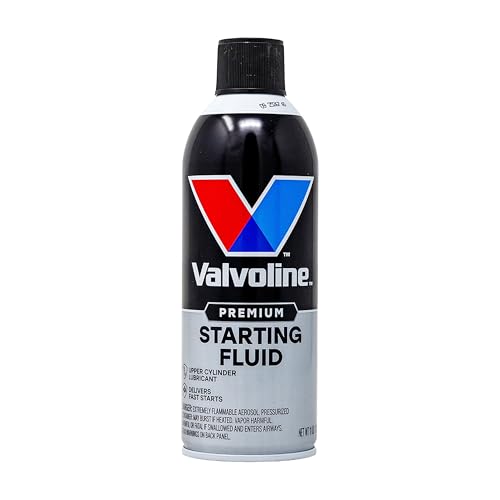
Pros
- 11 fl oz spray can, per listing
- Listed as suitable for cold starts and multiple equipment types
- Includes upper cylinder lubricant, per listing
- Weight listed as 0.86 pounds
Cons
- Lubrication and cleaning benefits are manufacturer-stated claims
- No usage or safety instructions are included in the listing data

Pros
- Listed for gasoline engines
- Manufacturer says it lubricates upper cylinders
- Manufacturer says it inhibits corrosion
- 11-ounce can, single pack
Cons
- Gasoline engines only, not diesel
- No customer reviews listed yet
Understanding Starter Fluid and When to Use It
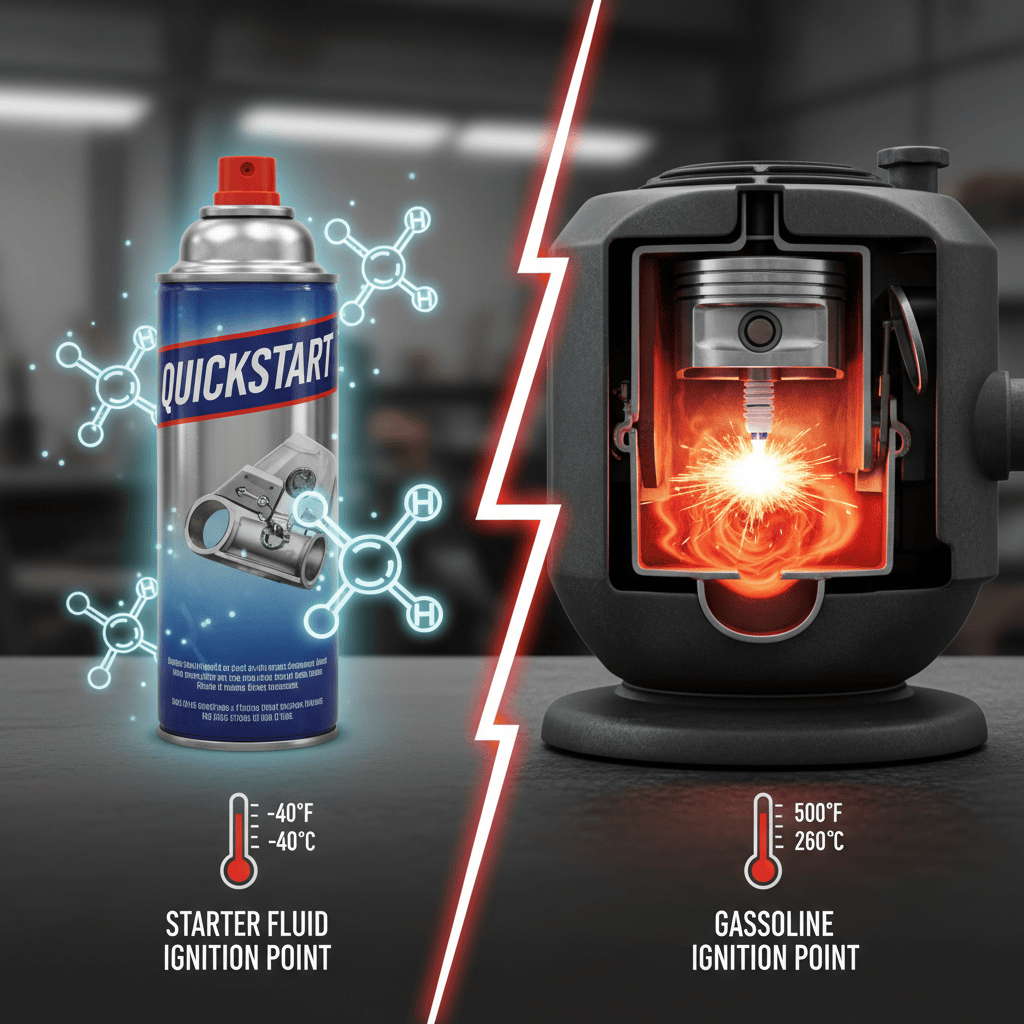
What Is Starter Fluid and How Does It Work?
Starter fluid (also called cold start fluid) is a volatile liquid containing ether or similar compounds that ignite at much lower temperatures than gasoline. When sprayed into the engine intake, it provides combustible vapor that helps cold or reluctant engines turn over and start. The fluid vaporizes quickly and burns in the combustion chamber, giving the engine the initial ignition boost needed to begin the normal fuel-burning process.
Most starter fluids are designed for short-term emergency use only. They are not fuel replacements and should not be used as a regular starting aid.
When Should You Use Starter Fluid on a Lawn Mower?
Starter fluid is appropriate in these situations:
- Cold weather starting (below 50°F) when your mower struggles to turn over
- After the mower has been stored for winter and fuel has degraded
- When you’ve confirmed the spark plug is firing and fuel is reaching the carburetor, but the engine still won’t catch
- As a one-time diagnostic tool to determine if the fuel system is the problem
Do not use starter fluid as a regular starting aid. If your mower requires starter fluid every time you use it, the carburetor, fuel system, or ignition system likely needs professional service.
Locating the Air Intake and Carburetor on Your Mower
Push Mower Air Filter Location
On most push mowers, the air filter housing is mounted directly on top of the engine. Look for a black plastic or metal dome-shaped cover with a center bolt or clips. The air filter cartridge sits inside this housing. To access the intake opening: When planning workspace deployment, consider the engineering criteria outlined in our z890 vs x870e motherboard guide.
- Locate the air filter cover on top of the engine
- Remove the center bolt or release the clip tabs holding the cover in place
- Lift off the plastic cover
- Remove the foam or paper air filter cartridge
- You’ll now see the carburetor throat opening directly below
The carburetor throat is the funnel-shaped opening where air enters the carburetor. This is your spray target.
Riding Mower Carburetor Location
On riding mowers, the carburetor is typically mounted on the side of the engine, often near the fuel tank or air filter housing. To locate it: For additional operational safety benchmarks, see our published testing notes on marshall stanmore iii vs harman kardon onyx studio 8.
- Turn off the engine and ensure the mower is parked on level ground
- Look for a cylindrical or rectangular component with fuel lines attached
- The carburetor throat (the opening where the air intake connects) faces upward or to the side
- You may need to remove a plastic air intake duct to access the throat directly
- Some riding mowers have the air filter in a separate housing, the carburetor is the component with visible fuel lines
Consult your mower’s manual for the exact carburetor location, as designs vary significantly between manufacturers.
Identifying the Correct Spray Opening
The air intake or carburetor throat will appear as: To compare alternative configurations, check our hands-on review of dyson v8 cyclone vs bissell featherweight stick.
- A funnel-shaped opening, typically 1-2 inches in diameter
- Located where the air filter housing connects to the engine
- Often a dark, open passage with no visible fuel or oil
- Sometimes labeled with arrows indicating airflow direction
If you’re unsure, consult your mower’s manual or take a photo to show a small engine repair technician.
Step-by-Step Instructions for Applying Starter Fluid
Preparation and Safety
Before applying starter fluid: Users looking for related component recommendations can explore our bissell crosswave hydrosteam vs shark stainforce breakdown.
- Ensure the engine is completely cool and turned off
- Disconnect the spark plug wire to prevent accidental starting
- Place the mower on a flat, level surface
- Work in a well-ventilated area (starter fluid fumes are strong)
- Wear safety glasses, starter fluid can splash
- Keep the starter fluid container away from ignition sources
- Have a fire extinguisher nearby
Removing the Air Filter Cover (Push Mower)
- Locate the center bolt or clip tabs on the air filter cover
- Using a wrench or screwdriver, remove the center bolt, or release the clip tabs by hand
- Gently lift the plastic cover straight up and set it aside
- Remove the foam or paper air filter cartridge and set it on a clean surface
- Do not discard the filter, you’ll reinstall it after starting the engine
Applying the Starter Fluid
- Hold the starter fluid can upright, 4-6 inches from the carburetor throat opening
- Aim the nozzle directly into the center of the intake opening
- Press the spray button for 1-2 seconds only, do not oversaturate
- A short burst is sufficient; excessive starter fluid can cause flooding or backfiring
- Immediately replace the air filter cartridge and cover (for push mowers)
- Reconnect the spark plug wire
Starting the Engine
- Set the choke to the “cold start” or “choke” position if your mower has one
- Prime the fuel system by pressing the primer bulb 3-5 times (if equipped)
- Pull the starter cord with a smooth, firm motion
- The engine should catch within 2-3 pulls if starter fluid was effective
- Once running, let the engine warm up for 30 seconds before operating
Important: If the engine does not start after 3-4 pulls, stop and wait 5 minutes. Do not spray additional starter fluid immediately, you risk flooding the engine.
Safety Warnings and Common Mistakes
What Happens If You Spray in the Wrong Location
Spraying into the fuel tank: This contaminates the fuel and can damage the carburetor. Starter fluid is incompatible with gasoline and will cause separation and varnish buildup.
Spraying into the oil fill: This dilutes engine oil, reducing its lubricating properties and causing engine wear or seizure.
Spraying into the spark plug hole: This can cause the spark plug to misfire or corrode, and the fluid may damage internal engine components.
Spraying while the engine is running: This risks severe backfiring, which can cause burns or ignite the starter fluid.
Can Starter Fluid Damage Your Lawn Mower Engine?
Starter fluid is safe when used correctly, occasional use in the carburetor intake causes no damage. However, repeated or excessive use can:
- Leave residue in the carburetor, requiring cleaning
- Cause carbon buildup in the combustion chamber
- Damage rubber seals in the fuel system if sprayed into the fuel tank
- Cause engine flooding or backfiring if overused
Using starter fluid more than once per season suggests an underlying mechanical problem that needs professional diagnosis.
Essential Safety Precautions
- Never spray while the engine is running. Risk of severe burns and backfiring.
- Keep starter fluid away from heat and sparks. It is highly flammable.
- Wear safety glasses. Starter fluid can splash or spray back.
- Disconnect the spark plug wire before working on the engine.
- Work in a well-ventilated area. Fumes are toxic in enclosed spaces.
- Never use starter fluid as a fuel additive. Add it only to the air intake.
- Store starter fluid in a cool, dry place away from children and pets.
Differences Between Push Mowers and Riding Mowers
Push Mower Application
Push mowers have the simplest starter fluid application because the air filter and carburetor are easily accessible on top of the engine. The entire process takes 2-3 minutes:
- Air filter housing is directly on top of the engine
- Carburetor throat is immediately below the air filter
- No need to remove guards or access panels
- Spray location is clearly visible once the air filter is removed
Riding Mower Application
Riding mowers require more investigation because the carburetor location varies by model:
- Carburetor is typically on the side of the engine, not directly on top
- May be partially obscured by the fuel tank or air intake duct
- You may need to remove plastic covers or air intake tubing to access the throat
- Fuel lines are attached to the carburetor, be careful not to disturb them
- Some models have the air filter in a separate housing from the carburetor
For riding mowers, consult your owner’s manual for the exact carburetor location before attempting to apply starter fluid.
Zero-Turn Radius Mowers
Zero-turn mowers typically have larger engines with carburetors located on the side of the engine block. The application process is similar to riding mowers, but you may have better access due to the open frame design. Always refer to the manufacturer’s manual.
When Starter Fluid Isn’t the Solution
What If Starter Fluid Doesn’t Work?
If your mower doesn’t start even with starter fluid, the problem lies elsewhere in the fuel or ignition system:
- No spark: Check the spark plug for fouling, gap, or damage. Replace if necessary.
- No fuel reaching the carburetor: Check the fuel filter, fuel lines, and fuel pump (on some mowers).
- Flooded engine: Remove the spark plug, pull the starter cord 10-15 times to clear excess fuel, then reinstall the spark plug.
- Carburetor blockage: Degraded fuel or debris may clog the carburetor jets, requiring professional cleaning.
- Ignition system failure: A faulty magneto or ignition coil will prevent spark generation.
When to Seek Professional Service
Stop using starter fluid and consult a small engine repair technician if:
- Your mower requires starter fluid every time you use it
- Starter fluid works once, but the mower won’t start the next time without it
- The engine starts with starter fluid but dies immediately
- You notice fuel leaking from the carburetor or fuel lines
- The mower has been stored for more than 6 months and won’t start even with starter fluid
These symptoms indicate carburetor cleaning, fuel system service, or ignition system repair, not a quick starter fluid fix.
Preventing Future Starting Problems
To avoid relying on starter fluid:
- Change the oil at the beginning of each season
- Replace the air filter annually or when visibly dirty
- Use fresh fuel and add fuel stabilizer before storing the mower for winter
- Run the mower dry or drain the fuel tank before long storage periods
- Clean or replace the spark plug annually
- Have the carburetor professionally cleaned every 2-3 years if the mower is used regularly
Buyer FAQs: Where To Spray Starter Fluid Lawn Mower Solved
Can You Spray Starter Fluid Into the Fuel Tank?
No. Never spray starter fluid into the fuel tank. Starter fluid contains ether or similar volatile compounds that are incompatible with gasoline. Mixing them causes separation, varnish buildup, and carburetor damage. Starter fluid must be sprayed only into the air intake or carburetor throat, where it enters the combustion chamber directly.
How Much Starter Fluid Should You Use?
Use only a short 1-2 second burst. A single spray is typically sufficient. Oversaturating the carburetor can cause engine flooding, backfiring, or damage to internal components. If one burst doesn’t work, wait 5 minutes and try again, do not spray multiple times in succession.
Is It Safe to Use Starter Fluid on a Riding Mower?
Yes, starter fluid is safe for riding mowers when applied correctly to the carburetor intake. The process is the same as push mowers, but you may need to remove air intake ducts or covers to access the carburetor throat. Always disconnect the spark plug wire first and work in a well-ventilated area. Consult your owner’s manual for the exact carburetor location.
What Should You Do If Your Mower Engine Floods?
If you’ve sprayed too much starter fluid and the engine floods, remove the spark plug and pull the starter cord 10-15 times to clear excess fuel from the combustion chamber. Reinstall the spark plug, reconnect the spark plug wire, and try starting again. If flooding persists, wait 30 minutes for the fuel to evaporate, then try again. Repeated flooding indicates a carburetor problem requiring professional service.
Can You Use Starter Fluid on a Mower That’s Already Running?
No. Never spray starter fluid into a running engine. The sudden ignition of the fluid can cause severe backfiring, which risks burns and engine damage. Starter fluid is for cold-start assistance only, applied to a stopped engine before attempting to start it.
How Often Is It Safe to Use Starter Fluid?
Occasional use (once or twice per season) is safe. If you need starter fluid every time you use the mower, or multiple times per season, this indicates a mechanical problem, likely a dirty carburetor, degraded fuel, or ignition system issue. Continued reliance on starter fluid can damage the engine. Have your mower serviced professionally instead.
Starter Fluid Safety Notes
Starter fluid is highly flammable, so spray only as the label directs and keep sparks, open flames, and smoking well away from the engine. Broader safety guidance for outdoor power equipment is listed at American National Standards Institute (ANSI).