When your lawn mower starts smoking, the color of that smoke tells you almost everything you need to know about what’s wrong. White smoke typically means oil has entered the combustion chamber, blue or gray smoke indicates oil is burning during operation, and black smoke points to a rich fuel mixture. The first thing to check is your oil level, followed by the air filter condition and any visible leaks around the engine.
What Smoke Color Tells You
Smoke color is the most important diagnostic clue when your lawn mower is having problems. Different colors indicate different underlying issues, and understanding this basic framework helps you narrow down the cause quickly. The timing of when the smoke appears also matters: smoke at startup often has a different cause than smoke that appears while the engine is running under load.
White smoke that appears briefly when you first start the mower is often less serious than smoke that continues throughout operation. Blue or gray smoke during running suggests an ongoing oil consumption problem. Black smoke typically means the engine is getting too much fuel relative to air, which is often easier to fix than internal engine issues.
Keep in mind that smoke color alone doesn’t always give you a definitive diagnosis. It’s a starting point that points you toward the most likely causes, which you can then confirm through simple checks.
White Smoke: Oil in the Combustion Chamber
White smoke from a lawn mower almost always means oil has found its way into the combustion chamber. This is one of the most common smoking issues, and it often has a straightforward explanation. When oil burns in the cylinder, it produces a thick white or light gray smoke that may smell distinctly of burning oil.
The most frequent cause of white smoke is overfilling the engine oil. When there’s too much oil in the crankcase, the excess can splash past the piston rings or be forced into the cylinder through the crankcase ventilation system. This is why checking your oil level should always be your first step when you see white smoke.
Tipping the lawn mower is another very common cause of white smoke. When you tip the mower on its side to clean the deck or inspect the blade, oil can flow past the piston rings and into the combustion chamber. This oil then burns off when you start the engine, producing white smoke. The smoke usually clears after a few minutes of running as the oil burns away.
A loose or damaged oil filler cap can also allow oil to splash out and onto hot engine parts, creating smoke. Similarly, a failing gasket or seal can allow oil to leak into areas where it shouldn’t be. If you notice oil on the outside of the engine or around the base of the cylinder, you likely have a leak that needs attention.
For air-cooled engines (which is what most lawn mowers have), white smoke can sometimes indicate that the engine is simply very hot. However, this is less common than oil-related causes and usually occurs only under extreme conditions like mowing very tall, thick grass in hot weather.
Blue or Gray Smoke: Oil Burning During Operation
Blue or gray smoke that appears while the engine is running indicates that oil is being consumed during normal operation. This is a more serious issue than white smoke at startup because it suggests internal engine wear that allows oil to pass into the combustion chamber continuously.
Worn piston rings are one of the most common causes of blue smoke. The piston rings seal the gap between the piston and the cylinder wall, keeping oil in the crankcase and out of the combustion chamber. As these rings wear over time, they allow oil to seep past and burn along with the fuel-air mixture.
Worn valve seals can also cause blue smoke. These seals prevent oil from leaking down the valve stems into the combustion chamber. When they deteriorate, oil enters the cylinder through the intake or exhaust valves, producing a characteristic blue-gray smoke.
If your mower is a 2-stroke engine, blue smoke is actually somewhat normal because these engines burn oil mixed with the fuel. However, excessive blue smoke from a 2-stroke engine may indicate that the fuel-oil mixture is too rich, or that the engine is worn and consuming more oil than intended.
Blue smoke that gets worse as the engine warms up, or that increases when you put the engine under load (like when cutting thick grass), typically indicates more advanced internal wear. This type of smoke usually doesn’t go away on its own and often requires professional diagnosis.
Black Smoke: Rich Fuel Mixture or Incomplete Combustion
Black smoke from a lawn mower means the engine is running with too much fuel relative to the amount of air available for combustion. This is called a rich fuel mixture, and it’s often the easiest type of smoke to diagnose and fix. The smoke appears dark and may have a strong fuel odor.
A clogged air filter is the most common cause of black smoke. When the air filter becomes dirty or restricted, less air reaches the carburetor, creating a rich mixture. The engine compensates by burning more fuel than it can efficiently combust, producing black smoke. Replacing a dirty air filter is a simple fix that often resolves the problem immediately.
Carburetor issues can also cause black smoke. A stuck float, a dirty carburetor, or an incorrect adjustment can allow too much fuel into the engine. If the carburetor is flooding the engine, you may also notice fuel leaking from the carburetor or a strong fuel smell.
Using the wrong type of fuel or fuel that has gone stale can contribute to black smoke. Old fuel can gum up the carburetor and cause improper fuel metering. If you haven’t used the mower in a while, draining the old fuel and replacing it with fresh gasoline may help.
Choke problems can also cause black smoke. If the choke is stuck in the closed position or isn’t opening fully as the engine warms up, it restricts airflow and creates a rich mixture. This is more common on older mowers with manual chokes.
First Diagnostic Steps You Can Safely Do
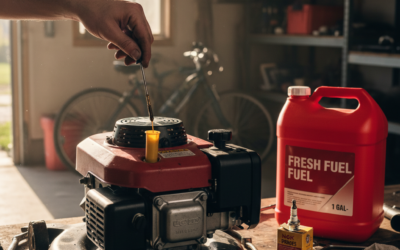
Before you do anything else, check your oil level. Make sure the mower is on a level surface and the engine is off. Pull out the dipstick, wipe it clean, reinsert it fully, then pull it out again to read the level. The oil should be between the low and high marks. If it’s above the high mark, you’ve likely overfilled it, which is a common cause of white smoke.
If the oil level is correct, inspect the air filter. Remove the air filter cover (usually held by clips or screws) and examine the filter. A dirty or clogged air filter will be visibly darkened with dirt and debris. Paper filters should be replaced when dirty; foam filters can often be washed and re-oiled according to the manufacturer’s instructions.
Look for visible oil leaks around the engine. Check the area around the oil filler cap, the base of the cylinder, and any gasket surfaces. Oil on the outside of the engine can drip onto hot surfaces and create smoke. Tightening a loose oil cap or replacing a damaged gasket may solve the problem.
Check for debris under the mower deck and around the engine. Grass clippings and other debris can accumulate on hot engine parts and create smoke or even pose a fire risk. Clean any debris you find with the engine off and cool.
Consider when the smoke appears. If it’s only at startup and clears after a few minutes, it’s likely residual oil that will burn off. If it continues throughout operation, you have an ongoing issue that needs attention. If the smoke gets worse under load, the problem may be more serious.
Safety Considerations When Troubleshooting
Always let the engine cool before working on it. The muffler and engine surfaces can remain hot long after the engine is turned off, and touching them can cause serious burns. Wait at least 15 to 20 minutes after shutting off the engine before inspecting or working on any components.
Never run the engine indoors or in an enclosed space. Lawn mower engines produce carbon monoxide, which is odorless and colorless but extremely dangerous. Always work in a well-ventilated outdoor area.
Be cautious when tipping the mower. While it’s sometimes necessary to inspect the underside, tipping can cause oil to flow into the wrong places and create new problems. If you must tip it, consult your owner’s manual for the correct procedure for your specific model. Some manufacturers recommend tipping with the air filter side up, while others have specific instructions.
Oil on hot engine parts can create a fire risk. If you notice significant oil leaks or oil splattered on the engine, don’t run the mower until you’ve cleaned it up and identified the source of the leak.
Wear appropriate clothing and avoid loose items that could get caught in moving parts. Even with the engine off, the blade and other components can cause injury if they move unexpectedly.
When Smoke Indicates a Serious Problem
Some smoking issues require professional diagnosis and repair. If you notice any of the following symptoms along with smoke, it’s time to stop using the mower and consult a qualified technician:
- Persistent blue or gray smoke that doesn’t go away after the engine warms up
- Smoke accompanied by a significant loss of power or difficulty starting
- Unusual noises like knocking, rattling, or grinding along with smoke
- Visible oil leaks that you can’t identify or fix yourself
- Smoke that gets progressively worse over a short period of time
- Oil consumption that requires frequent topping off between uses
Internal engine wear like worn piston rings, damaged valves, or cylinder scoring typically requires disassembly and specialized tools to repair. Attempting these repairs without proper knowledge can cause further damage and may be unsafe.
When you take the mower to a repair shop, be prepared to describe when the smoke appears, what color it is, and any other symptoms you’ve noticed. This information helps the technician diagnose the problem more quickly.
Continuing to run a smoking engine can cause additional damage. What might start as a minor issue can become a major repair if the engine is run in a damaged state for too long. It’s usually better to address the problem early, even if it means a trip to the repair shop.
Understanding 2-Stroke vs 4-Stroke Engines
The type of engine your lawn mower has affects how smoke behaves and what it means. Most modern push mowers and riding mowers use 4-stroke engines, which have a separate oil reservoir and don’t require oil to be mixed with the fuel. Some older push mowers and string trimmers use 2-stroke engines, where oil is mixed with the gasoline.
With a 4-stroke engine, any smoke is abnormal and indicates a problem. The oil should stay in the crankcase and the fuel should stay in the fuel system, never the twain shall meet except through normal combustion.
With a 2-stroke engine, a small amount of blue smoke is normal because the oil is designed to burn with the fuel. However, excessive blue smoke may indicate that the fuel-oil mixture is too rich, or that the engine is worn and consuming more oil than it should.
If you’re unsure which type of engine you have, check your owner’s manual or look for markings on the engine. The type of oil fill and whether you mix oil with fuel are clear indicators.
Preventing Future Smoking Issues
Regular maintenance is the best way to prevent smoking problems. Check your oil level before each use and change it according to the manufacturer’s recommended schedule. Keep the air filter clean or replace it regularly. Use fresh fuel and add a fuel stabilizer if you plan to store the mower for more than a month.
Avoid overfilling the oil. When adding oil, add a little at a time and check the level frequently. It’s easier to add more oil than to drain excess.
Be careful when tipping the mower for maintenance. If you must tip it, follow the manufacturer’s recommendations and be aware that oil may flow into areas where it shouldn’t be.
Store the mower in a clean, dry area and cover it to prevent debris accumulation. Clean grass clippings and other debris from the engine and deck after each use to prevent buildup that can cause problems.
Address any small problems promptly. A minor oil leak or a slightly dirty air filter can become a bigger issue if ignored. Regular attention to your mower’s condition will help keep it running smoothly and smoke-free.