Direct Answer: To start a lawn mower after winter, check and top off the oil, inspect the spark plug for corrosion or damage, verify the fuel is fresh (drain old fuel if stored longer than 30 days), ensure the battery has charge if applicable, and attempt a cold start using the choke. If it doesn’t start, clean the carburetor, replace the spark plug, or flush the fuel system.
Why Winter Storage Affects Lawn Mower Starting
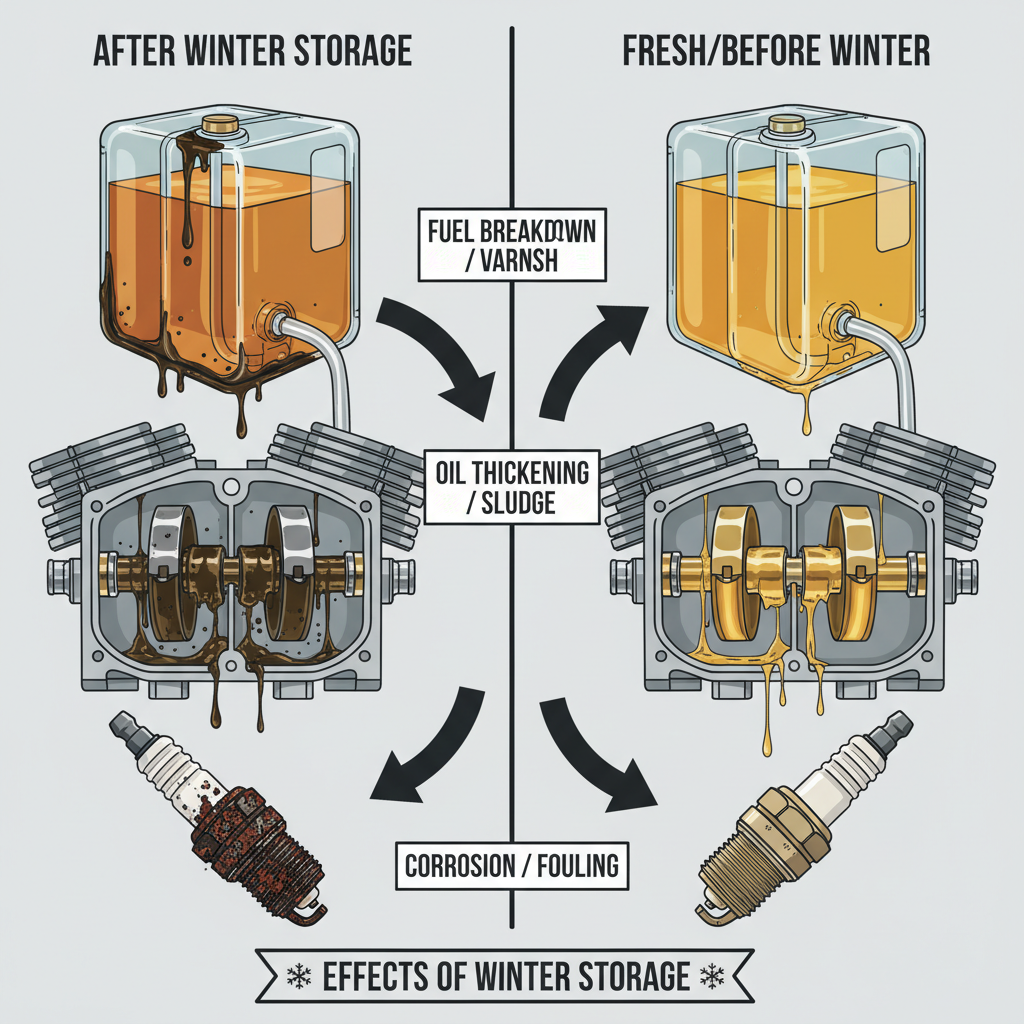
Lawn mowers sit idle during winter months, and this dormancy creates several mechanical and chemical challenges. Understanding what happens during storage helps explain why your mower needs special attention before the first spring start.
Fuel Degradation is the primary culprit. Gasoline begins to break down chemically within 30 days of storage, developing a varnish-like residue that clogs fuel lines and carburetor jets. After 90 days, the fuel becomes significantly degraded, making cold starts nearly impossible. This oxidation process accelerates in warm storage conditions.
Oil Viscosity Changes in cold temperatures. Engine oil thickens as temperatures drop, reducing its ability to flow through the engine during cold starts. Winter-stored mowers have thicker oil that requires more cranking force to circulate, stressing the starter and making ignition harder.
Spark Plug Deposits accumulate during idle periods. Carbon buildup and corrosion on spark plugs prevent proper ignition, especially when combined with the rich fuel mixture needed for cold starts. A spark plug that worked perfectly in fall may fail entirely after months of winter storage.
Battery Charge Loss occurs gradually. If your mower has an electric starter or battery-powered features, charge dissipates over winter. A weak or dead battery prevents the engine from cranking fast enough to start, even if everything else functions correctly.
Pre-Start Inspection: Oil, Fuel, and Spark Plug
Before attempting to start your mower, complete these essential checks. This takes 15–20 minutes and prevents damage to the engine.
Check and Change the Oil
- Locate the oil dipstick or sight glass on your mower’s engine.
- Wipe the dipstick clean, reinsert it fully, and remove it to check the level.
- The oil should reach the full mark. Top off with the correct oil grade for your mower (usually SAE 30 for warm climates or 10W-30 for colder regions; consult your manual).
- If the oil appears dark, sludgy, or smells burnt, drain and replace it completely. Winter storage often leads to water condensation in the oil, degrading its quality.
- Pour old oil into a drain pan and dispose of it properly at a recycling center. Add fresh oil until the level reaches full.
Assess the Fuel Situation
- Check the fuel tank. If you stored the mower with fuel inside and it’s been more than 30 days, assume the fuel is stale.
- If the tank has old fuel, drain it completely into a container. Locate the fuel drain valve at the bottom of the tank, or use a siphon to remove fuel from the filler neck.
- Add fresh gasoline. Use regular unleaded fuel (87 octane or higher) without ethanol if possible; ethanol absorbs water and accelerates fuel degradation.
- If you used fuel stabilizer before storing the mower in fall, the fuel may still be usable if storage was shorter than 60 days. If uncertain, replace it anyway—fresh fuel costs less than carburetor cleaning or repair.
Inspect and Replace the Spark Plug
- Locate the spark plug (usually accessible from the top or side of the engine; consult your manual).
- Disconnect the spark plug wire by twisting and pulling gently.
- Use a spark plug socket and ratchet to unscrew the old plug.
- Inspect it: a good spark plug should have a light tan or gray center electrode. If it’s black, wet, or has a large gap, replacement is needed.
- Install a new spark plug (gap set to manufacturer specs, typically 0.025–0.040 inches) or clean the old one with a wire brush if it’s only slightly fouled.
- Reconnect the spark plug wire firmly.
Starting a Gas-Powered Lawn Mower After Winter
Once inspections are complete, follow this procedure for a cold start. Most small gas engines use similar steps, though details vary by manufacturer.
Step-by-Step Cold Start Procedure
- Set the Choke: Locate the choke lever (usually on the side of the engine or control panel). Move it to the “Choke” or “Cold” position. The choke restricts airflow, creating a rich fuel mixture needed for cold ignition.
- Prime the Fuel Line (if applicable): Some mowers have a primer bulb. Squeeze it 3–5 times until you feel resistance and see fuel move through the clear fuel line. This fills the carburetor bowl before ignition, reducing the number of pulls needed.
- Engage the Brake/Safety Feature: Ensure the blade brake or dead-man switch is engaged. Most mowers won’t start unless the operator is holding the safety bar.
- Open the Fuel Valve: Locate the fuel valve at the base of the carburetor or fuel tank. Turn it to the “On” position (not “Reserve”). Some mowers have no manual valve; fuel flows automatically.
- Pull the Starter Cord: Grip the cord handle firmly. Use a quick, smooth motion—not a slow, forceful pull. The sudden jerk creates the compression and spark needed for ignition. Make 3–5 pulls before pausing.
- Listen for Catching: After a few pulls, the engine may sputter or catch briefly. This is a sign the fuel system is working. Continue pulling.
- Gradual Choke Reduction: Once the engine starts (even if briefly), move the choke to “Half Choke” or “Run” position after 10–15 seconds. This leans out the fuel mixture and prevents flooding. If the engine stalls, return the choke to “Full Choke” and restart.
- Let It Warm Up: Once running smoothly, let the engine idle for 30 seconds to 1 minute. The engine should warm up and idle consistently before you begin mowing.
Common Cold-Start Variations
Mowers Without a Choke: Some modern mowers have automatic choke systems. In these cases, simply engage the safety bar and pull the starter cord. The carburetor automatically adjusts the fuel mixture.
Electric-Start Mowers: If your mower has an electric starter button instead of a pull cord, ensure the battery is charged (see troubleshooting section). Press the button for 2–3 seconds. If the engine cranks but doesn’t start, release and wait 30 seconds before trying again to avoid draining the battery.
Troubleshooting: Mower Won’t Start After Winter
If the engine doesn’t start after following the procedure above, work through these diagnostics systematically.
The Engine Is Flooded
Symptom: The engine turns over but doesn’t ignite. You smell strong gasoline around the mower, or fuel drips from the spark plug hole.
Cause: Too much fuel has accumulated in the combustion chamber, preventing spark ignition.
Fix:
- Remove the spark plug completely and place it on a dry surface.
- Pull the starter cord 10–15 times with the spark plug out. This purges excess fuel from the cylinder.
- Wipe the spark plug dry and reinstall it.
- Attempt a restart with the choke in the “Run” position (not full choke) to avoid re-flooding.
No Spark at the Spark Plug
Symptom: The engine spins but produces no spark; the spark plug remains dark and wet.
Cause: Faulty spark plug, damaged ignition coil, or loose connections.
Fix:
- Replace the spark plug with a new one. If the new plug still produces no spark after reinstalling, the ignition system may be faulty and require professional service.
- Check the spark plug wire connection. Disconnect and reconnect it firmly to ensure proper contact.
Fuel Won’t Reach the Carburetor
Symptom: The engine cranks but shows no signs of catching or firing. You suspect a fuel system blockage.
Cause: Stale fuel has clogged the fuel line, carburetor jets, or fuel filter.
Fix:
- Locate the fuel filter (if your mower has one—consult your manual). Replace it with a new filter of the same size and type.
- Disconnect the fuel line from the carburetor inlet and direct it into a container. Turn the fuel valve on. If fuel flows freely, the line is clear. If not, the line is clogged and may need replacement.
- If fuel flows but the carburetor is still clogged, drain the fuel tank completely and flush it with fresh gasoline or carburetor cleaner. This requires more advanced work; consider professional service if uncomfortable.
Air Filter Is Dirty
Symptom: The engine starts but runs rough, sputters, or stalls quickly.
Cause: A clogged air filter restricts oxygen, creating an overly rich fuel mixture.
Fix:
- Locate the air filter housing (typically a canister on the side of the engine).
- Remove the filter element. If it’s paper, tap it gently against a hard surface to dislodge dust. If it’s foam, rinse it with clean water and let it dry completely before reinstalling.
- If the filter is heavily soiled or damaged, replace it with a new one of the same type.
Pull Cord Won’t Engage or Is Stuck
Symptom: The starter cord is frozen or extremely difficult to pull.
Cause: Engine oil has thickened in cold temperatures, or internal corrosion has seized the mechanism.
Fix:
- Do not force the cord; you may break it. Instead, let the mower warm in the sun for 30–60 minutes to raise the oil temperature.
- Attempt gentle pulls after warming. The engine should gradually loosen as the oil flows.
- If the cord remains stuck after warming, the engine may have internal corrosion. Professional service is recommended.
Electric and Battery-Powered Mowers After Winter
Corded Electric Mowers: These require minimal winter preparation. Simply plug them in and start. If the mower doesn’t power on, check the outlet (try plugging in another device to test). Inspect the power cord for damage. Ensure the safety switch is engaged.
Battery-Powered Mowers: Rechargeable batteries lose charge over winter, typically losing 15–30% of capacity after 3–4 months of storage. Before spring use:
- Charge the battery fully using the manufacturer’s charger. Most batteries require 30 minutes to 2 hours for a full charge.
- If the battery won’t hold a charge after being stored uncharged over winter, it may be permanently damaged. Lithium-ion batteries degrade if left fully discharged; always store batteries at 50% charge in a cool location.
- Once charged, test the mower on a small section of lawn before tackling the full yard. Battery performance often returns to normal after a few uses as cells reactivate.
When to Seek Professional Service
If you’ve completed all troubleshooting steps and the mower still won’t start, professional repair may be necessary. Seek help if:
- The pull cord remains frozen after warming and gentle pulling.
- The engine spins but produces absolutely no spark even after replacing the spark plug.
- The carburetor is severely clogged with varnish; it requires disassembly and soaking in carburetor cleaner.
- The fuel tank has internal rust or contamination visible inside.
- The mower is 10+ years old and repair costs approach the price of a new unit.
Small engine repair shops typically charge $50–$150 for diagnosis and basic repairs. Spring is their busy season, so schedule appointments early to avoid long waits.
Preventing Winter Starting Problems Next Year
After successfully starting your mower, plan ahead for next winter:
- Add Fuel Stabilizer: Before storing the mower in fall, add fuel stabilizer to a full tank of gasoline. Run the mower for 5 minutes to distribute the stabilizer through the fuel system. This prevents varnish formation and keeps fuel fresh for up to 12 months.
- Change Oil Before Storage: Fresh oil resists water absorption better than old oil. Drain and replace oil before the first freeze.
- Store in a Dry Location: Keep the mower in a shed, garage, or covered area. Moisture promotes rust and corrosion on metal components.
- Remove or Isolate the Battery: If your mower has a battery, disconnect it or store it separately indoors. This prevents charge loss and extends battery life.
Frequently Asked Questions
How often should I pull the starter cord before giving up and troubleshooting?
Make 5–10 firm, steady pulls before pausing. If the engine shows no signs of catching or turning over smoothly, stop and troubleshoot. Excessive pulling drains your energy and can cause rope burn on your hands. Move the choke gradually toward “Run” on the 3rd–5th pull to prevent flooding.
Can I use last year’s fuel in my lawn mower?
Only if you stored it with fuel stabilizer and it’s been less than 90 days. Without stabilizer, gasoline becomes unusable after 30 days. Stale fuel causes poor ignition, rough running, and carburetor clogs. When in doubt, drain old fuel and refill with fresh gasoline.
Why does my mower start but then immediately stall?
This typically indicates the choke is still in the “Full Choke” or “Cold” position. As soon as the engine catches, gradually move the choke toward “Run.” A fully choked engine receives too much fuel and dies within seconds. Also check that the fuel valve is in the “On” position; if it’s closed or set to “Reserve,” fuel won’t reach the carburetor after the initial primer.
Is it normal for a lawn mower to be hard to start after winter?
Yes, some difficulty is normal due to thickened oil, potential fuel degradation, and cold combustion temperatures. However, excessive resistance—such as a completely frozen pull cord or zero engine response after 10 pulls—indicates a problem requiring troubleshooting or professional service. Well-maintained mowers with fresh fuel and new spark plugs typically start within 3–5 pulls in spring.