Most lawn mowers that won’t start have one of four root causes: stale or missing fuel, no spark, blocked air flow, or a safety interlock preventing the engine from running. Start by confirming fresh fuel in the tank, then check the spark plug, air filter, and safety switches in that order. The fix is often a $5 spark plug, a carburetor cleaning, or simply engaging the correct safety lever.
Safety First: Before You Touch Anything
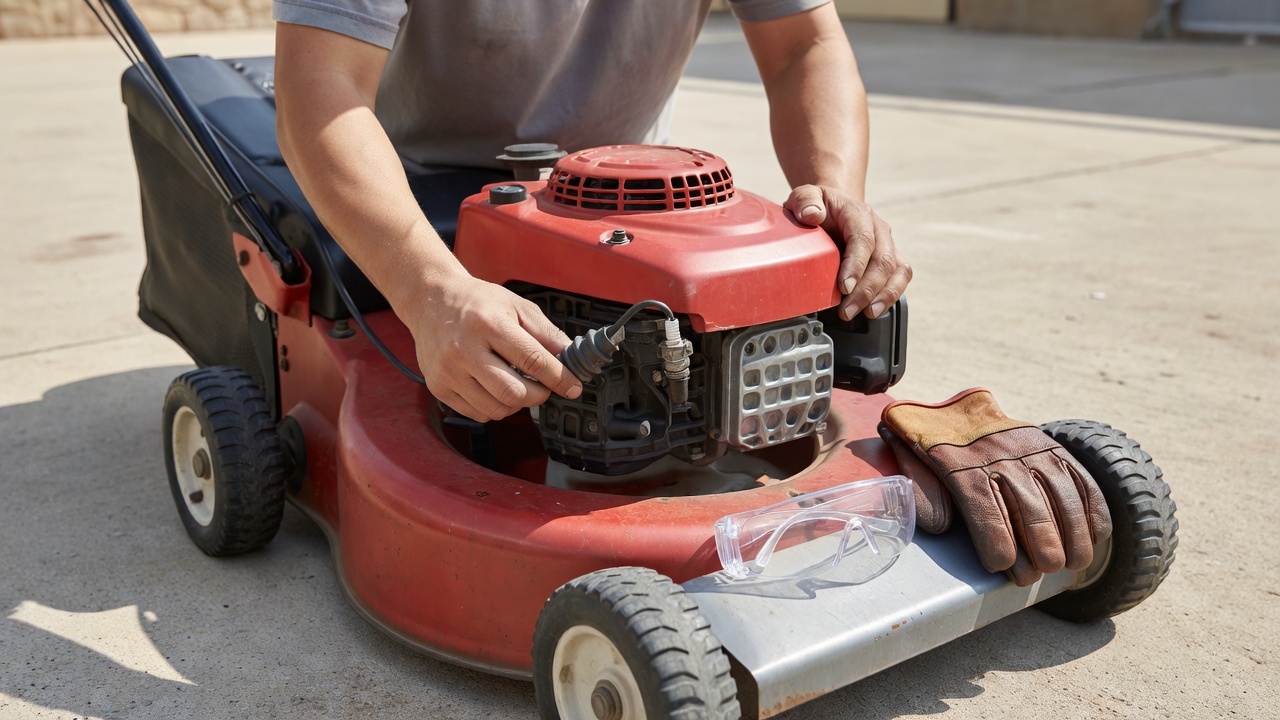
Before diagnosing any lawn mower problem, follow these non-negotiable safety steps regardless of mower type:
- Park on level ground and turn off the engine completely. Allow it to cool for at least 5 minutes before working on it.
- Disconnect the spark plug wire (on gas mowers) by grasping the boot—not the wire itself—and twisting it off. This prevents accidental engine start while you work near the blade or engine.
- Never run a gas engine indoors or in an enclosed space. Gasoline engines produce carbon monoxide, which is colorless, odorless, and lethal.
- For electric mowers, unplug the cord from the outlet before inspecting the blade brake, safety interlock, or any electrical connection.
- For battery mowers, remove the battery from the mower before performing any work on the engine or blade area.
Identify Your Mower Type and the Symptom
The troubleshooting path depends on two things: what kind of mower you have and what happens when you try to start it. Does the engine crank (turn over) but refuse to fire, or is it completely silent?
Gas push mowers use a pull cord or electric starter to turn the engine and rely on a spark plug to ignite fuel. Riding mowers add a battery, key ignition, and seat safety switch. Corded electric mowers depend on a live outlet and a properly grounded extension cord. Battery-powered mowers use a rechargeable lithium or lead-acid battery and a blade-brake interlock.
Each type has distinct failure modes, but all mowers share the same basic requirement: fuel, spark, air, and a closed safety circuit. If any one is missing, the engine won’t start.
Gas Mowers: Engine Cranks but Won’t Fire
If you pull the cord and the engine turns over but doesn’t ignite, the problem is almost always fuel, spark, air, or the carburetor. Check these in order:
Check Fresh Fuel First
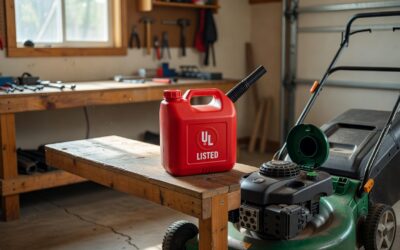
Stale gasoline is the number-one cause of mid-season no-start. Fuel loses its volatility after about 30 days, especially in warm climates. Old fuel can gum up the carburetor passages and prevent the engine from drawing a proper air-fuel mixture.
- Look inside the fuel tank. Do you see fuel? Does it smell fresh or stale and varnished?
- Check the fuel valve (if your mower has one) is turned on.
- Make sure the tank vent—a small hole or breather near the filler cap—is not blocked by dirt or debris.
- If the fuel is more than a month old or smells off, drain the tank using the drain plug (or by tilting the mower if no plug exists) and refill with fresh gasoline.
Check the Spark Plug
A fouled or incorrectly gapped spark plug prevents ignition even when fuel and air are present. To check:
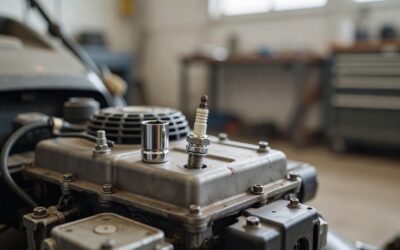
- With the spark plug wire disconnected, use a spark plug socket and ratchet to unscrew the plug (be sure the engine is cool).
- Inspect the plug tip. It should be light tan or white. A black, wet, or oily plug indicates fouling and should be replaced.
- If the plug looks serviceable, clean the tip with a wire brush and reinsert it.
- If you suspect fouling or it’s been in the mower for more than a season, buy a replacement spark plug that matches your mower’s specification and install it.
- Reconnect the spark plug wire firmly—it should snap into place with a click.
Check the Air Filter
A clogged air filter starves the engine of oxygen and prevents combustion. Foam and paper filters accumulate dust and grass debris:
- Locate the air filter housing (usually on top of or beside the engine).
- Remove the cover and slide out the filter.
- If it’s visibly clogged with dirt or matted down, it needs cleaning or replacement.
- For a foam filter, rinse it gently under warm water, squeeze out excess water, and let it dry. Do not wring it.
- For a paper filter, tap it gently to dislodge surface dust. If it’s still clogged, replace it.
- Reinstall the filter and cover.
Check the Carburetor and Prime the Engine
The carburetor mixes fuel and air. If the main jet (the fuel passage) is blocked, or if you’re starting a cold engine, you may need to prime.
- If your mower has a primer bulb (a small plastic bulb on the carburetor), press it 3 to 5 times with the spark plug wire off. This draws fuel into the carburetor.
- If your mower has a choke lever, move it to the “choke” or “cold” position before attempting to start.
- Try starting again. Once the engine catches, move the choke back to “run.”
- If the engine still won’t fire and you suspect the main jet is clogged, use a carburetor cleaning spray. Spray the jet opening lightly while the spark plug wire is disconnected. Do not soak the carburetor or spray for extended periods in an enclosed space—the fumes are irritating.
Flooded Engine
If you’ve been pulling the cord repeatedly or priming too many times, fuel may have accumulated in the cylinder. To clear a flooded engine:
- Remove the spark plug with the engine off.
- Pull the starter cord 5 to 10 times slowly to expel excess fuel from the cylinder.
- Wait 10 to 15 minutes with the plug out and the air intake open to allow fumes to dissipate.
- Reinstall the spark plug, reconnect the wire, and try starting again.
Gas Mowers: Engine Won’t Crank at All
If the engine is completely silent and won’t turn over, the problem is mechanical (a stuck blade or flywheel) or electrical (a dead battery or broken safety interlock):
Check the Blade Control Bail and Safety Switches
Push mowers have a blade control bail (a lever you squeeze toward the handle). If you release it or don’t engage it fully, the engine won’t crank:
- Squeeze the bail all the way toward the handle and hold it while you pull the starter cord.
- If the engine still won’t turn, the bail or its interlock switch may be faulty and require professional repair.
Riding mowers have multiple interlocks: the seat switch, the PTO (Power Take-Off) lever, and the blade brake lever. If any is disengaged, the engine won’t crank:
- Sit firmly on the seat.
- Move the PTO lever to the “off” or “neutral” position.
- Make sure the blade brake lever is in the “off” position (consult your manual for exact positions).
- Try the key ignition again.
Check the Starter Rope and Flywheel Brake
On push mowers with a pull cord:
- Grasp the starter handle and pull smoothly. Does the rope pull freely or is it stuck?
- If the rope is stuck, the flywheel brake may be engaged against the flywheel or the engine may have internal damage. Do not force the cord—this can break it. Consult a professional.
- If the rope pulls but the engine doesn’t turn, the rope may be disconnected inside the handle. This requires professional service.
Check the Riding Mower Battery and Electrical Connections
Riding mowers have a battery and key ignition:
- Turn the key to “on” and look for dashboard lights or a choke indicator. If nothing lights up, the battery may be dead.
- Open the battery access panel and inspect the terminals. Corrosion (white, blue, or green crusty buildup) on the battery posts or cable connectors can prevent current flow.
- If terminals are corroded, carefully disconnect the cables (negative first) and scrub the terminals and connectors with a wire brush and a mixture of baking soda and water. Rinse and dry, then reconnect (positive first).
- If the battery terminals are clean but the lights still don’t come on, the battery is likely dead and needs charging or replacement. Use a battery charger or consult a professional.
Electric and Battery Mowers: Won’t Start
Corded Electric Mowers
- Check that the outlet is live by plugging in a lamp or phone charger. If the outlet is dead, try a different outlet or reset the GFCI (Ground Fault Circuit Interrupter) button on the outlet or nearby circuit breaker.
- Inspect the extension cord for cuts, cracks, or exposed wires. If damaged, replace it with a cord rated for outdoor use and suitable for the mower’s amperage (consult the mower’s label).
- Make sure the blade safety key or interlock lever is in the correct position. This is usually a clip or lever under the handle. Engage it fully and try starting.
- If the mower hums but the blade doesn’t turn, the motor may have stalled due to heavy grass or a stuck blade. Turn off, unplug, and inspect the blade for debris or jamming.
Battery-Powered Mowers
- Check the battery charge indicator lights on the battery or charger. If the battery shows low or no charge, place it in the charger for the full recommended time (typically 4 to 8 hours for lead-acid, 30 to 60 minutes for lithium).
- Make sure the battery is fully seated in the mower. It should click or lock into place. If it’s loose, remove it and reinsert it firmly.
- Engage the blade safety key or bail lever fully. Battery mowers often have multiple interlocks—the blade brake and the safety key must both be activated.
- If the mower beeps or shows a red light when you try to start, the battery management system may have triggered a lockout due to low voltage or overheating. Allow the battery to cool for 30 minutes and try charging it again.
- If the blade spins but no battery appears in the charger port, the charger itself may be faulty. Test the charger with a different battery if available.
Quick Fixes You Can Do Today
Most no-start problems can be solved with simple parts or procedures:
- Replace the spark plug. Buy the correct plug for your mower model, remove the old one with a spark plug socket, and thread the new one in by hand first, then tighten with the socket. Cost: $3–$8.
- Clean or replace the air filter. Remove the filter housing, take out the filter, and rinse or replace it. Reinstall and secure the cover. Cost: $0 (cleaning) or $10–$20 (replacement).
- Drain and refill with fresh fuel. Use the drain plug under the tank or tilt the mower carefully to empty old fuel into a container. Refill with fresh gasoline and try starting. Cost: $0–$5.
- Clean the carburetor main jet. Spray carburetor cleaner into the jet opening (marked on most carburetors) while the spark plug is disconnected. Avoid prolonged spraying in enclosed spaces. Cost: $5–$10.
- Tighten or replace the spark plug wire. If the wire connection is loose, push it onto the plug firmly until it clicks. If it’s cracked or damaged, replace it. Cost: $10–$20.
When to Stop and Call a Professional
If you’ve completed the checks above and the mower still won’t start, or if you encounter any of the following, professional service is recommended:
- The starter rope is stuck or broken. Freeing a stuck rope or replacing the recoil assembly requires engine disassembly.
- The engine has low compression. If you suspect internal damage (bent crankshaft, damaged piston), the engine may need rebuild or replacement.
- The carburetor requires a full rebuild or cleaning beyond the main jet. If spraying the main jet doesn’t work, the carburetor may need soaking in cleaning solution or professional disassembly.
- The riding mower battery won’t hold a charge. A dead battery after charging suggests a failed battery or alternator, both of which require replacement.
- The spark plug produces no spark. If a new plug still shows no spark when the wire is held near the engine (a common test), the ignition coil or magneto may be faulty.
- Repair cost approaches or exceeds half the mower’s replacement value. Older mowers may be more economical to replace than repair.
Preventive Maintenance: Start Your Mower Next Season
Most no-start problems can be prevented with simple off-season care:
- Use fuel stabilizer before winter storage. Add fuel stabilizer (follow package directions) to a full tank of fresh gasoline before the last mow of the season. Run the engine for 10 minutes to circulate the treated fuel through the carburetor. This extends fuel storage life to 12–24 months and prevents gum buildup.
- Store the mower in a cool, dry place. Moisture and temperature swings accelerate fuel degradation and promote rust.
- Replace the spark plug annually or after 100 hours of use, whichever comes first.
- Clean or replace the air filter every season or more often if you mow in dusty conditions.
- For riding mowers, charge the battery before storage and trickle-charge it monthly during the off-season to maintain charge.
- For battery-powered mowers, store the battery indoors at room temperature, fully charged or at 50% charge (consult your manual). Remove the battery from the mower during storage.
- Run fresh fuel through the carburetor before starting up in spring. If you stored with stabilizer, run the engine for a few minutes to clear any residue.
By keeping fresh fuel on hand, maintaining the spark plug and air filter, and storing the mower correctly, you’ll avoid most no-start headaches and keep your lawn mower running reliably for years.