Direct Answer
To change oil on a lawn mower, allow the engine to cool for 10–15 minutes, locate the oil drain plug underneath the engine, drain the old oil into a container, replace the oil filter if equipped, refill with the manufacturer-recommended oil type and capacity, and verify the oil level using the dipstick. The entire process takes 15–30 minutes and requires basic tools like a wrench, oil drain pan, and funnel.
Before You Start: Safety and Preparation
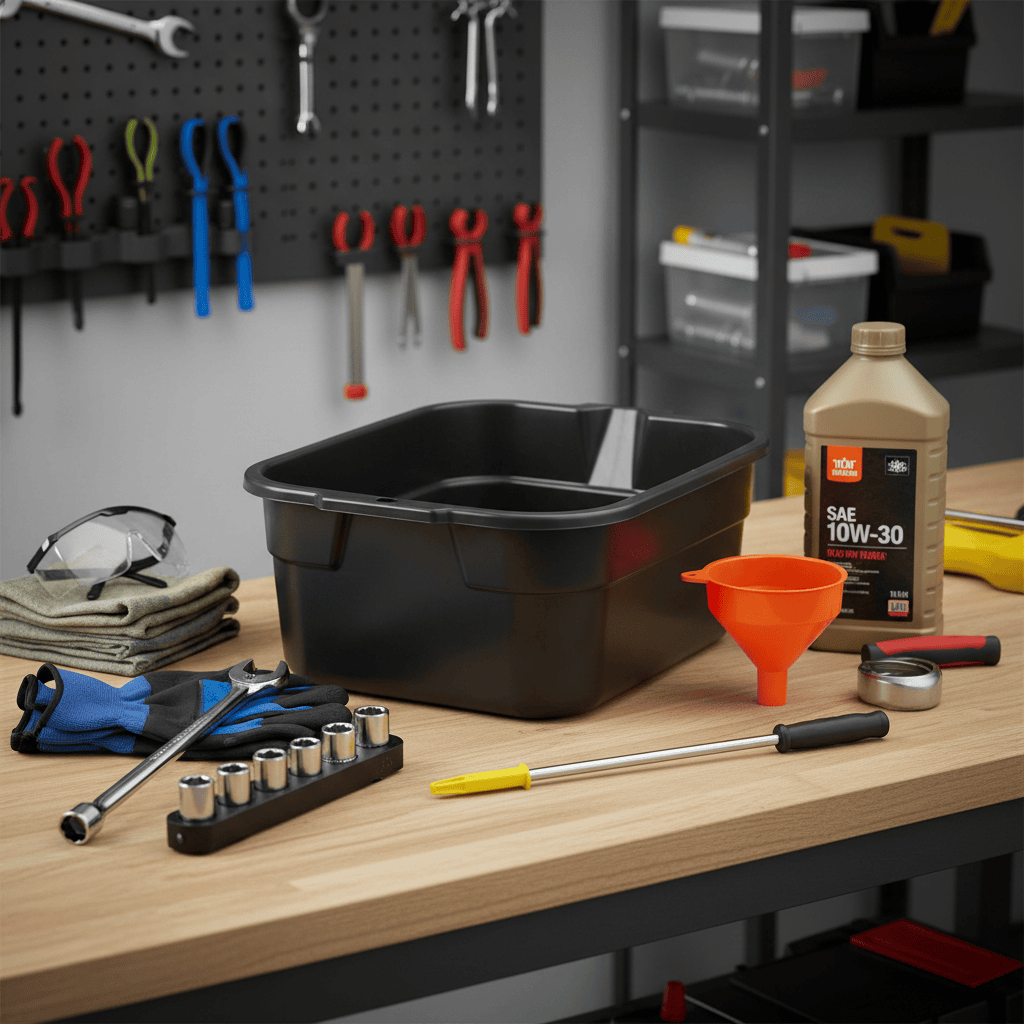
Changing your lawn mower’s oil is a straightforward maintenance task, but proper preparation prevents injury and ensures a clean, efficient process. Before beginning, always allow the engine to cool for at least 10–15 minutes. Hot engine oil can cause severe burns, and a warm engine makes the oil flow more easily during draining.
Perform the oil change on a level surface, ideally outdoors or in a well-ventilated garage. Lay down cardboard or newspaper to catch spills and protect your workspace. Wear work gloves to protect your hands from hot oil and sharp edges, and have old rags or paper towels nearby for cleanup.
Tools and materials you’ll need:
- Socket wrench or adjustable wrench (size depends on your drain plug)
- Oil drain pan (at least 2–3 quarts capacity)
- Funnel (preferably one designed for oil)
- New oil (correct type and viscosity for your mower)
- Oil filter (if your mower has one) and oil filter wrench
- Dipstick or oil level gauge
- Work gloves and safety glasses
- Old rags or paper towels
Consult your lawn mower’s owner’s manual before starting. This document provides your mower’s specific oil capacity, recommended oil type, and drain plug location—critical details that vary significantly between models.
Understanding Your Lawn Mower’s Oil System
Not all lawn mowers are created equal, and understanding your specific mower type helps you perform an oil change correctly.
4-Stroke vs. 2-Stroke Engines
Most residential push mowers and riding mowers use 4-stroke engines, which have a dedicated oil system that requires regular oil changes. These engines have a separate oil reservoir, dipstick, and drain plug. If your mower is 10 years old or newer, it almost certainly has a 4-stroke engine.
2-stroke engines, found on some older push mowers and certain lightweight equipment, do not have a traditional oil change procedure. Instead, 2-stroke engines require oil mixed directly into the fuel. If you own a 2-stroke mower, consult your manual—mixing fuel and oil is your maintenance routine, not draining and refilling.
Finding Oil Capacity and Type
Your owner’s manual lists the exact oil capacity (typically 0.5–1.5 quarts for push mowers, 2–4 quarts for riding mowers) and the recommended oil viscosity. Most lawn mowers use SAE 30 oil or SAE 10W-30 for general use, though some models specify synthetic or multi-viscosity oils. Using the wrong oil viscosity can affect engine performance and lifespan, so precision here matters.
Oil Filter Location
Many riding mowers and some larger push mowers have spin-on oil filters, typically located on the side of the engine. Smaller residential push mowers often lack an oil filter, requiring only an oil drain and refill. Check your manual or visually inspect your engine to determine if a filter is present.
Step-by-Step: Draining Old Oil
Locate and Access the Drain Plug
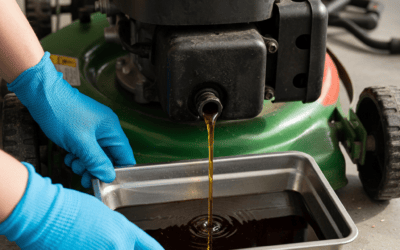
The oil drain plug is a bolt located underneath or at the lowest point of the engine. Position your oil drain pan directly beneath it to catch spilled oil. If the plug is difficult to reach, you may need to tip the mower on its side—but first, drain the fuel tank or ensure the carburetor side faces upward to prevent fuel leakage.
Remove the Drain Plug
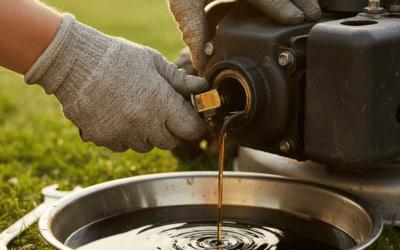
Using your wrench, slowly turn the drain plug counterclockwise. Once hand-tight, carefully unscrew it fully and set it aside on a clean rag. Expect hot oil to flow out initially, so let the pan catch the stream. If the plug is stuck, apply penetrating oil (like WD-40) and wait 15–20 minutes before trying again. Forcing a stuck plug risks stripping the threads.
Let the Oil Drain Completely
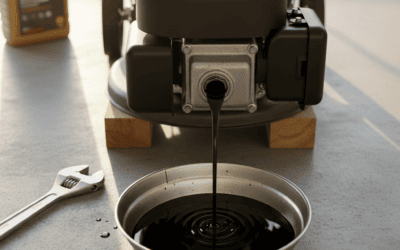
Position the drain pan to catch all oil, and allow 5–10 minutes for the oil to drain fully. Tilt the mower slightly if needed to ensure complete drainage. Once the flow slows to drips, the oil pan has captured most of the spent oil. Wipe the drain plug clean with a rag and inspect it for debris or damage; replace it if threads are stripped.
Dispose of Old Oil Responsibly
Never pour used oil down a drain or into the ground—it contaminates soil and water. Instead, take your oil to a local recycling center, auto parts store, or municipal hazardous waste facility. Most accept used oil for free or a small fee. Many retailers like AutoZone and Advance Auto Parts offer free used oil disposal.
Replacing the Oil Filter (If Applicable)
If your mower has a spin-on oil filter, replacement is straightforward and recommended every other oil change or per your manual’s guidance.
Locate and Remove the Old Filter
The oil filter is a cylindrical canister, typically on the engine’s side. Position your drain pan underneath to catch residual oil. Using an oil filter wrench, turn the filter counterclockwise approximately three-quarters of a turn, then unscrew it by hand. Be prepared for oil to spill—the filter holds about a cup of oil.
Install the New Filter
Wipe the filter mounting surface clean with a rag. Apply a thin layer of new oil to the rubber gasket on the new filter’s top. This creates a proper seal and makes removal easier next time. Hand-screw the new filter onto the mount until the gasket contacts the surface, then turn an additional three-quarters turn. Do not over-tighten—hand-tight is correct.
Pre-Fill Consideration
For mowers with filters, do not pre-fill the filter with oil before installation. Install it dry; the new oil you add will fill the filter as the engine runs.
Adding New Oil and Checking the Level
Determine the Correct Oil Amount
Refer to your owner’s manual for the exact oil capacity. For push mowers, this is typically 0.5–1 quart; for riding mowers, 2–4 quarts. As a general guideline, start by adding three-quarters of the recommended capacity. You’ll fine-tune with the dipstick.
Pour in the New Oil
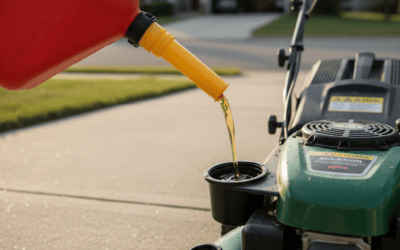
Using your funnel, carefully pour new oil into the fill cap opening. Go slowly to minimize splashing and air bubbles, which can give false dipstick readings. Add oil in stages, checking the dipstick between additions to reach the correct level.
Use the Dipstick to Verify Level
Wait 1–2 minutes after adding oil for it to settle in the reservoir. Remove the dipstick, wipe it clean on a rag, reinsert it fully, and remove it again to check the level. Most dipsticks have MIN and MAX markings. The oil level should reach the MAX line or sit between MIN and MAX, depending on your manual’s guidance. Never overfill—excess oil increases pressure, leaks from seals, and damages the engine.
What If You Overfill or Underfill?
If the level is above MAX, remove excess by loosening the drain plug slightly and catching oil in your pan until the level is correct. If the level is below MIN, add oil gradually until it reaches the target. Recheck the dipstick after any adjustment.
Oil Change Frequency and Maintenance Schedule
Regular oil changes keep your mower’s engine clean, lubricated, and efficient. The recommended frequency depends on your mower type and usage.
For residential push mowers: Change oil every 50–100 operating hours or at least once per season (typically spring). If you mow weekly for 10 weeks, that’s roughly 100 hours, so an annual oil change is standard.
For riding mowers: Change oil every 100–150 operating hours or twice per season, as they accumulate hours faster than push mowers.
Signs your mower needs an oil change:
- Dark or opaque oil on the dipstick (healthy oil is amber or light brown)
- A strong burnt smell when the engine runs
- Engine sputtering or running rough
- Smoke from the engine during operation
Starting your mower at the beginning of the season with fresh oil—even if it hasn’t hit the hour threshold—is good practice. Oil degrades over time, even when the engine is idle.
Special Considerations: 2-Stroke vs. 4-Stroke and Other Mower Types
Do 2-Stroke Mowers Require Oil Changes?
No. 2-stroke engines don’t have a separate oil reservoir. Instead, mix oil directly into the fuel at a ratio specified in your manual (commonly 1:50 or 1:32, meaning 1 part oil to 50 or 32 parts fuel). This pre-mix lubricates the engine as fuel burns. There’s no drain plug or oil change—just consistent fuel mixing each time you refuel.
Riding Mowers and Zero-Turn Mowers
These follow the same oil-change procedure as push mowers but may have larger capacities and filters. Riding and zero-turn mowers often operate at higher RPMs and accumulate hours faster, so more frequent oil changes are justified. Check your manual for specific intervals, as some recommend oil changes every 50 hours.
When to Seek Professional Service
If your drain plug is stripped, the filter won’t unscrew, or you suspect internal engine damage (smoke, excessive noise, metal debris in old oil), consult a lawn mower repair technician. These issues go beyond routine maintenance.
Frequently Asked Questions
What oil type should I use in my lawn mower?
Consult your owner’s manual for the specific oil viscosity and type. Most residential mowers use SAE 30 or SAE 10W-30. Some manufacturers specify synthetic or high-detergent oils for extended protection. Using the wrong oil can void your warranty and damage the engine, so follow the manufacturer’s recommendation exactly.
Can I change my lawn mower’s oil without draining the fuel tank?
Generally, yes—for most push mowers and riders, you can perform an oil change with the fuel tank full. However, if your mower tips sideways during the process or you need to access hard-to-reach drain plugs, tilt it carefully with the carburetor side up to avoid fuel entering the engine. When in doubt, drain the fuel tank first.
How often should I change the oil filter?
If your mower has an oil filter, replace it every other oil change (roughly every 100–200 operating hours) or per your manual’s guidance. Some manufacturers recommend replacing the filter every oil change. Filters are inexpensive insurance against engine wear, so err on the side of more frequent replacement if unsure.
What should I do if I accidentally overfilled the oil?
Stop the engine immediately and do not start it. Excess oil increases pressure and can leak from seals or cause engine damage. Loosen the drain plug slightly over an oil pan and allow excess oil to drain until the dipstick shows the correct level. Retighten the plug, recheck, and only then restart the engine.