How to Start a Craftsman Lawn Mower: Quick Answer
To start a Craftsman lawn mower, fill the fuel tank with fresh gasoline, check the oil level, and set the choke to the ‘Choke’ or ‘Start’ position. Press the primer bulb 3–5 times if your mower has one, then pull the starter cord with a firm, quick motion (or turn the ignition key on key-start models) until the engine fires. Once running, gradually move the choke to the ‘Run’ position. The exact procedure varies by mower type—push, self-propelled, or riding—and whether it uses a pull cord or electric start.
Identify Your Craftsman Mower Type
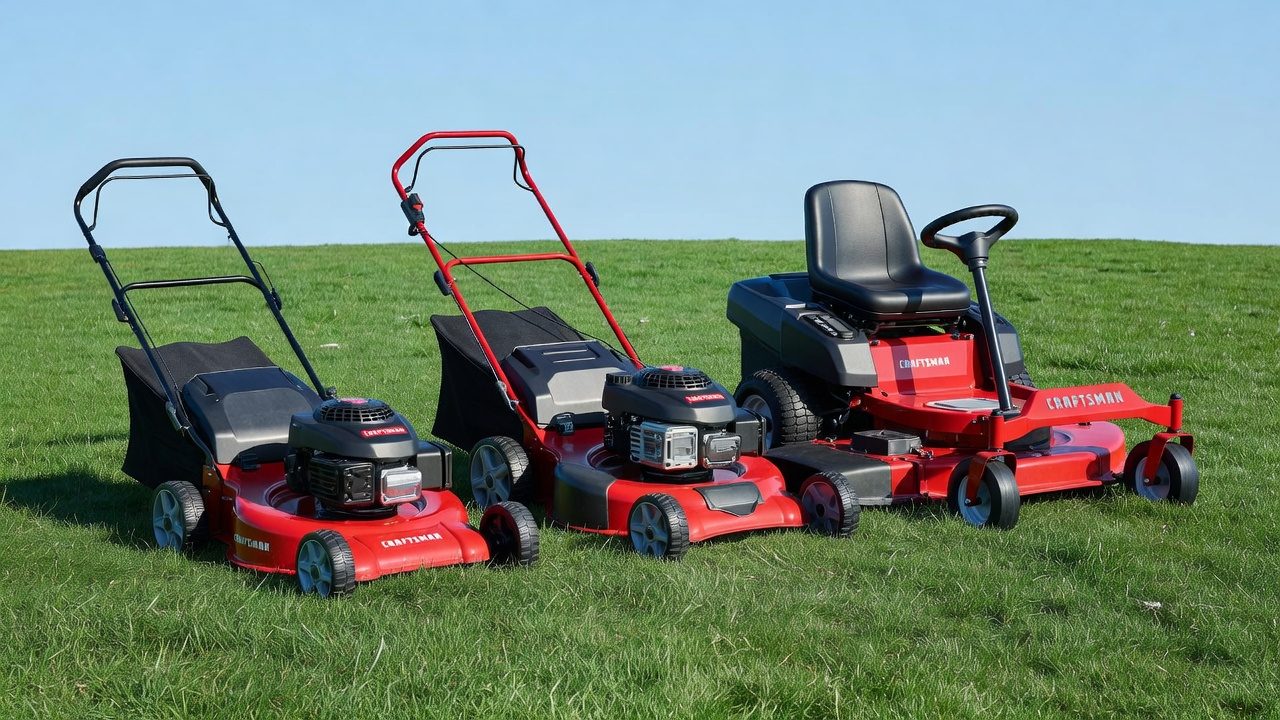
Craftsman manufactures several lawn mower styles, and the starting procedure differs slightly depending on which type you own. Before you begin, determine which category your mower falls into:
- Push mower: A manual, walk-behind model with no self-propulsion; you push it forward while controlling the blade engagement via a handlebar lever.
- Self-propelled mower: A walk-behind model with a transmission that drives the wheels; you engage the self-propel by squeezing or releasing a handlebar lever.
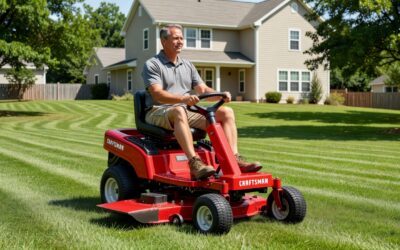
- Riding mower: A sit-down model with a seat, steering wheel, and foot pedals; typically larger and designed for bigger yards.
- Fuel source: Most Craftsman mowers are gas-powered, but some newer models are cordless electric or plug-in electric.
- Start mechanism: Older and manual models use a pull cord; newer models often feature an ignition key or electric starter button.
Consult your owner’s manual or the model plate on your mower to confirm the exact type and engine. This information is essential because starting procedures can vary significantly between models.
Pre-Start Safety and Fuel Checks
Before attempting to start your Craftsman mower, perform these essential checks to ensure safe operation and a successful start:
Fuel Tank and Fuel Quality
- Check fuel level: Open the fuel cap and visually inspect the tank. It should contain enough gasoline to run the mower; most Craftsman mowers hold 0.75 to 2 gallons depending on the model.
- Use fresh fuel: Gasoline older than 30 days can degrade and cause starting problems. If your mower has been sitting for several months, drain the old fuel and refill with fresh gasoline rated at 87 octane or higher.
- Avoid ethanol-blended fuel: Some Craftsman engines perform better with non-ethanol or low-ethanol gasoline. Check your owner’s manual for fuel recommendations specific to your model.
Oil Level
- Locate the oil dipstick: Most push and self-propelled Craftsman mowers have a dipstick located on the side of the engine. Riding mowers may have a separate oil reservoir.
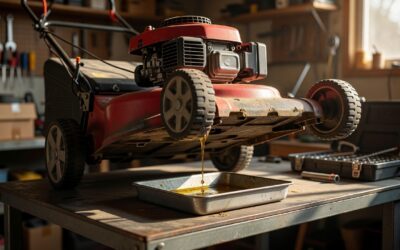
- Check the level: Pull the dipstick out, wipe it clean, reinsert it fully, then pull it out again to read the level. The oil should reach the ‘Full’ mark.
- Add oil if needed: If the level is low, add the recommended oil type (typically SAE 30 or 10W-30) until it reaches the ‘Full’ mark. Do not overfill.
Safety Inspection
- Blade engagement: On push and self-propelled mowers, ensure the blade engagement lever is in the ‘Off’ or neutral position. The blade should not be spinning when you start the engine.
- Guards and covers: Check that all blade guards, deck covers, and safety shields are in place and secured.
- Clear the area: Remove any debris, rocks, or obstacles from the mowing area. Ensure no children, pets, or bystanders are within 30 feet of the mower.
- Wear appropriate gear: Wear closed-toe shoes, long pants, and hearing protection when operating a lawn mower.
Starting a Pull-Cord Craftsman Push or Self-Propelled Mower
Pull-cord starting is the most common method on Craftsman walk-behind mowers. Follow these steps in order:
Step 1: Position the Choke
The choke restricts airflow to enrich the fuel mixture for cold starting. Locate the choke lever or dial on the side of the engine.
- Cold start: Move the choke fully to the ‘Choke’ or ‘Start’ position (often marked with a snowflake icon or the word ‘Choke’).
- Warm start: If the mower was recently running or the weather is warm, move the choke to the ‘Run’ position instead.
Step 2: Prime the Engine (if applicable)
Many Craftsman mowers have a primer bulb on the carburetor to help start the engine by forcing fuel into the combustion chamber.
- Locate the primer bulb: It is typically a small, soft rubber button on the side of the engine or carburetor.
- Press the button: Press the primer bulb 3–5 times with firm, controlled pressure. You should feel slight resistance as fuel is pushed through. Do not press more than 5 times; over-priming can flood the engine.
- If no primer bulb: Skip this step and proceed directly to the pull cord.
Step 3: Grip and Pull the Starter Cord
The pull cord is typically attached to a handle on the top or side of the engine. Proper technique is essential for a successful start:
- Stand securely: Position yourself with your feet shoulder-width apart and your weight balanced. This prevents you from falling if the cord snaps back.
- Grip the mower handle: With one hand, hold the mower frame or handlebar firmly to stabilize it.
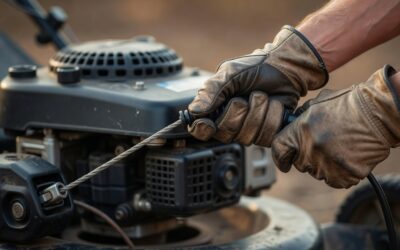
- Grip the pull cord: With your other hand, grasp the cord handle firmly with all four fingers and your thumb.
- Execute the pull: In one smooth, quick motion, pull the cord straight out and slightly upward. Do not jerk or yank; use steady, controlled force. The cord will extend 2–3 feet and then snap back into the housing.
- Repeat if necessary: After each pull, allow the cord to retract fully before pulling again. Most Craftsman mowers start within 2–4 pulls if the engine is in good condition.
Step 4: Transition the Choke
Once the engine fires and begins running (even if it’s rough or sputtering):
- Gradually move the choke: After 5–10 seconds of running, slowly move the choke lever from ‘Choke’ toward ‘Run’. Move it incrementally, about one-quarter of the way every few seconds.
- Listen for smoothing: As you move the choke, the engine should run more smoothly and evenly. If it dies, move the choke back slightly and wait another few seconds before continuing.
- Full ‘Run’ position: Once the engine is running steadily and smoothly, the choke should be fully in the ‘Run’ position.
Starting a Key-Start or Electric-Start Craftsman Mower
Modern Craftsman mowers, particularly self-propelled and riding models, often feature an ignition key or electric starter button for easier, more reliable starting.
For Key-Start Models
- Insert the key: Locate the ignition keyhole on the mower’s control panel (usually near the steering wheel on riding mowers or on the engine on larger walk-behinds).
- Set the choke (if applicable): Some key-start models still have a manual choke lever. If present, set it to the ‘Choke’ position for a cold start.
- Turn the key to ‘Start’: Turn the ignition key clockwise to the ‘Start’ position. Hold it there until the engine cranks and fires; typically this takes 2–5 seconds.
- Release the key: Once the engine is running, release the key and allow it to return to the ‘Run’ position.
- Adjust the choke: If your mower has a manual choke, gradually move it to ‘Run’ as the engine warms.
For Electric-Start Button Models
- Locate the start button: This is typically a large, prominent button labeled ‘Start’ on the control panel.
- Set the choke (if applicable): If your model has a choke, set it to ‘Choke’ for a cold start.
- Press the start button: Hold the button down for 3–5 seconds while the starter motor engages. Release once the engine fires.
- Listen for the engine: If the engine does not start after 5–10 seconds of cranking, release the button, wait 30 seconds, and try again.
Starting a Craftsman Riding Mower
Riding mowers follow a similar process to key-start walk-behind mowers but with some additional considerations:
- Sit on the seat: Always be seated before starting. Most Craftsman riding mowers have a seat switch that prevents the engine from starting unless you are in the seat.
- Disengage the blade: Ensure the blade engagement lever or switch is in the ‘Off’ position. The blade should not be spinning when you start the engine.
- Set the choke: If your riding mower has a manual choke, position it for a cold or warm start as appropriate.
- Turn the ignition key: Insert the key and turn it to ‘Start’ while holding the seat switch (if required). Hold the key for 3–5 seconds until the engine cranks and fires.
- Release and warm up: Once the engine is running, release the key and allow it to idle for 30–60 seconds before engaging the blade or driving.
Starting an Electric or Cordless Craftsman Mower
Craftsman cordless electric and plug-in mowers eliminate many of the steps required for gas-powered models:
- For cordless models: Ensure the rechargeable battery is fully charged. Insert the battery into the designated slot on the mower until it clicks into place. Press the power button or trigger to start the blade. Many cordless mowers do not have traditional starting procedures; they engage simply by pressing a button.
- For plug-in models: Plug the mower into a properly grounded outdoor electrical outlet using an appropriate extension cord. Press the power button to engage the blade.
- No choke needed: Electric mowers do not require choke adjustment or priming, making them simpler to operate than gas models.
Troubleshooting: Mower Won’t Start
If your Craftsman mower does not start after following the above steps, investigate these common causes:
Fuel-Related Issues
- Empty fuel tank: Verify the tank contains gasoline. An empty tank is the most common cause of starting failure.
- Old or contaminated fuel: Drain the fuel tank and fill it with fresh gasoline. Old fuel can clog the carburetor and prevent starting.
- Carburetor clogging: If the mower sat unused for several months, fuel residue may have clogged the carburetor. You may need to clean the carburetor or have it serviced by a professional.
Choke and Primer Issues
- Choke not set correctly: Verify the choke is fully in the ‘Choke’ position for a cold start. If it is in the ‘Run’ position, the engine will not receive enough enriched fuel mixture to start.
- Primer bulb failure: If you pressed the primer bulb but the engine shows no signs of combustion, the primer may be damaged. Try starting without priming, or have the mower serviced.
Spark Plug Problems
- Fouled spark plug: If the engine cranks but does not fire, the spark plug may be dirty, wet, or damaged. Remove the spark plug wire, unscrew the plug, and inspect it. If it is black with soot, wet, or corroded, replace it with a new Craftsman-approved plug.
- Spark plug gap: Ensure the spark plug gap (the distance between the electrodes) matches your mower’s specifications, typically 0.028–0.031 inches for most Craftsman models.
Pull Cord Issues
- Cord not extending fully: If the pull cord does not retract smoothly or feels stuck, the recoil spring may be damaged. Do not force the cord; have the mower serviced.
- No resistance during pull: If the cord pulls easily with no resistance from the engine, the pull cord may be disconnected from the crankshaft. This requires professional repair.
When to Seek Professional Help
- Persistent starting failure: If you have tried the steps above and the mower still will not start after 10–15 pulls or key turns, stop and consult your owner’s manual or contact a Craftsman-authorized repair center.
- Strange noises: If you hear grinding, squealing, or other unusual sounds during starting attempts, do not continue trying to start the mower. Have it inspected by a technician.
- Visible damage: If you notice cracked parts, leaking oil or fuel, or other visible damage, do not attempt to start the mower until it is repaired.
Frequently Asked Questions
How many times should I pull the starter cord before giving up?
Most Craftsman mowers start within 2–6 pulls if the engine is in good working order and you have followed the starting procedure correctly. If the mower does not start after 10–15 pulls, stop and investigate the issue. Excessive pulling can flood the engine or damage the pull cord. If you suspect flooding, set the choke to ‘Run’ and try a few more gentle pulls. If the engine still does not start, check the fuel, spark plug, and choke position, or consult a professional technician.
What is the difference between cold start and warm start procedures?
A cold start is used when the engine has not been running for several hours or more and is at ambient temperature. For a cold start, set the choke fully to the ‘Choke’ position to enrich the fuel mixture. A warm start is used when the engine has been running recently and is still warm. For a warm start, set the choke to the ‘Run’ position because the warm engine vaporizes fuel more readily and does not need enrichment. Using the wrong choke setting can prevent starting or cause rough running.
Why does my Craftsman mower start but then die immediately?
If your mower starts briefly but then stops, the most likely cause is the choke position. When the engine first starts, it should be in the ‘Choke’ position; as the engine warms, gradually move the choke toward ‘Run’ over 5–10 seconds. If the choke is moved too quickly to ‘Run’ or left in the ‘Choke’ position for too long, the engine can stall. Additionally, a weak or fouled spark plug, low fuel, or a damaged carburetor can cause the engine to stop shortly after starting. Try the starting procedure again, paying close attention to the choke transition. If the problem persists, have the spark plug and fuel system inspected.
Can I start my Craftsman mower in cold weather?
Yes, Craftsman mowers are designed to start in cold weather, but the procedure may be slightly different. In cold weather (below 50°F), use a choke setting for a cold start even if the mower ran recently. You may also need to press the primer bulb more times (up to 7–8 times instead of 3–5) to ensure adequate fuel reaches the carburetor. Additionally, use gasoline rated for winter use or a fuel additive designed to prevent fuel gelling. If the mower still will not start in very cold weather (below 32°F), try moving it to a warmer location such as a garage for 15–30 minutes before attempting to start it again.
Key Takeaways
- Always check fuel level, fuel quality, and oil level before starting your Craftsman mower.
- Set the choke to the ‘Choke’ position for cold starts and the ‘Run’ position for warm starts.
- Use the primer bulb (3–5 presses) if your mower has one, then pull the starter cord with a firm, smooth motion or turn the ignition key.
- Gradually transition the choke from ‘Choke’ to ‘Run’ as the engine warms up and runs more smoothly.
- Different Craftsman mower types (push, self-propelled, riding, electric) have slightly different starting procedures; consult your owner’s manual for model-specific instructions.
- If the mower does not start after 10–15 attempts, stop and investigate common issues such as fuel quality, spark plug condition, or choke positioning.
- Wear appropriate safety gear and ensure the blade is disengaged before starting any Craftsman mower.