Before You Start: Safety and Supplies
Before changing your Toro lawn mower’s oil, gather the necessary tools and materials to complete the job safely and efficiently. Working on your mower when the engine is warm (but not hot) helps old oil drain more completely, but allow it to cool enough that you can comfortably touch the mower deck.
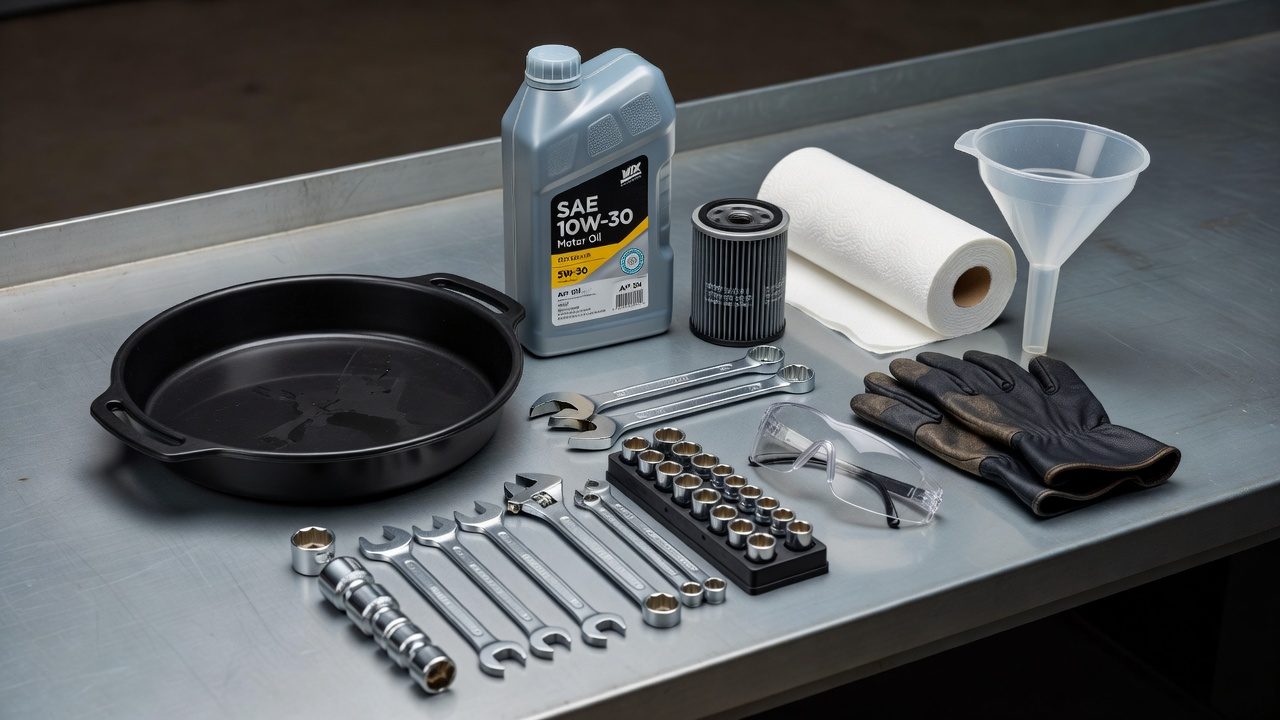
Essential supplies you’ll need:
- Replacement oil (type and amount specific to your model)
- Oil filter (if your model is equipped with one)
- Oil drain pan or container (at least 2–3 quarts capacity)
- Socket wrench or wrench set for drain plug removal
- Oil filter wrench (if applicable)
- Rags or paper towels
- Jack or ramps (for riding mowers only)
- Safety glasses and gloves
- Funnel for adding new oil
Finding Your Toro Mower’s Oil Specifications:
The correct oil type and capacity vary significantly by model year and engine displacement. Locate your mower’s model number on the frame or engine (typically a metal plate), then check your owner’s manual or Toro’s website for exact specifications. Most walk-behind Toro mowers use SAE 10W-30 or 5W-30 oil with capacities ranging from 0.6 to 1.5 quarts, while riding mowers typically hold 1.5 to 3 quarts. Using the wrong oil type or overfilling can damage your engine, so accuracy here is critical.
Walk-Behind vs. Riding Mower: Key Differences
The oil-change process differs slightly depending on your Toro mower type, primarily in accessing the drain plug and the amount of elevation required.
Walk-Behind Mowers: The drain plug on walk-behind Toro mowers is typically located on the underside of the engine or deck. You’ll need to tip the mower on its side to access it—most models tilt toward the air filter side to keep oil from entering the carburetor. This is the most common Toro mower type and the procedure described in detail below applies directly to these models.
Riding Mowers: Riding Toro mowers have the drain plug on the side or bottom of the engine block, usually accessible from beneath the seat or hood area without tipping. You may need to use a jack or ramps to safely access the underside. The basic procedure remains the same, but you have easier access and don’t risk oil spillage from tipping.
Zero-Turn Mowers: These high-end Toro models often have drain plugs designed for easy access without lifting, sometimes located with quick-connect ports. Consult your specific model’s manual, as procedures can vary.
Step-by-Step: Draining Old Oil
Step 1: Prepare the Mower
Park your Toro mower on a level surface and allow the engine to cool for 5–10 minutes if you’ve recently run it. Warm oil drains better than cold oil, but you want it cool enough to handle safely. Disconnect the spark plug wire to prevent accidental starting during maintenance.
Step 2: Access the Drain Plug (Walk-Behind Mowers)
Tip the mower carefully onto its side, with the carburetor and air filter pointing upward. This prevents oil from dripping into the carburetor. Position your drain pan directly beneath the drain plug to catch old oil. On walk-behind models, the drain plug is typically a bolt or cap with a bolt underneath the engine deck.
Step 3: Remove the Drain Plug
Using the appropriate wrench or socket, carefully unscrew the drain plug in a counterclockwise direction. Once loose enough to turn by hand, unscrew it completely and set it aside in a safe place—don’t lose it in the grass. Allow the old oil to drain completely into your pan. This may take 5–10 minutes. Tilt the mower slightly if needed to encourage full drainage.
Step 4: Inspect and Clean the Drain Plug
While the oil drains, wipe the drain plug clean with a rag. Check it for damage or excessive wear. If the plug is damaged or won’t tighten properly when reinstalled, replace it—a leaking drain plug creates ongoing problems. Once the oil has stopped dripping, wipe the drain plug area clean of residual oil.
Step 5: Reinstall the Drain Plug
Thread the drain plug back into the engine block by hand first to avoid cross-threading. Once hand-tight, use your wrench to snug it firmly—but do not over-tighten, which can strip the threads or crack the engine block. A snug, secure fit is all you need.
Replacing the Oil Filter
Not all Toro mower models have replaceable oil filters. Older walk-behind mowers and some small engines rely on the oil itself as a permanent filtering medium. Check your owner’s manual to determine whether your model has a filter.
If Your Mower Has an Oil Filter:
Locate the filter, which is usually a cylindrical cartridge on the side of the engine. Using an oil filter wrench, turn the filter counterclockwise to unscrew it. Have your drain pan ready, as some oil will spill. Dispose of the old filter in your trash or recycling bin (do not pour any remaining oil down a drain).
Before installing the new filter, apply a thin layer of fresh oil to the rubber gasket on the new filter. This creates a proper seal and makes future removal easier. Screw the new filter on by hand until the gasket contacts the engine, then turn it an additional three-quarters turn. Do not use a wrench to tighten a new filter—hand-tight is correct.
Adding New Oil and Checking the Level
Step 1: Prepare to Add Oil
Return the mower to its normal upright position. Locate the oil fill cap on top of the engine—it’s usually clearly marked with an oil can symbol. Remove the cap and set it aside.
Step 2: Add the Correct Amount of Oil
Insert a funnel into the oil fill opening to prevent spills. Pour in approximately three-quarters of the recommended oil capacity for your model. For example, if your mower requires 1.5 quarts, start with about 1 quart and adjust from there. This approach helps you avoid overfilling.
Step 3: Check the Oil Level
Wait a minute for the new oil to settle, then locate the dipstick, which is usually integrated into the oil fill cap or a separate stick nearby. Remove it, wipe it clean with a rag, reinsert it fully, and remove it again to read the level. The oil should reach the full mark on the dipstick. If it’s low, add oil in small increments (quarter-quart at a time) and recheck until it reaches the correct level.
Do not overfill: Excess oil can damage the engine by creating pressure in the crankcase, fouling the spark plug, and causing oil to leak past seals. It’s better to be slightly low than overfilled.
Step 4: Replace the Oil Fill Cap
Screw the oil fill cap back on securely. Reconnect the spark plug wire you disconnected earlier. Your mower is now ready to use.
Disposing of Used Oil Safely
Never pour used motor oil down a drain, into the ground, or in the trash. Used oil is an environmental hazard that contaminates water supplies and harms wildlife. Most communities offer free or low-cost disposal options.
Disposal Options:
- Recycling Centers: Most municipal recycling centers accept used motor oil free of charge. Check your local waste management website for locations and hours.
- Auto Parts Retailers: Stores like AutoZone, O’Reilly Auto, and NAPA often accept used oil at no cost, even if you didn’t purchase your new oil there.
- Quick-Lube Shops: Many oil-change shops will accept used oil from DIY maintainers, sometimes for a small fee.
- Hazardous Waste Collection Events: Many communities host seasonal hazardous waste collection days where oil disposal is free.
Store used oil in a sealed, clearly labeled container away from children and pets until you can dispose of it properly.
How Often Should You Change Oil on a Toro Lawn Mower?
The recommended oil-change interval for most Toro lawn mowers is every 50 operating hours or once per season, whichever comes first. If you use your mower frequently during the mowing season, you may reach 50 hours quickly—perhaps every 4–6 weeks. Casual users might only need to change oil once a year at the season’s start.
Signs your oil needs changing before the scheduled interval:
- Oil appears dark or dirty on the dipstick
- Oil level has dropped significantly between checks
- Engine runs rougher than normal or is harder to start
- Excessive smoke from the exhaust
- Unusual engine noise or knocking
Changing oil regularly extends your mower’s engine life significantly. Fresh oil keeps the engine clean, reduces wear on internal components, and improves fuel efficiency and starting reliability.
Frequently Asked Questions
What happens if I use the wrong oil type in my Toro mower?
Using oil that doesn’t meet your mower’s specifications can cause engine damage. Oil that’s too thick won’t flow properly in cold weather, while oil that’s too thin may not provide adequate lubrication at operating temperature. This leads to increased wear, poor starting, rough running, and potential engine seizure. Always use the oil type specified in your owner’s manual—typically SAE 10W-30 or 5W-30 for most Toro mowers.
Can I reuse old oil after an oil change?
No. Used motor oil has lost its protective properties and contains contaminants that damage engines. Reusing old oil will shorten engine life and void your warranty. Always use fresh oil for each oil change.
Should I change the oil when my mower is stored for winter?
Yes. Drain the old oil before storing your mower for more than a few months. Old oil degrades over time and can gum up the engine during storage. Fill the tank with fresh fuel that includes a fuel stabilizer, change the oil, and store the mower in a dry location. This ensures your mower starts reliably when you use it again.
What should I do if my drain plug is stuck or leaking after reinstallation?
A stuck drain plug may be corroded or cross-threaded. Stop immediately and do not force it—you risk damaging the threads permanently. Apply penetrating oil (like WD-40) around the plug and wait 30 minutes, then try again gently. If it leaks after reinstallation, the plug may be damaged. Remove it, inspect the threads for damage, and replace the plug if necessary. Ensure the new plug is not over-tightened.
Conclusion
Changing your Toro lawn mower’s oil is a straightforward maintenance task that takes 15–30 minutes and extends your engine’s lifespan significantly. By following these steps—draining old oil, replacing the filter if equipped, adding fresh oil of the correct type and amount, and disposing of used oil responsibly—you keep your mower running smoothly season after season. Regular oil changes are one of the most cost-effective investments you can make in your lawn equipment’s reliability and longevity.