Quick Answer: How to Start a Craftsman Riding Lawn Mower
To start a Craftsman riding lawn mower, first ensure the fuel tank is full and disengage the blade engagement lever. Sit on the seat, engage the parking brake, and position the choke to full choke (cold start) or no choke (warm start). Insert the key into the ignition switch and turn it to the ‘Start’ position while holding down the brake pedal. Hold until the engine fires, then release the key. If the engine doesn’t start after 3–4 attempts, wait 10 minutes before trying again.
Pre-Start Safety Checks and Preparation
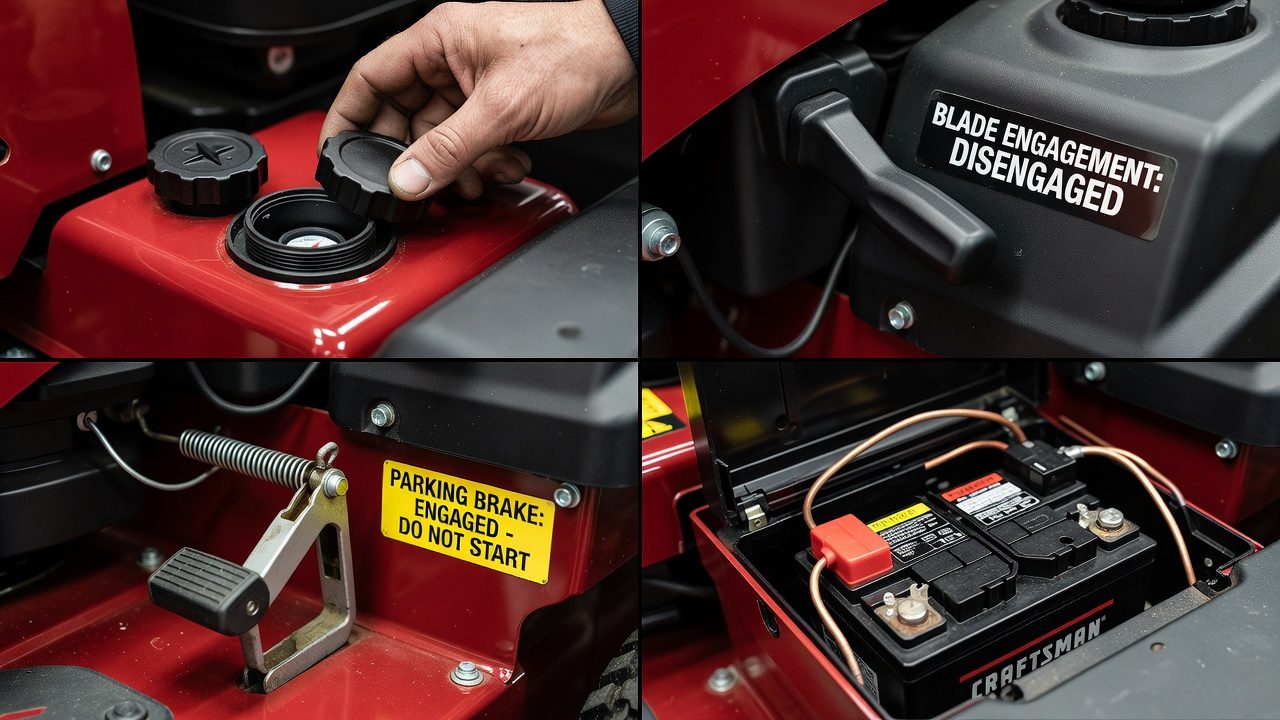
Before attempting to start your Craftsman riding mower, perform these essential safety checks to ensure safe operation:
- Clear the operating area: Remove debris, rocks, sticks, and other objects from the lawn. This prevents projectiles from being thrown by the blade during operation.
- Disengage the blade: Move the blade engagement lever to the disengaged or neutral position. The blades must not be spinning when you start the engine.
- Check fuel level: Open the fuel cap and visually inspect the tank. Craftsman riding mowers typically require regular unleaded gasoline with an octane rating of 87 or higher. Fuel should be fresh (less than 30 days old if stored without stabilizer).
- Inspect the battery (electric start models): If your mower has an electric start button, ensure the battery terminals are clean and corrosion-free. A weak or dead battery is a common cause of starting failure.
- Position yourself correctly: Sit fully on the operator seat. Most Craftsman mowers have a seat switch that prevents engine start if no one is seated—this is a critical safety feature.
- Engage the parking brake: Before inserting the key, ensure the parking brake or brake pedal is engaged. This prevents the mower from moving unexpectedly.
Understanding Choke Position: Cold Start vs. Warm Start
The choke control is one of the most important elements for successful starting. The choke regulates the fuel-to-air ratio in the engine. A cold engine requires a richer fuel mixture, while a warm engine runs best with a leaner mixture.
Cold Start Procedure (First Start of the Day)
When starting a mower that has been sitting for several hours or overnight:
- Move the choke lever to the full choke position (usually marked with a symbol or labeled “CHOKE” or “START”).
- Position the throttle lever to the middle or slightly higher setting.
- This enriches the fuel mixture, making ignition easier in a cold engine.
Warm Start Procedure (Subsequent Starts the Same Day)
After the engine has been running and has warmed up:
- Move the choke lever to the no choke or run position (often a fully open or “RUN” marking).
- Keep the throttle at a moderate position.
- A warm engine has better fuel vaporization and requires less choke to start.
Step-by-Step Starting Procedure
Follow these sequential steps to start your Craftsman riding mower:
Step 1: Secure Your Position
Sit firmly on the operator seat. Ensure your back is against the backrest and both feet are positioned on the floor or footrest. This activates the seat safety switch, which is required for engine start on most modern Craftsman models.
Step 2: Engage the Brake
Press and hold the brake pedal fully. On some models, you may need to engage a parking brake lever. This prevents the mower from rolling or moving when the engine starts.
Step 3: Set Choke and Throttle
If the engine is cold (first start of the day or after sitting), move the choke to the full choke position. If the engine is warm, move the choke to the no-choke or run position. Set the throttle to mid-range.
Step 4: Insert the Key
Insert the ignition key into the keyhole on the dashboard. The key should fit smoothly without forcing.
Step 5: Turn the Key to Start
Turn the ignition key clockwise to the ‘Start’ position (usually marked with a symbol). While turning the key, continue holding the brake pedal. Hold the key in the start position for 3–5 seconds or until you hear the engine crank and fire.
Step 6: Release the Key
As soon as the engine starts and begins running on its own, release the key. The ignition will return to the ‘On’ position automatically. Do not hold the key in the start position once the engine is running, as this can damage the starter motor.
Step 7: Adjust Choke as Engine Warms
If you used full choke, gradually move the choke lever toward the no-choke position as the engine warms up (usually 30–60 seconds). This prevents the engine from stalling and allows it to settle into a smooth idle. You’ll hear the engine sound smooth out as you reduce choke.
Electric Start vs. Manual Pull-Start Models
Craftsman offers both electric start and manual pull-start models. The procedure varies slightly:
Electric Start Models
Electric start Craftsman mowers use a battery-powered starter motor and an ignition key (as described above). This is the most common type on modern Craftsman riding mowers and is easier for most users.
Manual Pull-Start Models (Older Models)
Some older Craftsman models feature a pull-cord starter instead of an electric starter:
- Set the choke to full choke (cold start).
- Set the throttle to mid-range.
- Sit on the seat and engage the brake or parking brake.
- Grip the pull handle with one hand and pull the cord in one smooth, quick motion.
- Repeat as needed until the engine fires.
- Gradually reduce choke as the engine warms.
Troubleshooting: What to Do If Your Mower Won’t Start
Engine Cranks but Won’t Fire
Possible cause: Incorrect choke position or fuel system issue.
- Check that the choke is set to full choke for a cold engine or no choke for a warm engine.
- Verify the fuel tank has adequate fuel and the fuel cap’s vent is not clogged.
- Ensure the fuel shut-off valve (if present) is in the open position.
- Try 2–3 more start attempts, waiting 5–10 seconds between attempts.
Engine Doesn’t Crank or Makes a Clicking Sound
Possible cause: Dead or weak battery (electric start models).
- Inspect the battery terminals for corrosion or loose connections.
- Clean corroded terminals with a wire brush and reconnect firmly.
- Charge the battery using an appropriate charger if it’s low.
- Test the mower again after 12–24 hours of charging.
Rapid Clicking Sound Without Engine Cranking
Possible cause: Very weak battery or poor ground connection.
- Check all battery cable connections (positive and negative terminals).
- Ensure the mower frame is properly grounded to the battery’s negative terminal.
- Replace the battery if it is over 3–5 years old.
Engine Cranks Slowly or Reluctantly
Possible cause: Cold weather or thick oil.
- In cold weather (below 50°F), move the choke to full choke and allow the engine to crank longer—up to 10 seconds.
- Use the correct oil viscosity for your climate (check the owner’s manual).
- Wait longer between start attempts to allow the battery to recover.
Engine Starts but Stalls Immediately
Possible cause: Incorrect choke adjustment or blade engagement issue.
- Verify the blade engagement lever is fully disengaged.
- Gradually reduce choke while the engine is running.
- Adjust the throttle to a moderate position instead of full throttle or idle.
- Allow the engine 30–60 seconds to warm up before disengaging the brake.
Fuel in Tank but Engine Won’t Start After Extended Storage
Possible cause: Stale fuel or clogged fuel filter.
- Drain the old fuel from the tank and replace with fresh, high-octane fuel (87 or higher).
- Check if the fuel filter is visible and accessible; consult your owner’s manual for filter replacement procedures.
- If the mower will be stored for more than 30 days, add fuel stabilizer to the tank before shutdown.
When to Wait and Retry
If the engine doesn’t start after 3–4 consecutive attempts, stop and wait at least 10 minutes before trying again. Repeated failed start attempts can:
- Flood the engine with excess fuel, making starting harder.
- Drain the battery significantly on electric start models.
- Overheat the starter motor.
Model-Specific Variations
Craftsman riding mowers span many model years and feature variations. Starting procedures are largely similar across models, but you may encounter differences:
Newer Models (2010 and Later)
Modern Craftsman mowers typically feature:
- Electronic ignition with key start.
- Automatic choke or manual choke lever.
- Seat safety switch (prevents start if operator is not seated).
- Foot brake pedal instead of parking brake lever.
Mid-Range Models (1995–2009)
These mowers often include:
- Manual choke lever or cable.
- Electric or pull-cord start.
- Parking brake lever or foot brake.
- Less sophisticated safety switches.
Older Models (Pre-1995)
Vintage Craftsman mowers may feature:
- Pull-cord manual start (no battery required).
- Simple throttle and choke controls.
- Minimal safety features.
- Carburetor-based fuel systems that may require primer bulb activation.
Finding Your Model-Specific Instructions
For detailed procedures specific to your mower’s year and model, consult:
- Owner’s manual: Usually stored in a plastic envelope under the seat or in the frame.
- Model number plate: Located on the frame or deck; use this to search Craftsman’s website or contact customer service.
- Craftsman customer support: Call 1-800-4-CRAFTSMAN or visit the Craftsman website for downloadable manuals.
Frequently Asked Questions
Q: What type of fuel does a Craftsman riding mower use?
A: Craftsman riding mowers use regular unleaded gasoline with an octane rating of 87 or higher. Avoid using ethanol fuel blends higher than 10% (E10) unless your manual specifies compatibility. Never use diesel or two-stroke fuel. For best performance, use fuel that is less than 30 days old. If storing the mower for more than a month, add fuel stabilizer to prevent fuel degradation.
Q: Why won’t my Craftsman mower start even though it has fuel and a good battery?
A: The most common causes are incorrect choke position, a weak spark plug, or a dirty fuel filter. First, verify the choke is set correctly (full choke for cold start, no choke for warm start). If that doesn’t work, remove and inspect the spark plug for wear or fouling. A spark plug more than 2–3 years old should be replaced. Check that the fuel filter (if accessible) is not clogged with debris from old fuel. If these steps don’t resolve the issue, consult your owner’s manual or contact Craftsman customer support for model-specific troubleshooting.
Q: How long should I hold the ignition key in the start position?
A: Hold the key in the start position for 3–5 seconds or until you hear the engine crank and begin firing. As soon as the engine starts and runs on its own, release the key immediately. Do not hold the start position for more than 10 seconds at a time, as this can damage the starter motor. If the engine doesn’t start, release the key, wait 10 seconds, and try again.
Q: Can I start my Craftsman mower if I’m not sitting on the seat?
A: No. Modern Craftsman riding mowers have a seat safety switch that prevents engine start if the operator is not seated. This is a critical safety feature designed to prevent unattended operation. Always sit firmly on the seat with your back against the backrest before inserting the key or attempting to start the engine.
Maintenance Tips to Keep Your Mower Starting Reliably
Regular maintenance ensures your Craftsman mower starts easily every season:
- Change the oil: Perform an oil change before the mowing season and after 50 hours of use. Fresh oil improves engine compression and starting reliability.
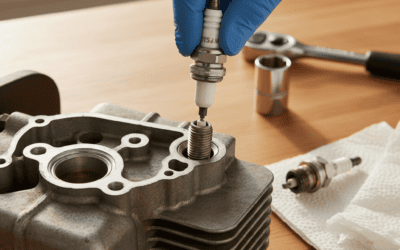
- Replace the spark plug: Inspect the spark plug before each season. Replace it every 100–200 hours of use or annually, whichever comes first.
- Check the air filter: A clean air filter is essential for proper engine starting. Inspect monthly during the mowing season and replace if dirty.
- Charge or replace the battery: For electric start models, check the battery charge before the season. Replace the battery every 3–5 years, or sooner if it has trouble holding a charge.
- Use fresh fuel: Replace fuel at the start of each season. Stale fuel (older than 30 days without stabilizer) is the leading cause of starting problems.
- Store properly: For winter storage, drain the fuel tank or add fuel stabilizer, charge the battery, and store in a dry, protected location.