Direct Answer: Lawn Mower Battery Duration
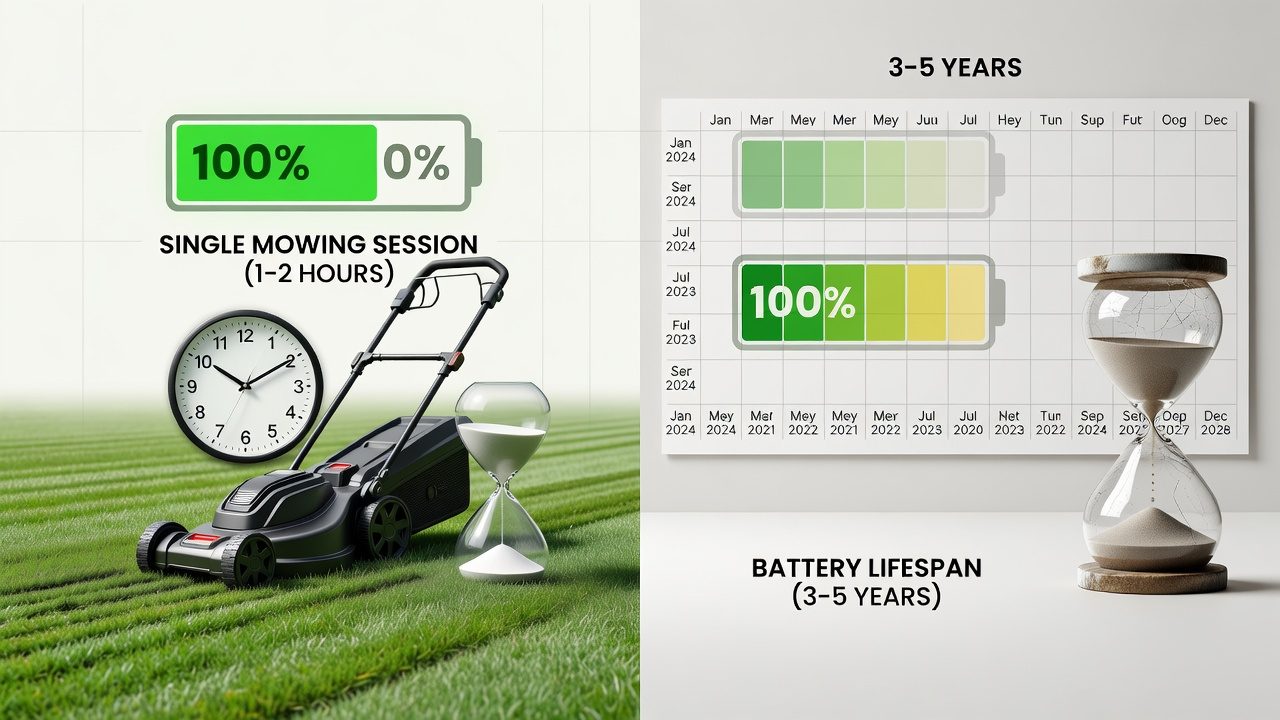
Lawn mower batteries typically last 1–2 hours per charge during active mowing and have a total lifespan of 3–5 years before replacement becomes necessary. Runtime varies by battery chemistry: lithium-ion batteries generally deliver longer runtime (often 1.5–2 hours) and last 4–6 years, while lead-acid batteries may run 1–1.5 hours per charge and need replacement sooner (2–3 years). Real-world duration depends on mower size, grass thickness, blade condition, and how well you maintain the battery.
Runtime Per Charge vs. Total Lifespan: Understanding the Difference
When asking “how long does a lawn mower battery last,” most people conflate two separate metrics. Understanding the distinction helps you plan maintenance and replacements effectively.
Runtime Per Charge (Single-Use Duration)
Runtime per charge refers to how long your mower runs on one full battery charge during active mowing. Most cordless lawn mower batteries deliver 1–2 hours of continuous runtime on a single charge. This duration assumes:
- Normal grass height and thickness
- Steady blade engagement
- Moderate terrain (no steep hills)
- Room-temperature conditions
- A battery in good condition (not significantly degraded)
Smaller, lightweight mowers may achieve 2+ hours; larger or more powerful models may run only 45 minutes to 1 hour per charge.
Total Battery Lifespan (Years Until Replacement)
Total lifespan refers to how many years a battery remains usable before capacity degrades to the point where replacement becomes practical. Most lawn mower batteries last 3–5 years with normal use, though this varies widely:
- Lithium-ion batteries: 4–6 years average
- Lead-acid batteries: 2–3 years average
- Nickel-cadmium batteries (older models): 2–4 years average
After this period, batteries typically retain only 50–70% of original capacity, making them less practical for regular lawn care, though they may still hold a partial charge.
Battery Type and Its Impact on Duration
The chemistry of your battery significantly influences both runtime per charge and total lifespan. Modern cordless mowers predominantly use one of two battery types.
Lithium-Ion Batteries
Lithium-ion (Li-ion) batteries are the standard in modern cordless lawn mowers and offer superior performance:
- Runtime per charge: 1.5–2+ hours (often the longest available)
- Total lifespan: 4–6 years with normal use
- Capacity retention: Typically retain 80% capacity after 3 years
- Advantages: No memory effect, lighter weight, faster charging, consistent power output
- Disadvantages: Higher upfront cost; sensitive to extreme temperatures
Most premium mower brands (DeWalt, Makita, EGO, Ryobi) use lithium-ion technology, which explains their popularity among homeowners seeking durability.
Lead-Acid Batteries
Lead-acid batteries are found in older cordless models and some riding mowers:
- Runtime per charge: 1–1.5 hours (generally shorter than Li-ion)
- Total lifespan: 2–3 years with normal use
- Capacity retention: Degrade faster; often drop to 60–70% capacity after 2 years
- Advantages: Lower cost, rugged, well-established technology
- Disadvantages: Heavier, memory effect requires specific charging practices, shorter lifespan
If your mower uses lead-acid batteries, monitor performance closely after 18–24 months of regular use.
Factors That Extend or Reduce Battery Life
Battery runtime and lifespan are not fixed. Several controllable and environmental factors significantly influence how long your battery lasts per charge and its total years of service.
Grass and Cutting Conditions
The work your mower performs directly impacts runtime:
- Thick, wet grass: Reduces runtime by 20–30% due to increased blade resistance
- Long grass (over 4 inches): Demands more power; expect 15–25% shorter runtime
- Uneven terrain or hills: Increases motor strain; may reduce runtime 10–20%
- Dull blades: Force the motor to work harder; can reduce runtime 15–40%
Keeping blades sharp and mowing dry grass at recommended heights maximizes battery efficiency.
Temperature Effects
Temperature has a pronounced effect on both immediate runtime and long-term battery health:
- Cold weather (below 32°F / 0°C): Reduces runtime by 20–40%; battery performance improves once warmed
- Hot weather (above 85°F / 29°C): Can temporarily reduce runtime 10–15%; prolonged heat accelerates degradation
- Extreme heat during storage: Significantly reduces total lifespan; batteries kept in hot sheds degrade 20–30% faster
Store batteries in a cool, dry location (50–75°F ideal) to preserve lifespan.
Charging Habits
How you charge affects both immediate performance and long-term capacity:
- Overcharging: Lithium-ion batteries left on chargers continuously can degrade faster; remove from charger once fully charged
- Deep discharge cycles: Regularly draining batteries to zero stresses lithium-ion cells; aim to recharge at 20–30% remaining
- Fast charging: Convenient but generates heat; regular fast charging reduces lifespan by 10–15% compared to standard charging
- Frequent shallow charges: Generally safer than occasional full drain-and-recharge cycles
Most modern mowers include smart chargers that prevent overcharging, but avoiding extended storage on the charger remains best practice.
Age and Cycle Degradation
Lithium-ion batteries naturally degrade with time and charging cycles, regardless of use:
- Annual capacity loss: 5–10% per year with normal use
- Charge cycle impact: Each full charge-and-discharge cycle causes minor, cumulative degradation
- Calendar aging: Even unused batteries degrade; a 3-year-old battery stored in ideal conditions will have lost 15–30% capacity
This degradation is normal and expected. After 3–4 years, most users notice a gradual reduction in runtime.
Signs Your Battery Needs Replacement
Recognizing when a battery has reached end-of-life helps you avoid mid-mow surprises and plan replacements in advance.
Performance Indicators
- Noticeably shorter runtime: If your battery now lasts 30–45 minutes instead of 1–2 hours, capacity has degraded significantly
- Difficulty holding a charge: Battery discharges quickly when not in use or won’t charge fully
- Inconsistent power: Mower bogs down or loses cutting power, especially midway through a charge
- Battery gets extremely hot: Excessive heat during charging or use indicates internal resistance problems
Visual and Physical Signs
- Battery case is cracked, swollen, or leaking
- Corroded terminals or connection points
- LED indicators (if present) no longer light up
- Charger fails to recognize the battery or won’t charge
Timeline Indicators
If your battery is 3–4 years old and showing performance decline, replacement is typically cost-effective and practical. Most lithium-ion batteries warranty for 2–3 years; if yours exceeds that and performs poorly, replacement generally makes sense. Lead-acid batteries over 2 years old are good candidates for proactive replacement.
Battery Maintenance Best Practices
Proper maintenance extends both runtime per charge and total battery lifespan by 6–12 months or more.
Seasonal Storage
Before winter storage (3+ months):
- Charge battery to 50–80% capacity (not fully charged, not depleted)
- Store in a cool, dry location (ideally 50–75°F)
- Keep away from direct sunlight, moisture, and extreme temperatures
- Avoid heated garages or sheds that fluctuate in temperature
- Do not leave on the charger continuously during storage
When returning from storage:
- Inspect for corrosion or damage
- Charge fully before first use
- If battery hasn’t been used for 6+ months, it may have lost 10–20% capacity; full recovery often occurs after a few charge cycles
Regular Maintenance During Mowing Season
- Charge promptly after use: Don’t leave a depleted battery sitting for days; charge within a few hours of use
- Use standard charging: Prefer standard chargers over fast chargers for routine charging to extend lifespan
- Monitor temperature: If battery is hot to the touch during charging, stop and allow it to cool before resuming
- Clean terminals: Wipe battery and charger terminals monthly with a dry cloth to prevent corrosion
- Check connection points: Ensure battery seats firmly in the mower; loose connections reduce efficiency
When to Use Each Battery (Multi-Battery Systems)
If you own multiple batteries, rotate use to balance wear:
- Use batteries in sequence rather than rotating back to the same battery immediately
- Allow recently used batteries to cool before charging
- This distributes degradation more evenly across batteries
Frequently Asked Questions
Q: Can I extend my lawn mower battery runtime by charging it differently?
A: Somewhat, but not dramatically. Charging to 80% instead of 100% and avoiding fast charges can preserve long-term capacity, but it won’t significantly increase runtime per charge on any given day. Runtime is determined primarily by battery capacity and mower power demand. Maintaining the battery well does ensure your runtime stays consistent as the battery ages.
Q: Is it normal for my battery runtime to decrease after a year of use?
A: Yes. Lithium-ion batteries typically lose 5–10% capacity annually through normal chemical aging. After one year, you might notice 5–10% less runtime; after three years, 15–30% less. This is expected. If you’ve lost significantly more (50%+) after one year, your battery may be defective and warranted for replacement.
Q: Should I replace my battery preemptively or wait until it fails?
A: Most homeowners wait until battery performance noticeably declines. However, if your battery is 3+ years old, purchasing a replacement before critical failure allows you to avoid mid-season power loss. Replacement costs typically range from $80–$300 depending on brand and type, so planned replacement prevents inconvenience without excessive expense.
Q: Do all lawn mower batteries fit all mowers?
A: No. Battery compatibility is brand-specific. DeWalt batteries don’t fit Makita mowers; EGO batteries are proprietary to EGO products. Before purchasing a replacement, verify your mower brand and battery model number. Some manufacturers (like EGO) offer batteries in different capacities (2.5Ah, 5.0Ah, 7.5Ah), with higher-capacity batteries providing longer runtime but weighing more and costing more.
The Bottom Line
Lawn mower batteries last 1–2 hours per charge during active use and typically remain practical for 3–5 years before capacity degradation warrants replacement. Lithium-ion batteries outperform lead-acid in both runtime and lifespan. Real-world duration depends heavily on cutting conditions, temperature, maintenance, and charging habits. By storing your battery properly, charging thoughtfully, and maintaining your mower and blades, you can maximize both immediate runtime and total lifespan, often extending useful battery life by 6–12 months. Monitor performance closely after year three; most users find replacement necessary or desirable by year four.