Quick Answer: How to Fix a Lawn Mower Pull Cord
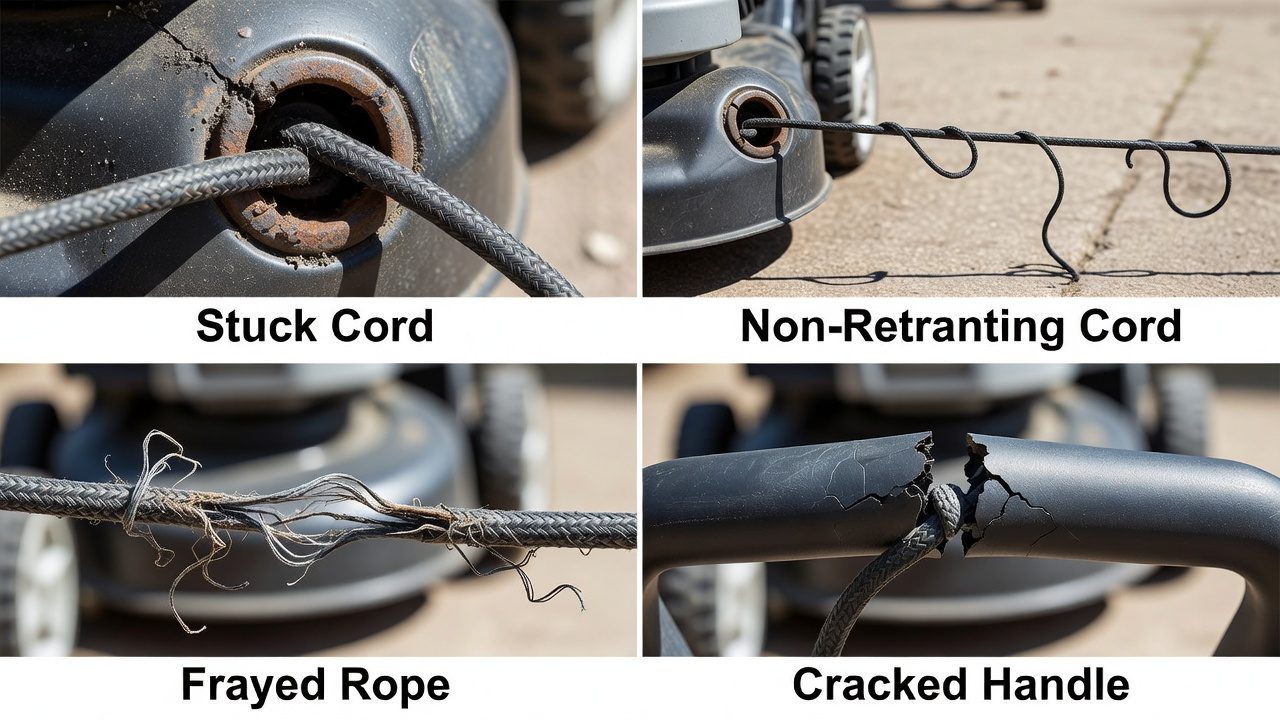
Most pull cord problems fall into four categories: a completely stuck cord (jammed by debris or seized spring), a cord that won’t retract (broken recoil spring), frayed or torn rope, or a cracked handle. Start by identifying which problem you have, then proceed with the appropriate fix—usually rope replacement (easiest, $10–20), spring replacement (moderate difficulty, $30–80), or full starter assembly replacement (most involved, $50–150). Many homeowners can handle rope replacement with basic tools in under an hour.
Identifying Your Pull Cord Problem: Four Failure Modes
Before you buy parts or disassemble anything, pinpoint exactly what’s wrong. The diagnosis determines your repair path.
1. Cord Is Completely Stuck or Won’t Move
The cord may feel immobilized—you cannot pull it even with firm pressure. This usually means:
- Debris lodged in the housing: Grass clippings, dirt, or rust have accumulated inside the starter mechanism.
- Seized recoil spring: The spring has corroded or the internal mechanism has locked up, most common after winter storage or extended disuse.
- Engine seizure: The engine itself is stuck (rare, but more serious).
What to do: Do not force the cord. Forcing can snap the rope or damage the spring. Instead, try gentle rocking—pull very slightly, release, repeat—to work out minor jams before attempting repair.
2. Cord Pulls Fine but Won’t Retract
You can yank the cord, but it doesn’t snap back into the housing. The rope remains slack or partially extended. This is almost always a broken or weakened recoil spring. The spring has lost tension, snapped, or detached from its anchor point.
3. Rope Is Visibly Frayed, Torn, or Unraveling
The starter rope itself shows damage—strands are coming apart, the rope is thin or kinked, or there’s a visible tear. This rope will eventually break completely and is easy to replace.
4. Handle Is Cracked, Loose, or Broken
The grip end is damaged—the plastic or wood is split, or the handle moves independently of the rope. You may be able to replace just the handle, or you may need a full rope-and-handle assembly.
Diagnostic Flowchart: Before You Repair
| Symptom | Likely Cause | Repair Difficulty |
|---|---|---|
| Cord won’t pull at all; feels solid or rusted | Jammed housing or seized spring | Easy (clean) to Moderate (replace) |
| Cord pulls smoothly but stays out; no retraction | Broken recoil spring | Moderate to Hard |
| Rope shredding, thin, or visibly torn | Worn or damaged rope | Easy |
| Handle cracked or loose | Worn handle or loose fastener | Easy |
| Cord tugs hard and won’t move; engine won’t turn | Engine seized or hydro-locked | Hard (engine service required) |
How to Fix a Stuck or Jammed Pull Cord
Step 1: Attempt to Free the Cord Gently
If the cord is stuck but not completely immobile:
- Use short, gentle tugs—pull an inch or two, then release.
- Rock the cord back and forth without forcing full extension.
- Wait a few minutes between attempts to let any internal mechanism settle.
- This sometimes dislodges debris without requiring disassembly.
Step 2: Inspect for Visible Debris
Look around the cord entry point and housing:
- Remove any visible grass, dirt, or leaves.
- If the mower has been stored outdoors, rust or corrosion may have accumulated.
- Gently probe the opening with a small stick or brush, being careful not to damage the rope.
Step 3: Apply Penetrating Oil (Optional)
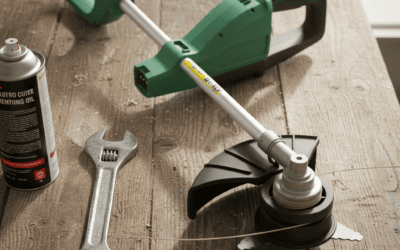
If rust or corrosion is visible, spray a small amount of penetrating oil (like WD-40 or similar) into the housing around the cord entry point. Let it sit for 15–30 minutes, then try gentle rocking again. Do not spray oil directly onto the rope itself.
Step 4: When to Replace Instead of Force
If the cord still won’t budge after these attempts, do not continue pulling hard. The internal spring or rope may already be damaged. Move on to rope replacement (if the cord snapped) or spring replacement (if the mechanism is seized).
Replacing a Broken or Frayed Starter Rope
This is the most accessible DIY repair. Rope replacement typically costs $10–20 in materials and takes 30–60 minutes.
Tools and Materials You’ll Need
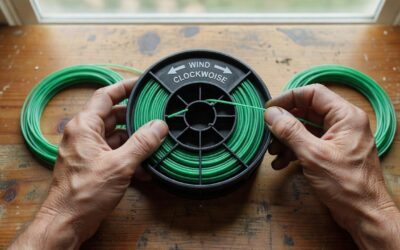
- Replacement rope (usually #4.5 or #5.5 marine-grade nylon; check your mower manual for exact size)
- Screwdriver (usually Phillips head)
- Socket wrench or pliers (to remove the housing if needed)
- Lighter or match (to seal rope ends and prevent fraying)
- Work gloves (spring tension can be strong)
Step-by-Step Rope Replacement
Step 1: Remove the Starter Housing
- Locate the bolts or screws holding the starter assembly to the engine.
- Unbolt or unscrew the entire housing; it may require 2–4 fasteners.
- Gently pull the housing away from the engine. Be aware: the recoil spring is under tension and may unwind suddenly.
Step 2: Secure the Spring (Critical Safety Step)
- Before touching the rope, visually inspect the recoil spring inside the housing.
- If the spring is still intact (coiled tightly), note which direction it winds.
- Many mechanics wrap a rubber band or cord around the outside of the housing to keep the spring from unwinding during work.
Step 3: Remove the Old Rope
- Locate where the rope is tied to the spring pulley (the center rotating part).
- Untie or cut the knot holding the rope to the pulley.
- Pull the old rope out through the handle opening and the housing opening.
- Cut away any frayed or stuck sections.
Step 4: Thread New Rope Through the Housing
- Take your new rope and seal one end with a lighter (briefly hold the cut end near a flame to melt and fuse the nylon fibers; do not ignite it).
- Feed the sealed end through the housing opening and the handle opening in the correct direction (your manual or the old rope path will show the route).
- Pull enough rope through so you have plenty to work with—typically 12–18 inches extra.
Step 5: Tie the Rope to the Pulley
- Feed the rope end through the hole or slot in the pulley/spring attachment point.
- Tie a secure knot—a figure-eight knot or double overhand knot works well.
- Make sure the knot cannot slip through the hole; test it by pulling gently.
- Trim excess rope and seal the cut end with a lighter again.
Step 6: Install the Handle
- Cut the rope to the correct length (usually 18–24 inches from the housing opening).
- Seal that end with a lighter.
- Thread the rope through the handle and tie another knot (typically a figure-eight or double overhand) inside the handle so the rope cannot pull back through.
- Seat the handle firmly; it may have a grooved channel to hold the rope in place.
Step 7: Test the Recoil Spring Before Reassembly
- Slowly pull the rope a few times to feel the spring tension and ensure smooth retraction.
- The rope should snap back quickly; if it feels weak or doesn’t retract fully, the spring may be damaged and will need replacement.
Step 8: Reinstall the Housing
- Carefully seat the housing back onto the engine, aligning bolt holes.
- Reattach bolts or screws, tightening firmly but not excessively.
- Give the cord a few test pulls; it should feel smooth and retract cleanly.
Replacing the Recoil Spring Assembly
If the rope is fine but the cord won’t retract, or if you discovered a damaged spring during rope replacement, the spring itself needs to be replaced. This is more involved than rope replacement.
Signs the Spring Is Broken
- The rope pulls smoothly but does not retract; it stays fully extended.
- You hear a crack or snap when pulling the cord (the spring may have snapped).
- Inside the housing, you see a broken or detached coil.
- The spring feels loose or rattles when you shake the housing.
Spring Replacement Difficulty and Cost
- Difficulty: Moderate to Hard. Recoil springs are under significant tension, and reassembly requires care to avoid finger pinching.
- Cost: Spring replacement kits typically cost $30–80. A complete new starter assembly costs $50–150.
- Labor: 1–2 hours if you are experienced; longer if you are working through it for the first time.
Should You Replace Just the Spring or the Whole Assembly?
Many homeowners and small-engine technicians replace the entire starter assembly rather than attempting spring replacement, because:
- Starter assemblies are relatively affordable ($50–150).
- Disassembling and reassembling the spring mechanism is error-prone and risky.
- A new assembly comes pre-assembled and tested.
- Spring-only replacement kits require you to transplant the spring into the old housing, which is fiddly.
Unless you are comfortable with mechanical assembly or have done this before, buying a complete starter assembly and swapping it out is usually the safer, faster choice.
How to Replace a Complete Starter Assembly
Tools: Socket wrench or screwdriver set.
Steps:
- Remove bolts or screws holding the old housing to the engine (usually 2–4 fasteners).
- Detach the housing and set it aside.
- Position the new assembly on the engine, aligning bolt holes.
- Install and tighten fasteners.
- Test by pulling the cord several times; it should retract smoothly and quickly.
Repairing or Replacing the Pull Cord Handle
If only the handle is damaged, you may avoid replacing the entire rope or starter assembly.
Minor Handle Cracks or Splits
- Small cracks in plastic or wood can sometimes be sealed with epoxy or plastic cement.
- Clean the area, apply epoxy or plastic adhesive, clamp or wrap with tape, and allow to cure per product instructions.
- This is a temporary fix; the handle may break again if used heavily.
Handle Replacement
If the handle is severely cracked, loose, or the repair didn’t hold:
- Unbolt the old handle from the housing or untie the rope from inside the handle.
- Purchase a replacement handle sized for your rope diameter (usually sold as part of a starter rope kit, ~$10–15).
- Thread the existing rope through the new handle and retie the knot inside.
- Bolt or clip the handle back into place.
Cost and Difficulty Comparison: When to Repair vs. Replace
| Repair Type | Cost | Difficulty | Time | Best For |
|---|---|---|---|---|
| Rope replacement only | $10–20 | Easy | 30–60 min | Frayed or torn rope; spring works fine |
| Handle replacement only | $10–15 | Easy | 15–30 min | Cracked or split handle; rope and spring OK |
| Spring replacement (DIY) | $30–80 | Hard | 1–2 hours | If you are handy and want to save money |
| Complete starter assembly | $50–150 | Easy | 15–30 min | Spring failure; fastest and safest option |
Decision Rule: If the rope alone is damaged, repair it for $10–20. If the spring is broken or the entire starter feels unsafe, buy a new assembly for $50–150. DIY spring replacement is only worth attempting if you are confident in mechanical work and want to save ~$70 in parts cost.
Prevention: Keeping Your Pull Cord in Working Order
Store the Mower Properly
- Do not leave the mower outside in rain or extreme humidity; this rusts the internal spring and corrodes the housing.
- Store in a dry garage or shed during off-season.
- For winter storage, drain the fuel or add fuel stabilizer to prevent varnish buildup inside the engine, which can cause starter cord stickiness.
Pre-Season Maintenance
- Before spring use, visually inspect the starter cord and housing for damage or corrosion.
- Pull the cord gently 5–10 times to confirm smooth operation and quick retraction.
- Wipe away any visible dirt or debris from the housing opening.
During-Season Care
- After each use, never leave the cord extended; let it retract fully into the housing.
- Do not yank the cord hard or at an angle; pull smoothly and straight.
- If the cord feels stiff or sticky, do not force it; clean or service the starter before the problem worsens.
Cord Lifespan Expectations
- A well-maintained pull cord typically lasts 5–10 years of regular use.
- Heavy or aggressive use, poor storage, or rust exposure can shorten this to 2–3 years.
- The recoil spring often lasts longer than the rope but can fail after 7–10 years of regular use or if exposed to rust.
Frequently Asked Questions
Can I Replace Just the Rope Without Removing the Entire Starter Housing?
In most cases, no—you need to remove the housing to access where the rope ties to the pulley and spring. However, some newer mower designs have starter rope replacement kits that allow you to thread new rope through an opening without full disassembly. Check your mower’s manual to see if your model supports this. If not, removing the housing is straightforward and takes about 5 minutes.
What Size Rope Should I Buy for Replacement?
Most lawn mower starter ropes are #4.5 or #5.5 marine-grade nylon. Check your mower’s manual or measure the diameter of the old rope to confirm. Rope is sold by the foot; you’ll typically need 20–35 feet for a complete replacement. Hardware stores and online retailers sell starter rope kits with pre-cut lengths and handles for $10–15.
Is It Safe to Work on a Recoil Spring?
Yes, if you are careful. Recoil springs are under tension and can unwind suddenly or snap if mishandled. Wear work gloves, wrap a rubber band or cord around the housing to contain the spring, and avoid placing your fingers directly in the path of moving parts. If you are uncomfortable, have a technician handle the spring replacement—it is not worth a pinched finger.
How Do I Know If the Engine Is Seized or If It’s Just the Cord?
Try rocking the mower gently side-to-side while pulling the cord. If the engine rocks but the cord doesn’t move, the cord mechanism is jammed. If the engine is locked in place and won’t rock at all, the engine itself may be seized (less common; usually requires engine service). If you’re unsure, spray penetrating oil around the starter housing and wait 30 minutes, then try again. If still stuck, have a small-engine technician diagnose it.