

Direct Answer: Where to Find Your Carburetor
The carburetor on a push lawn mower is typically located on the side of the engine, connected to the air filter housing and the throttle linkage. It is often found beneath or behind the air filter assembly. The exact position can vary by mower model and engine type (e.g., overhead valve vs. side valve), so consulting your owner’s manual is recommended for precise identification.
Understanding the Carburetor’s Role in a Push Lawn Mower
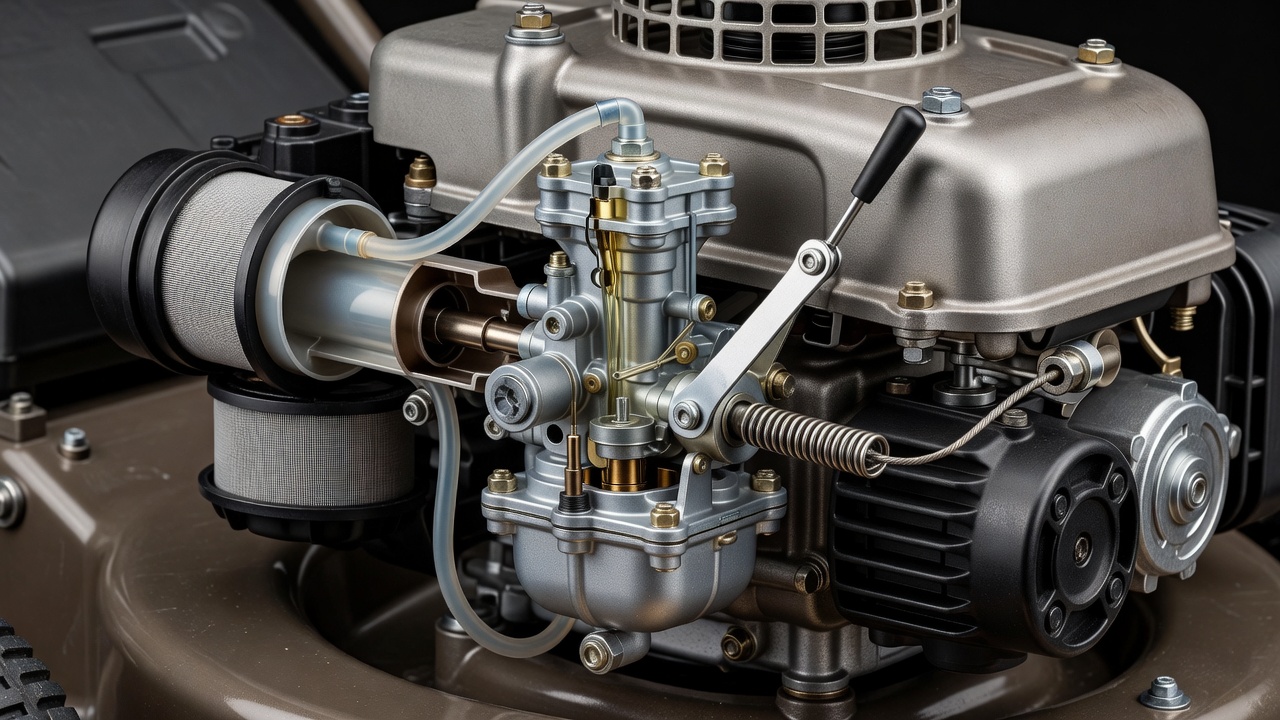
The carburetor is a critical component of your lawn mower’s engine. Its primary function is to mix air and fuel in the correct ratio to create a combustible mixture that powers the engine. Without a properly functioning carburetor, the engine may not start, may run poorly, or could stall unexpectedly. Locating the carburetor is the first step for essential maintenance tasks like cleaning, adjusting the idle, or replacing a worn-out part.
Common Locations of the Carburetor by Engine Type
The exact location of the carburetor depends largely on the engine manufacturer and design. Here are the typical locations for some of the most common push mower engines:
Briggs & Stratton Engines
On many Briggs & Stratton engines, which are extremely common on push mowers, the carburetor is located on the side of the engine block. It is usually situated directly behind the air filter housing. To access it, you will typically need to remove the air filter cover and the air filter itself. The carburetor is then visible, connected to the engine intake and the throttle linkage.
Honda Engines
Honda push mower engines often feature an overhead valve (OHV) design. On these models, the carburetor is generally located on the side of the engine, near the front or rear depending on the specific model. It is connected to the air filter assembly, which is often a black plastic housing. You may need to remove a few screws or clips to access the carburetor for cleaning or service.
Kohler Engines
Kohler engines, found on some higher-end or commercial-grade push mowers, typically have the carburetor mounted on the side of the engine. It is often positioned near the throttle control and governor linkage. The air filter housing is a key landmark; the carburetor is almost always connected to it. Before finalizing equipment decisions, refer to our comprehensive z890 vs x870e motherboard comparison.
Step-by-Step Guide to Locating Your Mower’s Carburetor
Follow these steps to identify the carburetor on most standard push lawn mowers:
- Locate the Air Filter Housing: This is usually a black or gray plastic box on the side of the engine. It often has a cover that can be removed with a screwdriver or by unclipping latches.
- Remove the Air Filter Cover and Filter: Take off the cover and remove the air filter element (which may be paper or foam). This will expose the air intake.
- Identify the Carburetor: The carburetor is the metal component directly attached to the air intake you just uncovered. It will have fuel lines connected to it and a linkage (a thin metal rod or spring) connecting it to the throttle control.
- Trace the Throttle Linkage: The throttle linkage is a mechanical connection that controls the engine speed. It connects the carburetor to the throttle lever on the mower handle. Following this linkage will confirm you have found the carburetor.
Important Considerations and Variations
While the steps above apply to most push mowers, there are some important exceptions and variations to keep in mind. For broader ecosystem context, read through our operational guide on marshall stanmore iii vs harman kardon onyx studio 8.
Modern Fuel-Injected Mowers
Some newer, premium push mowers use electronic fuel injection (EFI) instead of a traditional carburetor. If your mower has an EFI system, it will not have a carburetor to locate or clean. These systems are more efficient but are currently found on a smaller segment of the market.
Engine Design Differences
The location can differ between older side-valve (flathead) engines and newer overhead-valve (OHV) engines. OHV engines often have the carburetor in a slightly more accessible position on the side of the cylinder head. For troubleshooting and reliability insights, consult our in-depth dyson v8 cyclone vs bissell featherweight stick report.
Safety First
Before inspecting or working on the carburetor area, always perform these safety steps:
- Disconnect the spark plug wire to prevent accidental engine starts.
- Ensure the engine is cool to the touch.
- Work in a well-ventilated area away from open flames or sparks.
Common Questions on Where Is The Carburetor On A Push Lawn Mower Answered
What does the carburetor do on a lawn mower engine?
The carburetor’s job is to mix air and gasoline in the proper proportion to create a combustible mixture for the engine. It regulates the engine’s speed and power output based on throttle input. Readers comparing setup options can review our technical analysis on bissell crosswave hydrosteam vs shark stainforce.
Why might I need to find the carburetor on my push mower?
You may need to locate the carburetor for routine maintenance like cleaning it to remove gum and varnish buildup, adjusting the idle speed, or replacing a faulty part like a primer bulb or needle valve if the engine is running poorly or won’t start.
Are there push mowers that do not have a carburetor?
Yes. Some modern push mowers, particularly those with electronic fuel injection (EFI) systems, do not use a carburetor. Electric push mowers also do not have carburetors as they are powered by a battery and electric motor.
What safety precautions should I take before inspecting the carburetor area?
Always disconnect the spark plug wire to prevent accidental starting. Ensure the engine is cool, and work in a well-ventilated area. Be cautious with fuel, as it is flammable. If you are not comfortable performing maintenance, consult a professional technician.
Related Maintenance and Operating Guides
To keep your equipment running at peak operating efficiency, explore our related technical walkthroughs and maintenance tutorials:
- Consult our detailed breakdown on residential zero-turn lawn mower guide.
Technical Standards and Compliance
Mechanical safety standards, operational tolerances, and protective gear guidelines align with benchmark specifications established by the American National Standards Institute (ANSI).









