Direct Answer
The best battery-powered leaf blower depends on your use case. For most residential homeowners, models delivering 400–600 CFM with 30–60 minute runtime offer the best balance of power and productivity. For commercial or frequent use, prioritize 600+ CFM, extended runtime (60+ minutes), and fast-charging systems. Lithium-ion batteries outperform older technology and are now the market standard. Expect to spend $150–$300 for quality handheld models or $400–$600+ for premium backpack blowers with batteries and charger included.
Understanding Battery-Powered Leaf Blower Specifications
Battery-powered leaf blowers are rated by several key metrics that determine real-world performance. Understanding these specs prevents confusion and helps you compare models objectively.
CFM and MPH: What They Mean and Why They Matter
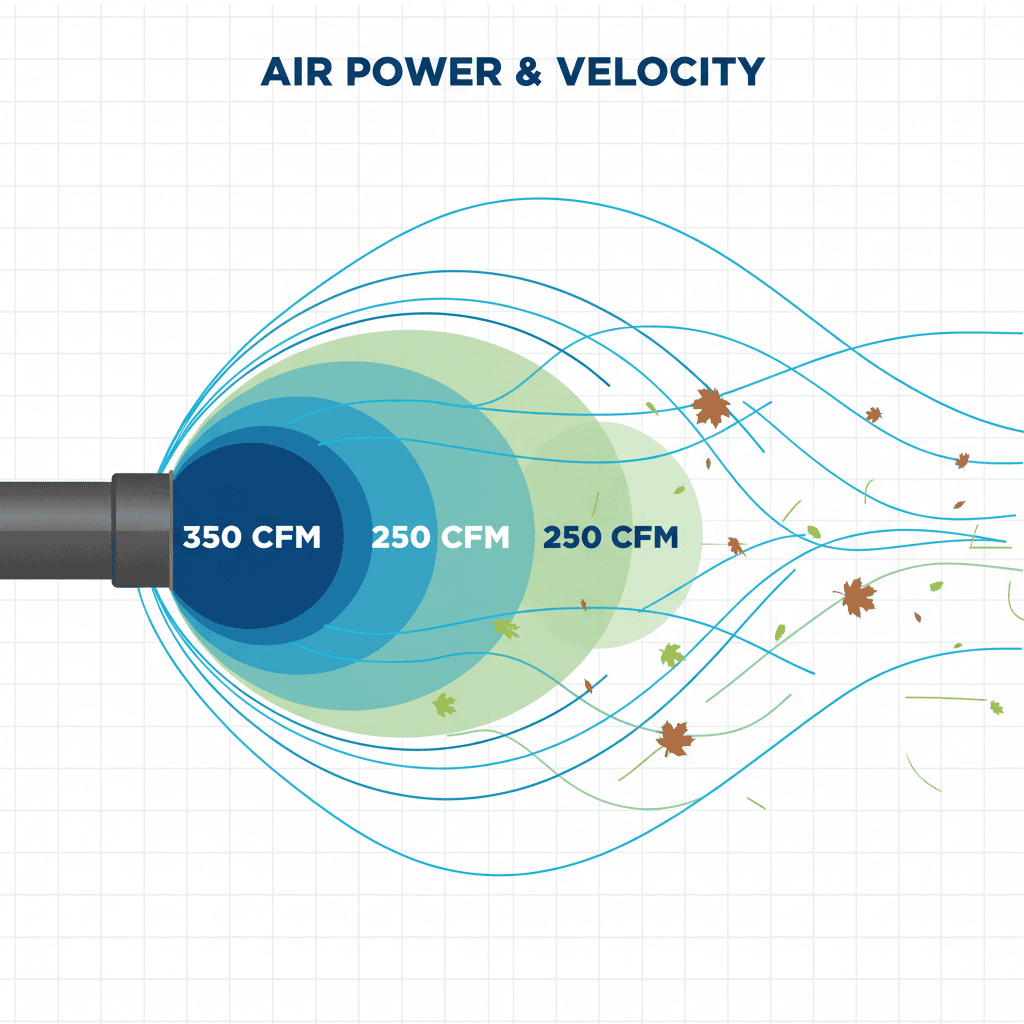
CFM (cubic feet per minute) measures the volume of air the blower moves per minute—the primary indicator of cleaning power. Higher CFM means faster debris removal, especially for wet leaves or dense piles. MPH (miles per hour) indicates air velocity, which affects how far debris travels and whether the blower can move heavier material.
- 300–400 CFM: Light cleanup, dry leaves, small yards (under 0.5 acres)
- 400–600 CFM: General residential use, mixed debris, typical properties (0.5–1.5 acres)
- 600–800 CFM: Heavy commercial use, wet leaves, large properties, frequent operation
- 800+ CFM: Professional landscaping, industrial applications
In practice, a 500 CFM handheld blower moves leaves efficiently across most residential properties. However, CFM ratings often reflect peak output—real-world performance drops as the battery depletes, typically losing 10–20% of CFM in the final third of the charge cycle.
Battery Voltage and Its Effect on Performance
Battery voltage (18V, 36V, 40V, 60V, 80V) directly correlates with motor power and maximum CFM. Higher voltage means stronger performance but also heavier batteries.
- 18V–20V: Entry-level, lightweight, best for light cleanup and small properties
- 36V–40V: Mid-tier, balanced power and weight, suitable for most homeowners
- 60V–80V: Premium, high power and longer runtime, commercial and heavy-duty use
Voltage alone doesn’t determine power—battery capacity (measured in amp-hours, or Ah) also matters. A 40V 5Ah battery delivers more total energy than a 40V 2Ah battery, resulting in longer runtime and sustained performance.
Lithium-Ion vs. Older Battery Technologies
Modern cordless leaf blowers use lithium-ion (Li-ion) batteries, which offer significant advantages over older nickel-cadmium (NiCd) and nickel-metal hydride (NiMH) systems:
| Feature | Lithium-Ion | Nickel-Cadmium |
|---|---|---|
| Energy density | High (lighter for same capacity) | Low (bulky and heavy) |
| Lifespan | 500–1000+ charge cycles (3–5 years typical) | 1000 cycles but degrades faster |
| Memory effect | Minimal (charge anytime) | Significant (must fully drain) |
| Cost | Higher upfront, lower long-term | Lower upfront, higher long-term |
| Performance consistency | Maintains power throughout charge | Voltage sag (power drops near end) |
Li-ion batteries maintain nearly constant voltage throughout the charge cycle, meaning you get reliable CFM output until the battery is nearly depleted. This is why modern cordless tools feel more responsive and predictable than older battery-powered equipment.
Runtime: Expected Performance vs. Marketing Claims
Manufacturers often rate runtime under ideal conditions—light debris, consistent blade contact, full battery charge. Real-world runtime is typically 20–40% shorter due to:
- Wet or dense leaves require more motor effort
- Battery voltage sag as capacity depletes (less pronounced with Li-ion)
- Ambient temperature (cold weather reduces effective runtime)
- User technique (continuous high-load operation drains batteries faster)
A blower rated for 60 minutes at half power might deliver 35–45 minutes at full power. Plan for 60–70% of the manufacturer’s claim during typical use.
Key Factors to Evaluate Before Buying
Residential vs. Commercial Use: How Requirements Differ
Residential homeowners typically clear leaves 2–4 times per season, usually on properties under 1.5 acres. Requirements:
- 400–600 CFM is sufficient for most tasks
- 30–60 minute runtime per charge accommodates typical cleanup sessions
- Lightweight design (under 8 lbs) reduces fatigue over 30–45 minute sessions
- $200–$350 budget (including battery and charger) is reasonable
- Noise level under 80 dB is preferable for early morning or evening use
Commercial landscapers and frequent users operate 5–7 days per week, often on multiple properties. Requirements shift dramatically:
- 600–800 CFM needed for efficiency and customer satisfaction
- 60+ minute runtime or quick battery swaps to minimize downtime
- Fast-charging systems (30–60 minutes for a full charge) are essential
- Multiple batteries ($400–$600 total investment) are standard
- Durability and warranty coverage become critical purchase criteria
- Total cost of ownership, including battery replacement cycles, matters more than purchase price
Handheld vs. Backpack Blowers
Handheld blowers dominate the residential market. They’re portable, easy to store, and sufficient for small-to-medium properties. Typical specs: 400–600 CFM, 30–60 minute runtime, 6–10 lbs, $150–$400.
Backpack blowers are heavier but distribute weight across your torso and shoulders, reducing arm fatigue during extended use. They typically offer higher CFM (600–900+), longer runtime (60–90 minutes), and cost $400–$800. Backpack models are overkill for most residential users but invaluable for commercial landscapers who spend 4+ hours blowing daily.
The Power-vs.-Runtime Trade-Off
The fundamental constraint: higher CFM consumes more battery power, reducing runtime. A 40V 5Ah battery might deliver 60 minutes at 400 CFM or 35 minutes at 600 CFM. Choose based on priority:
- Power first: Frequent wet-leaf cleanup or large properties; accept longer charging between sessions
- Runtime first: Large properties where stopping to swap batteries is impractical; accept slightly longer cleanup time
- Balanced: Most residential users; choose mid-range models (500–550 CFM, 45–60 minute runtime)
Battery Ecosystem: Cross-Compatibility Matters
If you own other cordless tools from the same manufacturer (drill, saw, trimmer), buying a leaf blower that shares the same battery platform is economical. Major ecosystems:
- DeWalt: 20V system widely compatible across tool lines
- Makita: 18V and 36V (two 18V) platforms
- Milwaukee: M18 (18V) and M28 (28V) systems
- Ryobi: 18V ONE+ system, the most affordable entry point
- Greenworks: 40V and 60V platforms, strong in outdoor power equipment
If you’re starting fresh, choose a brand with a robust ecosystem aligned to tools you’ll likely need. Buying additional batteries for an ecosystem you already use is cheaper than switching brands.
Charging Time and Battery Management
Charging speed affects workflow, especially for commercial users. Standard chargers take 60–120 minutes for a full charge. Fast chargers reduce this to 30–60 minutes but cost $30–$80 extra.
Consider purchasing extra batteries and rotating them. Two 5Ah batteries allow continuous work: use one while the other charges. This costs more upfront ($100–$200 per battery) but eliminates downtime during commercial operations.
Weight and Ergonomics
For handheld blowers, weight directly impacts user fatigue and shoulder strain during 30–60 minute sessions. Typical handheld specs:
- Under 7 lbs: Lightweight, best for extended use or smaller adults
- 7–9 lbs: Standard, suits most users
- Over 9 lbs: Acceptable only if features justify the added mass (higher CFM, longer runtime)
Vibration and grip design also matter. Models with rubberized, ergonomic handles and balanced weight distribution feel less tiring after 45 minutes of continuous operation.
Performance and Runtime in Real-World Conditions
Typical Performance by Category
Here’s what realistic performance looks like across common use scenarios:
| Use Case | Recommended CFM | Realistic Runtime | Est. Price (Tool + Battery + Charger) |
|---|---|---|---|
| Small yard (< 0.25 acres), light cleanup | 300–400 CFM | 30–40 min | $120–$180 |
| Medium yard (0.5–1 acre), occasional use | 450–550 CFM | 40–60 min | $200–$350 |
| Large yard (1–2 acres), seasonal cleanup | 600–750 CFM | 45–75 min | $350–$500 |
| Commercial (daily use), multiple properties | 700–900 CFM | 60–90 min (backpack) | $500–$900 |
Battery Degradation Over Time
Lithium-ion batteries gradually lose capacity with each charge cycle. Expect:
- Year 1–2: Minimal degradation (95–98% of original capacity retained)
- Year 3–4: Noticeable reduction (85–90% capacity), runtime drops by 10–15 minutes
- Year 5+: Significant decline (70–80% capacity), battery may no longer justify continued use
Storage conditions affect longevity. Batteries stored in cool, dry environments degrade slower than those left in hot garages or extreme cold. Charge batteries to 50–80% capacity for long-term storage (weeks or months) rather than topping them to 100%.
Noise Level and Environmental Considerations
Battery-powered blowers are significantly quieter than gas-powered models, typically operating at 70–80 dB compared to 85–100 dB for gas engines. This matters in residential neighborhoods with noise restrictions or early morning use.
- 70–75 dB: Quiet enough for early morning use without disturbing neighbors
- 75–80 dB: Standard residential blowers, acceptable for daytime use
- 80+ dB: Louder models, best used mid-day on weekdays
Battery-powered blowers produce zero emissions and require no gas, oil, or spark plug maintenance—an environmental and convenience advantage over gas-powered alternatives.
How to Choose the Right Blower for Your Property
Answer these questions to narrow your options:
- Property size and leaf volume: Small yards (under 0.5 acres) need 300–400 CFM; medium properties (0.5–1.5 acres) need 450–600 CFM; large properties (1.5+ acres) need 600+ CFM or backpack models.
- Cleanup frequency: Seasonal (2–4 times per year) vs. frequent (weekly during fall). Frequent users should prioritize runtime and battery ecosystem investment.
- Budget: Entry-level kits start at $120–$180; mid-range quality models run $250–$400; premium commercial equipment costs $500+.
- Existing tool ecosystem: If you own DeWalt, Makita, or other brand tools, choose a blower compatible with existing batteries and chargers to maximize value.
- Physical limitations: Lighter users prefer models under 7 lbs; those with shoulder/back issues benefit from backpack designs that distribute weight.
- Noise sensitivity: Noise-restricted areas demand models under 75 dB; commercial use allows 80+ dB if daytime operation is permitted.
Cost Considerations: Initial Investment and Long-Term Value
What’s Included in the Package?
Pricing varies widely depending on what’s bundled. Always verify whether your purchase includes the blower, battery, and charger or if these are sold separately.
- Tool only: $80–$150 (requires existing battery and charger)
- Tool + 2Ah battery + charger: $120–$200 (entry-level kit)
- Tool + 5Ah battery + charger: $250–$400 (mid-range, best value for most users)
- Tool + dual batteries + fast charger: $350–$600 (commercial or power users)
Replacement Battery Costs
Budget for battery replacement every 3–5 years of regular use:
- 2–3Ah batteries: $60–$100 each
- 4–5Ah batteries: $120–$180 each
- Premium commercial 6–8Ah batteries: $180–$280 each
Commercial operators benefit from purchasing multiple batteries upfront. Two 5Ah batteries cost $240–$360 total but eliminate downtime and extend the lifespan of each battery by reducing daily charge cycles.
Warranty and What It Signals
Warranty periods vary by brand and model:
- 1-year limited warranty: Standard for budget brands and entry-level models
- 3-year warranty: Mid-range brands confident in durability
- 5+ year warranty: Premium brands or corded blowers (less wear than batteries)
Longer warranties often correlate with better build quality and realistic durability expectations. However, warranty doesn’t cover battery degradation—batteries are typically covered for 1–2 years even if the tool itself has a longer warranty.
Frequently Asked Questions
How long does a battery-powered leaf blower battery last before needing replacement?
Lithium-ion batteries typically deliver 3–5 years of regular use before capacity degrades to 70–80% of original output. With light seasonal use, batteries can last 5–7 years. Storage conditions, charging frequency, and operating temperature significantly affect lifespan. Storing batteries in cool environments and avoiding complete discharge extends their life. Most manufacturers cover batteries for 1–2 years under warranty, but degradation is normal and not a defect.
Can I use the same battery in multiple cordless tools?
Yes, if the tools share the same brand and voltage platform. For example, all DeWalt 20V tools use compatible batteries, so a battery from your drill works in a leaf blower, impact driver, or circular saw. However, batteries are not compatible across brands (DeWalt and Milwaukee batteries won’t interchange). Before buying a new tool, verify it matches your existing battery ecosystem to maximize value and flexibility.
What’s the difference between handheld and backpack battery leaf blowers?
Handheld blowers are lighter (6–10 lbs), portable, and suitable for small-to-medium properties. Backpack models (12–18 lbs) distribute weight across your shoulders and back, reducing arm fatigue. Backpack blowers typically deliver higher CFM (600–900+) and longer runtime (60–90 minutes), making them ideal for commercial use or large properties. For residential use under 1.5 acres, handheld models are more practical; commercial landscapers benefit from backpack designs.
Is 400 CFM enough for a typical residential yard?
For most residential properties under 1 acre, 400–500 CFM is sufficient, especially for dry leaves on driveways and patios. However, 500–600 CFM is preferable if you deal with wet leaves, dense piles, or thick grass clippings. More power reduces cleanup time and effort. If your budget allows, invest in a 500–550 CFM model rather than settling for 400 CFM—the performance improvement justifies the cost over several years of use.
Final Takeaway
The best battery-powered leaf blower matches your property size, use frequency, and budget. Residential users typically thrive with handheld models in the 450–600 CFM range and 30–60 minute runtime, costing $250–$400 with battery and charger. Commercial operators should invest in 600+ CFM backpack models with multiple batteries and fast-charging systems for uninterrupted productivity.
Prioritize lithium-ion battery technology, which dominates the market and delivers consistent performance over 3–5 years. If you already own cordless tools from DeWalt, Makita, or Ryobi, choose a blower compatible with your existing battery ecosystem to avoid redundant purchases. Weight, noise level, and warranty coverage round out the decision—lighter models reduce fatigue, quieter operation respects neighbors, and longer warranties suggest durability.
Don’t overspend on features you won’t use. A 500 CFM handheld blower with 50 minutes of runtime is overkill for a quarter-acre suburban lot; conversely, a 300 CFM model frustrates users with large properties or frequent cleanup needs. Honest self-assessment of your needs prevents buyer’s remorse and ensures your investment delivers years of reliable service.