The Direct Answer
The best leaf blower for you depends on three factors: property size, power source preference, and budget. For small residential yards (under 1/4 acre), a handheld electric or battery-powered blower offers convenience and minimal maintenance. For medium properties (1/4 to 1 acre), a backpack blower delivers superior power and runtime. For large properties or commercial use, walk-behind blowers maximize efficiency. Battery-electric models prioritize convenience and quiet operation; gas models provide maximum power but require regular maintenance; corded electric blowers are budget-friendly but limited by cord length.
Understanding Your Leaf Blower Needs
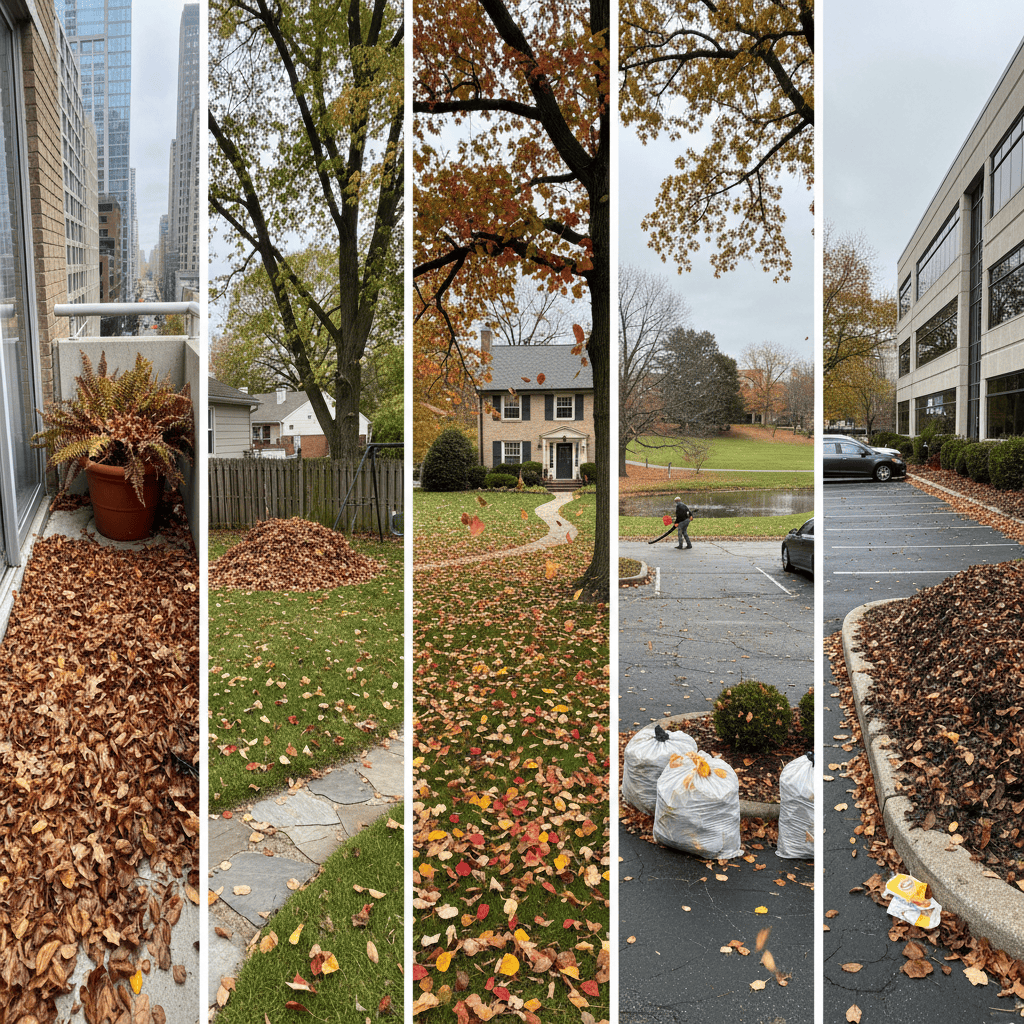
Before comparing specific features or models, answer these five questions to narrow your options:
- Property size: How many square feet or acres do you need to clear? Small yards (under 1/4 acre) have different requirements than large estates.
- Debris type: Are you moving only leaves, or also twigs, pine needles, and heavier debris? Heavier materials demand more CFM (cubic feet per minute).
- Noise tolerance: Do you have close neighbors or early-morning restrictions? Noise levels vary dramatically between power sources.
- Physical ability: Can you comfortably handle a 8–12 pound backpack blower, or do you need a lightweight handheld unit?
- Budget: Are you spending $100, $300, or $1,000? Your budget tier dramatically affects available features and longevity.
Leaf Blower Power Sources: Gas vs. Electric vs. Battery
The power source you choose determines performance, maintenance, noise, and long-term cost.
Gas Blowers
Power and performance: Gas blowers deliver the highest CFM ratings (up to 1,000+ CFM) and are best for heavy-duty debris and large properties. They handle wet leaves and dense accumulation better than electric alternatives.
Maintenance and cost: Gas engines require seasonal tune-ups, spark plug replacements, carburetor cleaning, and fuel stabilization. Oil changes and air filter maintenance add ongoing work. Fuel costs also accumulate over time.
Noise and emissions: Gas blowers are the loudest option (75–85 decibels) and produce emissions. Many areas restrict their use during certain hours.
Best for: Commercial landscapers, large rural properties (1+ acres), contractors, and users who prioritize raw power over convenience.
Battery-Powered (Cordless) Electric Blowers
Power and performance: Modern lithium-ion batteries deliver 300–600 CFM, sufficient for most residential properties. Runtime ranges from 20–90 minutes depending on battery capacity and power setting.
Maintenance and cost: Battery blowers require minimal maintenance—no oil changes, spark plugs, or seasonal prep. Battery replacement (typically $100–300) occurs every 3–5 years. Upfront costs are higher, but operating costs are lower than gas.
Noise and emissions: Battery blowers are the quietest option (60–75 decibels) and produce zero emissions, making them ideal for noise-sensitive neighborhoods.
Best for: Homeowners with small-to-medium yards, residential areas with noise restrictions, and users who value convenience over raw power.
Corded Electric Blowers
Power and performance: Corded models deliver consistent 300–400 CFM without battery drain. Performance remains constant throughout use.
Maintenance and cost: These are the lowest-maintenance option—no gas, oil, or battery replacement needed. Initial cost is the lowest of all categories ($60–$150).
Noise and emissions: Corded blowers are quiet (65–75 decibels) with zero emissions.
Best for: Budget-conscious buyers, small yards under 1/4 acre, and properties where a 100-foot extension cord reaches all clearing areas. Limited by cord range and the hassle of managing cord placement.
Blower Types and Design: Which Format Suits Your Needs?
Handheld Blowers
Design: Lightweight (5–8 pounds), one-handed or two-handed operation, held at waist or shoulder height.
Performance: Moderate CFM (200–500), best for light debris and small areas. Not ideal for heavy leaves or large properties.
Advantages: Easy storage, minimal fatigue, affordable, good for precision work around flower beds.
Disadvantages: Lower power, limited runtime (battery models), narrow clearing path.
Best for: Small yards, light cleanups, patios, and users with limited storage space.
Backpack Blowers
Design: Engine or battery mounted on your back with a hose and nozzle extending forward. Weight distributed across shoulders.
Performance: High CFM (400–900+), excellent for sustained clearing. Battery-powered versions offer 60–90 minutes runtime at moderate power.
Advantages: Superior power and endurance, better ergonomics for extended use, ideal for medium-to-large residential properties.
Disadvantages: Heavier (8–14 pounds), requires more physical effort, higher cost than handheld models.
Best for: Properties 1/4 to 2 acres, frequent seasonal use, and users who can comfortably handle the weight.
Walk-Behind and Tow-Behind Blowers
Design: Wheeled units pushed like a lawnmower (walk-behind) or towed behind a vehicle (tow-behind). Operator controls from a handle or vehicle cab.
Performance: Extreme CFM (1,000–3,000+), clearing massive areas efficiently. Some models handle wet debris and thick accumulation with ease.
Advantages: Minimum physical exertion, fastest coverage for large properties, commercial-grade durability.
Disadvantages: High cost ($2,000–$8,000+), requires storage space, excessive for small residential yards, loud and fuel-intensive (most models).
Best for: Commercial properties, estates over 2 acres, professional landscapers, and municipal use.
Key Performance Specifications Explained
CFM (Cubic Feet Per Minute)
CFM measures the volume of air a blower moves. Higher CFM moves more debris, especially heavier materials like wet leaves and twigs. Typical residential needs:
- Light cleanup (small yard, dry leaves): 200–350 CFM
- Medium cleanup (average yard, mixed debris): 350–600 CFM
- Heavy cleanup (large property, wet leaves, twigs): 600–1,000+ CFM
MPH (Miles Per Hour)
MPH measures air velocity—how fast air leaves the nozzle. Higher MPH concentrates force in a narrower stream, useful for moving dense debris. Most quality blowers deliver 100–200 MPH. CFM and MPH together determine effectiveness; high CFM with low MPH spreads air diffusely, while high MPH with modest CFM concentrates force in a tight stream.
Runtime and Battery Capacity
Battery capacity is measured in amp-hours (Ah). A 2.0 Ah battery runs 20–40 minutes at moderate power; a 5.0 Ah battery runs 60–90 minutes. Most manufacturers offer expandable battery systems so you can buy additional batteries or upgrade capacity as needed.
Noise Levels
Measured in decibels (dB):
- Corded electric: 65–75 dB
- Battery-powered: 60–75 dB
- Gas handheld: 75–85 dB
- Gas backpack: 75–90 dB
For context, normal conversation is 60 dB; lawn mowers are 80–90 dB. Battery and corded electric blowers won’t disturb neighbors; gas blowers may violate local noise ordinances.
Budget Tiers: What You Get at Each Price Point
Under $150 (Budget Tier)
Options: Corded electric handheld, entry-level battery handheld, basic gas handheld.
Performance: 200–350 CFM, suitable for small yards and light debris.
Trade-offs: Lower build quality, shorter runtime (battery models), limited warranty.
Best for: Occasional use, small properties, users who prioritize cost over features.
$150–$400 (Mid-Range Tier)
Options: Quality battery handheld, entry-level backpack blower (battery or gas), corded electric backpack.
Performance: 350–600 CFM, handles most residential properties effectively.
Trade-offs: Good durability, decent runtime, improved ergonomics. Still entry-level in some performance categories.
Best for: Average homeowners, regular seasonal use, small-to-medium properties.
$400–$800 (Premium Residential Tier)
Options: High-quality battery backpack blower, professional-grade gas backpack.
Performance: 600–900 CFM, extended runtime (battery) or sustained power (gas).
Trade-offs: Premium build quality, better ergonomics, longer warranties, expandable battery systems.
Best for: Serious homeowners, frequent use, large residential properties (1–2 acres).
$800+ (Commercial/Professional Tier)
Options: Walk-behind blowers, commercial backpack blowers, tow-behind units.
Performance: 900–3,000+ CFM, professional-grade durability and power.
Trade-offs: Highest cost, but longevity justifies investment for commercial use.
Best for: Landscapers, property managers, large estates, commercial applications.
Matching Blower Type to Your Property and Use Case
Small Urban or Suburban Yard (Under 1/4 Acre)
Recommendation: Battery-powered or corded electric handheld blower.
Reasoning: Lightweight for minimal fatigue, quiet for neighbor relations, low maintenance, and sufficient power for typical leaf volumes. Corded is cheapest if your yard accommodates a 100-foot cord; battery offers more freedom.
Expected CFM: 250–400 CFM.
Expected cost: $100–$350.
Average Suburban Home (1/4 to 1 Acre)
Recommendation: Battery-powered backpack blower or quality gas handheld.
Reasoning: Battery backpack offers power, runtime, and quiet operation. Gas handheld costs less but requires maintenance and generates noise. A 4.0 Ah battery provides 60–80 minutes of runtime.
Expected CFM: 400–700 CFM.
Expected cost: $300–$600.
Large Residential Property (1 to 3 Acres)
Recommendation: Gas backpack blower or premium battery backpack.
Reasoning: Large properties need sustained power or extended runtime. Gas backpack delivers consistent performance without battery fatigue; premium battery backpack with 5.0+ Ah offers similar runtime without fuel. Consider your tolerance for noise and maintenance.
Expected CFM: 600–1,000 CFM.
Expected cost: $400–$900.
Commercial or Very Large Property (3+ Acres)
Recommendation: Walk-behind blower or commercial-grade backpack.
Reasoning: Only walk-behind blowers provide the CFM and coverage speed needed for properties this large. Investment is justified by time saved.
Expected CFM: 1,000–2,500+ CFM.
Expected cost: $2,000–$6,000+.
Additional Considerations: Maintenance, Durability, and Long-Term Value
Maintenance Requirements
Battery-electric blowers: Minimal. Charge battery, store in cool place, keep intake vents clean. Battery replacement every 3–5 years is the only significant expense.
Corded electric blowers: Minimal. Inspect cord for damage, keep vents clean. Replace cord if damaged.
Gas blowers: Significant. Change oil before and after season, clean or replace spark plugs, maintain air filter, clean carburetor, add fuel stabilizer before winter storage, inspect belts and spark plug wires. Neglect leads to starting problems and premature failure.
Durability and Longevity
Budget gas and electric blowers: 3–5 years of typical use before decline.
Mid-range battery blowers: 5–8 years; battery replacement extends life.
Premium backpack blowers (battery or gas): 7–10+ years with proper maintenance.
Commercial walk-behind units: 10–15+ years when professionally maintained.
Hidden Costs
Factor these into your total cost of ownership:
- Gas blowers: Fuel ($40–$100/season), oil changes, spark plugs, seasonal maintenance.
- Battery blowers: Battery replacement ($100–$300 per battery every 3–5 years), occasional charger replacement.
- Corded blowers: Extension cord (if needed), eventual cord replacement.
- All blowers: Occasional repairs, replacement spark plugs or air filters, storage space.
Making Your Final Decision
Follow this process to choose the right blower:
- Assess your property: Measure square footage, note terrain obstacles, estimate seasonal leaf volume.
- Prioritize your values: Rank these in order: cost, power, quiet operation, low maintenance, runtime, ease of use.
- Choose power source: Battery-electric if convenience and noise matter; gas if power is paramount and maintenance is acceptable; corded if budget is tight and your property accommodates it.
- Select design: Handheld for small areas, backpack for medium properties, walk-behind for large commercial sites.
- Compare within tier: Read reviews focusing on durability, warranty length, and user experience—not just specs.
- Check battery compatibility: If battery-powered, verify if the battery works with other tools in the manufacturer’s ecosystem. Expandable systems offer better long-term value.
Frequently Asked Questions
How much CFM do I actually need for my yard?
Most residential yards (under 1 acre) are adequately served by 350–600 CFM. Unless you have dense accumulation, wet leaves, or heavy twigs, higher CFM delivers diminishing returns. Test a friend’s blower or visit a rental center to feel the difference between 400 and 700 CFM—many buyers find modest CFM perfectly sufficient and less costly.
Are battery blowers powerful enough to compete with gas?
Modern battery backpack blowers with 60–90 minute runtime and 600–800 CFM handle 90% of residential and many commercial applications. They underperform gas only on heavy, wet debris or marathon sessions (4+ hours). For most homeowners, the convenience and quiet operation outweigh the raw power difference.
Should I buy a multi-battery system for future flexibility?
Yes, if you buy a battery blower, choose a brand with an expandable ecosystem (Dewalt, Makita, EGO, Ego+ Kobalt). Additional batteries cost $100–$200 each and work across multiple tools (leaf blowers, string trimmers, hedge trimmers, chainsaws). This flexibility justifies a slightly higher initial purchase price.
What maintenance makes gas blowers last longer?
End-of-season carburetor cleaning is critical. Run the blower for 30 seconds on high without fuel (allowing the carburetor to empty), or drain the fuel tank and add fuel stabilizer, then run it. Store in a cool, dry place. This prevents varnish buildup in the carburetor, the most common cause of starting problems. Spring tune-up (new spark plug, air filter cleaning, oil check) extends longevity significantly.