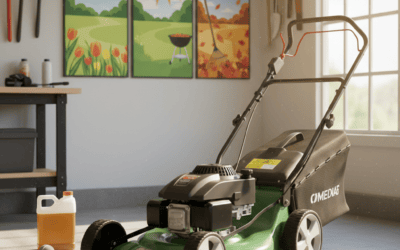
Direct Answer: Where Is the Spark Plug Located?
The spark plug is typically located on the side of the engine cylinder head, connected by a thick rubber boot or wire. On push mowers, it’s usually accessible on the upper side of the engine near the top. On riding mowers, it’s often positioned on the side of the engine block. The exact location varies significantly by mower model and manufacturer, making it essential to consult your owner’s manual for precise positioning before attempting any maintenance.
Understanding Spark Plug Location Basics
Before you begin searching for your lawn mower’s spark plug, it helps to understand what you’re looking for and why its location matters. The spark plug is a critical engine component responsible for igniting the fuel-air mixture that powers your mower. Knowing its location is important for several maintenance tasks:
- Routine inspection: Checking the spark plug’s condition during regular maintenance
- Cleaning: Removing carbon buildup that can affect engine performance
- Replacement: Swapping out worn or damaged spark plugs, typically recommended annually or after 100+ hours of use
- Troubleshooting: Diagnosing starting problems or performance issues
What Does a Spark Plug Look Like?
A spark plug is a relatively small component, typically about 1 to 1.5 inches long, with a cylindrical metal body and a ceramic insulator. The spark plug connects to the engine via a thick rubber boot or wire (called the spark plug wire or spark plug cap), which is usually the easiest way to identify its location. The boot is often black or dark-colored and sits directly on top of the spark plug.
Why Location Matters for Maintenance
Understanding where your spark plug is located allows you to safely access it without unnecessary disassembly. Accessibility varies widely—some mowers have spark plugs that are immediately visible and easy to reach, while others require removing covers, air filters, or other components first. Knowing the location beforehand prevents frustration and ensures you can complete maintenance tasks efficiently.
Spark Plug Location on Push Mowers
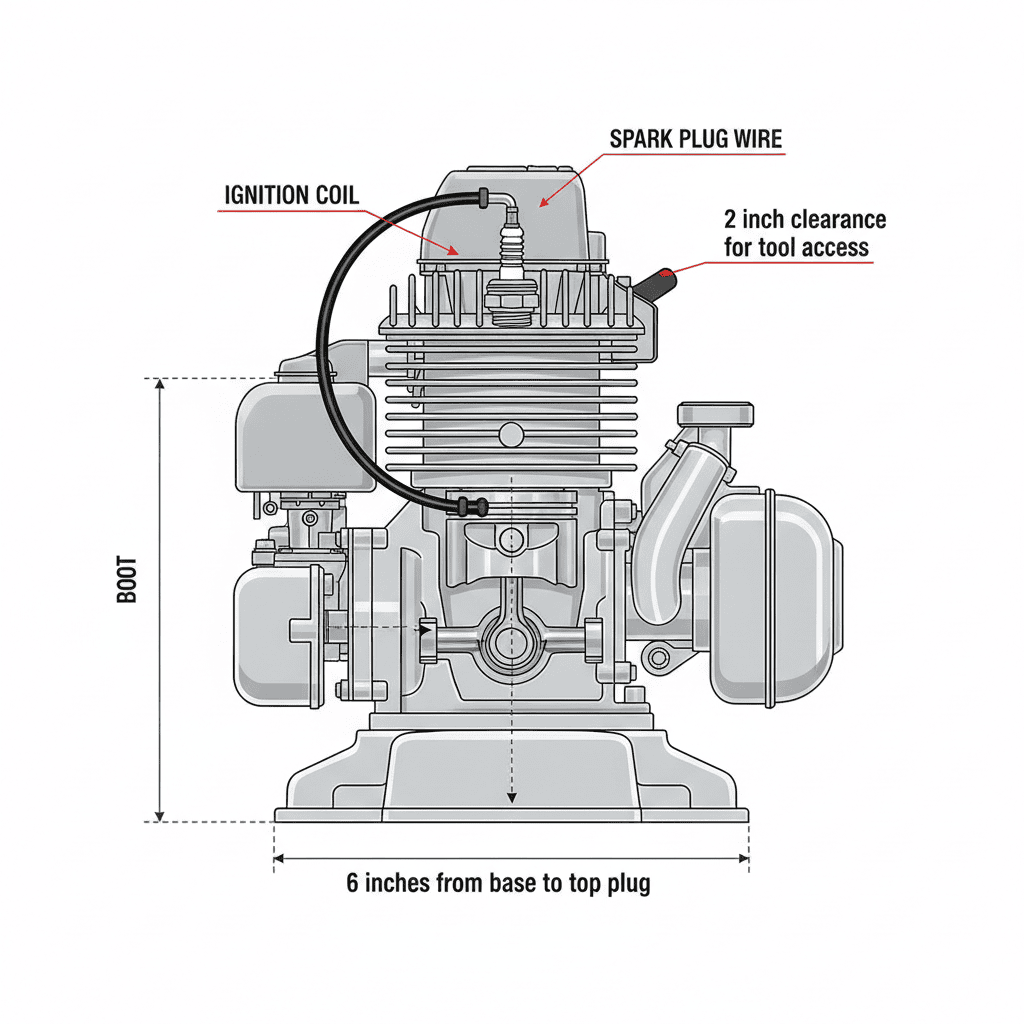
Push mowers are the most common residential lawn mower type, and their spark plugs are generally more accessible than those on riding mowers. The spark plug on a typical push mower is located on the side of the engine cylinder head, usually positioned toward the upper portion of the engine.
Typical Push Mower Spark Plug Position
On most push mowers with single-cylinder engines, the spark plug is mounted vertically on the side of the cylinder head. You can typically locate it by:
- Looking at the top of the engine (the highest point of the motor)
- Following the spark plug wire or boot downward from the engine’s upper side
- Identifying the thick rubber boot connected to the spark plug
The spark plug wire usually runs from the ignition system, over the top of the engine, and down to the spark plug boot. In many push mowers, this wire is one of the most visible engine components, making it a good reference point for locating the spark plug itself.
Accessing the Spark Plug on a Push Mower
Most push mower spark plugs are readily accessible without significant disassembly. However, some models may require:
- Removing the air filter cover or air intake housing
- Disconnecting the spark plug wire by gently twisting and pulling the rubber boot
- Using a spark plug socket (typically 13/16″ or 5/8″ depending on the plug size) and a ratchet for removal
Always ensure the engine is cool and the mower is turned off before attempting to access the spark plug. Some manufacturers recommend disconnecting the spark plug wire before performing any maintenance to prevent accidental engine starting.
Spark Plug Location on Riding Mowers
Riding mowers and zero-turn radius mowers typically have larger engines, and spark plug locations can vary more significantly depending on the engine type and mower design. Many riding mowers use engines manufactured by Briggs & Stratton, Kohler, or other commercial engine makers, each with different configurations.
Single-Cylinder Riding Mower Engines
On riding mowers with single-cylinder engines, the spark plug is usually located on the side of the engine block, often near the middle or lower portion of the engine. The spark plug wire typically runs from the top of the engine down to the spark plug, making it visible when you look at the mower from the side.
Multi-Cylinder Riding Mower Engines
Larger riding mowers and commercial-grade equipment may have multi-cylinder engines with multiple spark plugs. In these cases:
- Each cylinder has its own spark plug
- Spark plugs may be positioned on different sides of the engine block
- Multiple spark plug wires run from the ignition system to each plug
- Accessing all plugs may require removing engine covers or side panels
For multi-cylinder engines, consulting your owner’s manual is especially important, as the location and access procedures can be more complex than single-cylinder models.
Accessing Spark Plugs on Riding Mowers
Riding mower spark plugs may require more effort to access than push mower plugs. Common access steps include:
- Turning off the engine and allowing it to cool completely
- Removing the engine cover or side panels if necessary
- Locating the spark plug wire(s) by following them from the ignition coil
- Gently twisting and pulling the spark plug boot to disconnect the wire
- Using the appropriate spark plug socket and ratchet to remove the plug
Some riding mowers have spark plugs positioned in tight spaces, requiring a flexible spark plug socket or special tools for removal. Your owner’s manual should indicate if any special tools are needed.
Identifying the Spark Plug Wire and Boot
The spark plug wire and boot are crucial components that connect your ignition system to the spark plug. Understanding how to identify and handle these components safely is important for any spark plug maintenance.
What Is the Spark Plug Boot?
The spark plug boot is the thick rubber or silicone covering that slides over the top of the spark plug. It serves two purposes: it insulates the high-voltage spark from reaching unintended areas, and it provides a secure connection between the spark plug wire and the spark plug itself. The boot is typically black or dark-colored and feels like a thick rubber cap.
Locating the Spark Plug Wire
The spark plug wire runs from your mower’s ignition system (usually located near the top of the engine) down to the spark plug boot. Tracing this wire is often the easiest way to locate the spark plug itself. The wire is typically:
- Thick and heavily insulated (usually black)
- Clearly visible on the engine exterior
- Connected to a coil pack or ignition module at one end
- Connected to the spark plug boot at the other end
Safe Disconnection of the Spark Plug Wire
When you need to remove the spark plug wire, follow these safety guidelines:
- Always turn off the engine and allow it to cool before disconnecting the wire
- Grasp the boot, not the wire: Pull on the rubber boot, not the wire itself, to avoid damaging the connection
- Twist gently while pulling: A slight twisting motion while pulling helps loosen the boot from the spark plug
- Avoid touching the spark plug wire: High-voltage ignition systems can deliver dangerous shocks, so minimize contact with the wire itself
- Reconnect securely: When reinstalling, push the boot firmly onto the spark plug until it clicks or seats completely
How to Locate Your Spark Plug: Step-by-Step
Follow these steps to safely locate your lawn mower’s spark plug:
Step 1: Consult Your Owner’s Manual
Before you begin, locate your mower’s owner’s manual. It should contain a diagram or description of the spark plug location specific to your model. If you don’t have the physical manual, you can often find digital versions online by searching for your mower’s brand and model number. The model number is typically found on a label attached to the mower frame or engine.
Step 2: Turn Off the Engine and Allow It to Cool
Safety is paramount. Ensure the engine is completely off and has cooled for at least 5-10 minutes before attempting to locate or access the spark plug. This prevents burns and reduces the risk of accidental engine starting.
Step 3: Locate the Spark Plug Wire
Look at the top and sides of your mower’s engine. Identify the thick black wire or rubber boot connected to the engine. This is your spark plug wire or boot. Follow it to where it connects to the engine—this connection point is where your spark plug is located.
Step 4: Trace the Wire to the Spark Plug
The spark plug itself is located directly beneath the spark plug boot. On push mowers, it’s usually on the upper side of the engine. On riding mowers, it may be on the side or lower portion of the engine block. The spark plug will be a small cylindrical component with a metal body and ceramic insulator.
Step 5: Note Any Obstructions
Check whether the spark plug is easily accessible or if any covers, air filters, or other components are blocking access. If obstructions are present, note what needs to be removed before you can access the spark plug. Consult your manual for removal procedures if you’re unsure.
Step 6: Document the Location
Take a photo of the spark plug location for future reference. This can be helpful the next time you need to perform maintenance, especially if you haven’t worked on your mower in a while.
Why Location Varies by Mower Model and Brand
Spark plug locations differ across mower models and manufacturers for several reasons:
Engine Type and Configuration
Different engine manufacturers (Briggs & Stratton, Kohler, Honda, Kawasaki, etc.) design their engines with different spark plug placements. Single-cylinder engines typically have one spark plug in a straightforward location, while multi-cylinder engines have multiple plugs positioned according to the cylinder layout.
Mower Design and Layout
The overall design of the mower affects spark plug accessibility. Manufacturers position components to optimize:
- Engine cooling and airflow
- Maintenance accessibility
- Space efficiency within the mower frame
- Safety and vibration isolation
Fuel Tank and Air Filter Placement
The location of the fuel tank, air filter, and other engine accessories can influence where the spark plug is positioned. Some mower designs place the spark plug in easily accessible locations, while others may require removing components to reach it.
Vertical vs. Horizontal Engine Orientation
Some lawn mower engines are oriented vertically (shaft pointing up), while others are horizontal. This orientation significantly affects spark plug location and accessibility. Vertical engines typically have spark plugs on the side, while horizontal engines may have them in different positions.
Using Your Owner’s Manual to Find the Spark Plug
Your mower’s owner’s manual is the most reliable source for spark plug location information specific to your model.
What Information the Manual Provides
A good owner’s manual should include:
- Diagrams or photos showing the spark plug location
- Step-by-step instructions for spark plug removal and installation
- The correct spark plug type and specifications for your mower
- Recommended maintenance intervals
- Safety precautions specific to your model
- Information about any special tools required
Locating Your Manual
If you don’t have your manual:
- Check the mower: Many manufacturers attach a manual holder or envelope to the mower frame
- Search online: Enter your mower’s brand and model number into a search engine followed by “owner’s manual” or “manual PDF”
- Contact the manufacturer: Most manufacturers can provide manuals upon request, often for free or a small fee
- Check retailer websites: The store where you purchased the mower may have digital manuals available
Finding Your Mower’s Model Number
The model number is typically found on a label or decal attached to the mower frame or engine. Common locations include:
- The frame near the handle or seat
- The engine block or cylinder head
- The fuel tank
- Under the mower deck
Write down the complete model number, including any letters or numbers, as this ensures you get the correct manual for your specific mower.
Frequently Asked Questions
How do I know if my spark plug needs replacement?
Signs that your spark plug may need replacement include difficulty starting the engine, rough idling, reduced fuel efficiency, or visible damage to the plug itself. Most manufacturers recommend replacing spark plugs annually or after 100+ hours of use. You can also inspect the plug visually—a healthy spark plug should have a light tan or gray color on the electrode. Black, oily, or heavily corroded plugs typically need replacement.
Can I damage my mower by removing the spark plug wire incorrectly?
Yes, improper removal can damage the spark plug wire or boot. Always grasp the rubber boot, not the wire itself, and twist gently while pulling. Yanking on the wire or pulling straight out without twisting can break the internal connections. Additionally, never touch the spark plug wire or boot while the engine is running, as the ignition system delivers high voltage that can cause electrical shock.
What if I can’t find the spark plug on my mower?
If you’re having difficulty locating the spark plug, consult your owner’s manual first. If you don’t have the manual, search for it online using your mower’s brand and model number. You can also contact the mower manufacturer’s customer service or visit an authorized dealer for assistance. Taking a photo of your mower and showing it to a dealer can help them identify the spark plug location quickly.
Do all lawn mowers have spark plugs in the same location?
No, spark plug locations vary significantly between mower types and manufacturers. Push mowers typically have spark plugs on the upper side of the engine, while riding mowers may have them positioned differently depending on the engine type. Single-cylinder engines have one spark plug, while multi-cylinder engines have multiple plugs. Always consult your specific mower’s manual for accurate location information.
Key Takeaways
The spark plug on a lawn mower is typically located on the side of the engine cylinder head, connected by a thick rubber boot or wire. While push mowers generally have easily accessible spark plugs on the upper engine side, riding mowers may have different configurations depending on their engine type. The exact location varies by manufacturer and model, making your owner’s manual an essential reference. By following the spark plug wire from the ignition system and consulting your manual, you can safely locate and maintain this critical engine component. Regular spark plug inspection and replacement are important maintenance tasks that keep your lawn mower running efficiently and reliably.