Direct Answer: What Is the Best Commercial Zero-Turn Mower?
The Ferris IS3200Z and Hustler Super Z are consistently recognized as the best commercial zero-turn mowers due to their robust construction, powerful engines, and superior cut quality. However, the “best” mower depends entirely on your specific operation—including deck size, terrain type, budget, and workload intensity. Models from Scag, Exmark, and Kubota also deliver excellent performance and may be better suited to your particular needs.
What Is a Commercial Zero-Turn Mower?
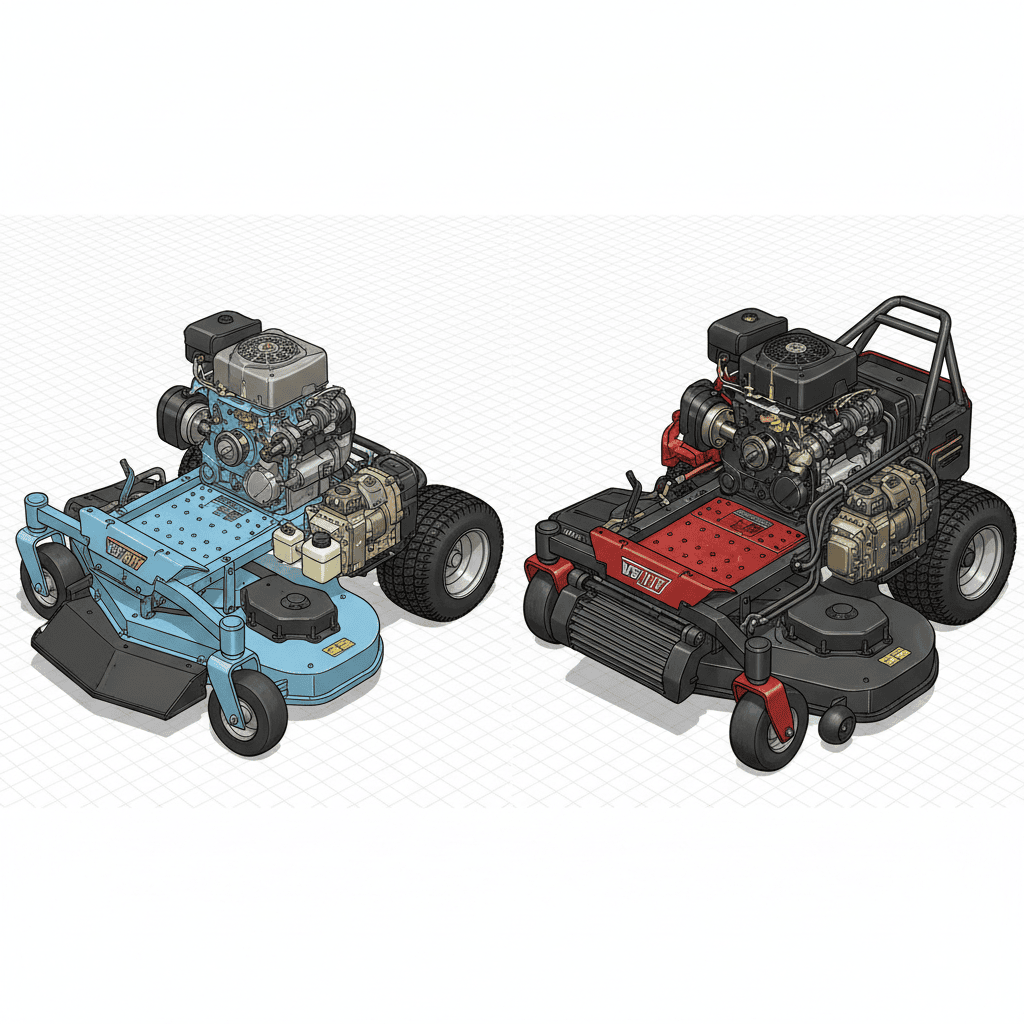
A zero-turn mower is a riding mower with independent control of the left and right wheels, allowing the operator to turn the mower 180 degrees in place—hence “zero-turn radius.” This design dramatically improves maneuverability and reduces mowing time on large properties.
Commercial-grade zero-turn mowers differ from residential models in several critical ways:
- Build Quality: Reinforced frames, heavier-gauge steel, and welded construction designed to withstand daily use and rough terrain.
- Engine Power: Larger displacement engines (typically 20–30+ horsepower) with industrial-grade components and longer service intervals.
- Deck Construction: Thicker, reinforced cutting decks (usually 48–72 inches wide) with high-lift blades for consistent cut quality in dense or wet grass.
- Transmission: Hydrostatic or commercial-grade hydraulic systems that provide smooth, responsive control and durability under continuous operation.
- Warranty & Support: Extended warranties (often 3–5 years) and dedicated dealer networks for professional landscapers and grounds maintenance crews.
- Maintenance Accessibility: Designed for frequent maintenance with easy access to filters, belts, and fluid reservoirs.
Why this distinction matters: A residential zero-turn mower may handle 2–3 acres per week, while a commercial model is engineered for 20–50+ acres weekly or continuous operation on large properties, golf courses, and commercial grounds.
Key Factors to Consider: What Makes One Commercial Zero-Turn Mower Better Than Another?
1. Deck Size and Width
Deck width directly affects mowing speed and efficiency. Commercial zero-turn mowers typically range from 48 to 72 inches:
- 48–52 inches: Ideal for residential properties, small commercial properties, and areas with tight landscaping or obstacles.
- 54–61 inches: The sweet spot for most professional landscaping operations; balances productivity with maneuverability.
- 66–72 inches: Best for large, open properties (golf courses, athletic fields, municipal grounds) where speed and coverage are priorities.
Larger decks reduce mowing time but require wider turning radius and more powerful engines. Assess your typical property size and layout before choosing.
2. Engine Horsepower and Type
Commercial zero-turn mowers typically feature engines ranging from 20 to 30+ horsepower. More power enables:
- Faster ground speed and cutting performance in thick or wet grass.
- Better hill climbing and terrain handling.
- Ability to operate auxiliary equipment (mulching attachments, baggers).
- Longer engine life under continuous operation.
Diesel engines are increasingly popular in commercial models because they offer superior fuel efficiency, lower operating costs, and greater durability over extended service life compared to gasoline engines.
3. Terrain and Cutting Conditions
The best mower for flat, manicured lawns differs from one suited to hilly, rough, or wet terrain:
- Flat, open properties: Prioritize speed and deck width; hydrostatic transmission for smooth operation.
- Hilly or uneven terrain: Look for models with superior hill-holding capability, reinforced suspension, and responsive steering.
- Wet or dense grass: Choose mowers with high-lift blades, powerful engines, and excellent deck ventilation to prevent clogging.
- Rough or rocky ground: Reinforced decks, skid plates, and durable undercarriage are essential to prevent damage.
4. Budget and Total Cost of Ownership
A commercial zero-turn mower is a significant investment. Consider:
- Purchase price: Ranges from $8,000 to $20,000+ depending on deck size, engine, and brand.
- Fuel costs: Diesel models typically cost 15–20% less to operate than gasoline equivalents.
- Maintenance and parts: Verify that your local dealers stock parts and offer service support; remote areas may face higher costs and downtime.
- Depreciation: Well-maintained commercial mowers hold value better than residential models; resale value is important if you upgrade.
- Financing options: Many dealers offer lease or payment plans tailored to landscaping businesses.
5. Warranty, Dealer Support, and Brand Reputation
Professional-grade equipment demands reliable support:
- Warranty length: Commercial mowers typically include 2–5 year warranties; longer warranties indicate manufacturer confidence in durability.
- Dealer network: Ensure your region has authorized dealers for service, parts, and warranty claims.
- Brand reputation: Research user reviews, industry forums, and professional landscaper feedback; established brands like Ferris, Hustler, Scag, and Exmark have proven track records.
- Customer service: Test dealer responsiveness before purchase; poor service support can cripple your operation during peak season.
How to Evaluate and Choose the Best Commercial Zero-Turn Mower: Step-by-Step Guidance
Step 1: Define Your Mowing Conditions and Workload
Before comparing models, answer these questions:
- How many acres per week will you mow, and how many months per year?
- What is the average property size?
- Is the terrain flat, hilly, or mixed?
- Are conditions typically dry, wet, or variable?
- Do you need to mow dense, thick grass or well-maintained turf?
- Are there obstacles (trees, flower beds, hardscape) that require frequent turning?
Your answers determine whether you need a 48-inch residential-friendly model or a 60+ inch production machine.
Step 2: Compare Key Specifications Across Models
Create a comparison table with these critical specs:
| Specification | Why It Matters | What to Look For |
|---|---|---|
| Deck Width | Affects mowing speed and coverage per pass | Match to property size and maneuverability needs |
| Engine Horsepower | Determines power for thick grass and terrain | 20+ HP for commercial work; diesel preferred for efficiency |
| Ground Speed (mph) | Impacts productivity and time per acre | 6–8 mph forward is typical for commercial models |
| Transmission Type | Affects smoothness, control, and maintenance | Hydrostatic transmission preferred for commercial use |
| Turning Radius | Critical for tight spaces and obstacle navigation | Zero-turn capability is standard; verify actual turning performance |
| Warranty (years) | Indicates durability and manufacturer support | 3–5 years is standard for commercial models |
| Price | Total investment and ROI calculation | Compare price-to-spec ratio; cheaper isn’t always better |
Step 3: Test Cut Quality, Ergonomics, and Field Performance
Before committing to purchase, arrange a demonstration or rental:
- Cut quality: Mow a test area with varying grass heights and densities. Look for even cutting, minimal scalping on slopes, and clean blade discharge.
- Operator comfort: Spend 30+ minutes in the seat. Evaluate steering effort, vibration, visibility, and control responsiveness.
- Terrain handling: Test on slopes and uneven ground to verify stability and hill-holding capability.
- Noise and emissions: Confirm that noise levels and exhaust are acceptable for your operating environment.
- Fuel efficiency: Ask the dealer for real-world fuel consumption data under typical operating conditions.
Step 4: Verify Warranty, Dealer Support, and Total Cost of Ownership
Before finalizing your purchase:
- Read the warranty fine print: Understand what is and isn’t covered, and any conditions that void coverage.
- Confirm dealer availability: Call local dealers to verify parts availability, service turnaround times, and support hours.
- Calculate operating costs: Factor in fuel, oil changes, blade replacements, and scheduled maintenance over 5 years.
- Ask about trade-in value: Understand depreciation and resale potential if you upgrade later.
- Review financing options: Compare lease, purchase, and payment plans to determine the best financial fit for your business.
Why the Ferris IS3200Z and Hustler Super Z Are Considered Top Performers
The Ferris IS3200Z and Hustler Super Z frequently appear at the top of expert and professional recommendations. While specific performance claims require manufacturer verification, these models are widely recognized in the industry for:
- Robust frame and deck construction designed to withstand heavy use and rough terrain.
- Powerful engine options that deliver consistent performance in demanding conditions.
- Reputation for cut quality among professional landscapers and grounds maintenance crews.
- Strong dealer networks providing accessible service and parts support.
- Extended warranty coverage reflecting manufacturer confidence in durability.
However, “best” remains subjective. Scag, Exmark, and Kubota models may offer superior value, better dealer support in your region, or features more aligned with your specific operation. The best choice is the one that matches your budget, terrain, workload, and local support infrastructure.
Frequently Asked Questions
What is the typical price range for a commercial zero-turn mower?
Commercial zero-turn mowers typically range from $8,000 to $20,000+, depending on deck size, engine power, and brand. A 54–60 inch model with a 20–25 HP engine from a reputable manufacturer usually costs $10,000–$15,000. Larger decks (66–72 inches) or diesel engines push prices toward the higher end. Always factor in local taxes, delivery, and initial setup costs.
How often do commercial zero-turn mowers require maintenance?
Commercial mowers require regular maintenance to ensure reliability and longevity. Typical intervals include:
- Daily: Visual inspection, fuel level check, blade condition.
- Every 50 hours: Oil and filter change (more frequent than residential models).
- Every 200 hours: Air filter replacement, fluid level checks.
- Seasonally: Blade sharpening, belt inspection, deck cleaning.
- Annually: Comprehensive service including transmission fluid, spark plugs, and wear parts.
Consult your owner’s manual and dealer for model-specific schedules. Proper maintenance extends mower life and prevents costly downtime during peak season.
Should I choose a gasoline or diesel engine?
Diesel engines are increasingly popular for commercial zero-turn mowers because they offer:
- Superior fuel efficiency: 15–25% lower fuel costs than gasoline over the mower’s lifetime.
- Greater durability: Diesel engines typically last longer under continuous operation.
- Higher torque: Better performance in thick grass and challenging terrain.
Gasoline engines are lighter, quieter, and less expensive upfront, making them suitable for smaller operations or properties with moderate workloads. For high-volume commercial use, diesel pays for itself through operating savings.
What deck width should I choose for my operation?
Deck width depends on your typical property size and mowing frequency:
- 48–52 inches: Best for residential properties under 2 acres or areas with dense obstacles.
- 54–61 inches: Ideal for professional landscapers managing multiple 2–10 acre properties per week.
- 66–72 inches: Optimal for large commercial properties, golf courses, or athletic fields where speed and coverage are priorities.
Larger decks reduce mowing time but require more powerful engines and wider turning space. Calculate the average time saved per week and compare it to the additional fuel and maintenance costs before upgrading to a larger deck.
Key Takeaways
The best commercial zero-turn mower is one that aligns with your specific operation—deck size, terrain, workload, budget, and local dealer support. While the Ferris IS3200Z and Hustler Super Z are widely recognized as top performers, models from Scag, Exmark, and Kubota also deliver excellent value and reliability. Use the step-by-step evaluation process to compare specifications, test cut quality and ergonomics, and verify warranty and dealer support before making your investment. Proper maintenance and realistic expectations about operating costs ensure your mower delivers years of productive service.