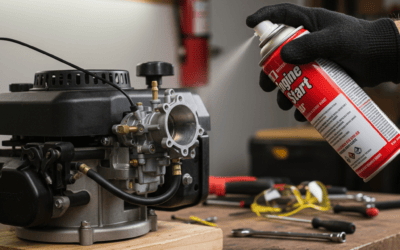
Why Lawn Mower Oil Differs From Car Oil
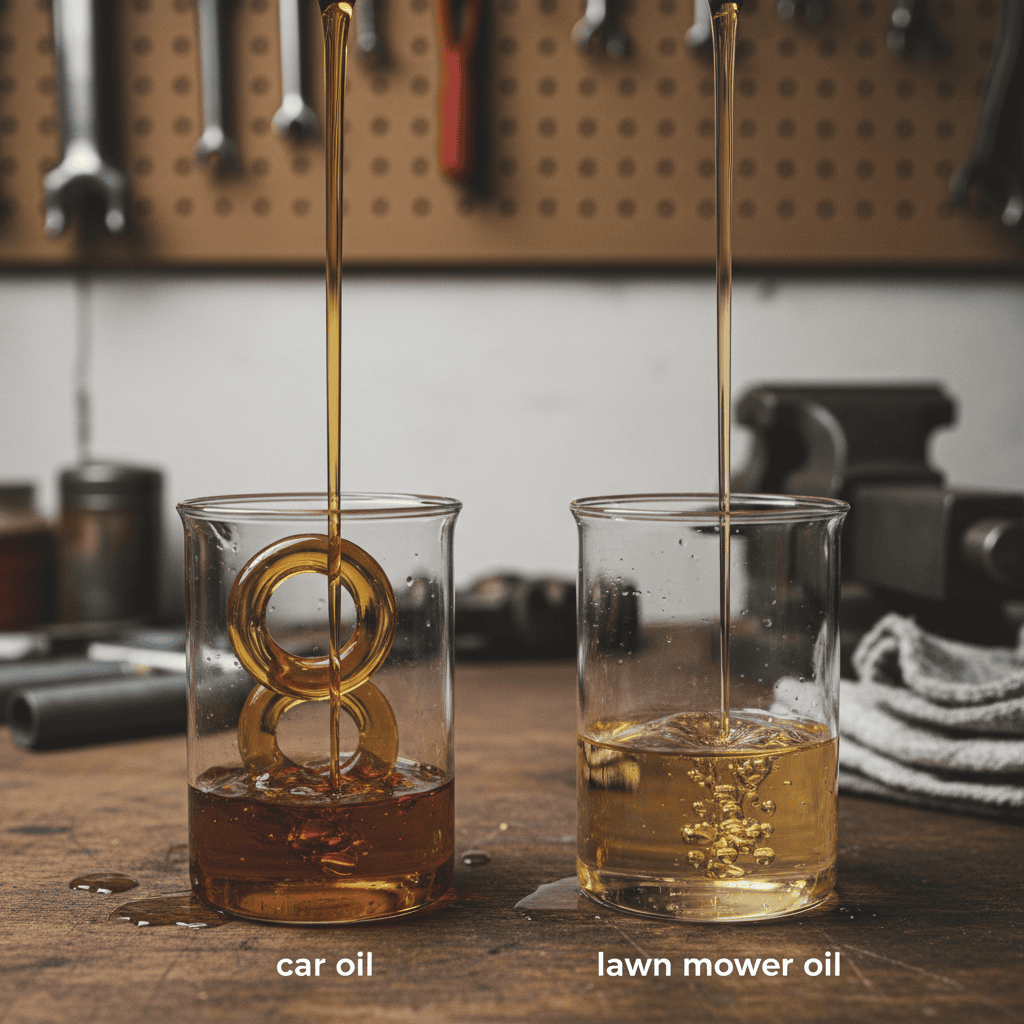
At first glance, motor oil is motor oil—but this assumption can lead to serious engine problems. Lawn mower engines and automotive engines operate under fundamentally different conditions, requiring oils formulated to meet distinct performance standards.
Car engines are designed to run at lower RPMs and operate within a controlled temperature range. Lawn mower engines, by contrast, run at significantly higher RPMs and experience more extreme temperature fluctuations, especially in small 4-stroke engines and 2-stroke engines used in push mowers, trimmers, and chainsaws.
Key differences include:
- Viscosity Grade: Lawn mower engines typically require lighter oils (such as SAE 30 or SAE 10W-30) compared to many car oils, which are formulated for heavier-duty automotive use.
- Additive Package: Car oils contain detergents and additives designed for automotive fuel injectors and catalytic converters. Lawn mower oils have different additive packages suited to smaller engines and different fuel systems.
- Burn Rate: Lawn mower engines, especially 2-stroke models, burn oil as part of normal operation. Car oil is not formulated to burn cleanly in these engines, leading to excessive carbon deposits.
- Temperature Tolerance: Lawn mower engines operate at higher temperatures relative to their size. The oil must withstand these conditions without breaking down or forming harmful residue.
Using car oil in a lawn mower can cause the engine to work harder, produce more emissions, and accumulate carbon buildup that reduces efficiency and shortens engine life.
2-Stroke vs. 4-Stroke Lawn Mower Engines: Oil Requirements
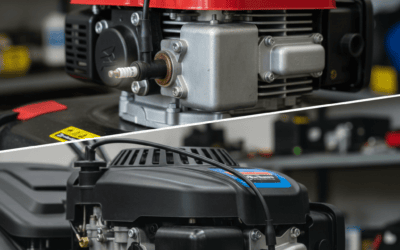
Understanding your lawn mower’s engine type is crucial, as oil requirements differ significantly between the two designs.
2-Stroke Engine Oil Requirements
2-stroke engines are found in many handheld lawn equipment, including string trimmers, chainsaws, and some smaller push mowers. These engines do not have a separate oil reservoir. Instead, oil must be mixed directly into the fuel at a specific ratio—typically 50:1 or 40:1, depending on the manufacturer.
Critical points for 2-stroke engines:
- You cannot use regular car oil in a 2-stroke engine, even if you mix it with fuel. Car oil is not formulated to burn cleanly in this application.
- 2-stroke oil must be designed to combust completely, leaving minimal ash and carbon deposits.
- Using car oil will result in excessive smoke, fouled spark plugs, clogged fuel filters, and engine seizure.
- Always purchase oil specifically labeled “2-stroke engine oil” or “2-cycle oil.”
4-Stroke Engine Oil Requirements
4-stroke engines are common in larger push mowers, riding mowers, and lawn tractors. These engines have a separate oil sump (reservoir) where oil circulates to lubricate moving parts, similar to car engines but on a smaller scale.
Critical points for 4-stroke engines:
- While 4-stroke lawn mower engines are more similar to car engines than 2-stroke engines, they still require oil formulated specifically for small engines.
- Most 4-stroke lawn mower engines require SAE 30 or SAE 10W-30 oil, which is lighter than typical car motor oil.
- Car oil formulations may contain additives that can cause varnish buildup in small engines operating at higher temperatures.
- Check your owner’s manual for the exact viscosity grade and any certifications required (such as API SG or higher).
How to Identify Your Engine Type
Check your lawn mower’s manual or look for these visual clues:
- 2-stroke: Has a fuel cap with a two-color fuel/oil mixing label; no separate oil dipstick or oil fill cap.
- 4-stroke: Has a separate oil fill cap and dipstick; fuel tank is separate from the oil system.
Risks of Using Car Oil in Your Lawn Mower
Substituting car oil for lawn mower oil may seem like a cost-saving measure, but the potential consequences far outweigh any short-term savings.
Engine Performance Degradation
Car oil is thicker and heavier than lawn mower oil, causing increased friction in small engines. This results in:
- Reduced engine power and slower blade speed
- Harder starting, especially in cold weather
- Sluggish acceleration and uneven cutting performance
Carbon Buildup and Deposits
Car oil contains additives and has a burn rate unsuitable for lawn mower engines. Over time, this causes:
- Excessive carbon deposits on spark plugs, leading to fouling and misfires
- Varnish accumulation in the combustion chamber
- Clogged air filters from increased emissions
- Reduced fuel efficiency and increased smoke output
Accelerated Engine Wear
Incorrect oil viscosity and formulation lead to:
- Inadequate lubrication of pistons, rings, and bearings
- Increased friction and heat generation
- Premature wear of engine components
- Potential engine seizure in extreme cases
Warranty Void
Most lawn mower manufacturers specify required oil types in their warranties. Using non-recommended oil provides grounds for warranty denial if engine problems occur, leaving you responsible for repair costs that could exceed the mower’s value.
How to Find the Correct Oil for Your Lawn Mower
Finding the right oil is straightforward when you know where to look and what information to gather.
Step 1: Consult Your Owner’s Manual
Your owner’s manual is the definitive source for oil specifications. It will specify:
- Exact viscosity grade (e.g., SAE 30, SAE 10W-30)
- Oil capacity (how much oil the engine holds)
- Any API certifications required
- Recommended oil change intervals
- Whether synthetic or conventional oil is acceptable
If you’ve lost your manual, most manufacturers provide digital copies on their websites, or you can contact the manufacturer directly with your mower’s model number.
Step 2: Understand SAE Viscosity Ratings
SAE (Society of Automotive Engineers) viscosity ratings indicate oil thickness:
- SAE 30: Single-grade oil; suitable for warmer climates; thicker, provides better protection at high temperatures.
- SAE 10W-30: Multi-grade oil; the “W” stands for winter; flows better in cold weather while maintaining protection at high temperatures. Suitable for most climates and seasons.
- SAE 5W-30: Even lighter winter performance; used in colder regions.
Never substitute a heavier grade (like 10W-40 or 15W-40 car oil) for a lighter lawn mower oil specification. The thicker oil will not circulate properly in small engines.
Step 3: Check the Oil Bottle Label
When purchasing oil, verify:
- The label explicitly states “small engine oil” or “lawn mower oil”
- The SAE viscosity grade matches your manual’s specification
- Any required API certification is present (typically SG or higher)
- For 2-stroke engines, the label says “2-stroke oil” or “2-cycle oil”
Step 4: Consider Synthetic vs. Conventional
Most lawn mower manuals specify conventional oil, but many modern mowers accept synthetic small-engine oil. Synthetic oils offer:
- Better performance in extreme temperatures
- Longer oil change intervals
- Reduced carbon buildup
- Improved engine cleanliness
However, do not assume your mower accepts synthetic oil. Always verify in your manual before switching. If your manual allows synthetic, premium small-engine synthetic oil is a worthwhile investment for extended engine life.
Step-by-Step: Checking Your Owner’s Manual for Oil Specifications
If you’re unsure where to find oil information in your manual, follow these steps:
- Locate the maintenance section: Usually titled “Maintenance,” “Service,” or “Care and Maintenance.”
- Find the oil subsection: Look for headings like “Engine Oil,” “Oil and Fuel,” or “Lubrication.”
- Record the specifications: Write down the SAE grade, capacity, and any certifications listed.
- Check oil change intervals: Note how often oil should be changed (typically every 50-100 hours of operation for small engines).
- Review any warnings: Manufacturers often list oils to avoid or special instructions for your climate.
If your manual is missing or illegible, contact the manufacturer with your mower’s model and serial number. Most will provide specifications over the phone or email at no cost.
Common Misconceptions About Using Car Oil in Lawn Mowers
Misconception 1: “All Motor Oil Is the Same”
Reality: Motor oil formulations vary significantly based on intended application. Car oils are engineered for engines that run at lower RPMs with fuel injection systems and catalytic converters. Lawn mower oils are formulated for small engines operating at much higher RPMs with different fuel systems and no emissions controls. The additive packages, viscosity ranges, and burn characteristics are distinctly different.
Misconception 2: “Using Car Oil Will Save Money”
Reality: While car oil may be cheaper per quart, using it in your lawn mower can result in:
- Engine damage requiring expensive repairs or replacement
- Voided warranty, leaving you to pay full repair costs
- Reduced mower lifespan, forcing premature replacement
- Increased fuel consumption due to poor engine efficiency
The cost of correct small-engine oil is minimal compared to potential repair expenses. Proper maintenance with the right oil is always the most economical choice.
Misconception 3: “Synthetic Car Oil Is Better and Will Work in My Lawn Mower”
Reality: Synthetic car oil is engineered for automotive engines, not small engines. Even though it’s synthetic and high-quality, it’s still formulated with automotive additives and viscosity ranges unsuitable for lawn mowers. Using synthetic car oil in a lawn mower can cause the same problems as conventional car oil. If you want to use synthetic oil, purchase synthetic small-engine oil specifically, and only if your manual permits it.
Misconception 4: “One Oil Change Won’t Hurt”
Reality: Even a single use of incorrect oil can cause problems. Carbon deposits begin forming immediately in 2-stroke engines, and viscosity issues affect lubrication from the first start. While your mower may run briefly on car oil, damage accumulates quickly. Always use the correct oil from the first use.
Frequently Asked Questions
Q: Can I use 10W-30 car oil in my 4-stroke lawn mower if it calls for SAE 30?
A: No. While both are 30-weight oils, car oil and lawn mower oil have different additive packages and formulations. Car 10W-30 is designed for automotive engines and may contain detergents unsuitable for small engines. Always use the exact oil type specified in your manual. If your manual calls for SAE 30, use small-engine SAE 30 oil, not car oil.
Q: What happens if I accidentally put car oil in my 2-stroke lawn mower?
A: If you’ve already mixed car oil with fuel, drain the fuel tank immediately and refill with the correct fuel-oil mixture using 2-stroke engine oil. Run the mower briefly to clear the old mixture, then drain and refill again with fresh fuel. If the engine has already seized or won’t start, you may need professional service. To prevent this, always double-check oil labels before mixing fuel.
Q: Is there any car oil that’s safe to use in a lawn mower?
A: No. Even premium or synthetic car oils are formulated for automotive engines and are not suitable for lawn mowers. Car oil is specifically engineered for different operating conditions, fuel systems, and emission controls. The only safe oil for your lawn mower is oil labeled specifically for small engines or lawn mowers, matching your manual’s specifications.
Q: How often should I change my lawn mower oil?
A: Most manufacturers recommend changing oil every 50-100 hours of operation, or at least once per season. Check your owner’s manual for the specific interval. Some modern mowers with synthetic oil may have longer intervals. Regular oil changes prevent carbon buildup, maintain proper lubrication, and extend engine life significantly.
Conclusion
Using car oil in a lawn mower is a false economy that risks expensive engine damage. Lawn mower engines operate under different conditions than automotive engines and require oils specifically formulated for small-engine use. Whether you have a 2-stroke or 4-stroke engine, the solution is simple: consult your owner’s manual, purchase the specified small-engine oil, and follow the manufacturer’s maintenance schedule. The minimal cost difference between car oil and correct lawn mower oil is insignificant compared to the cost of engine repair or replacement. Protect your investment by using the right oil from day one.