How to Sharpen Mower Blades at Home: Quick Answer
Sharpening mower blades involves disconnecting the spark plug wires for safety, removing and securing the blade in a vise, then filing or grinding both cutting edges to the correct angle (typically 30-45 degrees for rotary mowers). The key is maintaining symmetry between both edges and checking blade balance before reinstalling to prevent vibration damage to your mower.
Safety Precautions You Must Take Before Starting
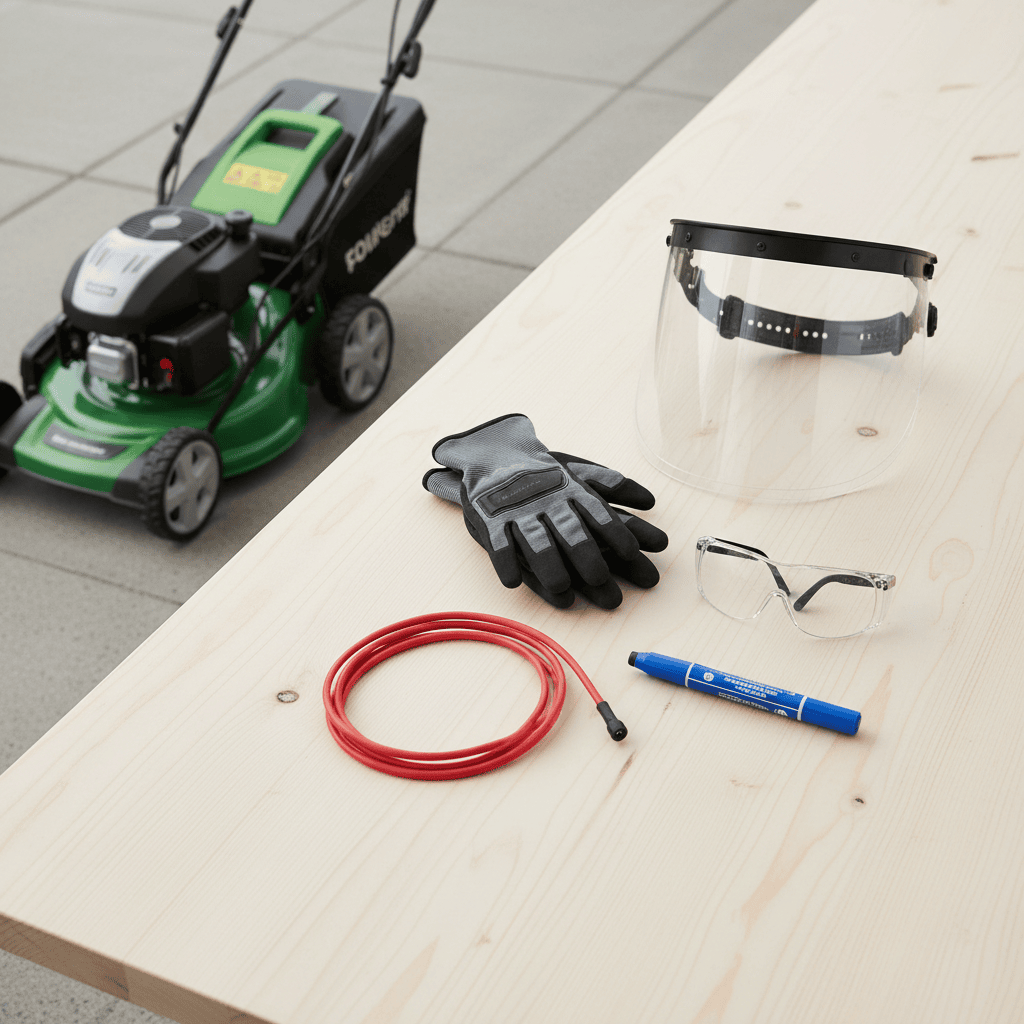
Before you touch a mower blade, safety is non-negotiable. Mower blades rotate at high speeds and can cause serious injury if the engine accidentally starts during maintenance.
- Disconnect the spark plug wires—This is the single most critical step. Remove the wires from both spark plugs to prevent accidental engine ignition while you work.
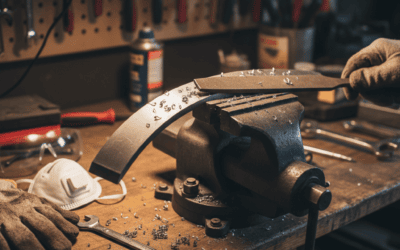
- Wear cut-resistant gloves—Mower blades have sharp edges and can cut through skin easily. Heavy-duty work gloves or leather gloves protect your hands during handling and sharpening.
- Use eye protection—Metal filings and grinding sparks can lodge in your eyes. Safety glasses or a face shield are essential when using an angle grinder.
- Work on a stable surface—Secure the mower on level ground or place it on a sturdy workbench before attempting blade removal.
- Mark the blade top—Before removal, mark the top of the blade with paint or tape so you reinstall it in the correct orientation.
Tools and Materials You’ll Need
You don’t need expensive equipment to sharpen mower blades effectively. Here are your primary options:
| Tool | Best For | Pros | Cons |
|---|---|---|---|
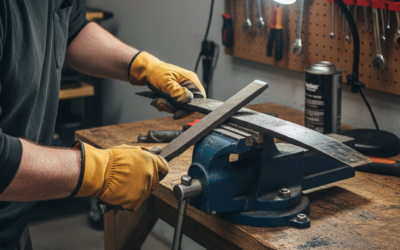
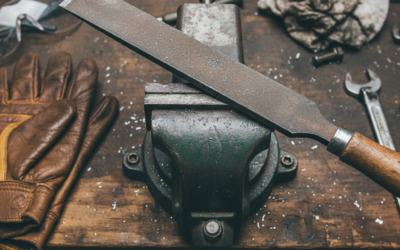
| Metal file (10-12 inch) | Hand sharpening rotary blades | Quiet, controlled, no electricity needed, slower means fewer mistakes | Requires more physical effort and time |
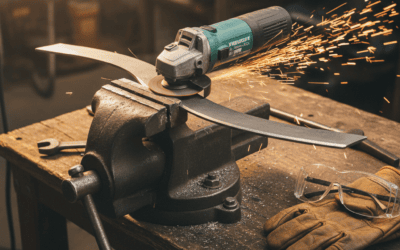
| Angle grinder (4-5 inch) | Fast sharpening of dull blades | Quick results, handles thick or heavily dull blades efficiently | Requires experience, generates sparks and noise, higher injury risk if misused |
| Bench vise or clamp | Securing blade during sharpening | Frees both hands for filing or grinding | Requires workbench space |
| Angle gauge or protractor | Verifying correct blade angle | Ensures precision and consistency | Optional if you estimate carefully |
Understanding Blade Angle and Balance
The blade angle is critical to both sharpness and mower performance. Most rotary mower blades are designed with a cutting angle between 30 and 45 degrees—typically 35-40 degrees is standard. This angle is measured from the blade’s face to the cutting edge.
Why angle matters: A blade sharpened at too shallow an angle will dull quickly and may bend under load. A blade sharpened at too steep an angle will be weak and prone to chipping. Checking your mower’s manual for the exact specification ensures optimal performance.
Blade balance is equally important. If you sharpen one edge more than the other, the blade becomes unbalanced. An unbalanced blade causes vibration, which damages the crankshaft and spindle bearings—a repair that costs significantly more than a new blade. After sharpening, check balance by hanging the blade on a nail through its center hole; it should remain level without tipping to either side.
Step-by-Step Sharpening Process for Rotary Blades
Step 1: Remove the Blade Safely
- Ensure spark plug wires are disconnected.
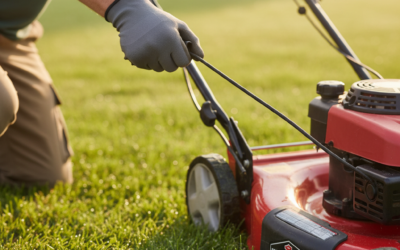
- Tip the mower on its side (carburetor side up to prevent oil leakage).
- Use a socket wrench or adjustable wrench to remove the center bolt holding the blade.
- Mark the top side of the blade with paint before removal so you reinstall it correctly.
Step 2: Secure the Blade in a Vise
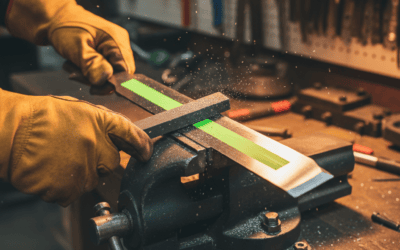
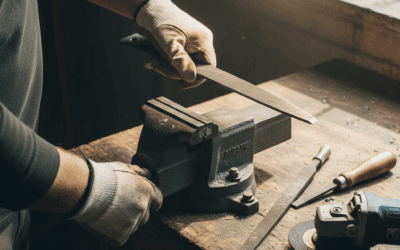
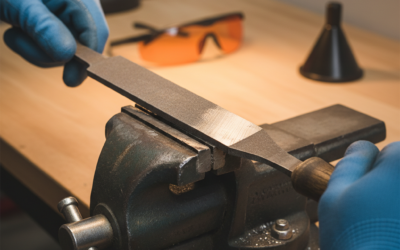
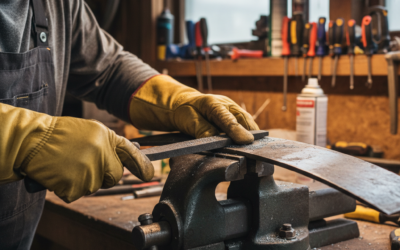
- Place the blade flat in a bench vise with the cutting edge facing out.
- Tighten the vise firmly but not so tight you deform the blade.
- Some people clamp the blade vertically if they prefer—either orientation works as long as it doesn’t move during sharpening.
Step 3: Inspect and Mark the Dull Areas
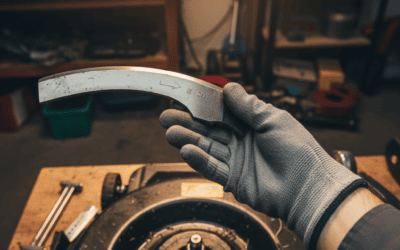
- Look for a dull gray or whitish edge on the blade. A sharp blade edge should be bright and reflective.
- Run your finger lightly along the edge (carefully—it may still be sharp) or look at it in sunlight to identify dull sections.
- Mark heavily dull spots with a marker so you know where to focus your effort.
Step 4: Begin Filing or Grinding
If using a metal file:
- Hold the file at the blade’s existing angle—typically 30-45 degrees.
- Stroke the file in one direction only, from the blade’s top surface toward the cutting edge. Lift the file on the return stroke; don’t drag it backward.
- Use steady, even pressure. You’re not trying to remove material quickly—controlled passes produce a better edge.
- Complete 3-5 passes on each dull spot, checking progress frequently.
If using an angle grinder:
- Wear a full face shield and work gloves.
- Hold the grinder at the correct angle to the blade edge.
- Move the grinder in short strokes, allowing the spinning disc to do the work.
- Do not force the grinder into the blade; let the tool’s motion guide the cut.
- Work in short intervals (5-10 seconds) and allow the blade to cool between passes to avoid heat damage.
Step 5: Sharpen Both Cutting Edges Equally
- Rotate the blade or move the vise to access the opposite cutting edge.
- Sharpen the second edge using the same number of passes and the same angle as the first.
- This symmetry is essential for blade balance.
- Check frequently by sight to ensure both edges look equally sharp and have the same appearance.
Step 6: Check Blade Balance
- Remove the blade from the vise.
- Find a nail or a balance tool and hang the blade through its center hole.
- If one side tips downward, that side is heavier—remove a small amount of material from the heavy side using light file strokes.
- Repeat until the blade hangs perfectly level.
Sharpening Reel Mower Blades: Key Differences
If you own a reel mower (push mowers with spinning cylinders), blade sharpening is different and more specialized. Reel blades are typically sharpened at a shallower angle (around 20-30 degrees) and require precision to maintain alignment with the stationary blade they cut against.
- Reel blades are more delicate and easily damaged by aggressive grinding.
- Hand filing is strongly preferred over angle grinding for reel blades.
- Professional sharpening is often recommended for reel mowers because improper technique can render the blade unusable.
- If you attempt reel blade sharpening at home, research your specific mower model’s angle specification first.
When to Sharpen Versus When to Replace
Not every dull blade should be sharpened. Understanding when replacement is the better option saves frustration and money.
Sharpen If:
- The blade has only minor dullness (a thin gray edge).
- The blade has no visible damage, cracks, or heavy pitting.
- The blade can be restored to balance after sharpening.
- The blade is relatively new—typically blades can be resharpened 2-4 times before replacement is necessary.
Replace If:
- The blade has deep nicks, cracks, or bent sections.
- The blade is heavily pitted or corroded.
- Sharpening cannot restore balance due to excessive material loss from a previous sharpening.
- The blade has been resharpened multiple times and is now very thin.
- The cutting edge is chipped or fractured.
Testing Your Sharpened Blades
Before reinstalling your blade, verify your work:
- Visual inspection: Both cutting edges should have a consistent, bright appearance. Dull gray patches indicate incomplete sharpening.
- Feel test: Very carefully run your thumb perpendicular (not along) the blade edge. A sharp blade will catch your skin slightly. A dull blade will slide without catching. Do this cautiously.
- Balance check: Hang the blade and confirm it remains level without tipping.
- Reinstall properly: Replace the blade with the marked top side facing up, tighten the center bolt securely, and reconnect the spark plug wires before testing the mower.
Maintenance Tips to Keep Blades Sharp Longer
- Mow clean lawns when possible. Dirt, sand, and gravel dull blades rapidly. Sweep or blow off heavy debris before mowing.
- Avoid rocks and sticks. Hitting a hidden rock or branch can chip or bend the blade instantly.
- Keep blades dry. Wet grass clippings stick to blades and promote rust. Clean and dry blades after each mowing session.
- Inspect blades regularly. Check blade condition every 3-4 weeks during mowing season. Catch dullness early before it affects mowing quality.
- Mow at the correct height. Cutting grass too short stresses the blade and mower engine.
- Store the mower properly. At season’s end, drain fuel, clean the deck, and store in a dry location to prevent rust.
Frequently Asked Questions
How often should I sharpen my mower blade?
Most homeowners should sharpen their mower blades every 20-40 hours of mowing, or roughly every 4-8 weeks during the growing season. Lawns with sandy soil, rocks, or frequent debris will need more frequent sharpening. If you notice the mower leaves ragged cut edges on grass instead of clean cuts, that’s a sign it’s time to sharpen.
Can I sharpen a bent or damaged blade?
A blade with a slight bend might be straightened carefully in a vise, but bent blades are usually best replaced. Attempting to straighten a heavily bent blade risks breaking it during the process. A damaged blade creates dangerous vibration and should never be reinstalled.
What’s the difference between a sharp blade and a dangerous blade?
A properly sharpened blade has a fine, uniform edge designed for cutting grass. This is safe when the mower is operating normally. A blade becomes dangerous when it’s loose, unbalanced, cracked, or bent—conditions that cause severe vibration and can lead to the blade breaking during operation. Sharpening actually makes your mower safer by reducing the stress on internal components.
Do I need special equipment to sharpen blades at home?
No. A metal file, work gloves, and a vise are sufficient for most homeowners. An angle grinder speeds up the process but requires experience and safety precautions. The most important tools are spark plug wire disconnection and a way to securely clamp the blade.
Conclusion
Sharpening mower blades at home is a practical maintenance task that improves mowing quality, extends blade life, and reduces stress on your equipment. By following safety precautions, maintaining the correct blade angle, ensuring balance, and inspecting blades regularly, you can keep your mower running efficiently throughout the season. Most homeowners find that the 30-45 minutes invested in blade sharpening pays dividends in smoother cuts and longer equipment life.