Direct Answer: Most residential lawn mower batteries have a capacity of 20–40 amp-hours (Ah) for lithium-ion models and 30–50 Ah for lead-acid batteries. Peak amperage output ranges from 100–300 amps depending on battery chemistry. Your specific mower’s amperage depends on the manufacturer, battery type, and model.
Amp-Hours vs. Peak Amperage: What’s the Difference?
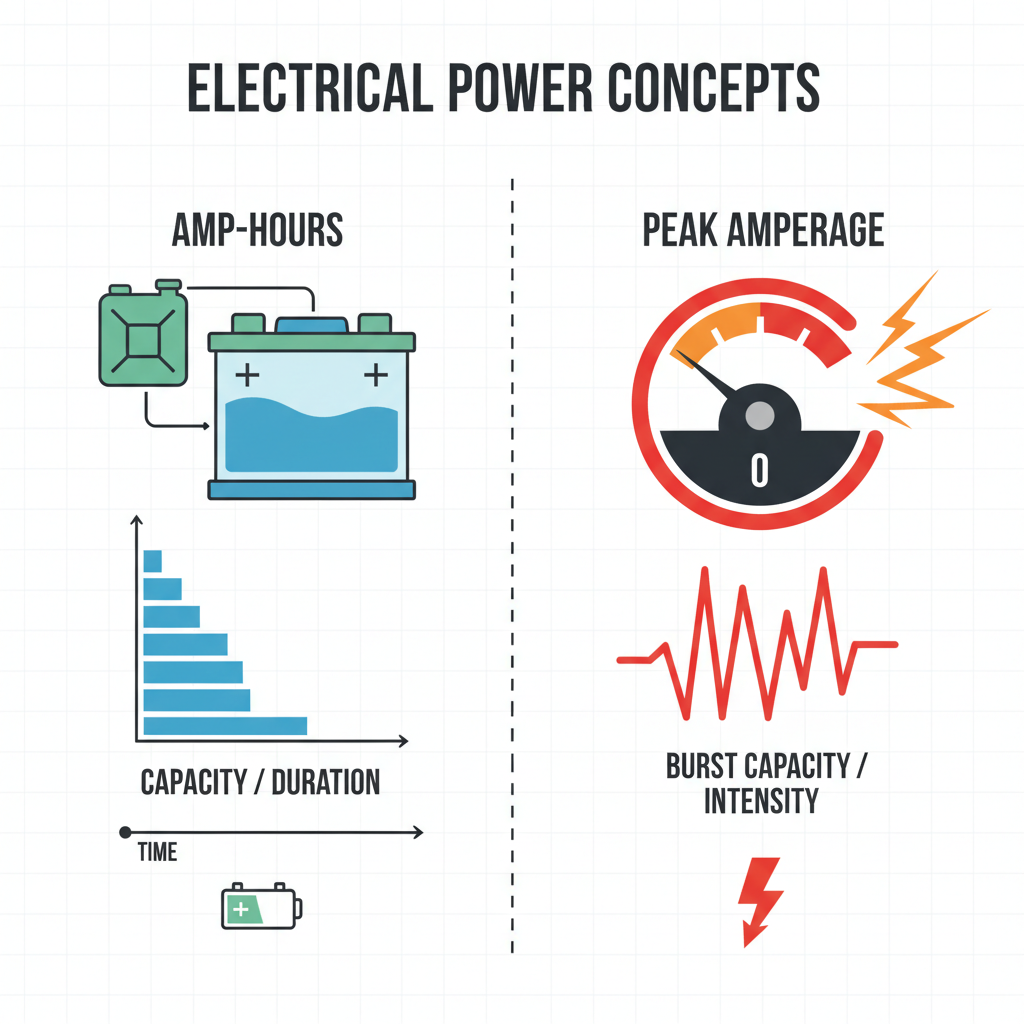
Understanding lawn mower battery amperage requires distinguishing between two different measurements that often confuse consumers: amp-hours (Ah) and peak amperage output.
Amp-hours (Ah) measure the total energy capacity of a battery. Think of it like a fuel tank: a 40 Ah battery can theoretically deliver 40 amps of current for one hour, or 20 amps for two hours. This measurement directly correlates to runtime—higher amp-hour ratings mean longer mowing sessions before recharging.
Peak amperage refers to the maximum current the battery can deliver in a short burst, typically measured in amps. This is the “power” available for cutting and motor performance. A battery might have a 40 Ah capacity but deliver 150 peak amps during operation. Peak amperage determines how quickly the mower can cut thick grass and how powerful the motor performs under load.
When shopping for lawn mower batteries, manufacturers often emphasize amp-hours because it’s the more consumer-friendly metric. However, both measurements matter: amp-hours affect runtime, while peak amperage affects cutting performance and power delivery.
Typical Amperage Ranges by Battery Type
Lawn mower batteries come in two primary chemistries, each with distinct amperage characteristics.
Lithium-Ion Lawn Mower Batteries
Lithium-ion (Li-ion) batteries dominate the cordless lawn mower market. Typical residential models feature:
- Capacity: 20–40 amp-hours (Ah)
- Peak Amperage: 150–250 amps
- Voltage: 20V, 40V, or 60V systems (varies by manufacturer)
- Runtime: 30–90 minutes per charge depending on Ah rating and mower type
Lithium-ion batteries are lightweight, recharge quickly, and hold their charge well during storage. A 40V/4.0 Ah lithium battery from brands like DeWalt, Ryobi, or Makita typically delivers sufficient power for residential properties up to one acre.
Lead-Acid Lawn Mower Batteries
Lead-acid batteries are older technology, primarily found in riding mowers and some walk-behind gas models with electric start systems. Typical specs include:
- Capacity: 30–50 amp-hours (Ah)
- Peak Amperage: 200–400 amps (cold cranking amps for engine start)
- Voltage: 12V systems
- Maintenance: Requires periodic water level checks and cleaning
Lead-acid batteries are heavier and discharge faster than lithium-ion, but they’re durable and inexpensive. Cold cranking amperage (CCA) is the key spec for gas mowers—typically 200–400 CCA for reliable engine starting in various temperatures.
Nickel-Cadmium (Legacy)
Older cordless mower models used nickel-cadmium batteries with 12–24 Ah capacity and high self-discharge rates. Most users have replaced these with modern lithium systems.
How to Find Your Lawn Mower Battery’s Amperage
Locating your battery’s exact amperage rating is straightforward:
Check the Battery Label
The simplest place to find amperage is printed directly on the battery itself. Look for:
- A label on the battery case showing voltage and amp-hours (e.g., “40V/4.0 Ah”)
- Cold cranking amps (CCA) for lead-acid batteries
- Watt-hours (Wh), which can be converted to amp-hours by dividing by voltage
Consult Your Owner’s Manual
The mower’s manual typically lists compatible battery specifications. This is especially important if you need a replacement—using the correct amperage ensures compatibility with your charger and mower’s electrical system.
Visit the Manufacturer’s Website
Official product pages for specific mower models include detailed battery specifications, often organized by model year. Search for your mower’s model number (usually found on a sticker near the handle or engine) to locate exact amperage ratings.
Contact Customer Support
If specifications aren’t available online, contact the manufacturer directly. Provide your mower’s model number, and they’ll confirm the correct battery amperage and recommend compatible replacement options.
What Amperage Do You Need for Your Lawn Mower?
The right battery amperage depends on your property size, grass type, and mowing frequency.
Residential Properties (Under 1 Acre)
A 20–30 Ah lithium-ion battery provides 45–60 minutes of runtime, sufficient for most residential yards. Lower amperage batteries are lighter, cheaper, and adequate for regular weekly mowing.
Larger Residential or Small Commercial (1–3 Acres)
A 40 Ah lithium or dual-battery system extends runtime to 90+ minutes. Higher amperage maintains cutting power even in thick grass, reducing mowing time.
Commercial or Frequent Use
Commercial-grade cordless mowers use 48V or 60V systems with 60+ Ah capacity, or users rely on multiple swappable batteries for continuous operation.
The Amperage-Performance Relationship
Higher amperage doesn’t automatically mean “better” performance—it means longer runtime and sustained power under demanding conditions. A 4.0 Ah battery cuts most residential lawns effectively. A 6.0 Ah battery provides extra runtime for larger properties or thicker grass. Beyond 8.0 Ah, diminishing returns apply for typical residential use; the additional weight and cost don’t justify the marginal benefit.
Choosing a Replacement Battery: Amperage Considerations
Can You Use a Higher-Amperage Battery?
Yes, in most cases. A higher Ah battery fits the same slot and charges with your existing charger. You’ll get extended runtime without compromising mower performance. However, the battery will be heavier, and the mower may not be designed for the additional weight distribution.
What Happens with Lower Amperage?
Using a lower Ah battery reduces runtime but doesn’t damage the mower. A 2.0 Ah battery works in a mower designed for 4.0 Ah; you’ll simply need to recharge sooner. The voltage must match exactly—using 20V in a 40V system will cause malfunction.
Voltage Compatibility (Critical)
Voltage must always match your mower exactly. A 20V battery will not work in a 40V mower, and vice versa. Mixing voltages can damage the motor and charger. Always verify voltage before purchasing a replacement battery.
Brand Compatibility
Most manufacturers use proprietary battery connectors. DeWalt 20V batteries don’t fit Ryobi mowers, even though both brands make 20V systems. Cross-brand compatibility is rare; always confirm your mower’s brand before ordering a replacement battery.
Key Amperage Terms Explained
| Term | Definition | Why It Matters |
|---|---|---|
| Amp-Hour (Ah) | Total energy capacity of the battery | Determines runtime and how long you can mow before recharging |
| Peak Amperage | Maximum current the battery can deliver | Affects cutting power and motor performance under heavy load |
| Voltage (V) | Electrical potential of the battery system | Must match mower requirements; 20V, 40V, and 60V are common |
| Watt-Hours (Wh) | Total energy output (calculated as Ah × Voltage) | Alternative capacity metric; higher Wh = longer runtime |
| Cold Cranking Amps (CCA) | Current capacity for engine starting in cold weather | Relevant for lead-acid batteries in gas mowers; ensures cold-start reliability |
Frequently Asked Questions
What does “40V/4.0 Ah” mean on a battery label?
This indicates a 40-volt system with 4.0 amp-hour capacity. The battery can theoretically deliver 4 amps continuously for one hour, or 40 amps for six minutes. It means approximately 160 watt-hours of energy (40V × 4.0 Ah = 160 Wh). For most residential mowers, this provides 45–60 minutes of cutting time.
Is a higher amp-hour battery worth the extra cost?
It depends on your needs. If you frequently run out of battery mid-mow, upgrading from 4.0 Ah to 6.0 or 8.0 Ah is worthwhile. If your current battery handles your lawn comfortably, the extra cost may not justify the marginal runtime gain. Consider your property size and mowing frequency before upgrading.
Can I use two 20V batteries in a 40V mower?
No. Battery systems are not interchangeable. A 40V mower requires a 40V battery, not two 20V batteries. Attempting this will damage the mower’s electrical system and pose a safety risk.
Why does my battery show lower runtime than advertised?
Several factors reduce real-world runtime below manufacturer claims: tall or wet grass requires more power than ideal testing conditions, battery age (older batteries hold less charge), cold weather (lithium performance drops below 40°F), and mower deck height settings. A new 4.0 Ah battery might deliver 60 minutes under lab conditions but 45 minutes in typical residential use with thick grass.
Final Thoughts on Lawn Mower Battery Amperage
Understanding amperage helps you choose the right battery for your needs and troubleshoot performance issues. Most homeowners find that 20–40 Ah lithium-ion batteries provide ample power and runtime for residential properties. When replacing a battery, prioritize voltage compatibility above all else, then consider whether higher amperage fits your mowing habits and property size. Consult your mower’s manual or manufacturer website for exact specifications rather than guessing, and always purchase batteries designed for your specific mower model to ensure reliability and safety.