Quick Answer: Why Your Lawn Mower Won’t Start
Most lawn mowers fail to start because of stale fuel, a fouled spark plug, a clogged air filter, or a depleted battery. Set the choke correctly, confirm there is fresh fuel in the tank, inspect the spark plug, and check that all safety switches are engaged. Work through the checklist below that matches your mower type — gas or electric — and you will resolve the problem in most cases without a trip to the shop.
Understanding Your Lawn Mower Type
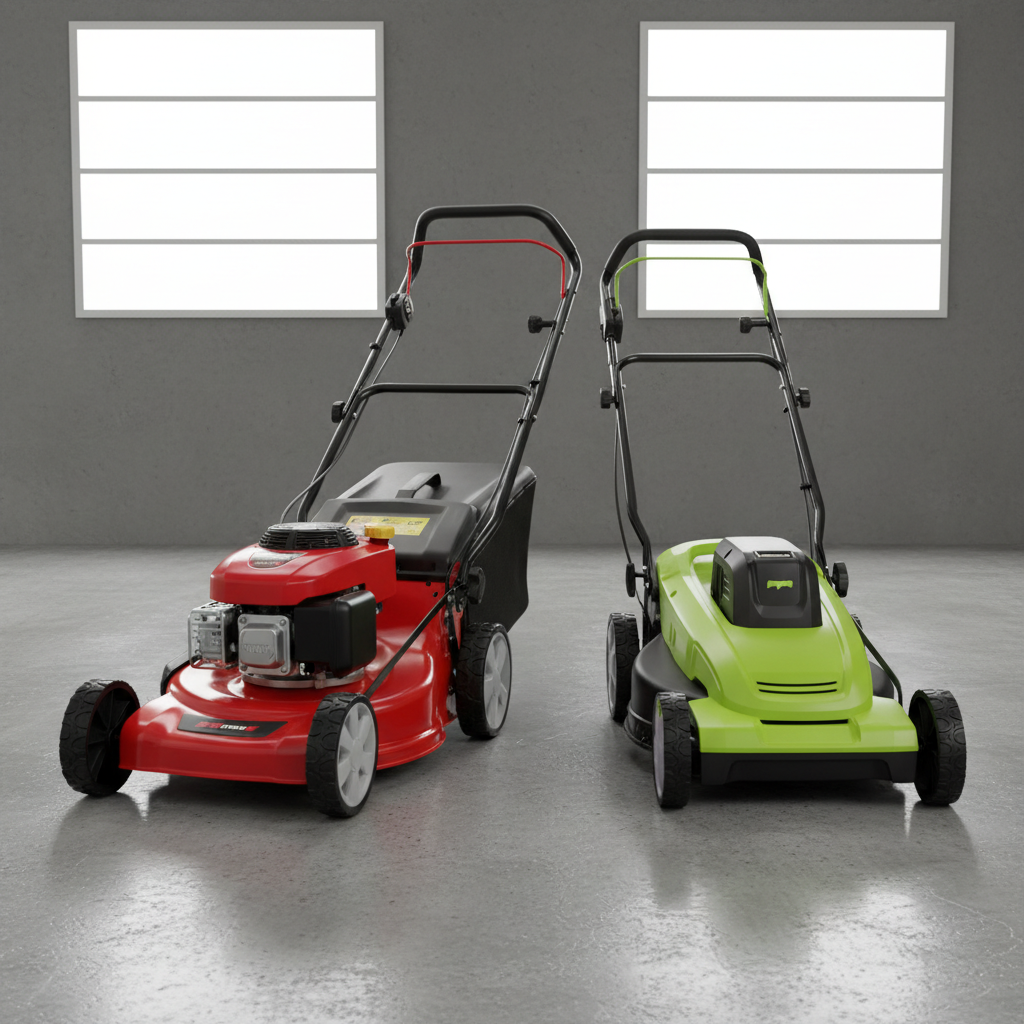
Troubleshooting steps differ significantly between gas-powered and electric mowers. Identifying which type you own narrows the checklist immediately and saves time.
Gas-Powered Mowers
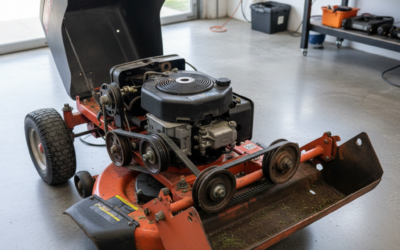
Gas mowers use an internal combustion engine fed by a fuel tank, a carburetor, and ignition components including a spark plug. They require periodic fuel, oil, and filter maintenance. Starting problems almost always trace back to one of those three systems.
Electric Mowers (Battery and Corded)
Battery-powered electric mowers rely on a lithium-ion or lead-acid battery pack and a brushless or brushed motor. Corded electric mowers depend on a continuous power supply. Neither type uses fuel, spark plugs, or carburetors, so their failure points are completely different: battery charge, terminal condition, and safety interlock switches.
Questions to Ask Before You Start Diagnosing
- Is the mower gas-powered or electric?
- When was the mower last used and last serviced?
- Has the mower been sitting in storage for more than 30 days?
- Did it fail to start suddenly, or has it been getting harder to start over time?
Gas Mower Starting Troubleshooting Checklist
Work through each step in order. Each check takes less than five minutes. Do not skip ahead — earlier steps cause later symptoms.
Step 1: Check the Fuel Level and Fuel Freshness
Confirm the tank is not empty. Then assess fuel freshness. Gasoline begins to degrade and form varnish deposits in as little as 30 days of storage, clogging the carburetor and preventing combustion. Stale fuel is the single most common cause of a gas mower that cranks but will not fire.
- If the fuel is older than 30 days, drain the tank completely using a hand pump or by tilting the mower safely over a drain pan.
- Refill with fresh 87-octane or higher unleaded gasoline. Most residential mowers do not require premium fuel.
- Add a fuel stabilizer if the mower will sit again for more than two weeks. Fuel stabilizer extends gasoline life to 12–24 months depending on the product.
Step 2: Set the Choke Correctly
The choke restricts airflow to enrich the fuel-air mixture during a cold start. Incorrect choke position is a frequently overlooked starting error.
- Cold engine: Move the choke lever to the CLOSED or CHOKE position before pulling the cord.
- Warm engine: Move the choke to the OPEN or RUN position. A warm engine does not need enrichment and will flood if the choke is closed.
- After the engine fires on a cold start, gradually open the choke to the RUN position over 30–60 seconds as the engine warms up.
Step 3: Inspect the Spark Plug
A dirty, fouled, or incorrectly gapped spark plug prevents the ignition system from firing. Spark plugs are inexpensive (typically $3–$8) and simple to replace.
- Disconnect the spark plug wire before proceeding for safety.
- Remove the spark plug with a spark plug wrench (usually 5/8-inch or 3/4-inch).
- Inspect the electrode tip. Black, oily, or carbon-coated deposits indicate fouling.
- Clean light deposits with a wire brush. Replace the plug if the electrode is heavily eroded, cracked, or heavily fouled.
- Check the gap with a feeler gauge. Most small-engine spark plugs require a gap of 0.030 inches (0.76 mm), but consult your owner’s manual for the exact specification.
- Reinstall snugly — do not overtighten. Reconnect the spark plug wire.
Step 4: Inspect and Clean the Air Filter
A clogged air filter starves the engine of oxygen, making combustion impossible or unreliable. Dirty air filters measurably reduce engine efficiency and fuel economy in small engines.
- Locate the air filter housing on the side of the engine — it is typically a rectangular or cylindrical plastic cover secured by one or two clips or screws.
- Paper/pleated filters: Tap gently against a hard surface to dislodge debris. Hold up to light — if light does not pass through, replace it.
- Foam filters: Wash with warm soapy water, rinse, allow to dry completely, then apply a light coat of clean motor oil before reinstalling.
- Replace any filter that is torn, saturated with oil, or heavily contaminated. Replacement filters cost $5–$15.
Step 5: Check the Oil Level
Many modern gas mowers include a low-oil shutoff sensor that prevents the engine from starting when oil is below the minimum level. This protects the engine from seizure.
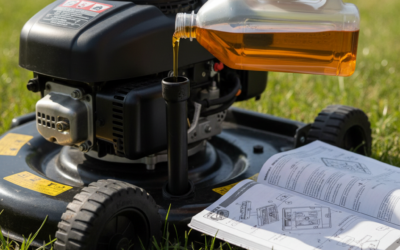
- Pull the oil dipstick, wipe it clean, reinsert fully, and pull again to read the level.
- Top off with the manufacturer-specified oil type (commonly SAE 30 for warm weather, 10W-30 for variable temperatures).
- Do not overfill — oil above the maximum line can cause smoking or fouled spark plugs.
Step 6: Inspect the Pull-Cord Mechanism
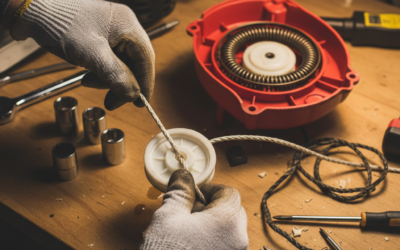
If the pull cord feels unusually stiff, snaps back hard without turning the engine, or feels loose with no resistance, the recoil starter mechanism may be the problem rather than the engine itself.
- No resistance when pulling: The recoil spring may be broken. The starter assembly must be replaced.
- Cord stuck or very hard to pull: The engine may be seized (hydrolocked from excess oil or coolant), or the blade brake mechanism may be binding.
- Cord pulls but engine does not turn over: The flywheel key may be sheared — a common result of the blade striking a hard object. This requires disassembly to inspect.
Step 7: Inspect the Carburetor
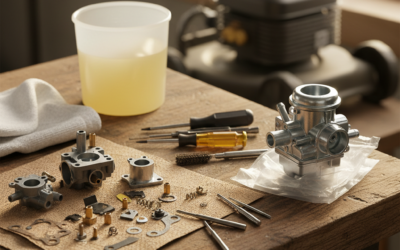
If fresh fuel, a clean spark plug, and a clean air filter have not resolved the problem, the carburetor is the next suspect. Stale fuel leaves behind varnish and gum deposits that block the carburetor’s tiny jets and passages.
- Remove the air filter housing to expose the carburetor.
- Spray carburetor cleaner into the air intake with the engine off. Attempt to start. If the engine briefly fires and then dies, the carburetor is restricted and fuel is not flowing normally.
- A full carburetor cleaning involves disassembling the bowl, removing and soaking the jets, and clearing all passages with cleaner and compressed air.
- Carburetor rebuild kits cost $5–$20. If the carburetor is severely corroded, replacement is often more cost-effective than repair.
Gas Mower Troubleshooting Summary Table
| Symptom | Most Likely Cause | Fix |
|---|---|---|
| Cranks but does not fire | Stale fuel or no fuel | Drain and refill with fresh gas |
| Cranks but does not fire | Fouled or gapped spark plug | Clean or replace spark plug |
| Fires briefly then dies | Clogged carburetor | Clean or rebuild carburetor |
| Engine bogs under load | Dirty air filter | Clean or replace air filter |
| Will not crank at all | Low-oil shutoff triggered | Check and top off engine oil |
| Cord pulls but engine will not turn | Sheared flywheel key | Inspect and replace flywheel key |
| Cord has no resistance | Broken recoil spring | Replace recoil starter assembly |
Electric Mower Starting Troubleshooting Checklist
Electric mowers eliminate fuel and ignition variables, but introduce battery, charging, and electronics-specific failure points. Battery-powered and corded mowers share some checks but differ on others.
Step 1: Check Battery Charge Level
A depleted battery is the most common reason a battery-powered electric mower will not start. Cold weather accelerates battery discharge — lithium-ion batteries lose a meaningful percentage of their effective capacity when ambient temperatures drop below 40°F (4°C), which can prevent startup even when the battery indicator shows a partial charge.
- Remove the battery pack and place it on the manufacturer-supplied charger.
- Allow a full charge cycle to complete before retesting — do not attempt to start with a partially charged battery if the mower failed to start.
- If the battery will not hold a charge or charges unusually quickly to 100% and then drains rapidly during use, the battery cells may be degraded and the pack may need replacement.
Step 2: Inspect Battery Terminals for Corrosion
Corroded or dirty battery terminals create resistance that prevents adequate current flow, causing startup failure even with a fully charged battery.
- Remove the battery pack and inspect both the battery contacts and the mower’s receiving terminals.
- Clean light corrosion with a dry cloth or fine-grit sandpaper.
- For heavier corrosion, use a small amount of electrical contact cleaner on a clean cloth. Allow to dry completely before reinstalling the battery.
Step 3: Check All Safety Switches and Interlocks
Electric mowers use multiple safety interlock switches that cut power if not properly engaged. These are a leading cause of apparent startup failure.
- Operator presence lever (bail handle): Must be held down continuously while operating. Releasing it kills the motor. Ensure it is fully depressed before pressing the start button.
- Blade engagement switch: Some models require a separate blade engagement button pressed simultaneously with or after the start trigger.
- Battery seating: Confirm the battery pack clicks fully into place. A partially seated battery will not make full contact.
- Key or PIN lock: Some models include a physical key or numeric lock to prevent unintended operation. Confirm it is in the ON or unlocked position.
Step 4: Check the Power Source (Corded Electric Mowers)
- Test the wall outlet using a phone charger or lamp to confirm power is present.
- Inspect the extension cord for cuts, damaged insulation, or a blown inline fuse.
- Use only a heavy-duty outdoor-rated extension cord with the correct amperage rating for your mower. Undersized cords cause voltage drop that prevents startup.
- Reset any tripped GFCI outlets on the circuit.
Electric Mower Troubleshooting Summary Table
| Symptom | Most Likely Cause | Fix |
|---|---|---|
| No response when trigger pressed | Dead battery or safety switch not engaged | Charge battery; check bail handle and interlocks |
| Starts briefly then cuts out | Weak or failing battery pack | Replace battery pack |
| Battery charges but mower will not run | Corroded terminals or faulty interlock | Clean terminals; inspect all safety switches |
| Corded mower does not power on | Tripped GFCI, undersized cord, or outlet fault | Reset GFCI; test outlet; use rated extension cord |
Preventive Maintenance to Avoid Starting Issues
Most lawn mower starting problems are preventable. A consistent maintenance schedule eliminates the vast majority of no-start situations before they occur.
End-of-Season Storage (Gas Mowers)
- Stabilize or drain fuel: Add fuel stabilizer to a full tank and run the engine for 10 minutes to distribute it through the carburetor, or drain the tank and carburetor bowl completely. Stale fuel left in a carburetor over winter is the primary cause of spring no-start conditions.
- Change the oil: Old oil contains combustion byproducts that accelerate internal wear. Change oil at the end of each season or every 50 hours of use.
- Remove and inspect the spark plug: Apply a small amount of clean oil into the cylinder, reinstall the plug, and pull the cord slowly two or three times to distribute the oil before storage.
- Clean the underside of the deck: Remove grass clippings and debris. Decomposing clippings trap moisture and accelerate corrosion.
Annual Service Schedule (Gas Mowers)
| Component | Service Interval | Action |
|---|---|---|
| Spark plug | Every season or 100 hours | Inspect, clean, or replace |
| Air filter | Every 25 hours or once per season | Clean or replace |
| Engine oil | Every 50 hours or once per season | Drain and refill |
| Fuel filter (if equipped) | Every season | Replace |
| Blade | Every season | Sharpen or replace |
| Carburetor | Every 2–3 seasons or if symptoms arise | Clean jets and passages |
Battery Care (Electric Mowers)
- Store lithium-ion battery packs at 40–80% charge in a climate-controlled environment, not in a garage or shed where temperatures drop below freezing.
- Do not leave batteries on the charger indefinitely after reaching full charge — this accelerates cell degradation in older charger designs without trickle-charge management.
- Cycle the battery fully (charge to 100%, run to depletion) once per season to recalibrate the battery management system’s state-of-charge display.
- Inspect terminals seasonally and clean as needed.
When to Take the Mower to a Professional
DIY troubleshooting resolves the majority of starting problems. Escalate to a small-engine repair shop when:
- The engine cranks and fuel, spark plug, air filter, and carburetor have all been checked and serviced with no improvement.
- You suspect a sheared flywheel key, which requires flywheel removal and is not straightforward without the correct puller tool.
- The engine runs but produces white or blue smoke, indicating oil burning or internal engine damage.
- The pull-cord mechanism or recoil starter assembly is broken and you are not comfortable with mechanical disassembly.
- An electric mower motor fails after all battery, terminal, and interlock checks pass — motor and controller replacement is typically not a DIY repair.
Professional small-engine service typically costs $50–$150 for a diagnostic and tune-up, which is worthwhile compared to purchasing a new mower if the unit is otherwise in good mechanical condition.
Frequently Asked Questions
Why does my lawn mower start and then immediately die?
The most common causes are a clogged carburetor restricting fuel flow after the initial prime, a dirty air filter causing the engine to run rich and stall, or incorrect choke position. If the mower fires on the first pull and dies within seconds, spray carburetor cleaner into the air intake — if it runs briefly longer, the carburetor jets are restricted and need cleaning. Also confirm the choke is being opened gradually after the initial cold start.
How long can gas sit in a lawn mower before it goes bad?
Untreated gasoline begins to degrade and form varnish deposits in as little as 30 days in an unsealed tank exposed to air and temperature swings. With a quality fuel stabilizer added and the tank sealed, gasoline can remain usable for 12–24 months. Always drain or stabilize fuel before seasonal storage.
Can I use starting fluid (ether) to start a lawn mower?
Starting fluid can be used sparingly on gas mowers with carbureted engines when other methods have failed — spray a short burst into the air intake, not directly into the cylinder. Use it as a diagnostic tool only, not as a routine starting aid. Overuse washes lubricant off cylinder walls, accelerating wear. Never use starting fluid on diesel engines without the manufacturer’s explicit guidance, and never use it on electric mowers.
My electric mower battery is fully charged but the mower still will not start — what do I do?
With a confirmed full charge, work through the safety interlock checklist: confirm the operator bail handle is fully depressed, the battery pack clicks fully into its housing, and any key or lock switch is in the ON position. Clean the battery terminals. If all interlocks pass and the mower still does not respond, the battery management system (BMS) may have entered a protection lockout mode — remove the battery, wait 30 minutes, and reinsert. If the problem persists, the battery pack or the mower’s motor controller likely requires professional service or replacement.