
The Direct Answer: Are Reel Mowers Good?
Yes, reel mowers are good for flat, small-to-medium lawns under roughly 5,000 sq ft growing fine-bladed grasses like Kentucky bluegrass, fine fescue, or Bermuda. They produce a cleaner scissor cut than rotary blades, run silently with zero direct emissions, and require minimal mechanical upkeep. They perform poorly on thick or coarse grasses, uneven terrain, infrequently mowed lawns, and yards with debris. Whether the mower is a manual push reel or a powered reel unit changes this calculus significantly, address that distinction before anything else.

Pros
- Environmentally friendly motorless design requires no gas, oil, or batteries
- Scissor-like 5-blade reel produces clean cuts that promote healthier grass growth
- Nine cutting heights from 1.3 to 2.6 inches offer flexible lawn customization
- 20-inch deck and large 10-inch front wheels improve navigation and coverage
- Durable steel blades built for extended use and lasting sharpness
Cons
- Manual push operation demands more physical effort than powered mowers
- Cutting height limited to 1.3-2.6 inches may not handle taller or overgrown grass well
- Reel-style design performs best on regularly maintained lawns and is less ideal for thick weeds
The LawnMaster LMRM2001 is a 20-inch 5-blade push reel lawn mower built for homeowners who value simple, eco-friendly lawn care. Its motorless design and durable steel blades create an immediate impression of solid, no-fuss construction focused on quiet operation and healthy grass results.
In real-world use the scissor-like cutting action cleanly slices grass without tearing for better lawn health, while nine height positions ranging from 1.3 to 2.6 inches allow easy customization. The 20-inch cutting width paired with 10-inch front wheels provides strong maneuverability around obstacles, and the absence of gas or batteries keeps operation silent and emission-free.
Potential drawbacks include the physical effort required for push operation and the relatively narrow height range, which may struggle with taller or neglected grass. As a reel mower it also works best on lawns that are already kept in reasonable condition rather than heavily overgrown areas.
Overall the LawnMaster LMRM2001 delivers excellent value for eco-conscious users with small to medium yards who prioritize a clean cut, quiet performance, and zero emissions. It is an ideal choice for those ready to trade power features for simplicity and environmental benefits.

Pros
- High-quality alloy steel blades that maintain sharpness longer than standard options
- Quiet motorless operation ideal for noise-sensitive neighborhoods
- Adjustable cutting height from 0.5 to 2.75 inches for versatile lawn care
- Comfortable cushioned loop handle and 10-inch composite wheels for better control
- Eco-friendly low-maintenance design with no fuel or electricity needed
Cons
- Manual push operation requires more physical effort than powered mowers especially on larger or thicker lawns
- Limited maximum cutting height of 2.75 inches may not suit very tall or overgrown grass
- No powered self-propulsion or collection bag mentioned which can leave clippings on the lawn
The Great States 815-18 18-Inch 5-Blade Push Reel Lawn Mower is a motorless walk-behind unit finished in grey and built for straightforward lawn maintenance. Its primary design centers on an 18-inch cutting deck paired with a loop-style handle that includes cushioned grips for improved hold and control. The overall build prioritizes simplicity with 10-inch composite wheels and easy assembly that requires no special tools, giving an immediate impression of a lightweight eco-focused tool suited for smaller residential yards.
In performance the 5-blade reel system uses high-quality alloy steel blades supported by ball bearings to deliver a clean even cut. Users can adjust the cutting height between 0.5 and 2.75 inches to match different grass conditions while the motorless design ensures quiet low-maintenance operation without fuel emissions or battery needs. Real-world use benefits from the wide 18-inch path that covers ground efficiently on moderate lawns and the composite wheels that help the unit roll smoothly over typical turf.
Drawbacks and considerations stem mainly from its manual push nature. The absence of a motor means operators must supply all the forward force which can become tiring on larger areas or denser grass. The upper cutting limit of 2.75 inches also restricts use on overgrown sections and the lack of any mentioned bag or chute leaves clippings on the surface rather than collecting them.
Overall the Great States 815-18 delivers strong value for environmentally minded homeowners with small to medium lawns who prioritize quiet operation and low upkeep. It is best suited for those willing to trade powered convenience for simplicity reliability and planet-friendly mowing.

Pros
- Lightweight construction with composite wheels for easy pushing and turning
- Heat-treated alloy steel blades maintain sharpness over time
- Fully adjustable cutting height for versatile lawn care
- Quiet manual reel design eliminates noise pollution and emissions
- Simple tool-less assembly for convenient setup
Cons
- Manual push operation requires physical effort and is best suited for small flat lawns
- Cutting height limited to a maximum of 2.5 inches which may not suit taller grass varieties
- No powered assist or self-propulsion features for larger or hilly yards
The Great States 415-16 is a manual mechanical reel lawn mower built for homeowners who value simplicity and eco-friendly yard care. Its lightweight frame combines a 16-inch cutting width with 10-inch composite wheels and a comfortable T-style cushioned grip handle. Immediate impressions highlight the clean design and straightforward tool-less assembly that gets the mower ready quickly.
In real-world use the 5-blade ball bearing reel powered by high-quality heat-treated alloy steel blades delivers a clean even cut across the adjustable 1 to 2.5 inch height range. The absence of gas or oil means completely quiet operation free from fumes while the lightweight build and large wheels enhance maneuverability around tight spaces and garden features. These specs make it effective for maintaining neat lawns without the bulk of traditional power mowers.
Potential drawbacks center on its fully manual nature which demands physical pushing effort and works best on smaller flat areas. The cutting height tops out at 2.5 inches so very tall or thick grass may require multiple passes or pre-trimming. Users should also note the lack of any bagging or powered assist options based on the core specifications.
Overall the Great States 415-16 offers strong value for environmentally minded gardeners with modest lawns who want a reliable quiet alternative to gas models. It shines for those prioritizing low maintenance sharp lasting blades and easy handling over high power features.

Pros
- Precision 5-blade reel delivers clean scissor-like cuts that promote healthier lawn growth
- Completely quiet and emission-free manual operation ideal for residential neighborhoods
- Included grass catcher collects clippings for easy disposal and a tidy finish
- Adjustable cutting height from 1/2 inch to 2 1/2 inches suits various grass conditions
- Cushion-grip T-handle provides comfortable control and reduces hand fatigue
Cons
- Manual push operation requires physical effort and may tire users on larger or uneven properties
- 16-inch cutting width means more passes are needed to cover bigger lawns compared to wider mowers
- Reel design performs best on regularly maintained shorter grass and can struggle with very tall or thick growth
The American Lawn Mower Company 1604-16 is a walk-behind 16-inch 5-blade reel mower that prioritizes simplicity and environmental friendliness. Its straightforward design with a cushion-grip T-handle creates an immediate impression of a practical, no-frills tool built for residential use and easy handling.
In real-world performance the high-quality 5-blade reel produces a clean scissor-like cut that supports healthier grass. Cutting height adjusts from 1/2 inch to 2 1/2 inches to match different grass types, while the included grass catcher efficiently collects clippings. The fully manual operation ensures quiet running with zero emissions, making it comfortable for frequent use around homes.
Drawbacks include the physical effort needed for pushing, which can become tiring on larger areas, and the 16-inch width that requires additional passes for bigger lawns. As a reel mower it also works best when grass is kept at moderate heights rather than left to grow tall and thick.
This model delivers strong value for eco-conscious homeowners with small to medium flat lawns who want precise, quiet, and low-maintenance mowing without the noise or fuel costs of powered machines.
What Is a Reel Mower and How Does It Cut?
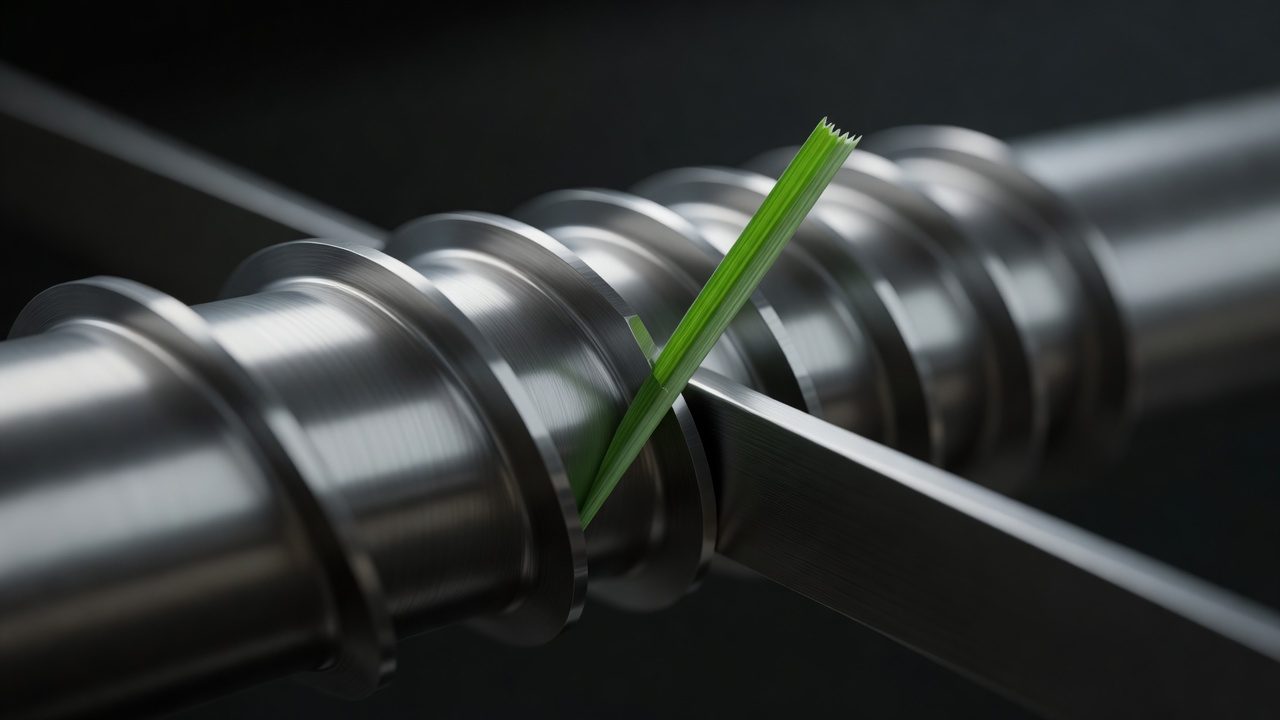
A reel mower cuts grass using a cylindrical reel of helical blades that spin forward against a fixed bedknife at the base. Each grass blade is trapped between the rotating reel blade and the bedknife and sliced cleanly, the same mechanical principle as scissors. This is fundamentally different from a rotary mower, which spins a single horizontal blade at high speed and severs grass by impact force alone.
The distinction matters for grass health. According to turfgrass research from university extension programs including Penn State’s Center for Turfgrass Science, the scissor-cut action of a reel mower produces a clean, uniform wound on each grass blade. Rotary mowers, especially with dull blades, shred and tear the tip, leaving frayed tissue that browns, desiccates faster, and creates larger entry points for fungal disease. The reel cut is categorically cleaner at a cellular level.
Push Reel Mower vs. Powered Reel Mower: The Distinction That Matters
Many readers arrive at this question conflating two very different products:
- Push reel mower (manual): No engine, no battery. The reel spins because you push it forward. Brands like American Lawn Mower Company and Fiskars StaySharp represent this category. Suited to lawns under 5,000 sq ft with consistent mowing schedules. Physical effort is real and increases sharply in heavy or wet grass.
- Powered reel mower: Gas or electric motor drives the reel independently of your walking speed. Used heavily in professional turf management, golf courses, sports fields, fine lawn estates. Capable of handling larger areas and slightly coarser turf, though still ill-suited to very thick grasses. Considerably more expensive.
The rest of this article addresses both, with push reel mowers as the primary subject since that is the product most residential readers are evaluating.
When Reel Mowers Are a Good Choice
A reel mower earns its place in specific, well-defined conditions. Use this as a self-qualification checklist. Readers comparing setup options can review our technical analysis on z890 vs x870e motherboard.
Lawn Size
Push reel mowers are practical on lawns up to approximately 5,000 sq ft, roughly an eighth of an acre. Manufacturer guidance from brands across the category consistently cites this threshold. Beyond that, fatigue and time investment make the tool impractical for most users. Powered reel mowers extend the viable range significantly.
Grass Types That Suit Reel Cutting
Fine-bladed, low-growing grasses respond best to reel mowing. Turfgrass management literature identifies the following as well-suited species: For complementary field maintenance guidelines, examine our breakdown of marshall stanmore iii vs harman kardon onyx studio 8.
- Kentucky bluegrass, dense, fine-textured, tolerates close mowing heights
- Fine fescue (creeping red, chewings, hard fescue), low-vigor growth habit, handled easily by reel blades
- Bermuda grass, golf-course favorite specifically because it thrives under the precision of reel cutting at very low heights
- Zoysia grass, fine-bladed varieties respond well, though coarser cultivars push the limit
- Bentgrass, used on putting greens precisely because reel mowing delivers the required precision
Terrain
The lawn must be relatively flat and free of significant obstacles. Gentle, consistent slopes are manageable. Sharp grade changes, ruts, exposed tree roots, or uneven surfaces cause the bedknife to scalp high points and skip low ones. A reel mower does not float over terrain variation the way a rotary mower with a flexible deck can.
Mowing Frequency
Reel mowers demand frequent, consistent mowing. Cutting no more than one-third of the grass blade per session , the standard agronomic guideline , means mowing every five to seven days during peak growing season. Users who mow every two to three weeks are poor candidates for a reel mower regardless of grass type. To evaluate matched hardware tolerances, consult our detailed overview of dyson v8 cyclone vs bissell featherweight stick.
When Reel Mowers Are a Poor Choice
Honest assessment of failure cases prevents buyer regret and is the more useful information for many readers.
Coarse and Thick Grass Types
Several common lawn grasses resist or defeat reel mowing:
- St. Augustine grass, wide, flat blades with a tough mid-rib; reel blades deflect or fail to engage cleanly
- Tall fescue, coarse, dense clumping habit; push reel mowers struggle to cut uniformly and can stall
- Bahiagrass, very coarse with tough seed stalks that jam reel mechanisms
- Centipede grass, coarser than ideal for standard residential reel mowers
Tall or Wet Grass
Most push reel mowers cannot effectively cut grass that has grown beyond approximately 4 inches. At that height, grass bends away from the reel before the bedknife can engage it, producing an uneven, patchy result. Wet grass compounds this by matting under the reel rather than standing upright into the cutting zone. Letting the lawn get ahead of you even once can require multiple passes or a rotary mower to rescue the situation.
Uneven or Sloped Terrain
Beyond gentle grades, reel mowers scalp high spots and miss low ones. Slopes also increase the physical effort of pushing substantially. Lawns with significant slope variation are better served by a self-propelled rotary mower.
Large Yards
Yards over a quarter-acre (roughly 10,000 sq ft) make push reel mowing genuinely exhausting and time-prohibitive for most people. A powered reel mower shifts this boundary, but the cost rises accordingly.
Debris-Heavy Lawns
Twigs, acorns, pinecones, and small stones jam or damage reel mechanisms. Lawns under heavy tree canopy require thorough clearing before every mow, an added step that erodes the time-savings argument.
Reel Mower vs. Rotary Mower: Key Differences That Affect Your Decision
This is not a full comparison article, but the functional trade-offs directly shape whether a reel mower is the right tool for a given situation.
| Factor | Reel Mower (Push) | Rotary Mower (Gas/Electric) |
|---|---|---|
| Cut quality | Clean scissor cut; healthier grass tissue | Impact tear; cleaner with sharp blade, still inferior to reel |
| Noise level | Near-silent mechanical clicking | 70 to 95 dB depending on engine type |
| Emissions | Zero direct emissions | Gas: significant; electric: upstream only |
| Purchase cost | $90-$250 for quality push models | $200-$600+ for rotary; robot mowers far higher |
| Maintenance cost | Low, no fuel, oil, spark plugs, air filters | Higher, annual tune-up consumables for gas |
| Terrain flexibility | Low, flat lawns only | High, handles slopes, uneven ground, obstacles |
| Grass type range | Narrow, fine-bladed only | Broad, handles most residential grass types |
| Physical effort | Moderate to high depending on grass density | Low to moderate; self-propelled models reduce effort |
The reel mower wins clearly on cut quality, noise, and long-term running cost. The rotary wins on versatility, range of suitable lawns, and user effort. Neither is universally superior, the lawn determines the answer.
Who Should (and Should Not) Use a Reel Mower
Good Candidates
- Homeowners with small, tidy suburban lots growing fine-bladed grasses on flat ground who mow consistently, this is the core use case the product is designed for
- Eco-conscious users in noise-restricted neighborhoods or HOA communities with early-morning mowing restrictions, zero noise and zero emissions are genuine practical advantages, not just marketing
- Fitness-motivated users who view mowing as light exercise and have the physical stamina for consistent weekly mowing
- Low-budget lawn owners who want a durable, long-lasting tool with minimal ongoing costs after the initial purchase
Poor Candidates
- Infrequent mowers, if you mow every two to three weeks, grass regularly exceeds the reel’s cutting threshold and the tool becomes frustrating and ineffective
- Older adults or users with limited mobility or upper-body strength, push reel mowers in dense or slightly overgrown grass require meaningful physical effort; a battery-powered rotary or self-propelled mower is more accessible
- Owners of coarse-grass lawns (St. Augustine, tall fescue, Bahia) regardless of other conditions, grass type is disqualifying on its own
- Large-yard owners, time and energy cost simply does not scale for lawns over 5,000 to 6,000 sq ft with a manual reel mower
Maintenance, Sharpening, and Long-Term Ownership
Reel mowers are not maintenance-free. They are lower-maintenance than gas rotary mowers, no fuel, no oil, no spark plugs, but they have their own specific requirements that owners underestimate.
Blade Lapping
Blade lapping is the process of applying a grinding compound to the reel blades and spinning them in reverse against the bedknife to restore the cutting edge. This is the primary sharpening method for reel mowers and differs from the sharpening process used on rotary blades. Most manufacturers and professional servicing guidelines recommend lapping once per season or annually for residential use, with more frequent lapping for high-use situations. Lapping kits are available and the process is learnable by most homeowners, though professional reel mower sharpening services exist for those who prefer to outsource it.
Bedknife Adjustment
As the reel and bedknife wear, the gap between them widens and cut quality degrades. Periodic bedknife adjustment, tightening the blade-to-reel clearance, is necessary maintenance. Done improperly, the reel drags on the bedknife and increases resistance substantially. Manufacturer documentation covers the adjustment procedure for each model.
Routine Cleaning and Storage
- Clear clippings and debris from the reel mechanism after each mow
- Wipe down metal components and apply a light coat of oil at the end of each season to prevent rust
- Store in a dry location, reel mowers are compact and garage-storage-friendly compared to full rotary units
Lifespan
With proper lapping and bedknife maintenance, a quality push reel mower from an established manufacturer lasts 10 to 20 years or more. The mechanical simplicity works in the owner’s favor, fewer components means fewer failure points. The Fiskars StaySharp series and American Lawn Mower Company models have documented long service lives when maintained correctly.
What to Look for If You Decide a Reel Mower Is Right for You
This is not a product roundup. These are the specification categories that determine whether a given reel mower matches your lawn, use them as an evaluation framework when comparing models.
Blade Count: 5-Blade vs. 7-Blade
5-blade reels are the standard for most residential push reel mowers. They cut well at typical lawn heights of 2 to 3.5 inches and are appropriate for most fine-bladed grass types. 7-blade reels make more cuts per rotation, producing a finer finish at lower cutting heights, better suited for Bermuda grass or fine fescue maintained at golf-fairway heights (1 to 2 inches). For a standard suburban Kentucky bluegrass or fine fescue lawn, a 5-blade reel is sufficient.
Cutting Width
Most push reel mowers offer 14 to 20 inches of cutting width. Wider decks cover ground faster but add weight and become harder to maneuver around obstacles. For lawns under 2,000 sq ft with tight landscaping, a 14 to 16 inch deck is practical. For 2,000 to 5,000 sq ft open lawns, 17 to 20 inches reduces passes and total mowing time meaningfully.
Cutting Height Adjustment Range
Look for a model that covers at least 1 to 4 inches of cutting height, adjustable in half-inch or smaller increments. Grass-type recommendations vary: Bermuda is maintained at 0.5 to 1.5 inches, Kentucky bluegrass at 2.5 to 3.5 inches, fine fescue at 2 to 3 inches. A narrow height range limits the grasses the mower can serve properly. Verify that height adjustments are tool-free or quick-adjust, mowers requiring tools for every height change are disproportionately annoying in regular use.
Weight and Handle Design
Push reel mowers range from approximately 15 to 38 pounds. Lighter mowers are easier to start and maneuver but occasionally sacrifice frame rigidity. Heavier cast-iron reel models are more durable but fatigue users faster over larger lawns. Ergonomic handle height and adjustability matters for users outside average height ranges, fixed handles at the wrong height increase lower-back strain over a full mowing session. Padded or cushioned grips reduce hand fatigue on longer mowing sessions.
For detailed model comparisons on specific reel mowers meeting these criteria, see our guide to the best reel mowers for residential use.
Frequently Asked Questions About Are Reel Mowers Good
Can a reel mower handle Bermuda grass?
Yes, Bermuda grass is one of the best matches for reel mowing. Its fine blades, low-growth habit, and tolerance for close mowing heights make it well-suited to the scissor-cut action of a reel. Maintain Bermuda between 0.5 and 1.5 inches using a 5- or 7-blade reel for best results. Mow frequently during the growing season; Bermuda that has been allowed to grow past 3 inches will challenge a push reel mower.
How often do reel mower blades need sharpening?
Annual lapping, once per season, is the standard recommendation for residential push reel mowers under normal use conditions. Lapping applies an abrasive compound to the reel and spins it in reverse against the bedknife to restore sharpness. Homeowners can learn the process using a lapping kit; professional sharpening services are also widely available. Signs that lapping is overdue: grass tips browning after mowing, uncut grass strips between passes, or the mower requiring noticeably more pushing effort.
Is a reel mower good for a bumpy lawn?
No. Uneven terrain is one of the primary disqualifying conditions for a reel mower. The bedknife sits at a fixed height relative to the axle, so high spots in the ground cause the blade to scalp turf and low spots get missed entirely. A lawn with significant bumps, ruts, or grade changes requires either grading work before a reel mower becomes viable, or a rotary mower with a floating deck that adjusts to terrain variation.
Are reel mowers worth it compared to electric rotary mowers?
For the right lawn, yes, and specifically on cut quality and long-term cost. A quality push reel mower at $150-$250 with annual lapping costs far less to own over a decade than a battery-powered rotary mower requiring battery replacement and motor servicing. The cut quality advantage of reel mowing over rotary, cleaner wound, reduced disease entry, is real and documented in turfgrass science literature. The trade-off is versatility: an electric rotary mower handles a much wider range of grass types, heights, and terrain. If your lawn qualifies for a reel mower, it is worth it. If it does not, the comparison is irrelevant.
Technical Standards and Compliance
Mechanical safety standards, operational tolerances, and protective gear guidelines align with benchmark specifications established by the American National Standards Institute (ANSI).