

Does a Lawn Mower Need Oil? Direct Answer by Mower Type
Gas-powered lawn mowers require engine oil — no exceptions. Oil lubricates the pistons, crankshaft, and other moving metal components inside a combustion engine. Without it, the engine seizes and sustains permanent damage. Electric and battery-powered mowers contain no combustion engine and require no engine oil to operate.

Pros
- Large-size design named in product title
- Sharpening and balancing functions listed
- Listed as a new upgraded version

Pros
- Adjustable 15-to-45-degree range in title
- Sharpening and balancing functions listed

Pros
- Sharpener and balancer functions in title
- 15-to-45-degree adjustable setting listed
- Built for lawn mower blade maintenance
Pros
- Includes replacement gaskets and a 98079-55846 spark plug
- Matches Honda HRR216 and HRS216 lawn mower models
- Designed around the 16100-Z8B-901 carburetor specification
Cons
- Restricted to select Honda GCV160 mower applications
- Installation requires basic mechanical tools and skills
| Mower Type | Needs Oil? | How Oil Is Used |
|---|---|---|
| Gas — 4-stroke engine | Yes | Separate oil reservoir (crankcase); must be checked and changed on a schedule |
| Gas — 2-stroke engine | Yes | Oil pre-mixed directly into the fuel; no standalone oil reservoir |
| Electric (corded) | No | No combustion engine; no engine oil required |
| Battery-powered | No | No combustion engine; no engine oil required |
Note: Some electric and battery mowers with wheel-drive gearboxes may require periodic grease on the gearbox — consult your owner’s manual. That is a separate maintenance item from engine oil and is not covered here.
Why Gas-Powered Lawn Mowers Need Oil
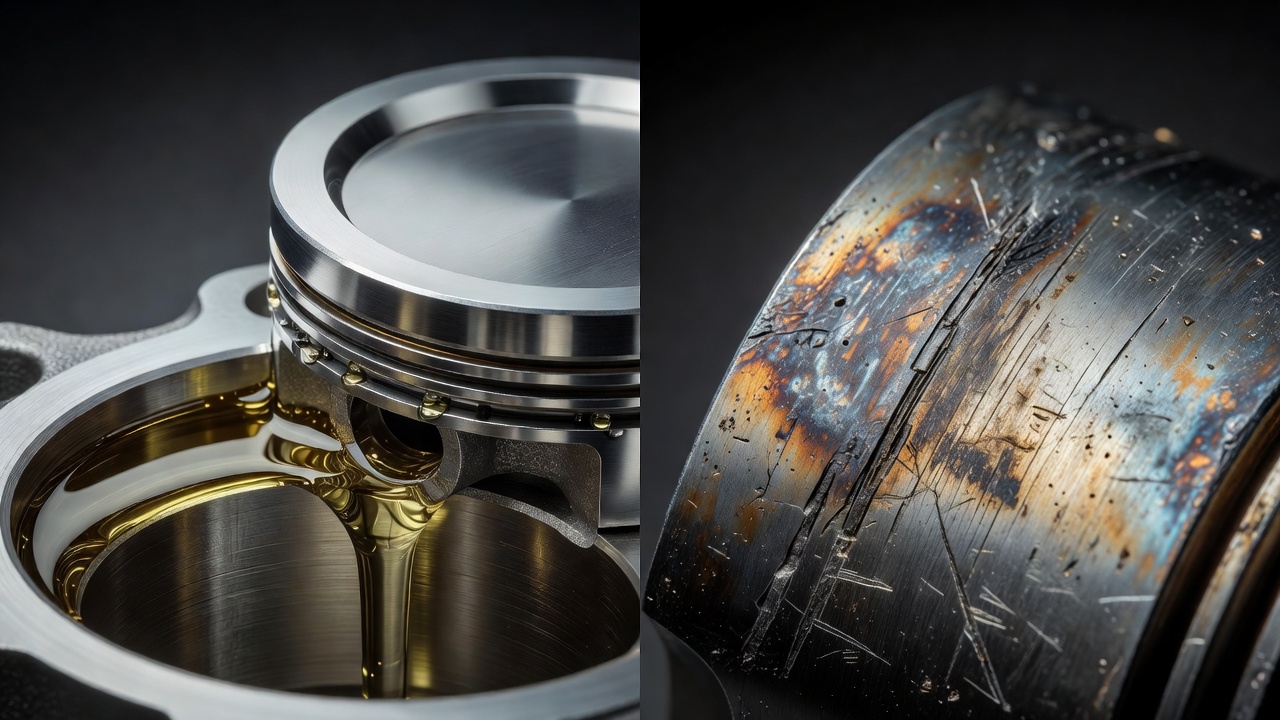
A gas mower engine is a combustion machine. Inside the engine, metal components move against each other at high speed and under intense heat every time the engine runs. Engine oil performs three critical jobs that make continued operation possible: For additional operational safety benchmarks, see our published testing notes on jbl partybox club 120 vs sony srs xv500.
- Lubrication: Oil forms a thin film between moving metal parts — pistons, cylinder walls, crankshaft bearings, and camshaft lobes. This film prevents direct metal-on-metal contact, which would otherwise cause rapid wear and generate destructive friction.
- Heat dissipation: Combustion produces extreme heat. Oil absorbs and transfers heat away from engine components, helping to regulate operating temperature alongside the engine’s air-cooling fins.
- Contaminant suspension: Over time, combustion byproducts, carbon deposits, and microscopic metal particles accumulate inside the engine. Oil suspends these contaminants and carries them to where they can be drained out during an oil change, preventing buildup that would otherwise accelerate wear.
These functions are not optional. A gas mower engine cannot compensate for absent or depleted oil. Oil is as essential to a gas mower as fuel itself. For additional operational safety benchmarks, see our published testing notes on jbl partybox club 120 vs sony srs xv500.
4-Stroke vs. 2-Stroke Lawn Mower Engines: How Oil Works Differently
The single most important technical distinction for lawn mower oil is whether the engine is a 4-stroke or a 2-stroke. Confusing the two leads to critical errors — either running a 2-stroke on straight fuel (no lubrication) or pouring unmixed oil into a 4-stroke’s fuel tank.
4-Stroke Engines
The overwhelming majority of modern gas push mowers and virtually all riding mowers use 4-stroke engines. Examples include the Briggs & Stratton 550e, 625e, and 675 series, and the Honda GC160 and GCV160 — the engines found on a large share of consumer walk-behind mowers sold today. To compare alternative configurations, check our hands-on review of z890 vs x870e motherboard.
In a 4-stroke engine:
- Oil is held in a dedicated crankcase — a sealed reservoir separate from the fuel tank.
- The oil circulates continuously through the engine during operation and does not get consumed in combustion.
- Oil must be checked regularly via a dipstick and changed on a schedule — Briggs & Stratton specifies the first oil change after 5 hours on a new engine, then every 50 hours or every season thereafter under normal operating conditions.
- Recommended oil grades for most 4-stroke push mower engines are SAE 30 (for consistent warm-weather use above 40°F / 4°C) or 10W-30 (for variable temperatures), per Briggs & Stratton and Honda GC/GCV engine documentation.
2-Stroke Engines
2-stroke engines are now uncommon on consumer mowers but still appear on some older or lightweight models. They operate differently: Users looking for related component recommendations can explore our marshall stanmore iii vs harman kardon onyx studio 8 breakdown.
- There is no separate oil reservoir. The crankcase is not sealed for oil storage.
- Oil must be pre-mixed into the gasoline before fueling. Running straight gasoline in a 2-stroke engine provides zero lubrication and causes immediate engine damage.
- The correct oil-to-fuel ratio is specified by the engine manufacturer — commonly 50:1 (2.6 oz of 2-stroke oil per 1 gallon of gasoline) for many small engines, though some manufacturers specify 40:1 or other ratios. Always follow the ratio on the engine label or in the owner’s manual — do not substitute a generalized figure.
- 2-stroke oil burns along with the fuel during combustion, which is why the exhaust from 2-stroke engines tends to be more visible than from 4-stroke engines.
How to Tell Which Engine Type You Have
- Look for a dipstick or oil fill cap on the engine body (not the fuel tank). If one is present, the engine is 4-stroke.
- Check for a single fill point that takes fuel only, with no separate oil cap anywhere on the engine. Combined with a label or manual specifying a fuel-oil mix ratio, this indicates a 2-stroke engine.
- Check the engine label or owner’s manual — the model number will identify the engine type definitively.
What Happens If You Run a Lawn Mower Without Oil?
Running a gas mower engine without adequate oil does not produce a gradual decline in performance. The damage is fast and catastrophic.
Without oil to lubricate moving parts, metal-on-metal friction generates extreme heat within seconds to minutes of operation. The piston expands from heat and seizes against the cylinder wall — a condition called engine seizure. At the moment of seizure, the engine stops suddenly and the internal components are fused or scored beyond use. Before finalizing equipment decisions, refer to our comprehensive dyson v8 cyclone vs bissell featherweight stick comparison.
Key facts about running a mower without oil:
- Engine seizure is typically irreversible without a full engine rebuild or replacement. In most consumer mowers, the cost of repair exceeds the value of the mower itself.
- Damage can occur within minutes. Small air-cooled engines used on push mowers have limited heat tolerance compared to automotive engines. Low or absent oil accelerates damage rapidly under load.
- Warranty is voided. Running an engine without oil, or with oil at a critically low level, constitutes operator misuse under virtually all manufacturer limited warranties. Neither Briggs & Stratton nor Honda covers seized engines caused by oil neglect under their standard consumer engine warranties.
- Low oil is nearly as dangerous as no oil. An oil level significantly below the minimum mark on the dipstick provides inadequate film thickness for full lubrication. Damage risk increases substantially before the oil is completely gone.
The consequence of skipping an oil check is a destroyed engine. The check itself takes under two minutes. For broader ecosystem context, read through our operational guide on bissell crosswave hydrosteam vs shark stainforce.
How to Check the Oil Level in a Lawn Mower Before Each Use
This procedure applies to 4-stroke gas mowers. 2-stroke engines have no oil reservoir to check — their lubrication depends entirely on the pre-mixed fuel ratio being correct before fueling.
Check the oil on a level surface before starting the engine. Oil checked on a slope or in a hot engine gives an inaccurate reading.
- Locate the oil fill cap and dipstick. On most push mowers, the oil fill cap is on the side or top of the engine, often marked with an oil-can icon. On many models the dipstick is integrated into the cap. On riding mowers, the dipstick location varies — consult the owner’s manual if it is not immediately visible.
- Clean around the dipstick area before removing it to prevent dirt from entering the crankcase.
- Remove the dipstick, wipe it clean, reinsert it fully, then remove it again. This two-step process gives an accurate reading; checking without reinserting first produces a false result.
- Read the oil level. The dipstick has two marks — minimum and maximum (sometimes labeled MIN/MAX, ADD/FULL, or indicated by a crosshatch area). The oil film on the dipstick should fall between these two marks, ideally near the maximum mark.
- Check oil color and consistency. Fresh oil is amber to light brown and translucent. Dark black or thick, sludge-like oil indicates it is overdue for a change. Milky or foamy oil suggests water contamination — do not run the engine; investigate further.
- Top up if needed. Add the correct oil grade in small increments (do not overfill — oil above the maximum mark can cause its own engine problems). Recheck the dipstick after each addition.
- Reinstall the dipstick cap securely before starting the engine.
How often to check: Briggs & Stratton recommends checking the oil level before each use. At minimum, check at the start of every mowing session during the season and always before the first use of the season after winter storage.
For oil-type selection guidance and full oil-change procedure, see our separate guides: What Oil Does a Lawn Mower Use? and How to Change Lawn Mower Oil.
Push Mower vs. Riding Mower: Do Oil Needs Differ?
Both push mowers and riding mowers with gas engines require oil. The fundamental maintenance obligation is identical. However, there are practical differences between the two:
| Factor | Gas Push Mower | Gas Riding Mower |
|---|---|---|
| Typical oil capacity | ~15–20 oz (0.47–0.6 L) | ~48–64 oz (1.4–1.9 L) — varies significantly by engine |
| Engine type (typical) | Single-cylinder 4-stroke | Single- or twin-cylinder 4-stroke |
| Oil change interval (typical) | Every 50 hours or once per season | Every 50–100 hours depending on engine — consult OEM manual |
| Dipstick location | Side or top of engine, near operator handle end | Varies — often under hood or seat; consult manual |
| Additional oil considerations | Engine oil only | Engine oil plus transmission fluid or hydrostatic fluid on some models |
Riding mowers with hydrostatic transmissions have a separate fluid reservoir for the transmission — this is a different fluid from engine oil and is checked and serviced independently. Confirm all fluid types for your specific model in the owner’s manual before performing any maintenance.
The core answer remains the same: if the mower has a gas engine, it needs oil, and that oil must be checked regularly and changed on schedule.
Buyer FAQs: Does Lawn Mower Need Oil Solved
Does an electric lawn mower need oil?
No. Corded electric and battery-powered lawn mowers have no combustion engine and require no engine oil. Some models with self-propelled wheel drives include a gearbox that may need periodic greasing — check your owner’s manual for any lubrication points specific to your model.
Can I check my lawn mower oil with the engine hot?
Let the engine cool for at least 5–10 minutes before checking oil. Hot oil expands and can give a falsely high reading on the dipstick. Always check on a level surface to ensure an accurate reading.
What happens if I put too much oil in a lawn mower?
Overfilling causes oil to enter areas it should not — including the combustion chamber — resulting in blue or white smoke from the exhaust, fouled spark plugs, hard starting, and potential engine damage. Keep the oil level between the minimum and maximum marks on the dipstick. If overfilled, drain the excess before running the engine.
How do I know if my mower needs an oil change vs. just a top-up?
A top-up is appropriate when oil level is low but the oil itself is still clean — amber to light brown and translucent on the dipstick. An oil change is needed when the oil is dark black, thick, or has a burned smell, or when you have reached the manufacturer’s recommended change interval (typically every 50 hours or once per season for most 4-stroke push mowers). Dark oil that is also at the correct level still needs to be changed — level and condition are two separate checks.
For more hands-on benchmarks and buying recommendations, consult our guides on heavy-duty chainsaw buyer guide.
Mechanical safety standards, operational tolerances, and protective gear guidelines align with benchmark specifications established by the American National Standards Institute (ANSI).
To see how this matches real-world operating conditions, see our complete guide on battery weed wacker.









