As an Amazon Associate we earn from qualifying purchases. When you buy through our links, we may earn a commission at no extra cost to you. Prices and availability are subject to change on Amazon. Affiliate disclosure ›
How Many Hours Is A Lot For A Lawn Mower (2026)
Wondering how many hours is a lot for a lawn mower? Get clear thresholds by mower type — walk-behind, riding, and zero-turn — plus what maintenance history, engine brand, and commercial vs. residential use actually mean for lifespan and resale value.
Quick Answer: How Many Hours Is A Lot For A Lawn Mower?
For a residential riding or zero-turn mower, 500–1,000 hours is considered high use. With proper maintenance, most residential machines comfortably reach 1,500–2,000 hours before major failures. Walk-behind mowers enter high-use territory at 300–500 hours. Commercial zero-turn mowers are built to tighter tolerances and can push past 2,000–3,000 hours under diligent service schedules. Raw hour count is a starting point, not…
The Flagship Score evaluates build engineering, verified performance signals, and long-term owner satisfaction.
Updated: Oct 3, 2026
Last update on Oct 3, 2026. Product prices and availability are accurate as of that date/time and are subject to change. Any price and availability information displayed on Amazon.com at the time of purchase will apply. Affiliate links / Images, product titles, and product highlights from Amazon.
The Greenworks 80V 42" CrossoverT Cordless Riding Lawn Tractor is a zero-emission riding mower for large-yard homeowners, delivering 32HP gas-equivalent brushless power, SmartCut technology, and four included batteries for up to 1.5 acres of runtime.
Pros & Cons
Pros
Powerful 80V brushless motor delivers 32HP gas-equivalent performance with quiet fume-free operation and no engine maintenance.
Complete kit includes four 6.0Ah batteries and 600W charger for substantial runtime up to 1.5 acres.
SmartCut technology and 42-inch heavy-duty steel deck ensure consistent cuts without bogging in tough conditions.
Versatile towing up to 350 lbs and optional cargo hauling plus comfort features like high-back seat and LED lights.
Strong 4-year limited warranty and full compatibility with the Greenworks 80V tool ecosystem.
Cons
Rear utility cargo bed for 200 lb hauling is sold separately and not included in the kit.
Runtime of up to 1.5 acres varies with conditions and may require recharging or battery swaps on larger properties.
As a fully cordless model continuous operation depends on battery levels unlike gas engines with unlimited runtime.
Detailed Review
The Greenworks 80V 42" CrossoverT Cordless Riding Lawn Tractor is a ready-to-mow zero-emission tractor designed for homeowners managing medium to large lawns. It features a reinforced 42-inch stamped steel deck of 12-gauge construction along with premium comfort elements such as a high-back padded seat with foldable armrests. The overall build emphasizes durability and user convenience right out of the box with the included battery and charger set.
Performance centers on the 80V TruBrushless motor that provides 32HP gas-equivalent power with instant torque and quiet fume-free operation. SmartCut technology senses grass conditions and automatically adjusts power to maintain a consistent cut even in tall thick or wet areas. The four 6.0Ah batteries support runtime for up to 1.5 acres depending on conditions while dual LED headlights and a 7-position deck height range from 1.5" to 4.5" add practicality. Front and rear attachments further allow towing up to 350 lbs for added yard utility.
Key considerations include that the rear utility storage bin capable of hauling 200 lbs is sold separately so full cargo functionality requires an extra purchase. Runtime remains condition-dependent and may fall short for properties significantly larger than 1.5 acres without using the 600W charger or swapping batteries. The cordless design prioritizes ease and low maintenance but trades off the continuous runtime of traditional gas models.
This tractor delivers strong value for eco-conscious owners of residential properties who want gas-like power without the emissions noise or upkeep. It suits those who already use or plan to expand into the Greenworks 80V family of tools and who appreciate the 4-year limited warranty. Users with exceptionally large or commercial-scale lawns should evaluate battery logistics carefully before purchase.
The Flagship Score evaluates build engineering, verified performance signals, and long-term owner satisfaction.
Updated: Oct 3, 2026
Last update on Oct 3, 2026. Product prices and availability are accurate as of that date/time and are subject to change. Any price and availability information displayed on Amazon.com at the time of purchase will apply. Affiliate links / Images, product titles, and product highlights from Amazon.
The EGO Power+ TR4204 is a cordless electric riding lawn mower designed for medium to large lawns, delivering 21 horsepower equivalent power and cutting up to 1.5 acres per charge with six included 56V batteries.
Pros & Cons
Pros
Delivers strong 21 horsepower equivalent power comparable to gas riding mowers.
Provides up to 1.5 acres of runtime on a full charge with the six included batteries.
Features low-maintenance dual brushless motors without belts for greater durability.
Offers versatile 12-position cutting height adjustment from 1.5 to 4.5 inches.
Includes digital controls for blade settings, drive speeds, and cruise control.
Cons
Limited to 1.5 acres of cutting per charge without purchasing additional batteries for bigger lawns.
Requires recharging time for the six 56V batteries after each use session.
Relies solely on battery power with no hybrid or gas backup option for extended operation.
Detailed Review
The EGO Power+ TR4204 is a cordless electric riding lawn mower built as a modern tractor alternative for residential use. It features a robust 42-inch stamped steel deck and arrives ready to go with six 56V 6.0Ah batteries plus a charger, creating an immediate impression of convenience and solid construction free from gas engine complexity.
Performance shines through its equivalent 21 horsepower output and top speed of 6 MPH, allowing efficient coverage of up to 1.5 acres on a single charge. Dual brushless cutting motors operate without belts for added durability and less upkeep, while the digital display lets users select three blade settings, three drive speeds, and cruise control. The 12 adjustable heights ranging from 1.5 to 4.5 inches combined with anti-scalp wheels deliver precise results across varied terrain.
Drawbacks center on battery dependency, as larger properties beyond 1.5 acres require extra batteries and recharging intervals can interrupt workflow. The fully electric design eliminates fuel storage needs but demands access to power sources between sessions.
This mower suits homeowners with medium to large yards who value quiet, emission-free operation and reduced maintenance. Those seeking expandable battery capacity for bigger areas will find the EGO Power+ TR4204 a strong long-term investment in cordless lawn care.
The Flagship Score evaluates build engineering, verified performance signals, and long-term owner satisfaction.
Updated: Oct 3, 2026
Last update on Oct 3, 2026. Product prices and availability are accurate as of that date/time and are subject to change. Any price and availability information displayed on Amazon.com at the time of purchase will apply. Affiliate links / Images, product titles, and product highlights from Amazon.
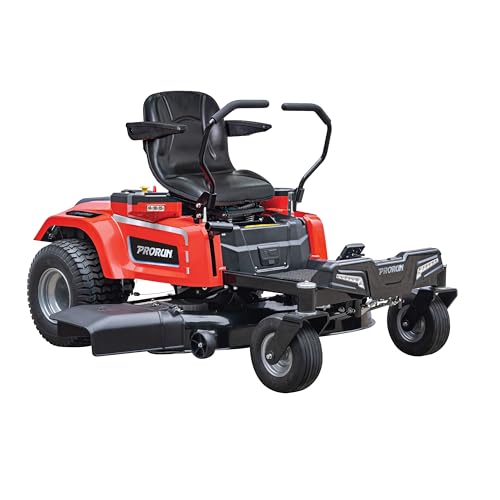
The PRORUN PZT60V42 is a fully electric 60V zero-turn riding lawn mower designed for homeowners seeking zero-emission power equivalent to a 20 HP gas engine, offering up to 2 acres runtime with four brushless motors and a 42-inch steel deck.
Pros & Cons
Pros
High-efficiency brushless motors maximize power output and durability over traditional motors
Up to 2 acres runtime with three included 10.0 Ah batteries supports substantial mowing sessions
Zero-emission operation with gas-equivalent 20 HP power for quieter environmentally friendly use
Six-port auto-switchover battery system provides flexible extended runtime options
Durable 42-inch steel deck plus included mulch and towing kits add immediate functionality
Cons
Runtime is limited to approximately 70 minutes or 2 acres which may require recharging for larger properties
Fully battery-dependent design means performance relies on charge levels and spare battery availability
42-inch deck size may require more passes on expansive lawns compared to wider commercial models
Detailed Review
The PRORUN PZT60V42 is a fully electric 60V zero-turn riding lawn mower built for residential and light commercial use. Its primary design centers on a robust 42-inch 14-gauge stamped steel twin blade deck powered by direct-drive brushless motors, giving an immediate impression of solid construction and modern battery-focused engineering. The mower arrives complete with three 10.0 Ah batteries, a charger, mulch kit, and towing kit for ready-to-work versatility.
In performance terms, four high-efficiency brushless motors deliver power equivalent to a 20 HP gas engine while producing zero emissions. The system supports up to 2.0 acres or 70 minutes of runtime, and six battery ports with auto switchover intelligently manage all PRORUN 60V battery sizes for continuous operation. A washout port on the steel deck further simplifies post-mow maintenance during real-world sessions.
Potential drawbacks include the finite 70-minute runtime window which can limit coverage on larger properties without spare batteries or recharge breaks. As a fully electric model, it also depends entirely on battery charge levels rather than continuous fuel refills, and the 42-inch deck width may demand extra passes compared with wider traditional options.
Overall the PRORUN PZT60V42 offers strong value for homeowners and small-property managers who want gas-like cutting power without emissions or noise. Those with medium-sized lawns seeking quiet efficient zero-turn performance and included accessories will benefit most from this electric mower.
The Flagship Score evaluates build engineering, verified performance signals, and long-term owner satisfaction.
Updated: Oct 3, 2026
Last update on Oct 3, 2026. Product prices and availability are accurate as of that date/time and are subject to change. Any price and availability information displayed on Amazon.com at the time of purchase will apply. Affiliate links / Images, product titles, and product highlights from Amazon.
The Husqvarna Z254F is a zero turn riding mower designed for large residential lawns, offering a 24HP 726cc FR730 engine and 54-inch FAB deck as its standout power and cutting strengths.
Pros & Cons
Pros
Strong 24HP FR730 engine power for demanding cutting conditions
Wide 54-inch FAB deck reduces total mowing time
Zero turn design delivers excellent maneuverability
Sparse details beyond engine and deck leave other features unspecified
Gas-powered FR730 engine needs regular fuel and maintenance
Large 54-inch deck size may feel oversized on compact properties
Detailed Review
The Husqvarna Z254F is a zero turn mower from the established Husqvarna brand in the riding lawn mowers category. It centers on a solid build that pairs a 24HP 726cc FR730 engine with a 54-inch FAB deck for straightforward residential grass care.
Performance stems directly from the listed specifications. The FR730 engine delivers the horsepower needed for steady operation across typical lawns while the wide FAB deck completes passes efficiently. Zero turn handling improves control in real yard layouts based on the model design.
Considerations arise from the limited data available. Secondary elements such as comfort features fuel capacity or extras receive no mention and the gas engine format involves routine upkeep. The large deck suits open areas better than confined spaces.
The Husqvarna Z254F provides the most value for owners of medium or large properties who want reliable engine power and a broad cutting width. Users with smaller lots or those seeking extensive accessory options should weigh the core specs carefully before purchase.
What “High Hours” Actually Means for a Lawn Mower
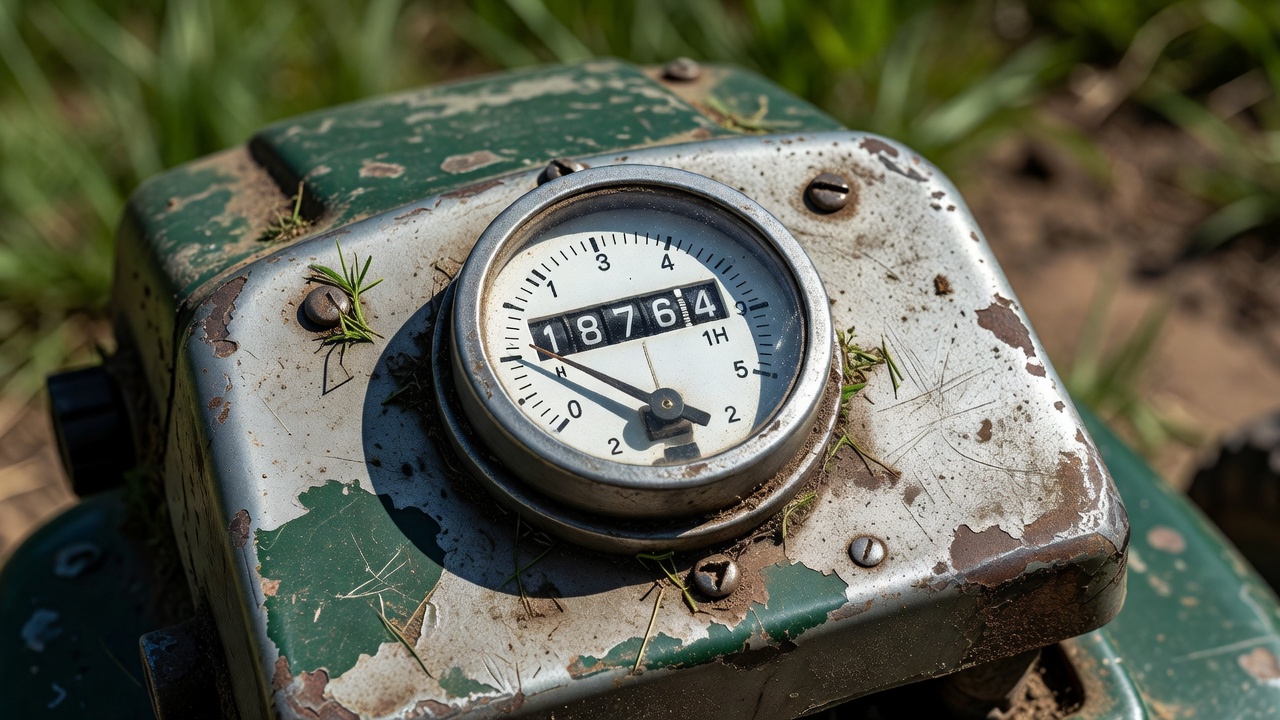
Engine hours on a mower work like odometer miles on a car — they measure cumulative wear on the engine’s internal components: pistons, rings, bearings, valves, and seals. The hour meter logs every minute the engine runs, whether the blades are engaged or not.
“A lot” has no single universal answer because three variables override the raw number: For broader ecosystem context, read through our operational guide on jbl partybox club 120 vs sony srs xv500. For complementary hardware performance, examine our breakdown on riding lawn mower.
Mower type — a walk-behind engine is smaller and cooled less efficiently than a commercial zero-turn’s liquid- or air-cooled powerplant.
Engine quality — a commercial-grade Kawasaki FX or Kohler Command Pro engine is engineered to a longer service life than a residential-grade Briggs & Stratton 500-series engine.
Maintenance history — consistent oil changes, air filter service, and blade care extend usable life far beyond neglected machines at any hour count.
Understanding these three factors is what separates a useful hour-count evaluation from a misleading one. For broader ecosystem context, read through our operational guide on jbl partybox club 120 vs sony srs xv500.
Hour Thresholds by Mower Type: Quick Reference
Use the table below to benchmark any machine you own or plan to buy. For troubleshooting and reliability insights, consult our in-depth z890 vs x870e motherboard report.
Mower Type
Low
Moderate
High
Very High
Walk-behind (push / self-propelled)
0–100 hrs
100–300 hrs
300–500 hrs
500+ hrs
Residential riding mower
0–200 hrs
200–500 hrs
500–1,000 hrs
1,000+ hrs
Residential zero-turn mower
0–250 hrs
250–600 hrs
600–1,200 hrs
1,200+ hrs
Commercial zero-turn mower
0–500 hrs
500–1,200 hrs
1,200–2,000 hrs
2,000–3,000+ hrs
Thresholds assume average maintenance practices. Well-serviced machines frequently exceed the “very high” ceiling; neglected ones fail well before “high.”
Why Engine Brand and Quality Change the Equation
Not all small engines wear at the same rate. Engine manufacturer and grade are among the strongest predictors of how far past the “high” threshold a mower can realistically go. Readers comparing setup options can review our technical analysis on marshall stanmore iii vs harman kardon onyx studio 8.
Residential-Grade Engines
Briggs & Stratton single-cylinder engines (500 Series, 550EX, Intek) power the majority of homeowner walk-behinds and entry-level riding mowers. They are reliable within their design scope but are built to lighter tolerances optimized for cost, not longevity. Expect a realistic service life of 500–1,000 hours under typical residential conditions with consistent maintenance. For troubleshooting and reliability insights, consult our in-depth z890 vs x870e motherboard report.
Prosumer and Commercial-Grade Engines
Kawasaki FX / FR Series — V-twin engines common on mid-to-high-end zero-turns. Designed for extended drain intervals, higher continuous-duty cycles, and longer bearing life. Well-maintained FX engines routinely reach 2,000+ hours. A 600-hour Kawasaki FX is nowhere near end-of-life.
Kohler Command Pro / ECV Series — another prosumer benchmark. Kohler Command Pro engines share a similar design philosophy to Kawasaki’s commercial lineup, with pressurized lubrication and heavy-duty air filtration options that extend service intervals under demanding conditions.
Honda GCV / GX Series — Honda GCV engines (residential) and GX engines (commercial) are known for exceptional reliability in walk-behind applications. A GX-powered commercial walk-behind can outlast several residential-engine machines at the same hour count.
The practical rule: when evaluating hours, identify the engine first. The same hour count on a Kawasaki FX850V and a Briggs & Stratton Intek 26 represents very different remaining life.
Maintenance History Matters More Than the Number on the Meter
Engine hours are a proxy for wear — maintenance history is the actual determinant. Two machines with identical hour meters can be in completely different mechanical condition based on how they were serviced. Readers comparing setup options can review our technical analysis on marshall stanmore iii vs harman kardon onyx studio 8.
Key Maintenance Intervals That Drive Longevity
Oil changes — most small engines require oil changes every 50 hours or annually, whichever comes first. Dirty oil accelerates bearing and ring wear faster than almost any other factor. Look for clean, honey-colored oil on the dipstick; black, gritty oil signals chronic neglect.
Air filter service — a clogged air filter forces the engine to run rich, increasing combustion deposits and reducing cooling efficiency. Foam pre-filters should be cleaned every 25 hours; paper elements replaced every 100 hours or when visibly dirty.
Spark plug replacement — typically every 100 hours. A fouled plug causes misfires that stress the ignition system and increase fuel consumption.
Blade sharpening and balancing — dull, unbalanced blades transmit vibration into spindle bearings and the deck. Spindle bearing failure is one of the most common repair costs on high-hour machines; blade maintenance directly extends spindle life.
Deck cleaning — grass clippings pack under the deck and trap moisture, accelerating rust that eventually compromises deck structural integrity.
Belt inspection — drive and PTO belts should be inspected for cracking and fraying every season. A snapped belt is a minor fix; a belt that comes off at speed and damages a spindle pulley is not.
Hydrostatic transmission fluid — on machines with serviceable transmissions, fluid changes every 200–400 hours (per manufacturer spec) prevent heat-related seal failure. Many budget residential machines use sealed, non-serviceable transmissions — inspect these for leaks and sluggish response.
When evaluating a high-hour mower you own: pull service records or inspect the air filter, oil color, and blade condition. Those three checks alone tell you most of what you need to know about how the machine was treated.
Buying a Used Mower: What to Inspect at Different Hour Counts
Use this tiered inspection checklist when evaluating any used riding or zero-turn mower. Adjust expectations and price accordingly. For complementary field maintenance guidelines, examine our breakdown of dyson v8 cyclone vs bissell featherweight stick.
Under 200 Hours — Low Risk, Verify Basics
Confirm hour meter reads accurately (check for signs of meter replacement or tampered wiring).
Look for warranty documentation or service receipts — a machine this young should have records.
Check for crash damage on the deck and frame; low-hour machines sometimes come from sellers who damaged them.
Start cold and listen for any smoke, knock, or hard-start behavior — there should be none at this age.
200–500 Hours — Moderate, Inspect Wear Items
Check spindle bearing play by grabbing each blade and rocking it laterally — any wobble indicates worn bearings.
Inspect belts for glazing, cracking, or fraying.
Test hydrostatic transmission in both forward and reverse; response should be smooth and immediate without drift or hesitation.
Pull the dipstick — oil should be relatively clean. If it’s black at 200 hours, the machine has likely missed multiple service intervals.
500–1,000 Hours — High, Compression-Test Required
Perform or request a compression test. Most small engines should read 90–120 PSI; below 90 PSI on a single-cylinder or significantly mismatched cylinders on a V-twin signal ring and valve wear.
Watch startup closely for blue or white smoke — blue smoke indicates oil burning (ring or valve seal wear); white smoke at startup that dissipates is usually condensation, but persistent white smoke can indicate head gasket issues.
Inspect the deck for cracks, rust-through, or reinforced welds that indicate prior damage.
Factor in remaining belt, blade, and spindle life when negotiating price — these components will need replacement soon.
This is the range where price should reflect upcoming maintenance costs. A 700-hour machine priced at 70–80% of a comparable low-hour machine is reasonable; 90%+ is not.
1,000+ Hours — Very High, Buy for Parts or With Eyes Open
Treat any purchase as a calculated risk unless the seller can document meticulous service history.
Budget for potential engine work, hydrostatic transmission service or replacement, and full deck rebuild.
A well-documented 1,200-hour Kawasaki-powered commercial zero-turn can still be a legitimate buy for a knowledgeable owner; a mystery 1,000-hour residential riding mower is a gamble.
Walk away if compression is low, smoke is present, and the seller cannot provide any service documentation.
Repair or Replace? Using Hours to Make the Call
The general rule in the small-engine repair industry: if the estimated repair cost exceeds 50% of the machine’s current market replacement value, replacement is usually the better financial decision — especially on a high-hour machine where additional failures are statistically more likely.
Under 500 hours (residential riding): most repairs are worth doing. The machine has significant life remaining. Engine rebuilds, hydrostatic transmission repairs, and deck work can all make economic sense.
500–1,000 hours: evaluate repair cost against replacement value carefully. A $400 spindle and deck repair on a $1,800 machine is reasonable; a $900 hydrostatic transmission replacement on an $800 trade-in machine is not.
1,000+ hours (residential): major repairs — engine replacement, full hydrostatic rebuild — rarely make financial sense unless the rest of the machine is in exceptional condition. Maintenance items (belts, blades, filters, battery) remain worth doing.
Commercial machines at any hour count: higher replacement costs shift the calculus. A $1,200 engine rebuild on a $8,000 commercial zero-turn at 1,500 hours is straightforwardly worth it.
Commercial vs. Residential Use: Same Hours, Different Wear
An hour logged under commercial conditions is not equivalent to an hour logged in light residential use — even if the meter shows the same number.
Full-throttle operation for extended continuous periods (often 6–10 hours per day)
Heavy debris exposure — wet grass, thick growth, gravel, and curb contact
Daily use with minimal rest cycles for components to cool
Multiple operators, removing the personal ownership incentive to treat equipment carefully
Residential use typically involves:
Shorter cutting sessions (1–3 hours per week)
Lighter debris loads on maintained turf
Extended rest between uses, allowing components to cool and lubricants to settle
Single-owner accountability
Practical implication: a 500-hour commercial walk-behind used by a landscaping crew may be more worn than a 700-hour homeowner riding mower that was serviced every spring and stored correctly each winter. When buying used, always ask: was this machine used commercially or residentially? The answer can shift your valuation by 20–30%.
How to Check Mower Hours If There Is No Hour Meter
Many older mowers — and some budget models — were sold without factory-installed hour meters. That doesn’t mean you’re flying blind.
Install an Aftermarket Hour Meter
Aftermarket hour meters (inductive-style, clip-on units) attach to the spark plug wire and detect engine pulses without any wiring modification. Models from brands like Briggs & Stratton and generic universal meters are widely available for under $20. Install one now and start tracking from zero — useful for establishing your own service interval records going forward.
Estimate Hours from Seasonal Use
Use a simple runtime estimate if you know the machine’s history:
Average homeowner cuts grass 30–35 times per season for a 1–2 hour session each time.
That equals roughly 30–70 hours per year of residential use.
A 10-year-old residential riding mower with no meter likely has 300–700 hours — possibly more or less depending on property size and mowing frequency.
Use Visual and Mechanical Inspection as a Substitute
When hour count is unknown, let the machine tell you its condition directly:
Compression test — quantifies engine wear regardless of hours.
Oil color and condition — reveals service history quality.
Spindle bearing play, belt condition, deck rust — surface indicators of cumulative use and storage quality.
Plastic and rubber component condition — sun-degraded plastics, cracked fuel lines, and brittle belts all indicate age and exposure history.
A thorough mechanical inspection on a meter-free machine is more informative than an hour count on a neglected one. The number on the meter only matters when paired with honest service history.
Common Questions on How Many Hours Is A Lot For A Lawn Mower Answered
Is 500 hours a lot for a riding lawn mower?
500 hours is the beginning of the “high” range for a residential riding mower — not an automatic disqualifier, but a threshold where condition matters more than ever. A 500-hour machine with documented oil changes, clean air filters, and tight spindle bearings can easily run another 500–1,000 hours. A neglected 500-hour machine may already need significant engine or transmission work. Inspect before assuming either extreme.
How many hours does a zero-turn mower last?
Residential zero-turn mowers typically last 1,500–2,000 hours with proper maintenance. Commercial zero-turn mowers — especially those powered by Kawasaki FX or Kohler Command Pro engines — can surpass 2,000–3,000 hours under diligent service schedules. The hydrostatic transmission and spindle bearings often require attention before the engine does on high-hour zero-turns.
How many hours is too many for a used lawn mower?
There is no universal cutoff. Context determines everything: a 1,200-hour commercial Hustler with a Kawasaki FX engine and full service records is a credible buy; a 600-hour no-name residential riding mower with black oil and wobbly spindles is not. Use the 50% repair-cost rule — if the machine will immediately need repairs exceeding half its market value, walk away regardless of hour count.
Can a lawn mower last 2,000 hours?
Yes — and many do. Commercial zero-turn mowers routinely reach 2,000–3,000 hours when maintained on schedule. Residential machines with quality engines (Honda GX, Kawasaki FR/FX, Kohler Command Pro) can reach 2,000 hours with committed homeowner maintenance. The ceiling is not the engine hours themselves but whether oil changes, filter service, blade maintenance, and off-season storage were performed consistently throughout the machine’s life.
For more hands-on benchmarks and buying recommendations, consult our guides on heavy-duty chainsaw buyer guide, as well as high-CFM commercial leaf blower guide.
Mechanical safety standards, operational tolerances, and protective gear guidelines align with benchmark specifications established by the American National Standards Institute (ANSI).