

Quick Answer: How Often to Mow in Summer
Mow most lawns once per week in summer. Cool-season grasses (tall fescue, Kentucky bluegrass, ryegrass) may need cutting every 5–7 days in early summer when growth is active, but frequency drops during peak heat stress in July and August. Warm-season grasses (Bermuda, Zoysia, St. Augustine) grow fastest in summer heat and typically require mowing every 7–14 days depending on rainfall and fertilization. The governing principle for both: never remove more than one-third of the blade height in a single cut.

Pros
- Powerful 80V brushless motor delivers 32HP gas-equivalent performance with quiet fume-free operation and no engine maintenance.
- Complete kit includes four 6.0Ah batteries and 600W charger for substantial runtime up to 1.5 acres.
- SmartCut technology and 42-inch heavy-duty steel deck ensure consistent cuts without bogging in tough conditions.
- Versatile towing up to 350 lbs and optional cargo hauling plus comfort features like high-back seat and LED lights.
- Strong 4-year limited warranty and full compatibility with the Greenworks 80V tool ecosystem.
Cons
- Rear utility cargo bed for 200 lb hauling is sold separately and not included in the kit.
- Runtime of up to 1.5 acres varies with conditions and may require recharging or battery swaps on larger properties.
- As a fully cordless model continuous operation depends on battery levels unlike gas engines with unlimited runtime.
The Greenworks 80V 42" CrossoverT Cordless Riding Lawn Tractor is a ready-to-mow zero-emission tractor designed for homeowners managing medium to large lawns. It features a reinforced 42-inch stamped steel deck of 12-gauge construction along with premium comfort elements such as a high-back padded seat with foldable armrests. The overall build emphasizes durability and user convenience right out of the box with the included battery and charger set.
Performance centers on the 80V TruBrushless motor that provides 32HP gas-equivalent power with instant torque and quiet fume-free operation. SmartCut technology senses grass conditions and automatically adjusts power to maintain a consistent cut even in tall thick or wet areas. The four 6.0Ah batteries support runtime for up to 1.5 acres depending on conditions while dual LED headlights and a 7-position deck height range from 1.5" to 4.5" add practicality. Front and rear attachments further allow towing up to 350 lbs for added yard utility.
Key considerations include that the rear utility storage bin capable of hauling 200 lbs is sold separately so full cargo functionality requires an extra purchase. Runtime remains condition-dependent and may fall short for properties significantly larger than 1.5 acres without using the 600W charger or swapping batteries. The cordless design prioritizes ease and low maintenance but trades off the continuous runtime of traditional gas models.
This tractor delivers strong value for eco-conscious owners of residential properties who want gas-like power without the emissions noise or upkeep. It suits those who already use or plan to expand into the Greenworks 80V family of tools and who appreciate the 4-year limited warranty. Users with exceptionally large or commercial-scale lawns should evaluate battery logistics carefully before purchase.

Pros
- Delivers strong 21 horsepower equivalent power comparable to gas riding mowers.
- Provides up to 1.5 acres of runtime on a full charge with the six included batteries.
- Features low-maintenance dual brushless motors without belts for greater durability.
- Offers versatile 12-position cutting height adjustment from 1.5 to 4.5 inches.
- Includes digital controls for blade settings, drive speeds, and cruise control.
Cons
- Limited to 1.5 acres of cutting per charge without purchasing additional batteries for bigger lawns.
- Requires recharging time for the six 56V batteries after each use session.
- Relies solely on battery power with no hybrid or gas backup option for extended operation.
The EGO Power+ TR4204 is a cordless electric riding lawn mower built as a modern tractor alternative for residential use. It features a robust 42-inch stamped steel deck and arrives ready to go with six 56V 6.0Ah batteries plus a charger, creating an immediate impression of convenience and solid construction free from gas engine complexity.
Performance shines through its equivalent 21 horsepower output and top speed of 6 MPH, allowing efficient coverage of up to 1.5 acres on a single charge. Dual brushless cutting motors operate without belts for added durability and less upkeep, while the digital display lets users select three blade settings, three drive speeds, and cruise control. The 12 adjustable heights ranging from 1.5 to 4.5 inches combined with anti-scalp wheels deliver precise results across varied terrain.
Drawbacks center on battery dependency, as larger properties beyond 1.5 acres require extra batteries and recharging intervals can interrupt workflow. The fully electric design eliminates fuel storage needs but demands access to power sources between sessions.
This mower suits homeowners with medium to large yards who value quiet, emission-free operation and reduced maintenance. Those seeking expandable battery capacity for bigger areas will find the EGO Power+ TR4204 a strong long-term investment in cordless lawn care.
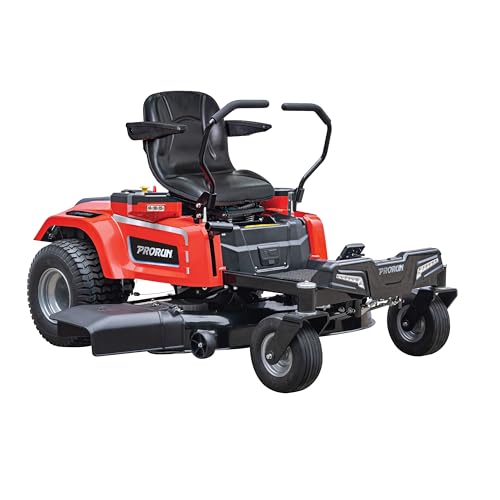
Pros
- High-efficiency brushless motors maximize power output and durability over traditional motors
- Up to 2 acres runtime with three included 10.0 Ah batteries supports substantial mowing sessions
- Zero-emission operation with gas-equivalent 20 HP power for quieter environmentally friendly use
- Six-port auto-switchover battery system provides flexible extended runtime options
- Durable 42-inch steel deck plus included mulch and towing kits add immediate functionality
Cons
- Runtime is limited to approximately 70 minutes or 2 acres which may require recharging for larger properties
- Fully battery-dependent design means performance relies on charge levels and spare battery availability
- 42-inch deck size may require more passes on expansive lawns compared to wider commercial models
The PRORUN PZT60V42 is a fully electric 60V zero-turn riding lawn mower built for residential and light commercial use. Its primary design centers on a robust 42-inch 14-gauge stamped steel twin blade deck powered by direct-drive brushless motors, giving an immediate impression of solid construction and modern battery-focused engineering. The mower arrives complete with three 10.0 Ah batteries, a charger, mulch kit, and towing kit for ready-to-work versatility.
In performance terms, four high-efficiency brushless motors deliver power equivalent to a 20 HP gas engine while producing zero emissions. The system supports up to 2.0 acres or 70 minutes of runtime, and six battery ports with auto switchover intelligently manage all PRORUN 60V battery sizes for continuous operation. A washout port on the steel deck further simplifies post-mow maintenance during real-world sessions.
Potential drawbacks include the finite 70-minute runtime window which can limit coverage on larger properties without spare batteries or recharge breaks. As a fully electric model, it also depends entirely on battery charge levels rather than continuous fuel refills, and the 42-inch deck width may demand extra passes compared with wider traditional options.
Overall the PRORUN PZT60V42 offers strong value for homeowners and small-property managers who want gas-like cutting power without emissions or noise. Those with medium-sized lawns seeking quiet efficient zero-turn performance and included accessories will benefit most from this electric mower.

Pros
- Strong 24HP FR730 engine power for demanding cutting conditions
- Wide 54-inch FAB deck reduces total mowing time
- Zero turn design delivers excellent maneuverability
- Fabricated deck supports durable everyday operation
Cons
- Sparse details beyond engine and deck leave other features unspecified
- Gas-powered FR730 engine needs regular fuel and maintenance
- Large 54-inch deck size may feel oversized on compact properties
The Husqvarna Z254F is a zero turn mower from the established Husqvarna brand in the riding lawn mowers category. It centers on a solid build that pairs a 24HP 726cc FR730 engine with a 54-inch FAB deck for straightforward residential grass care.
Performance stems directly from the listed specifications. The FR730 engine delivers the horsepower needed for steady operation across typical lawns while the wide FAB deck completes passes efficiently. Zero turn handling improves control in real yard layouts based on the model design.
Considerations arise from the limited data available. Secondary elements such as comfort features fuel capacity or extras receive no mention and the gas engine format involves routine upkeep. The large deck suits open areas better than confined spaces.
The Husqvarna Z254F provides the most value for owners of medium or large properties who want reliable engine power and a broad cutting width. Users with smaller lots or those seeking extensive accessory options should weigh the core specs carefully before purchase.
The One-Third Rule: The Real Mowing Frequency Regulator
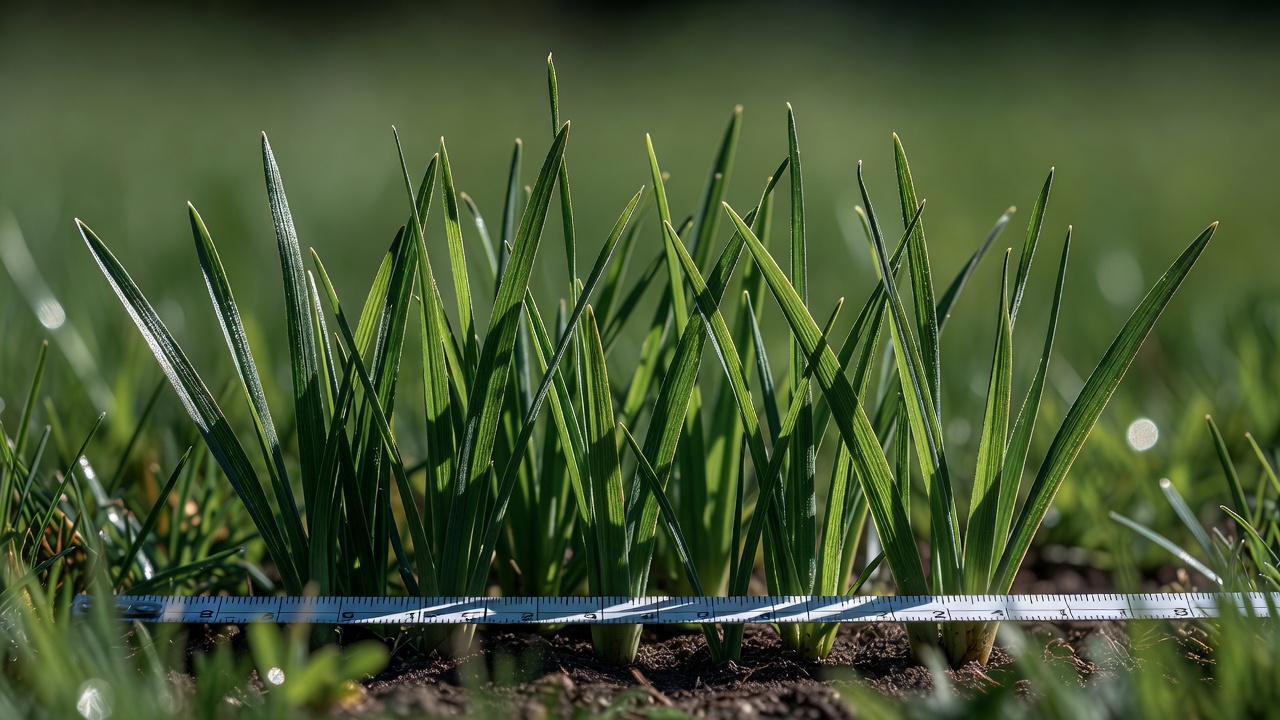
No fixed calendar schedule works for every lawn. The one-third rule is the universal standard used by turfgrass scientists and university extension programs to determine when — and how often — to mow.
The rule: Never cut more than one-third of the grass blade in a single mowing session.
If your target mowing height is 3 inches, mow before the grass reaches 4.5 inches. If you keep Bermuda at 1.5 inches, cut before it hits 2.25 inches. This principle automatically adjusts your schedule based on actual growth rate rather than the day of the week. Readers comparing setup options can review our technical analysis on jbl partybox club 120 vs sony srs xv500.
Why the One-Third Rule Matters
Removing more than one-third of the blade in one cut forces the plant to redirect energy from root development to leaf regrowth. According to cooperative extension research, this stress response increases the lawn’s vulnerability to disease, weed encroachment, and drought damage. During summer heat, a scalped lawn loses moisture faster and recovers more slowly than one managed within the one-third threshold. Readers comparing setup options can review our technical analysis on jbl partybox club 120 vs sony srs xv500.
How to Use It as a Scheduling Tool
- Measure your target height (e.g., 3 inches for tall fescue in summer).
- Multiply by 1.5 to get the maximum height before mowing (4.5 inches).
- Check the lawn every few days during active growth periods. Mow when it hits that maximum.
- During slow-growth phases (peak heat, drought), that threshold may not be reached for 10–14 days — and that is fine.
The one-third rule means your mowing frequency is driven by the grass, not the calendar. A week of heavy rain and fertilization may demand twice-weekly mowing; a week of 100°F heat may demand none at all.
Cool-Season vs. Warm-Season Grasses: How Grass Type Determines Summer Frequency
Grass type is the single biggest variable affecting summer mowing frequency. Cool-season and warm-season grasses have opposite growth cycles, which means they respond to summer conditions in completely different ways. For complementary field maintenance guidelines, examine our breakdown of z890 vs x870e motherboard.
Cool-Season Grasses (Tall Fescue, Kentucky Bluegrass, Ryegrass)
Cool-season grasses thrive between 60–75°F. They grow most actively in spring and fall. As summer temperatures climb above 80–85°F, growth slows significantly, and during extended heat or drought, these grasses can enter semi-dormancy — turning brown and temporarily halting growth to conserve moisture and energy.
- Early summer (June): Mow every 5–7 days. Growth is still active before peak heat arrives.
- Peak summer (July–August): Mow every 10–14 days, or only when the one-third threshold is reached. Do not force a weekly schedule during dormancy or stress.
- Recommended mowing height: Raise the deck to 3.5–4 inches in summer. Taller blades shade the soil, retain moisture, and reduce heat stress on root systems.
- Kentucky bluegrass is particularly sensitive to summer heat and may need minimal mowing in July–August if not irrigated.
- Tall fescue is more heat-tolerant among cool-season varieties and typically maintains moderate growth through early summer before slowing.
Warm-Season Grasses (Bermuda, Zoysia, St. Augustine, Centipede)
Warm-season grasses grow most actively when soil temperatures exceed 80–95°F. Summer is their peak growth season, which means consistent mowing is essential from June through August. To evaluate matched hardware tolerances, consult our detailed overview of marshall stanmore iii vs harman kardon onyx studio 8.
- Bermuda grass: Fastest-growing warm-season variety. Mow every 5–7 days during active summer growth, sometimes more frequently on irrigated or fertilized lawns. Recommended height: 1–1.5 inches.
- Zoysia grass: Moderate grower. Mow every 7–14 days. Recommended height: 1–2.5 inches depending on variety.
- St. Augustine grass: Mow every 7–10 days in summer. Keep at 3–4 inches — this variety is sensitive to scalping and thrives at taller heights.
- Centipede grass: Slow grower. Mow every 10–14 days. Recommended height: 1.5–2 inches. Avoid over-fertilizing, which forces excess growth and increases mowing demand.
| Grass Type | Season Type | Summer Mowing Frequency | Recommended Summer Height |
|---|---|---|---|
| Kentucky Bluegrass | Cool-season | Every 7–14 days (slows in peak heat) | 3–4 inches |
| Tall Fescue | Cool-season | Every 7–10 days (early summer); less in peak heat | 3.5–4 inches |
| Perennial Ryegrass | Cool-season | Every 7–10 days | 2.5–3.5 inches |
| Bermuda Grass | Warm-season | Every 5–7 days | 1–1.5 inches |
| Zoysia Grass | Warm-season | Every 7–14 days | 1–2.5 inches |
| St. Augustine Grass | Warm-season | Every 7–10 days | 3–4 inches |
| Centipede Grass | Warm-season | Every 10–14 days | 1.5–2 inches |
Early, Peak, and Late Summer: How Mowing Frequency Shifts by Growth Phase
“Summer” is not a single growth condition — it spans three distinct phases with different mowing demands, especially for cool-season lawns.
Early Summer (June)
Cool-season grasses are still finishing their spring growth flush in June. Temperatures are rising but have not yet hit stress thresholds. Expect to mow cool-season lawns every 5–7 days. Warm-season grasses are accelerating out of spring dormancy and moving into their peak growth window — Bermuda in particular can require weekly or more frequent mowing by mid-June. When planning workspace deployment, consider the engineering criteria outlined in our dyson v8 cyclone vs bissell featherweight stick guide.
Peak Summer (July–August)
This is the most variable phase. Cool-season grasses slow dramatically as temperatures consistently exceed 85–90°F. If rainfall is limited, they may enter drought dormancy — stop mowing dormant cool-season grass unless it is actively growing. Mowing dormant turf adds unnecessary stress. Warm-season grasses, by contrast, are at maximum growth rate during this period. Bermuda and Zoysia lawns in the South may need mowing every 5–7 days through August. During heat waves, avoid mowing during the hottest part of the day regardless of grass type.
Late Summer (September)
Cool-season grasses begin recovering as temperatures moderate below 80°F. Growth resumes and mowing frequency increases again toward weekly. This is also an important period for overseeding and fertilizing cool-season lawns — mowing frequency will increase as new growth establishes. Warm-season grasses begin slowing as days shorten and temperatures drop, reducing mowing demand to every 10–14 days heading toward fall dormancy. For additional operational safety benchmarks, see our published testing notes on bissell crosswave hydrosteam vs shark stainforce.
Other Factors That Change How Often You Need to Mow
Grass type and season set the baseline, but several secondary variables push mowing frequency up or down significantly.
Rainfall and Irrigation
Water is the primary growth accelerant. A week of consistent rainfall or aggressive irrigation can double growth rate on warm-season lawns and push cool-season lawns back into active growth during periods that would otherwise see slowdown. After heavy rain weeks, apply the one-third rule strictly — the lawn may need cutting 2–3 days ahead of a normal schedule.
Fertilization
Nitrogen fertilizer directly increases shoot growth rate. A summer fertilizer application (appropriate for warm-season grasses) will increase mowing demand within 1–2 weeks. Cool-season grasses should generally not be fertilized heavily in peak summer — doing so forces growth during heat stress and increases disease risk. If you fertilize, expect to mow more frequently in the 2–3 weeks following application.
Shade
Shaded lawn areas grow more slowly than sun-exposed areas year-round. In summer, shaded sections may need mowing 25–50% less frequently than open lawn. Set the mower deck higher in shaded zones — grass in shade is already light-limited and needs more blade surface to capture photosynthesis.
Newly Seeded or Sodded Lawns
Do not mow a newly seeded lawn until it reaches one-third above the target height AND has been mowed at least 2–3 times to establish. For sod laid in summer, wait until the turf has rooted (typically 2–3 weeks) and reached the one-third threshold before the first cut. Use a sharp blade and avoid heavy foot traffic around the mowing schedule during establishment.
Mowing Height Setting
Higher mowing height directly reduces the frequency at which the one-third threshold is triggered. A lawn kept at 4 inches has more blade buffer before it needs cutting than one kept at 2 inches. Raising the deck in summer is both a heat-stress management strategy and a practical way to reduce mowing frequency during the most demanding months.
Summer Mowing Best Practices: Timing, Height, and Blade Care
Frequency is only part of healthy summer mowing. When you mow, how high you cut, and the condition of your equipment all affect lawn health outcomes.
Best Time of Day to Mow in Summer
Mow in the early morning (7–10 AM) or early evening (4–7 PM). University extension guidance consistently identifies midday mowing as the most stressful window — temperatures peak, the turf is already heat-stressed, and freshly cut blades lose moisture rapidly. Morning mowing allows cut surfaces to dry and recover before peak heat. Evening mowing is acceptable, though cut surfaces left damp overnight in humid climates can increase fungal disease risk. Avoid mowing on wet grass — clippings clump, traction decreases, and cut quality drops.
Mowing Height in Summer
- Raise the deck 0.5–1 inch above your standard spring height for cool-season grasses. Taller blades shade soil, reduce evaporation, and buffer root systems against heat.
- Warm-season grasses can be maintained at their standard heights but should not be scalped during heat stress periods.
- Never mow below the minimum recommended height for your grass variety — scalping exposes the crown and soil surface to direct sun damage.
Mower Blade Sharpness
A dull mower blade tears grass tissue rather than cutting it cleanly. Torn edges turn brown, create entry points for fungal pathogens, and increase the plant’s recovery time after mowing. Sharpen mower blades at minimum every 20–25 mowing hours, or at the start of each summer season. If a blade shows visible nicks or uneven cutting patterns, sharpen immediately. A sharp blade makes a clean, straight cut that heals faster.
Mulching vs. Bagging Clippings in Summer
Mulching (returning clippings to the lawn) is the preferred approach for most summer mowing. Grass clippings decompose rapidly and return nitrogen to the soil — research indicates mulched clippings can reduce supplemental fertilizer needs by up to 25%. Clippings do not cause thatch buildup when the lawn is mowed on schedule. Bag clippings only when the lawn has been allowed to get significantly overgrown (clumps would smother turf) or when a fungal disease is present and you want to avoid spreading spores.
Signs You Are Mowing Too Often or Not Often Enough
If measuring growth precisely is not practical, use the lawn’s visual signals to self-correct your schedule.
Signs You Are Mowing Too Often
- Scalped patches: Exposed soil or pale yellow crowns visible after cutting — the blade is going below the green growth zone.
- Thin, patchy texture: Grass is not recovering between cuts, resulting in sparse coverage.
- Brown tips immediately after mowing: Combined with thin growth, this indicates chronic over-cutting stress.
- Increased weed presence: Weak, over-stressed turf cannot compete with weed encroachment. Crabgrass and other summer weeds exploit gaps left by over-mowed lawns.
- Slow recovery after heat events: Lawns that are consistently cut too short have weakened root systems and recover poorly from drought or heat stress.
Signs You Are Not Mowing Often Enough
- Visible seed heads: Grass allowed to grow beyond its active phase will bolt and produce seed heads, indicating the one-third threshold has been significantly exceeded.
- Clumping after mowing: Excessive clipping volume smothers turf and blocks sunlight and airflow.
- Uneven surface texture: Overgrown lawns develop an inconsistent, lumpy surface that is harder to cut cleanly.
- Stem mowing: When the lawn is severely overgrown, the mower cuts into the brown stem rather than green blade — this shocks the plant and can cause widespread browning. If this occurs, raise the deck and take multiple passes over several days to bring the height down gradually.
Heat Stress vs. Mowing Damage: How to Tell the Difference
Brown grass after mowing in summer is not always a mowing problem. If the entire lawn browns uniformly in midsummer and the grass is cool-season, it is likely drought dormancy — not mowing damage. Stop mowing dormant grass and water deeply (1 inch per week) if you want to break dormancy. If browning is patchy, concentrated at cut tips, or appears immediately after mowing, the blade height is too low or the mower blade is dull.
Common Questions on How Often Mow Lawn In Summer Answered
Is it OK to mow every 2 weeks in summer?
For warm-season grasses in active growth, every 2 weeks is too infrequent — Bermuda and Zoysia will exceed the one-third threshold well before 14 days in summer. For cool-season grasses during peak heat dormancy, or for slow-growing varieties like centipede, every 10–14 days is appropriate. Use the one-third rule to confirm: if the grass has not reached one-third above its target height, delay the cut regardless of the calendar.
Should I stop mowing in a summer drought?
Yes, if cool-season grass enters drought dormancy (turns uniformly straw-brown), stop mowing until growth resumes. Mowing dormant turf adds stress without benefit. For warm-season grasses, drought slows but rarely stops growth entirely — continue mowing on the one-third schedule but reduce or eliminate fertilization. Water warm-season lawns with 1 inch per week to maintain active growth and normal mowing cycles.
Does mowing in summer heat damage the lawn?
Mowing itself does not damage a healthy lawn in summer if the blade is sharp, the height is correct, and the one-third rule is followed. Timing matters — avoid cutting during midday peak heat (11 AM–3 PM). The combination of heat stress plus fresh cut wounds increases moisture loss from blade tips. Early morning mowing minimizes this exposure and gives the lawn the full day to begin recovery before the next heat peak.
Why does my lawn grow faster after mowing in summer?
Mowing stimulates lateral shoot production and tillering — the grass plant responds to defoliation by accelerating new growth. This is a normal plant response and is more pronounced in well-fertilized, well-irrigated lawns. It is not a reason to mow less frequently; it simply means that active lawns with adequate water and nutrients will require consistent mowing throughout the summer growing season.
For more detailed testing breakdowns and top recommendations, check our in-depth guide to residential zero-turn lawn mower guide.
For more hands-on benchmarks and buying recommendations, consult our guides on heavy-duty chainsaw buyer guide, as well as high-CFM commercial leaf blower guide, as well as automated robotic lawn mower guide.
Mechanical safety standards, operational tolerances, and protective gear guidelines align with benchmark specifications established by the American National Standards Institute (ANSI).









