

Quick Answer: How to Change Oil in a Craftsman Riding Lawn Mower
Warm the engine for 2 minutes, shut it off, disconnect the spark plug wire, then drain old oil via the drain plug or an oil extractor pump inserted through the dipstick tube. Replace the oil filter if equipped, refill with SAE 30 (above 40°F) or 10W-30 (variable temperatures) to the dipstick FULL mark — typically 48 oz for Briggs & Stratton single-cylinder engines or 64 oz for Kohler single-cylinder engines — then run for 30 seconds and recheck the level. Dispose of used oil at any AutoZone, O’Reilly, or Advance Auto Parts location.

Pros
- Large-size design named in product title
- Sharpening and balancing functions listed
- Listed as a new upgraded version

Pros
- Adjustable 15-to-45-degree range in title
- Sharpening and balancing functions listed

Pros
- Sharpener and balancer functions in title
- 15-to-45-degree adjustable setting listed
- Built for lawn mower blade maintenance
Pros
- Includes replacement gaskets and a 98079-55846 spark plug
- Matches Honda HRR216 and HRS216 lawn mower models
- Designed around the 16100-Z8B-901 carburetor specification
Cons
- Restricted to select Honda GCV160 mower applications
- Installation requires basic mechanical tools and skills
Identify Your Craftsman Mower’s Engine Before You Start
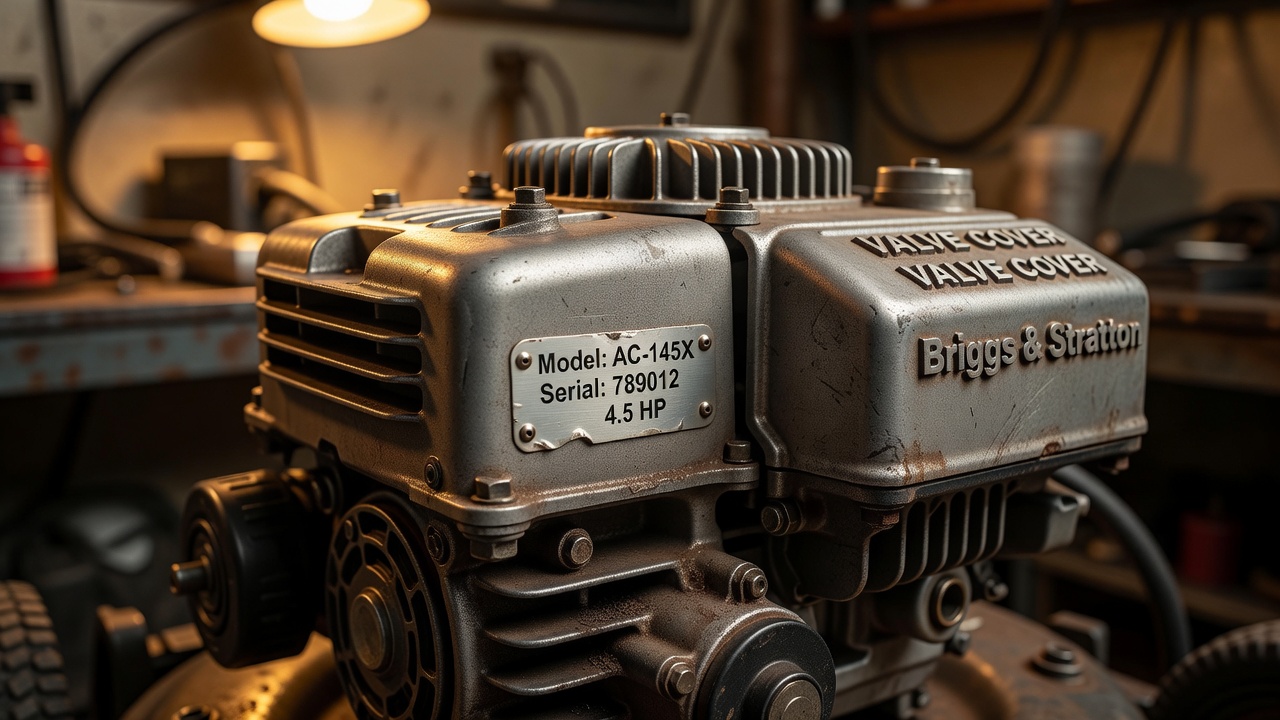
Craftsman riding mowers are built on two major platforms — older MTD-built models and newer CMXGRAM series — and run either a Briggs & Stratton or Kohler engine. The oil capacity, drain plug location, and oil filter presence all differ between these engines. Skipping this identification step is the single most common cause of incorrect fills and stripped plugs.
How to Find Your Engine Type
- Locate the silver or black model tag on the engine block itself (not the mower deck). It sits on the side or top of the engine housing.
- Briggs & Stratton engines display a model number starting with a series like 31R977, 33R877, or similar. The words “Briggs & Stratton” appear in large text on the valve cover.
- Kohler engines display a model prefix of CV (Command Vertical) or KS and carry the Kohler name prominently on the air filter housing.
- The mower’s full model number appears on a sticker under the seat or on the rear frame. Cross-reference it at craftsman.com or sears.com to confirm engine brand and filter fitment.
Does Your Craftsman Mower Have an Oil Filter?
Not every Craftsman riding mower engine includes a spin-on oil filter. Single-cylinder Briggs & Stratton engines on entry-level Craftsman models (typically under 19 HP) often omit the filter; Kohler Command engines and larger Briggs & Stratton V-twin units almost always include one. Look for a cylindrical canister filter on the lower side of the engine block. If none is visible, your engine uses internal screening only — skip the filter replacement step. For broader ecosystem context, read through our operational guide on jbl partybox club 120 vs sony srs xv500.
Drain Plug or Extractor Pump: Which Method Applies to You?
Most Briggs & Stratton OHV and Kohler single-cylinder engines on Craftsman mowers have an accessible drain plug on the underside of the engine. However, on some deck configurations the plug sits directly above the mower blade assembly, making removal without full deck removal impractical. If the plug is blocked, the oil extractor pump method is equally effective and faster. For broader ecosystem context, read through our operational guide on jbl partybox club 120 vs sony srs xv500.
Tools, Oil Type, and Supplies You Need
Oil Type and Capacity
| Engine Type | Recommended Oil | Oil Capacity |
|---|---|---|
| Briggs & Stratton single-cylinder OHV | SAE 30 (above 40°F) / 10W-30 (variable temps) | ~48 oz (1.5 qt) |
| Kohler Command single-cylinder | SAE 30 (above 40°F) / 10W-30 (variable temps) | ~64 oz (2 qt) |
| Briggs & Stratton V-twin (18–26 HP) | 10W-30 or 5W-30 (cold climates) | ~80 oz (2.5 qt) — confirm via dipstick |
SAE 30 is the traditional recommendation for small air-cooled engines operating consistently above 40°F. 10W-30 handles cold morning starts better and is acceptable across a wider temperature range — both Briggs & Stratton and Kohler approve it for their engines. Do not use automotive high-mileage blends or diesel-spec oils unless the engine manual explicitly permits them.
Full Supply Checklist
- New engine oil (SAE 30 or 10W-30) — quantity per table above
- Drain pan (2-quart minimum capacity)
- 3/8 in. or 5/8 in. socket and ratchet (check your drain plug size — vary by engine)
- Oil extractor pump (manual or electric, with a hose thin enough to fit the dipstick tube — typically 6–8 mm)
- Replacement oil filter (if equipped — match by engine model number; common Craftsman/Briggs filter: 491056; common Kohler filter: 52-050-02-S)
- Oil filter wrench (strap or cup style)
- Nitrile gloves and rags
- Sealable container or original oil bottle for used oil transport
- Torque wrench (optional but recommended — drain plug torque is typically 14 ft-lb for Briggs & Stratton)
Safety Steps Before Draining the Oil
These steps are required, not optional. Perform them in order. For troubleshooting and reliability insights, consult our in-depth z890 vs x870e motherboard report.
- Run the engine for 2 minutes. Warm oil flows faster and carries more suspended contaminants out of the engine. Do not exceed 2 minutes — the exhaust becomes a burn hazard and oil temperature climbs beyond safe handling range.
- Shut the engine off completely. Turn the ignition key to OFF. Do not leave the key in the ON position.
- Disconnect the spark plug wire. Pull the rubber boot off the spark plug tip. This prevents accidental engine engagement while your hands are near the undercarriage. On twin-cylinder engines, disconnect both wires.
- Engage the parking brake. Confirm the mower is on a flat, level surface. A slope will cause inaccurate dipstick readings and can allow the mower to roll during drain pan positioning.
- Keep ignition sources away from the drain area. Fresh oil vapor near a still-hot exhaust pipe is a fire hazard. Work in a ventilated space.
How to Change Oil Using the Drain Plug Method
Use this method when the drain plug is accessible without removing the mower deck.
- Locate the oil drain plug. On most Briggs & Stratton engines, the plug is on the lower left side of the engine block, facing the operator. On Kohler Command engines, it is typically on the front-lower face of the block. It is a hex-head bolt, usually 3/8 in. or 5/8 in.
- Position the drain pan directly below the plug. Slide the pan under the engine, not under the deck edge — oil will flow straight down from the plug.
- Remove the oil fill cap on top of the engine. This breaks the vacuum seal and allows oil to drain freely.
- Remove the drain plug. Apply the correct socket, turn counterclockwise. As the plug loosens completely, keep light inward pressure with your palm so the plug does not drop into the drain pan. Pull it clear and set it aside on a rag.
- Allow full drainage for 3–5 minutes. Tilting the mower slightly toward the drain side (front wheel on a 2×4 block) speeds drainage. Do not rush this step — residual old oil left in the engine dilutes fresh oil immediately.
- Replace the oil filter (if equipped). Turn the old filter counterclockwise by hand or with a strap wrench. Wipe the filter mounting base clean. Apply a thin film of fresh oil to the rubber gasket of the new filter. Thread the new filter on by hand until the gasket contacts the base, then tighten an additional 3/4 turn — do not use a wrench to final-tighten a spin-on filter.
- Reinstall the drain plug. Thread it in by hand first to avoid cross-threading. Tighten to hand-tight plus a firm quarter-turn. If using a torque wrench, Briggs & Stratton specifies 14 ft-lb for most single-cylinder engines; Kohler specifies 13.6 ft-lb. Do not overtighten — the aluminum block threads strip easily.
- Refill with fresh oil. Pour slowly through the fill port. Add oil in 8 oz increments and check the dipstick between additions to avoid overfill.
- Check the dipstick and confirm the fill level (see dedicated section below).
- Reconnect the spark plug wire(s).
- Start the engine and run for 30 seconds. Watch underneath for leaks at the drain plug and filter. Shut off and recheck the dipstick after 1 minute (oil must settle back into the pan).
How to Change Oil Using an Oil Extractor Pump (No Drain Plug Access)
Use this method when the drain plug is blocked by the mower deck or blade assembly, or when you prefer a faster, cleaner process. Extraction through the dipstick tube removes oil just as completely as a drain plug when done correctly. Readers comparing setup options can review our technical analysis on marshall stanmore iii vs harman kardon onyx studio 8.
- Confirm the engine is warm and shut off per the safety steps above. The spark plug wire must be disconnected.
- Remove the dipstick and set it on a clean rag.
- Insert the extractor pump hose into the dipstick tube. Feed it down slowly until it contacts the bottom of the oil pan — you will feel slight resistance. Most Craftsman engine dipstick tubes accept a 6 mm extraction hose without forcing.
- Operate the pump. Manual hand-pump extractors require 20–30 strokes to build suction; electric models begin extracting immediately. Pump until no more oil transfers — typically 2–3 minutes for a single-cylinder engine.
- Verify full extraction. Reinsert the dipstick. If it reads below the ADD mark, the pan is essentially empty. A reading between ADD and FULL after extraction indicates remaining oil — reinsert the hose and extract again.
- Replace the oil filter if equipped — follow the same procedure as step 6 in the drain plug method above.
- Remove the extractor hose, refill with fresh oil, and confirm fill level per the dipstick check section below.
- Reconnect the spark plug wire, start the engine, run 30 seconds, and recheck the dipstick after a 1-minute settle period.
How to Check the Oil Level and Confirm a Correct Fill
An incorrect oil level — either overfill or underfill — causes engine damage. Overfilling generates oil foam that loses lubrication properties; underfilling starves bearings within minutes of operation.
- Wipe the dipstick clean with a lint-free rag. Insert it fully into the tube and seat it completely — do not rest it on the threads if the cap screws on.
- Remove and read the dipstick. The oil film must fall between the ADD and FULL marks. On most Craftsman engines, this range represents approximately 8 oz of difference — do not treat the FULL mark as a target to exceed.
- Add oil in 4 oz increments if below ADD. Recheck after each addition.
- If overfilled, extract the excess with the oil extractor pump or use a turkey baster to remove small amounts through the fill port. Do not run an overfilled engine.
- Reinstall the oil fill cap and tighten firmly by hand.
- Run the engine for 30 seconds, shut off, wait 1 minute, and perform a final dipstick check. The level will drop slightly as oil coats internal components and the filter (if new) fills — top off as needed to reach the FULL mark.
If the engine smokes after an oil change: white or blue smoke typically indicates overfill. Shut the engine off immediately, extract excess oil, and recheck. A single thin puff of smoke during the first start after a filter change is normal as the new filter primes. For complementary field maintenance guidelines, examine our breakdown of dyson v8 cyclone vs bissell featherweight stick.
How Often to Change Oil and How to Dispose of Used Oil
Oil Change Interval
Change engine oil every 50 hours of operation or once per mowing season, whichever comes first — this is the standard service interval specified in both Briggs & Stratton and Kohler engine owner’s manuals for residential riding mower engines. Change oil after the first 5 hours on a brand-new engine to flush break-in metal particles. If you mow in dusty, sandy, or high-heat conditions, shorten the interval to every 25 hours.
Track hours using the hour meter if your Craftsman model includes one (standard on CMXGRAM1130036 and similar newer models). On older models without a meter, estimate based on mowing sessions — a typical 1-acre lawn takes approximately 45–60 minutes, putting you at 50 hours after roughly 50–60 mowing sessions.
Used Motor Oil Disposal
Used motor oil is a regulated waste under U.S. EPA guidelines. Do not pour used oil on the ground, into storm drains, or into household trash — a single quart contaminates up to 250,000 gallons of groundwater and is illegal in all 50 states under EPA and state environmental regulations. To evaluate matched hardware tolerances, consult our detailed overview of bissell crosswave hydrosteam vs shark stainforce.
Accepted disposal locations that take used motor oil at no charge in most U.S. states:
- AutoZone — accepts up to 5 gallons per visit at most locations
- O’Reilly Auto Parts — accepts used oil and filters at store locations
- Advance Auto Parts — accepts used motor oil at participating stores
- Municipal household hazardous waste (HHW) collection sites — search your county’s public works website for drop-off schedules
Transfer used oil from the drain pan into a sealed container — the original oil bottle works well — before transporting. Call ahead to confirm current store policy, as individual locations may vary.
Common Questions on How To Change Oil In A Craftsman Riding Lawn Mower Answered
Where is the oil drain plug on a Craftsman riding lawn mower?
On most Craftsman mowers with Briggs & Stratton OHV engines, the drain plug is on the lower-left side of the engine block facing the operator. On Kohler Command engines, it is typically on the front-lower face of the block. If the plug is obstructed by the deck or blade assembly on your model, use the oil extractor pump method through the dipstick tube instead.
What type of oil does a Craftsman riding lawn mower take?
SAE 30 for consistent operating temperatures above 40°F; 10W-30 for areas with variable temperatures or cold morning starts. Both Briggs & Stratton and Kohler approve 10W-30 for their residential riding mower engines. Use a conventional or synthetic oil meeting API SJ or higher classification — do not use diesel-rated or high-mileage automotive blends unless the engine manual approves them.
Can I use an oil extractor pump instead of the drain plug on a Craftsman riding mower?
Yes. Extraction through the dipstick tube is a fully accepted method and removes oil as completely as the drain plug when the engine is warm and the extraction hose reaches the bottom of the oil pan. It is the preferred method on any Craftsman model where the drain plug sits directly above the blade assembly and cannot be accessed without deck removal.
How often should I change the oil in a Craftsman riding lawn mower?
Every 50 hours of operation or once per mowing season — whichever comes first — per Briggs & Stratton and Kohler service schedules. Perform an additional oil change after the first 5 hours on a new engine. In dusty or high-heat operating conditions, shorten the interval to 25 hours to prevent accelerated wear from contaminated oil.
For more detailed testing breakdowns and top recommendations, check our in-depth guide to residential zero-turn lawn mower guide.
For more hands-on benchmarks and buying recommendations, consult our guides on heavy-duty chainsaw buyer guide, as well as high-CFM commercial leaf blower guide.
Mechanical safety standards, operational tolerances, and protective gear guidelines align with benchmark specifications established by the American National Standards Institute (ANSI).
If you require additional technical details and buying criteria, review our analysis of good weed eater.









