

Quick Answer: Are Robot Lawn Mowers Any Good?
Robot lawn mowers are genuinely useful for many homeowners, but they are not a universal upgrade. Their value depends on lawn size, shape, terrain, obstacles, and how much you care about convenience versus control. They tend to work best on relatively open, gently sloped yards and excel at frequent, hands-off maintenance. They struggle with steep grades, fragmented layouts, and wet…

Pros
- Powerful 80V brushless motor delivers 32HP gas-equivalent performance with quiet fume-free operation and no engine maintenance.
- Complete kit includes four 6.0Ah batteries and 600W charger for substantial runtime up to 1.5 acres.
- SmartCut technology and 42-inch heavy-duty steel deck ensure consistent cuts without bogging in tough conditions.
- Versatile towing up to 350 lbs and optional cargo hauling plus comfort features like high-back seat and LED lights.
- Strong 4-year limited warranty and full compatibility with the Greenworks 80V tool ecosystem.
Cons
- Rear utility cargo bed for 200 lb hauling is sold separately and not included in the kit.
- Runtime of up to 1.5 acres varies with conditions and may require recharging or battery swaps on larger properties.
- As a fully cordless model continuous operation depends on battery levels unlike gas engines with unlimited runtime.
The Greenworks 80V 42" CrossoverT Cordless Riding Lawn Tractor is a ready-to-mow zero-emission tractor designed for homeowners managing medium to large lawns. It features a reinforced 42-inch stamped steel deck of 12-gauge construction along with premium comfort elements such as a high-back padded seat with foldable armrests. The overall build emphasizes durability and user convenience right out of the box with the included battery and charger set.
Performance centers on the 80V TruBrushless motor that provides 32HP gas-equivalent power with instant torque and quiet fume-free operation. SmartCut technology senses grass conditions and automatically adjusts power to maintain a consistent cut even in tall thick or wet areas. The four 6.0Ah batteries support runtime for up to 1.5 acres depending on conditions while dual LED headlights and a 7-position deck height range from 1.5" to 4.5" add practicality. Front and rear attachments further allow towing up to 350 lbs for added yard utility.
Key considerations include that the rear utility storage bin capable of hauling 200 lbs is sold separately so full cargo functionality requires an extra purchase. Runtime remains condition-dependent and may fall short for properties significantly larger than 1.5 acres without using the 600W charger or swapping batteries. The cordless design prioritizes ease and low maintenance but trades off the continuous runtime of traditional gas models.
This tractor delivers strong value for eco-conscious owners of residential properties who want gas-like power without the emissions noise or upkeep. It suits those who already use or plan to expand into the Greenworks 80V family of tools and who appreciate the 4-year limited warranty. Users with exceptionally large or commercial-scale lawns should evaluate battery logistics carefully before purchase.

Pros
- Delivers strong 21 horsepower equivalent power comparable to gas riding mowers.
- Provides up to 1.5 acres of runtime on a full charge with the six included batteries.
- Features low-maintenance dual brushless motors without belts for greater durability.
- Offers versatile 12-position cutting height adjustment from 1.5 to 4.5 inches.
- Includes digital controls for blade settings, drive speeds, and cruise control.
Cons
- Limited to 1.5 acres of cutting per charge without purchasing additional batteries for bigger lawns.
- Requires recharging time for the six 56V batteries after each use session.
- Relies solely on battery power with no hybrid or gas backup option for extended operation.
The EGO Power+ TR4204 is a cordless electric riding lawn mower built as a modern tractor alternative for residential use. It features a robust 42-inch stamped steel deck and arrives ready to go with six 56V 6.0Ah batteries plus a charger, creating an immediate impression of convenience and solid construction free from gas engine complexity.
Performance shines through its equivalent 21 horsepower output and top speed of 6 MPH, allowing efficient coverage of up to 1.5 acres on a single charge. Dual brushless cutting motors operate without belts for added durability and less upkeep, while the digital display lets users select three blade settings, three drive speeds, and cruise control. The 12 adjustable heights ranging from 1.5 to 4.5 inches combined with anti-scalp wheels deliver precise results across varied terrain.
Drawbacks center on battery dependency, as larger properties beyond 1.5 acres require extra batteries and recharging intervals can interrupt workflow. The fully electric design eliminates fuel storage needs but demands access to power sources between sessions.
This mower suits homeowners with medium to large yards who value quiet, emission-free operation and reduced maintenance. Those seeking expandable battery capacity for bigger areas will find the EGO Power+ TR4204 a strong long-term investment in cordless lawn care.
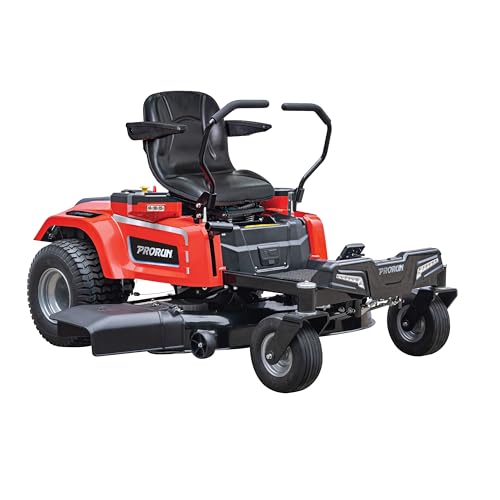
Pros
- High-efficiency brushless motors maximize power output and durability over traditional motors
- Up to 2 acres runtime with three included 10.0 Ah batteries supports substantial mowing sessions
- Zero-emission operation with gas-equivalent 20 HP power for quieter environmentally friendly use
- Six-port auto-switchover battery system provides flexible extended runtime options
- Durable 42-inch steel deck plus included mulch and towing kits add immediate functionality
Cons
- Runtime is limited to approximately 70 minutes or 2 acres which may require recharging for larger properties
- Fully battery-dependent design means performance relies on charge levels and spare battery availability
- 42-inch deck size may require more passes on expansive lawns compared to wider commercial models
The PRORUN PZT60V42 is a fully electric 60V zero-turn riding lawn mower built for residential and light commercial use. Its primary design centers on a robust 42-inch 14-gauge stamped steel twin blade deck powered by direct-drive brushless motors, giving an immediate impression of solid construction and modern battery-focused engineering. The mower arrives complete with three 10.0 Ah batteries, a charger, mulch kit, and towing kit for ready-to-work versatility.
In performance terms, four high-efficiency brushless motors deliver power equivalent to a 20 HP gas engine while producing zero emissions. The system supports up to 2.0 acres or 70 minutes of runtime, and six battery ports with auto switchover intelligently manage all PRORUN 60V battery sizes for continuous operation. A washout port on the steel deck further simplifies post-mow maintenance during real-world sessions.
Potential drawbacks include the finite 70-minute runtime window which can limit coverage on larger properties without spare batteries or recharge breaks. As a fully electric model, it also depends entirely on battery charge levels rather than continuous fuel refills, and the 42-inch deck width may demand extra passes compared with wider traditional options.
Overall the PRORUN PZT60V42 offers strong value for homeowners and small-property managers who want gas-like cutting power without emissions or noise. Those with medium-sized lawns seeking quiet efficient zero-turn performance and included accessories will benefit most from this electric mower.

Pros
- Strong 24HP FR730 engine power for demanding cutting conditions
- Wide 54-inch FAB deck reduces total mowing time
- Zero turn design delivers excellent maneuverability
- Fabricated deck supports durable everyday operation
Cons
- Sparse details beyond engine and deck leave other features unspecified
- Gas-powered FR730 engine needs regular fuel and maintenance
- Large 54-inch deck size may feel oversized on compact properties
The Husqvarna Z254F is a zero turn mower from the established Husqvarna brand in the riding lawn mowers category. It centers on a solid build that pairs a 24HP 726cc FR730 engine with a 54-inch FAB deck for straightforward residential grass care.
Performance stems directly from the listed specifications. The FR730 engine delivers the horsepower needed for steady operation across typical lawns while the wide FAB deck completes passes efficiently. Zero turn handling improves control in real yard layouts based on the model design.
Considerations arise from the limited data available. Secondary elements such as comfort features fuel capacity or extras receive no mention and the gas engine format involves routine upkeep. The large deck suits open areas better than confined spaces.
The Husqvarna Z254F provides the most value for owners of medium or large properties who want reliable engine power and a broad cutting width. Users with smaller lots or those seeking extensive accessory options should weigh the core specs carefully before purchase.
How Robot Lawn Mowers Actually Work
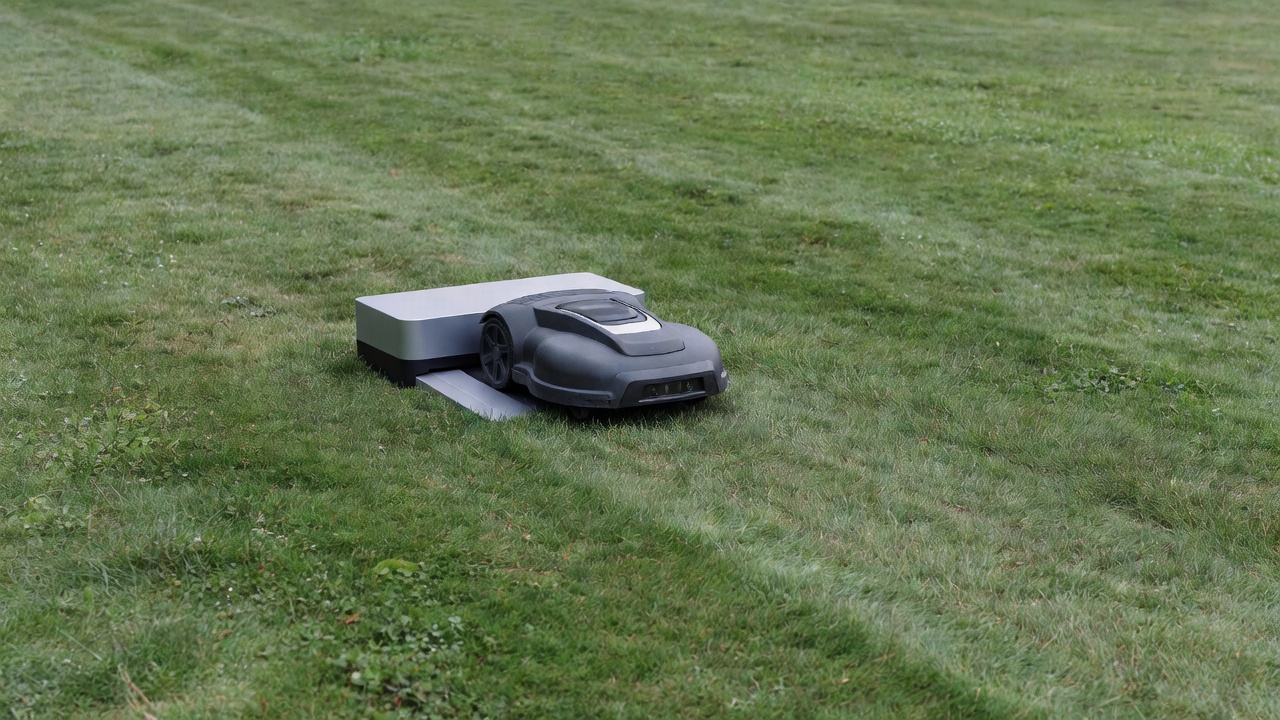
A robot lawn mower is a battery-powered machine that cuts grass on a schedule without someone walking behind it or riding on it. Most of the time it lives at a charging dock, leaves on its own, mows a portion of the lawn, and returns to recharge. The point is not to finish the whole yard in one dramatic pass. It is to visit the grass often enough that growth never gets ahead of the cut.
The basic operating principle
Traditional mowers remove a lot of grass at once. Robot mowers take the opposite approach. They usually run several times a week and remove only a little growth each visit. That frequent, light cutting is why many owners notice a more even look over time, provided the machine can actually reach every part of the lawn.
Because the robot works in short sessions, battery life and runtime matter more as a scheduling issue than as a single-session endurance contest. A smaller yard may be covered in one outing. A larger or more complicated yard may take several trips from the charging station across a day or a week. If the machine spends too much time traveling back to the dock, coverage suffers even if the mower itself is working as designed.
How they navigate and stay within bounds
A robot mower only works if it knows where the lawn ends. The most common method is a boundary wire, also called a perimeter wire. You install that wire around the edge of the cutting area and usually around islands you want the mower to avoid, such as flower beds, ponds, or play structures. The mower senses the signal from the wire and treats it as a fence. If the loop is broken, poorly buried, or routed around a layout the machine cannot interpret, the robot may leave gaps, bounce around inefficiently, or stop altogether.
Some newer systems rely more on GPS navigation or other wireless mapping instead of, or in addition to, a physical wire. These can reduce trenching and make later layout changes easier, but they still need a defined work area and a reliable way to return to the charging dock. Trees, buildings, dense shade, and awkward property lines can complicate wireless mapping just as buried obstacles can complicate a wire. Neither approach is magic. Both are ways of telling a small machine, “this is grass, that is not.”
Inside the boundary, navigation styles vary. Some robots wander in a somewhat random pattern and rely on frequent visits to even things out. Others follow more systematic routes. Almost all use sensors to react to bumps, lift events, or sudden drops. Obstacle detection helps the mower turn away from trees, furniture, and toys. Cliff detection is meant to keep it from driving off a terrace or into a steep drop. These systems reduce collisions; they do not give the machine human judgment. A hose, a low wire, a child’s toy, or a shallow hole can still confuse it. For troubleshooting and reliability insights, consult our in-depth jbl partybox club 120 vs sony srs xv500 report.
What the blades do with the grass
Most robot mowers use small, sharp mulching blades rather than a large bagging deck. They chop clippings into fine pieces and leave them on the lawn. In a healthy, regularly cut yard, those clippings can return nutrients and moisture to the soil. That is a real advantage when the system is working. It is also why these machines dislike tall, wet, or neglected grass. Thick clumps clog the deck, dull blades faster, and leave a messy surface. For troubleshooting and reliability insights, consult our in-depth jbl partybox club 120 vs sony srs xv500 report.
A robot mower is a maintenance tool, not a rescue tool. It can keep an already reasonable lawn tidy. It is a poor choice for knocking down a meadow, clearing storm debris, or cutting ornamental grasses and weeds that a conventional mower would struggle with as well. Edges against fences, walls, and tight corners often still need a trimmer. Many owners keep a string trimmer or a small backup mower for those leftover jobs.
What Robot Mowers Do Well
The honest case for a robot mower is convenience plus consistency, not spectacle. If your lawn is a good fit, the machine can take over the most repetitive part of yard work and do it more often than most people will do it themselves. Readers comparing setup options can review our technical analysis on z890 vs x870e motherboard.
When they outperform a traditional mower
A push mower or riding mower is usually better at one hard job: cutting a lot of grass quickly, including taller growth, after rain delays, or on a yard that is too large or too broken up for a small autonomous deck. A robot mower is usually better at a different job: keeping grass at a steady height week after week without you blocking out Saturday mornings.
Frequent cutting is the category’s main agronomic strength. Grass that is never allowed to get long often looks denser, and the mulched clippings are easier for the lawn to absorb. You also avoid the cycle of letting the yard get shaggy, then scalping it in one sweaty session. That benefit only appears if the robot can reach the whole lawn on a reliable schedule. Coverage gaps cancel the advantage. For complementary field maintenance guidelines, examine our breakdown of marshall stanmore iii vs harman kardon onyx studio 8.
Convenience, labor, and time
The labor difference is real. You are not pushing a deck, emptying a bag, or climbing on a rider every week. Scheduling and automation handle the routine. Many owners set mowing windows around school runs, quiet hours, or times when pets are indoors, then let the machine work in the background. That is the feature people are actually buying: the chore happens without them.
It is still not zero work. Someone has to install the system, keep the path to the charging dock clear, pick up debris, check blades, and deal with stuck machines. The time you save is mowing time, not all lawn time. Compared with a push mower, the reduction in physical effort is substantial. Compared with a riding mower on a large, simple field, the time comparison is less flattering because the rider can cover ground faster when conditions are good. To evaluate matched hardware tolerances, consult our detailed overview of dyson v8 cyclone vs bissell featherweight stick.
Noise is another practical plus for many households, even without quoting decibel figures. Electric robot mowers are generally quieter than gas machines, which makes daytime or early-evening operation less disruptive. That does not make them silent, and neighbors can still notice a unit that runs for hours on a looping path.
What “good cutting” usually means here
If you judge a mower by a single, striped, just-cut look, a well-operated traditional mower can still win. If you judge it by whether the lawn stays neat most of the season with little involvement from you, a well-sited robot often wins. The finish depends on blade sharpness, cutting height, grass type, moisture, and whether the machine is leaving uncut islands. A robot will not hide a lawn that is already thin, weedy, or badly graded. It will, at best, keep that lawn shorter. When planning workspace deployment, consider the engineering criteria outlined in our bissell crosswave hydrosteam vs shark stainforce guide.
Lawns and Situations Where Robot Mowers Struggle
Most disappointment with robot mowers comes from a mismatch, not from the idea being fake. The same machine that looks brilliant on a simple suburban rectangle can look lost on a hillside property broken up by gardens, trees, and retaining walls.
Size, shape, and fragmentation
Robot mowers are generally better suited to smaller and mid-size lawns than to large estates. As the area grows, the machine needs more runtime, more return trips to the charging station, and more faultless navigation. Very large properties often need more than one unit, a much more capable model, or a conventional mower that can finish the job in a single session.
Shape matters as much as size. A compact, mostly open lawn with a simple perimeter is the easy case. A long, narrow yard, a lot with many separate grass patches, or a property split by driveways and planting beds forces the mower to travel through corridors and may require several defined zones. Every extra island means more boundary work and more chances that the robot will spend its battery commuting instead of cutting.
Slopes, terrain, and obstacles
Slope and terrain limitations are among the most common deal-breakers. Robot mowers are compact and relatively light. On gentle rolls they are fine. On steep banks they can lose traction, slip sideways, or refuse to climb, especially when grass is wet. Models differ in how much grade they can handle, so the limit is a specification you must check against your actual hills rather than assume. If you have terraces, sharp drop-offs, or a lawn that becomes a slide after rain, treat that as a warning sign.
Obstacles compound the problem. Trees, swing sets, garden statues, exposed roots, shallow steps, and patio furniture all interrupt the path. Obstacle detection helps the mower turn away, but a cluttered lawn produces a patchwork of uncut fringes and repeated bump-and-turn behavior. Low objects are worse than tall ones because the machine may climb them or catch a blade. Temporary clutter is worse still: hoses, balls, pet toys, and holiday decorations appear and disappear, and the robot has no idea which of those objects belong there.
Uneven ground is its own issue. Ruts, mole hills, and poorly leveled soil can high-center a small chassis or cause scalping. A robot does not float over bad grading the way a heavier conventional deck sometimes can.
Weather, moisture, and season
Weather and moisture limitations affect robot mowers more than many buyers expect. Wet grass clumps, reduces traction, and can push the machine outside its intended path. Heavy rain, standing water, and soggy soil are reasons to pause operation. Many units have rain sensors or app-based weather rules, but those features only help if you accept downtime. After a storm you may still need to clear sticks and leave the lawn alone until it dries.
Seasonal limits are ordinary lawn limits, not unique robot failures. In peak spring growth the schedule may need to be more aggressive. In drought or dormancy the mower should run less, or not at all, so it does not stress already struggling turf. In leaf season, a robot is not a leaf vacuum. A heavy carpet of leaves will block cutting and can bury the boundary or the dock path. Winter storage is usually required in freezing climates because batteries, plastics, and charging contacts do not enjoy sitting outside unused in ice and slush.
Heavy shade is a quieter problem. If grass already grows poorly under trees, frequent cutting will not create a lush carpet. It may simply reveal thin turf more clearly. A robot cannot compensate for soil, water, or light problems.
Setup, Installation, and Ongoing Maintenance
Ownership starts before the first autonomous cut. Poor setup is one of the most common reasons people decide a robot mower is “not good,” when the real issue is that the boundary, dock, or schedule never matched the yard.
What initial setup actually involves
Plan on a project, not an unbox-and-forget afternoon, especially if you are using boundary wire. You need a charging dock on firm, fairly level ground with access to power and a clear approach so the mower can dock reliably. The perimeter wire has to follow the true edge of the cutting area, stay the recommended distance from drop-offs and obstacles, and form a continuous loop. Corners, gates, narrow passages, and islands are where DIY layouts usually go wrong.
Some people staple the wire to the surface and let grass grow over it. Others bury it. Burying looks cleaner and protects the wire from mowers, pets, and feet, but it is more labor and makes later changes harder. Installation complexity rises quickly with irregular lots. A simple rectangle can be straightforward. A multi-zone garden may justify professional installation, both to place the wire correctly and to avoid damaging irrigation, cables, or drainage. If you are unsure what is underground, treat locating utilities as a necessary step, not an optional one.
GPS-assisted or wire-free systems shift the work from trenching to mapping and calibration. That can be easier physically, but you still have to teach the machine the lawn, confirm that it returns home, and test edge behavior. Either way, the first weeks are a commissioning period. Expect to watch a few runs, adjust the boundary or map, and change the schedule after you see what the machine actually does rather than what the box implied.
Ongoing care
Robot mowers are low-effort, not no-effort. Blades need regular inspection and replacement or sharpening because they are small and they hit whatever you failed to pick up. Dull blades tear grass instead of cutting it, which browns tips and makes the lawn look worse even if the height is correct. The underside of the deck collects packed clippings, especially in damp weather, and that buildup hurts both cut quality and cooling.
The charging dock needs a clear, stable pad. Grass growing over contacts, a dock that has shifted on soft soil, or a path blocked by a hose will produce missed sessions that look like random failure. Wheels and chassis should be kept free of twine, hair, and mud. In colder climates, seasonal storage usually means cleaning the unit, charging or storing the battery as the manual directs, and protecting the dock from winter damage. Smart models may also need firmware updates; those can improve behavior, but they are one more reason to keep the system on a supported app and a reliable network if the manufacturer designed it that way.
What goes wrong, and how owners usually fix it
Typical problems are mundane. The mower gets stuck under a low branch, high-centered on a root, or trapped in a narrow alley. It fails to dock because the approach is crooked. It leaves a strip uncut because the boundary was placed too far from an edge or because a new planter created an island the map does not include. It stops after a wire break, a lifted chassis, or a rain delay. Troubleshooting is mostly walk-the-yard work: look for debris, inspect the loop, watch one full cycle, and change one variable at a time.
If the lawn was never a good candidate, no amount of fiddling will make the robot behave like a riding mower. That is why a trial period of close observation matters more than any marketing claim about “set it and forget it.”
Cost, Durability, and Long-Term Value
Whether a robot mower is “worth it” is a value judgment, not a math identity. Upfront cost is generally higher than that of many walk-behind mowers and can rival or exceed a modest riding mower, depending on capacity and navigation features. Ongoing fuel cost is usually lower because the machine uses household electricity in small doses rather than gasoline. How that comparison lands in your household depends on local energy prices, how often you currently mow, and whether you would otherwise pay a lawn service.
There is no honest universal payback period. A person who hates mowing, already pays for weekly service, and has a simple yard may recoup the inconvenience quickly even if the cash payback is slow. A person who enjoys a Saturday ride-on session on a huge, open lot may never come out ahead. Treat convenience as the product. Treat any fuel or labor savings as a possible bonus, not a promise.
What wears out
The parts that live hardest are blades, wheels, and the battery. Blades are consumables. Battery replacement is a future cost you should assume, not a surprise, because rechargeable packs lose capacity with age, heat, and charge cycles. How many seasons a pack lasts varies too widely by climate, runtime, and storage habits to pin to a single number. When the battery fades, the mower may still run but cover less ground per charge, which quietly ruins the schedule.
Long-term durability data for the category is still thinner than for conventional mowers that have been in sheds for decades. A robot has more electronics, more sensors, and more software. That can mean better diagnostics. It can also mean a machine that is expensive to repair after a board, motor, or docking fault, especially once it is outside any warranty. Warranty terms differ by maker and are not something to generalize. Read the actual coverage for outdoor electronics, batteries, and theft before you buy, and keep the unit identifiable and, if the design allows, locked or alarmed.
Theft and vandalism are practical ownership costs in some neighborhoods. A machine that sits outside unattended is a target in a way a mower stored in a locked garage is not. Placement of the dock, visibility from the street, and any anti-theft features the model offers should be part of the value calculation.
Safety, Children, and Pets
Robot mowers have moving blades. That is the central safety fact, and it does not disappear because the machine is small or electric. They are not toys, and they are not risk-free around children or animals. Treat them with the same seriousness you would give any unattended cutting tool.
Most modern units include lift sensors, tilt sensors, collision detection, and an emergency stop. Many stop the blades quickly if the chassis is raised or overturned. Boundary containment is also a safety tool: it is meant to keep the mower on the lawn and away from streets, pools, and play areas. None of those features is a guarantee. Sensors can be defeated by grass buildup, unusual obstacles, or a machine that is overdue for service. A boundary wire does not replace adult judgment about when the yard is a play space and when it is a work zone.
Practical precautions are simple and worth repeating. Keep people and pets off the lawn while the mower is running, especially young children who may try to ride, block, or flip it. Pick up debris, wire, stones, and toys before a scheduled run so the blades are not throwing objects. Do not let the machine operate near unsupervised water features or steep drops. Teach older children that the robot is equipment, not a pet. If a dog is likely to chase, bite, or guard the unit, do not run it while that animal is loose. Follow the manufacturer’s manual for stopping, lifting, and blade service; disconnect power as instructed before you put hands near the deck.
If your household cannot reliably separate playtime from mowing time, a robot’s convenience shrinks. A machine that must be paused whenever someone is outside may still help, but it will not deliver the fully hands-off routine the category is sold on.
Making Your Decision: Is One Right for Your Lawn?
“Good” is subjective. A robot lawn mower is a trade-off: you exchange money, setup effort, and some control for frequent cutting and less physical work. The right question is not whether the category works. It is whether it works on your ground, for your habits.
A practical self-check
Walk the property with these questions in mind:
- Is the lawn a mostly connected area of manageable size, or a large patchwork of small zones?
- Is the ground flat to gently rolling, or does it include banks that feel steep underfoot when wet?
- Can you define a simple perimeter, or will the boundary have to thread through gardens, gates, and obstacles?
- Is the yard usually clear of toys, hoses, and clutter, or is it a living play space most afternoons?
- Do you have a sensible place for a charging dock with power and a straight approach?
- Will weather in your climate leave enough dry operating windows during the growing season?
- Are you willing to install the system carefully and do light weekly checks, or do you want a tool that works with almost no onboarding?
- Do you value convenience more than the ritual and control of mowing it yourself?
If most answers point to a simple, moderately sized, reasonably tidy lawn and a household that will respect the machine’s limits, a robot mower is often a good fit. If most answers point to steep ground, chaos, huge acreage, or a desire to cut tall grass on demand, keep a conventional mower. Some households reasonably own both: the robot for weekly maintenance and a backup machine for edges, overgrowth, and cleanup after storms.
Mechanical safety standards, operational tolerances, and protective gear guidelines align with benchmark specifications established by the American National Standards Institute (ANSI).
To see how this matches real-world operating conditions, see our complete guide on how to operate husqvarna riding lawn mower.
How to weigh convenience, cost, and cut quality
Rank the three outcomes instead of hunting for a product that maximizes all of them. Convenience is the robot’s strongest card. Cut quality can be excellent in the sense of consistent height and mulched clippings, but it will not automatically beat a skilled operator with a sharp conventional deck, especially on edges and after interruptions. Cost is the weakest argument for buying one unless you are replacing paid labor or you place a high personal value on free weekends. Paying more for autonomy only makes sense if autonomy is what you actually want.
Be skeptical of marketing that implies a robot will transform any yard into a showpiece, run in any weather, or eliminate every other lawn tool. Realistic expectations look like this: the grass stays shorter more of the time; you still walk the yard; you still edge; you still pick things up; you still service blades and the battery; and you still need a plan for hills, leaves, and winter. When those expectations match the property, robot lawn mowers are not a gimmick. They are a specialized, effective way to maintain the right kind of lawn. When they do not match, the same machines become expensive ornaments that miss strips, get stuck, and leave you dragging the old mower out anyway.
Decide from the lawn you have, not the lawn in the brochure. That is the difference between a robot mower that feels like a genuine upgrade and one that feels like a bad bet.









