

Quick Answer: How Much Does A Riding Mower Weigh?
Riding mower weight varies by type and size. Many residential models typically fall around 300–600 pounds, while zero-turn and commercial machines often weigh 600–1,000 pounds or more. Deck width, engine size, fuel, attachments, and frame materials drive most of the difference. Check the manufacturer’s dry or shipping weight, then add fluids and accessories for transport or storage planning.

Pros
- Powerful 80V brushless motor delivers 32HP gas-equivalent performance with quiet fume-free operation and no engine maintenance.
- Complete kit includes four 6.0Ah batteries and 600W charger for substantial runtime up to 1.5 acres.
- SmartCut technology and 42-inch heavy-duty steel deck ensure consistent cuts without bogging in tough conditions.
- Versatile towing up to 350 lbs and optional cargo hauling plus comfort features like high-back seat and LED lights.
- Strong 4-year limited warranty and full compatibility with the Greenworks 80V tool ecosystem.
Cons
- Rear utility cargo bed for 200 lb hauling is sold separately and not included in the kit.
- Runtime of up to 1.5 acres varies with conditions and may require recharging or battery swaps on larger properties.
- As a fully cordless model continuous operation depends on battery levels unlike gas engines with unlimited runtime.
The Greenworks 80V 42" CrossoverT Cordless Riding Lawn Tractor is a ready-to-mow zero-emission tractor designed for homeowners managing medium to large lawns. It features a reinforced 42-inch stamped steel deck of 12-gauge construction along with premium comfort elements such as a high-back padded seat with foldable armrests. The overall build emphasizes durability and user convenience right out of the box with the included battery and charger set.
Performance centers on the 80V TruBrushless motor that provides 32HP gas-equivalent power with instant torque and quiet fume-free operation. SmartCut technology senses grass conditions and automatically adjusts power to maintain a consistent cut even in tall thick or wet areas. The four 6.0Ah batteries support runtime for up to 1.5 acres depending on conditions while dual LED headlights and a 7-position deck height range from 1.5" to 4.5" add practicality. Front and rear attachments further allow towing up to 350 lbs for added yard utility.
Key considerations include that the rear utility storage bin capable of hauling 200 lbs is sold separately so full cargo functionality requires an extra purchase. Runtime remains condition-dependent and may fall short for properties significantly larger than 1.5 acres without using the 600W charger or swapping batteries. The cordless design prioritizes ease and low maintenance but trades off the continuous runtime of traditional gas models.
This tractor delivers strong value for eco-conscious owners of residential properties who want gas-like power without the emissions noise or upkeep. It suits those who already use or plan to expand into the Greenworks 80V family of tools and who appreciate the 4-year limited warranty. Users with exceptionally large or commercial-scale lawns should evaluate battery logistics carefully before purchase.

Pros
- Delivers strong 21 horsepower equivalent power comparable to gas riding mowers.
- Provides up to 1.5 acres of runtime on a full charge with the six included batteries.
- Features low-maintenance dual brushless motors without belts for greater durability.
- Offers versatile 12-position cutting height adjustment from 1.5 to 4.5 inches.
- Includes digital controls for blade settings, drive speeds, and cruise control.
Cons
- Limited to 1.5 acres of cutting per charge without purchasing additional batteries for bigger lawns.
- Requires recharging time for the six 56V batteries after each use session.
- Relies solely on battery power with no hybrid or gas backup option for extended operation.
The EGO Power+ TR4204 is a cordless electric riding lawn mower built as a modern tractor alternative for residential use. It features a robust 42-inch stamped steel deck and arrives ready to go with six 56V 6.0Ah batteries plus a charger, creating an immediate impression of convenience and solid construction free from gas engine complexity.
Performance shines through its equivalent 21 horsepower output and top speed of 6 MPH, allowing efficient coverage of up to 1.5 acres on a single charge. Dual brushless cutting motors operate without belts for added durability and less upkeep, while the digital display lets users select three blade settings, three drive speeds, and cruise control. The 12 adjustable heights ranging from 1.5 to 4.5 inches combined with anti-scalp wheels deliver precise results across varied terrain.
Drawbacks center on battery dependency, as larger properties beyond 1.5 acres require extra batteries and recharging intervals can interrupt workflow. The fully electric design eliminates fuel storage needs but demands access to power sources between sessions.
This mower suits homeowners with medium to large yards who value quiet, emission-free operation and reduced maintenance. Those seeking expandable battery capacity for bigger areas will find the EGO Power+ TR4204 a strong long-term investment in cordless lawn care.
Pros
- High-efficiency brushless motors maximize power output and durability over traditional motors
- Up to 2 acres runtime with three included 10.0 Ah batteries supports substantial mowing sessions
- Zero-emission operation with gas-equivalent 20 HP power for quieter environmentally friendly use
- Six-port auto-switchover battery system provides flexible extended runtime options
- Durable 42-inch steel deck plus included mulch and towing kits add immediate functionality
Cons
- Runtime is limited to approximately 70 minutes or 2 acres which may require recharging for larger properties
- Fully battery-dependent design means performance relies on charge levels and spare battery availability
- 42-inch deck size may require more passes on expansive lawns compared to wider commercial models
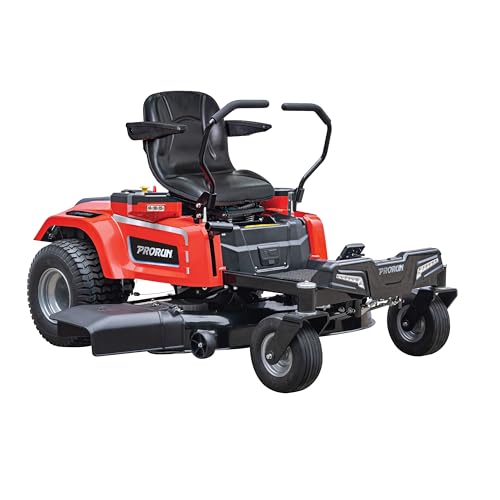
The PRORUN PZT60V42 is a fully electric 60V zero-turn riding lawn mower built for residential and light commercial use. Its primary design centers on a robust 42-inch 14-gauge stamped steel twin blade deck powered by direct-drive brushless motors, giving an immediate impression of solid construction and modern battery-focused engineering. The mower arrives complete with three 10.0 Ah batteries, a charger, mulch kit, and towing kit for ready-to-work versatility.
In performance terms, four high-efficiency brushless motors deliver power equivalent to a 20 HP gas engine while producing zero emissions. The system supports up to 2.0 acres or 70 minutes of runtime, and six battery ports with auto switchover intelligently manage all PRORUN 60V battery sizes for continuous operation. A washout port on the steel deck further simplifies post-mow maintenance during real-world sessions.
Potential drawbacks include the finite 70-minute runtime window which can limit coverage on larger properties without spare batteries or recharge breaks. As a fully electric model, it also depends entirely on battery charge levels rather than continuous fuel refills, and the 42-inch deck width may demand extra passes compared with wider traditional options.
Overall the PRORUN PZT60V42 offers strong value for homeowners and small-property managers who want gas-like cutting power without emissions or noise. Those with medium-sized lawns seeking quiet efficient zero-turn performance and included accessories will benefit most from this electric mower.

Pros
- Strong 24HP FR730 engine power for demanding cutting conditions
- Wide 54-inch FAB deck reduces total mowing time
- Zero turn design delivers excellent maneuverability
- Fabricated deck supports durable everyday operation
Cons
- Sparse details beyond engine and deck leave other features unspecified
- Gas-powered FR730 engine needs regular fuel and maintenance
- Large 54-inch deck size may feel oversized on compact properties
The Husqvarna Z254F is a zero turn mower from the established Husqvarna brand in the riding lawn mowers category. It centers on a solid build that pairs a 24HP 726cc FR730 engine with a 54-inch FAB deck for straightforward residential grass care.
Performance stems directly from the listed specifications. The FR730 engine delivers the horsepower needed for steady operation across typical lawns while the wide FAB deck completes passes efficiently. Zero turn handling improves control in real yard layouts based on the model design.
Considerations arise from the limited data available. Secondary elements such as comfort features fuel capacity or extras receive no mention and the gas engine format involves routine upkeep. The large deck suits open areas better than confined spaces.
The Husqvarna Z254F provides the most value for owners of medium or large properties who want reliable engine power and a broad cutting width. Users with smaller lots or those seeking extensive accessory options should weigh the core specs carefully before purchase.
That range is a planning guide, not a substitute for the specification sheet on a specific model. Two mowers with the same cutting width can differ by a large margin if one is a light lawn tractor and the other is a fabricated-deck commercial machine. The useful question is not only “how much does a riding mower weigh?” but “which weight applies to the machine I will store, trailer, or roll across my lawn?”
Weight Ranges by Riding Mower Type
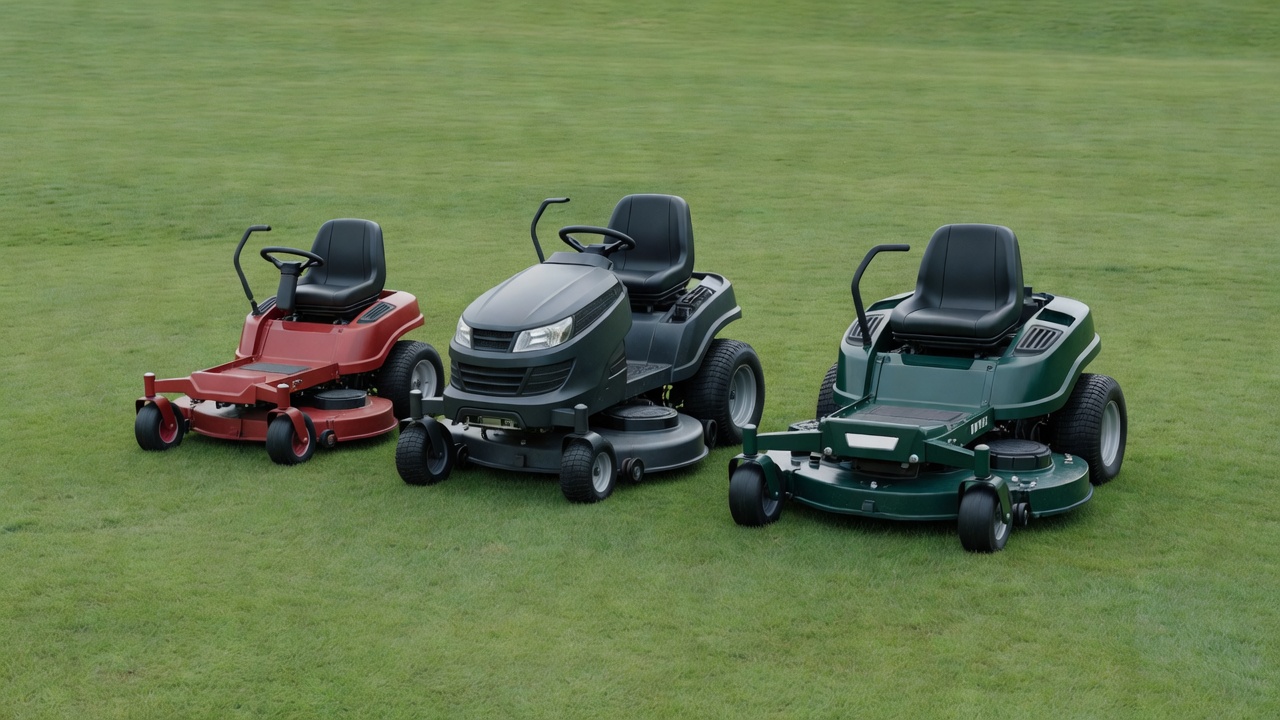
Manufacturers usually publish a dry weight, a shipping weight, or both. Dry weight is the machine without fuel and sometimes without fluids. Shipping weight can include packaging, a crate, or fluids added at the factory. Operating weight is higher still once you add gasoline, the operator, a bagger, or a blade. When people quote a single number, they are usually repeating dry or shipping weight.
The bands below are typical planning ranges drawn from how these machines are commonly built and specified. Individual models sit outside them. Always confirm the figure for the exact model year and deck option. For troubleshooting and reliability insights, consult our in-depth jbl partybox club 120 vs sony srs xv500 report.
Small residential riding mowers
Entry-level rear-engine riders and compact lawn tractors sit at the light end of riding mower weight. They use smaller engines, narrower decks, simpler transmissions, and less steel in the frame and hood. Many machines in this class are listed in the lower portion of the residential band, often toward the 300-pound side of that range when measured dry, though a wider deck or extra features can push them higher. For troubleshooting and reliability insights, consult our in-depth jbl partybox club 120 vs sony srs xv500 report.
These mowers are aimed at modest yards where the owner wants to sit instead of walk. Lighter mass makes them easier to push by hand in a garage, easier to load with modest ramps, and less demanding on a small utility trailer. The tradeoff is capacity: they usually have less drawbar strength, smaller fuel tanks, and decks that take longer to finish a large property.
Mid-size residential lawn tractors
The most common homeowner lawn tractor occupies the middle and upper part of the 300–600 pound residential range. A 42- to 54-inch stamped deck, a single- or twin-cylinder engine, hydrostatic drive, and a steel frame add up quickly. Hoods, fenders, a larger seat, and a battery all contribute. Two otherwise similar tractors can differ by tens of pounds based on whether the deck is a basic stamped shell or a heavier fabricated assembly. Readers comparing setup options can review our technical analysis on z890 vs x870e motherboard.
This is the class most people mean when they ask about residential riding mower weight. It is heavy enough that you should not assume one person can lift a corner onto a high tailgate, and light enough that many half-ton pickups and small trailers can haul it if payload, hitch rating, and ramp rating are checked first.
Garden tractors and heavy residential machines
Garden tractors are built to pull tillers, carts, and snow equipment more often than a basic lawn tractor. Frames, axles, and hitches are thicker. Transmissions are stronger. Optional cabs, larger rear tires, and wider decks move these machines toward the top of the residential band and sometimes past it. If you treat a garden tractor as if it weighed the same as a compact rider, you can overload ramps or a light-duty trailer. For complementary field maintenance guidelines, examine our breakdown of marshall stanmore iii vs harman kardon onyx studio 8.
Some premium residential zero-turn mowers also live in this heavier homeowner zone. Dual hydrostatic pumps, a wider fabricated deck, and a sturdier chassis can put a “homeowner” zero-turn closer to light commercial weight than to a small rear-engine rider.
Zero-turn mower weight
Zero-turn radius mowers overlap several classes. Compact residential zero-turns may sit near mid-size lawn tractors. Full-size residential and light commercial zero-turns commonly move into the 600–1,000 pound area. Wide commercial decks, large twin engines, oversized fuel tanks, and roll-over protective structures push many professional units to 1,000 pounds and beyond. To evaluate matched hardware tolerances, consult our detailed overview of dyson v8 cyclone vs bissell featherweight stick.
Weight is not evenly distributed. A zero-turn carries much of its mass over the drive tires at the rear, with casters up front. That layout affects trailer loading, ramp behavior, and how the machine sits on soft ground. A published dry weight does not tell you how much tongue weight you will see if the mower is parked nose-forward or tail-forward on a trailer.
Commercial riding mower weight
Commercial riding mowers are built for hours of daily use. Thicker frames, fabricated decks, heavier spindles, larger hydro systems, ROPS, bigger batteries, and dual fuel tanks all add mass. Many commercial walk-behind and ride-on units fall in a 600–1,000-plus pound band; large wide-area or front-mount professional machines can be substantially heavier than a typical zero-turn used on a home lawn. When planning workspace deployment, consider the engineering criteria outlined in our bissell crosswave hydrosteam vs shark stainforce guide.
If you are comparing a residential tractor-style mower with a commercial zero-turn of similar cutting width, expect the commercial machine to be the heavier of the two in most cases. The extra weight is not accidental. It is the cost of stiffness, durability, and the ability to hold a wide deck flat at speed.
| Mower category | Typical published weight band | What usually drives the number |
|---|---|---|
| Small residential rider / compact lawn tractor | Lower residential range (often near 300 lbs dry, higher with options) | Narrow deck, smaller engine, simpler drivetrain |
| Mid-size residential lawn tractor | About 300–600 lbs | 42–54 in class decks, hydro drive, steel bodywork |
| Residential / light commercial zero-turn | Often mid-hundreds to about 1,000 lbs | Dual hydros, wider deck, heavier chassis |
| Commercial zero-turn and pro riders | Often 600–1,000+ lbs; large units can exceed that | Fabricated decks, ROPS, large tanks, heavy spindles |
Key Factors That Affect Riding Mower Weight
Spec sheets vary because riding mowers are assemblies of steel, iron, fluids, and options. Understanding the parts that move the scale helps you compare two listings that look similar on paper.
How deck width affects weight
The cutting deck is one of the largest single contributors after the chassis. A wider deck uses more steel in the shell, more spindles, longer belt paths, extra idlers, and a heavier hanger or lift system. A 60-inch or larger deck is not simply a 42-inch deck with extra tin. It usually requires a stronger frame, more horsepower, and more robust lift linkage, so the whole machine grows.
Deck construction matters as much as width. Stamped decks are formed from sheet steel and are common on residential mowers. Fabricated decks are welded from thicker plate and are common on commercial equipment. Two 54-inch decks can differ by a noticeable amount if one is stamped and the other is a commercial fabricated unit with reinforced corners and heavier baffles. Spindle housings, blades, and pulley stacks add more mass at the outer edges, which also changes how the mower feels on a trailer or a slope.
Side-discharge chutes, mulch plugs, and bagging adapters are easy to forget. A triple-bagger with tubes, a hopper, and a mounting rack can add a substantial accessory load. If you buy a mower “ready to bag,” treat that package as part of riding mower weight for storage and towing, not as a free extra.
Engine size and related hardware
Engine displacement is a useful clue, not a complete explanation. A larger twin-cylinder engine weighs more than a small single, but the engine also forces other changes: a heavier crank support, more cooling sheet metal, a larger exhaust, a stronger clutch or pump drive, and sometimes a bigger battery to turn a higher-compression engine. Commercial twins with extra cooling and heavier flywheels add still more.
Electric-start gasoline mowers carry a lead-acid or similar starting battery. That battery is only a modest share of total weight, but it is enough to matter when you are close to a trailer or ramp limit. Fully electric riding mowers shift mass from the fuel tank and engine block into battery packs. Pack weight varies widely by voltage and capacity, so an electric model should be judged from its own specification sheet rather than from gasoline class averages.
Fuel capacity and other fluids
Gasoline weighs roughly six pounds per gallon. A small residential tank of a few gallons is a modest add-on. A commercial mower with a large tank, or dual tanks, can add several dozen pounds when filled. That is why dry weight and a full operating weight are not interchangeable.
Engine oil, hydraulic oil in hydrostatic transmissions, and coolant in liquid-cooled commercial engines also add mass. Hydrostatic systems on zero-turns hold a meaningful volume of fluid compared with a simple gear transaxle. If you are calculating trailer payload, assume the machine will be transported with fluids in it unless you have a specific reason to drain them. Do not drain fuel or hydraulics as a weight trick unless the manufacturer’s service information tells you how to do it safely; fuel handling and hydraulic service have fire and environmental hazards.
Frame materials and build quality
Most riding mowers still rely on steel frames. Thickness, cross-bracing, axle design, and whether the frame is a simple channel or a fully welded commercial chassis explain a large share of the gap between residential and commercial riding mower weight. Cast-iron axle housings, heavy transaxles, and steel running boards add more than plastic body panels do.
Some consumer machines use more polymer in hoods and fenders to save cost and a little mass. That can shave pounds without changing the steel structure that actually carries the deck and engine. Looking at body material alone will mislead you. ROPS bars, seat platforms, and floor pans on commercial units are structural and heavy. A folding ROPS still weighs a lot; it only changes height for storage.
Attachments, tires, and options
Tires and wheels vary. Turf tires, bar treads, wheel weights, and tire ballast change both total weight and how that weight meets the ground. Wheel weights and liquid ballast are sometimes used for traction or stability with snow equipment; they can move a machine well outside its brochure weight.
Common add-ons that change the number you should plan around include:
- Baggers, dump carts, and hitch-mounted spreaders
- Snow blades, rotary brooms, and front-mount blowers
- Cab enclosures, heaters, and extra lights
- Striping kits, mulch kits, and extra blade sets stored on the machine
- Sunshades and aftermarket seats (usually small, but real)
If the dealer quotes a base dry weight, ask whether the listed deck, ROPS, and bagger are included. Option codes are a frequent source of surprise when a “550-pound” tractor arrives closer to the next class once it is assembled the way you intend to use it.
Why Riding Mower Weight Matters
People look up riding mower weight for practical reasons: a trailer already in the driveway, a shed with a modest door threshold, a pickup with limited payload, or a lawn that stays wet in spring. The specification is a tool for those decisions.
Why you should know the weight before you buy
Buying first and measuring later is how ramps get bent and trailer axles get overloaded. Weight also hints at duty cycle. A very light machine with a wide deck may flex or scalp more on uneven ground. A very heavy machine may be durable and stable, yet harder to load and more likely to leave ruts on soft soil. Neither extreme is automatically better; it depends on yard size, storage, and how you will move the mower.
Insurance, HOA storage rules, and apartment or townhome shed limits sometimes mention equipment weight or size. Elevators and some residential lifts have strict load ratings; a riding mower plus operator can exceed them even when the brochure weight looks modest. If you store equipment in a space that is not a simple ground-level garage, treat published weight as a starting point and add operator and fuel.
Transportation and trailer requirements
Trailer and truck limits are the most common reason the number matters. You must stay within all of the following at once: trailer gross vehicle weight rating, trailer axle ratings, hitch and receiver rating, tow-vehicle payload (passengers, fuel, and cargo in the tow vehicle count), and ramp capacity. Payload on a pickup is often much lower than people expect because passengers and aftermarket accessories already consume part of it.
Use operating weight for transport math: published machine weight, plus fuel, plus any attachment that will stay on the mower, plus straps and chocks, plus the operator if someone will ride the mower up the ramps. Riding a mower up ramps is a high-risk task. Ramps can shift, decks can catch, and a zero-turn can turn off a ramp if a lever is bumped. Follow the mower and trailer manuals. Use ramps rated for more than the full load, set a shallow angle, clear the deck of discharge chutes that can snag, and keep bystanders away. If the ramp angle, surface, or your experience is in doubt, use a tilt-bed trailer or hire a hauler rather than improvising.
Secure the machine so it cannot roll or bounce. Parking brakes help but are not a substitute for straps attached to rated points. Do not guess at tie-down locations; the manual usually identifies frames or axle points that can take load. Avoid pulling on steering components, control levers, or thin stamped body panels. After loading, recheck tongue weight. A rear-heavy zero-turn placed too far back can lighten the hitch; placed too far forward it can overload the tongue. Adjust position rather than assuming a single “correct” spot for every mower type.
Storage, floors, and handling in tight spaces
A 300-pound compact rider and a 1,000-pound commercial zero-turn do not treat the same shed floor, ramp board, or helper the same way. Most residential garage slabs can support a riding mower, but temporary wooden ramps, mezzanines, and older shed floors may not. Spreading load across tires helps; concentrating a machine on a single weak board does not.
If you ever need to move a disabled mower by hand, weight becomes a safety issue. Hydrostatic machines can be difficult to push unless a bypass valve is set as the manufacturer describes. Even then, a heavy zero-turn on a slope can roll farther than you expect. Chock wheels, work on level ground when possible, and get enough people or a winch rated for the task. Do not put body parts under a jacked mower unless it is supported with stands on solid points identified in the service information.
Terrain, traction, maneuverability, and fuel use
On firm, flat turf, extra weight is often unnoticed except at the fuel pump. On wet ground, slopes, or sandy soil, mass shows up as ruts, spinning tires, or a machine that feels planted. Heavier mowers can improve traction and reduce bounce with a wide deck, but they also compact soft soil and can tear turf if you turn sharply. Weight distribution matters as much as the total: a nose-heavy tractor-style mower and a tail-heavy zero-turn do not mark a lawn in the same pattern.
Slope work is a safety topic, not a place to chase a universal degree limit. Manufacturer slope guidance, tire condition, deck position, and whether you mow across or up the grade all matter more than a generic weight rule. A heavier mower is not automatically safer on a hill. Braking, rollover risk, and control layout differ by design. Follow the operator’s manual, avoid slopes beyond the machine’s stated capability, and skip wet grass on grades.
Fuel use tracks engine load more than curb weight alone. A heavier commercial mower usually has a larger engine working a wider deck at higher speed, so it burns more fuel per hour even if pounds per horsepower look reasonable. For homeowners, the practical fuel question is tank size and how far you can mow between fill-ups, not a precise miles-per-gallon figure. Do not expect a lighter rider to be dramatically cheaper to run if you still need twice as many passes with a narrow deck.
How to Find Your Specific Mower’s Weight
The only exact answer for a given machine is the manufacturer’s specification for that model, deck, and option package, plus anything you have added.
Where the number is published
Start with the operator’s manual specifications page and the manufacturer’s product literature for your model year. Dealers can often pull a build sheet that lists shipping weight. The model and serial plate on the machine rarely lists weight; it identifies the unit so you can look the spec up correctly. Aftermarket listing sites and classified ads often copy a round number without saying whether it is dry, shipping, or a guess. Treat those as unverified.
If you own an older mower and the manual is missing, search the exact model number and “specifications” from the manufacturer’s support library if it is still hosted. When the factory figure is gone, a public vehicle scale or farm scale is more trustworthy than an internet rumor. Weigh the tow vehicle and trailer empty, then loaded, and subtract. That gives real-world operating weight with fuel and attachments, which is what ramps and axles actually feel.
What manufacturer specs typically include
Read the footnote. Common labels include:
- Dry weight: Machine without fuel; fluids may or may not be included.
- Shipping weight: May include crate, pallet, fluids, or accessories in the box.
- Curb or wet weight: Less common on mowers; implies fluids onboard.
- Operating or wet weight with operator: Rare on consumer sheets; if present, note the assumed operator mass.
Deck size is usually listed beside weight because many model lines share a chassis and change mass with the deck option. Engine options can do the same. If you are comparing two trims, match deck width, transmission type, and whether ROPS or a bagger is standard before you treat a 40-pound difference as meaningful.
How to account for fuel and attachments
For a conservative transport or floor-load number, add:
- Published dry or shipping weight (subtract obvious crate weight if it is stated separately).
- Fuel at about six pounds per gallon of tank capacity you actually fill.
- Known attachment weights from their own manuals, or a generous estimate if you must.
- Operator weight if someone will be on the machine on ramps or in an elevator.
- A small margin for mud, wet grass under the deck, tools on the floorboard, and extra blades.
Grass packed under a deck after a wet mowing can surprise you. Scrape the deck before a legal-for-highway load if you are close to a limit. Do not use bathroom scales under a single tire and multiply unless you understand that hydrostatic machines, parked brakes, and uneven ground make that method inaccurate.
When to get help
If you need certified weights for a commercial vehicle, a permit, or a workplace lift plan, use a calibrated scale and follow the rules that apply to that job. If loading requires a forklift, overhead hoist, or trailer you have never used with a machine this heavy, a qualified equipment hauler or dealer delivery is the safer choice. Loading accidents are a documented source of serious injuries around mowers and tractors; treat ramps and jacks as safety-sensitive, not as casual DIY.
Weight Comparison: Residential vs. Commercial Mowers
Residential and commercial labels describe duty cycle more than a single pound count, but the weight gap is usually obvious once you stand next to both. A typical residential lawn tractor is built to mow a home lot a few times a month. A commercial rider is built to mow for hours, day after day, with a deck that stays rigid and a frame that tolerates curbs, trailers, and operators who are not gentle.
How much heavier commercial mowers tend to be
Many commercial machines land hundreds of pounds above a similarly wide homeowner tractor. That is a general pattern, not a formula. A compact commercial unit can overlap a heavy garden tractor. A large commercial zero-turn with a wide fabricated deck, ROPS, and full tanks can weigh as much as several small residential riders combined. If you are stepping up from a homeowner tractor to a used commercial zero-turn, recheck every transport assumption you used for the lighter machine.
The extra mass usually comes from thicker deck steel, larger spindles, heavier hydro pumps and wheel motors, bigger fuel capacity, reinforced caster yokes, and safety structures. Comfort items such as suspension seats add a little; structural items add a lot.
Zero-turn versus tractor-style layout
Tractor-style riding mowers put a steerable front axle ahead of the operator and a transaxle at the rear. Their weight sits in a longer package, which can make them feel stable on a trailer if you place them correctly, and can make the front end light when a heavy bagger hangs on the back. Zero-turns put the operator between large driven rear tires with casters in front. They are often shorter and wider. Two machines with the same published weight will not load, turn, or mark a lawn the same way.
Zero-turns can be lighter or heavier than a tractor of the same deck width depending on class. A small residential zero-turn may undercut a loaded garden tractor. A commercial zero-turn of the same width will usually exceed a residential tractor-style mower because of the hydro drive system and deck construction. Compare class and duty, not steering type alone.
How weight tends to track cutting deck size
As deck width goes up, published weight usually goes up, but the curve is not a simple number of pounds per inch. Moving from a narrow compact deck to a common mid-size residential deck adds steel and a bit of engine. Moving from that mid-size deck into commercial 60-inch and wider territory often adds an entirely different chassis, not just a larger shell. That is why a small jump in cutting width at the commercial level can coincide with a large jump in riding mower weight.
If your goal is faster mowing, a wider deck saves time only if you can store and transport the heavier machine and if your yard has space to turn it. A lighter, narrower rider can be the better fit for a steep, gated, or trailer-limited property even if it takes more passes.
Practical Takeaways
Use class ranges only to know which conversation you are in: many residential riding mowers cluster around 300–600 pounds, and many zero-turn and commercial models live from about 600 pounds to 1,000 pounds and up. Then replace the range with a model-specific dry or shipping weight and add fuel, operator, and attachments for any decision that involves ramps, trailers, payload stickers, or elevated floors.
When two brochures disagree, look at deck construction, tank size, ROPS, and whether the figure is dry or shipping before you assume one brand is “heavier built.” Weight is a clue to structure and a hard limit for transport. It is not, by itself, a quality score. Match the machine to the lawn, the shed, and the trailer you actually have, and follow the manufacturer’s loading and slope instructions whenever you move or operate it.
Everything You Need to Know: How Much Does A Riding Mower Weigh FAQ
What is the typical weight of a small residential riding mower?
Compact riders and small lawn tractors usually sit at the light end of the residential range. Many are listed not far above 300 pounds dry, but a larger deck, bagger, or heavier transmission can raise that figure. Check the exact model sheet rather than assuming every “small” mower is easy to lift.
How much do mid-size residential riding mowers weigh?
Most homeowner lawn tractors with common mid-size decks fall somewhere in the overall 300–600 pound residential band. Options and fabricated decks push individual machines toward the top of that band.
What is the weight range for zero-turn mowers?
Residential zero-turns overlap mid-size tractors and extend higher. Light commercial and full commercial zero-turns often weigh 600–1,000 pounds or more, especially with wide fabricated decks and ROPS. Layout is rear-heavy compared with a tractor-style mower.
How much do commercial riding mowers weigh?
Commercial units are commonly in a 600–1,000-plus pound planning range, and large professional machines can exceed that. Expect a noticeable jump over a residential tractor with a similar cutting width.
Does fuel change the weight enough to matter?
Yes for trailers and payload math. Gasoline is about six pounds per gallon, so a large commercial tank is a real add-on. Small residential tanks matter less but still count when you are near a limit.
Where do I find the official specification?
Use the operator’s manual and the manufacturer’s model-year specifications. Confirm whether the number is dry or shipping and whether the deck and accessories you have are included. When in doubt, weigh the loaded trailer on a public scale.
For more hands-on benchmarks and buying recommendations, consult our guides on heavy-duty chainsaw buyer guide.
Mechanical safety standards, operational tolerances, and protective gear guidelines align with benchmark specifications established by the American National Standards Institute (ANSI).









