
Quick Answer: Does Home Depot Repair Lawn Mowers?
Home Depot is not a uniform nationwide small-engine repair network. A typical store is set up to sell lawn mowers, replacement parts, and accessories rather than take customer-owned machines for full shop repair. Some locations may offer limited help such as assembly, basic guidance, or a referral. Whether staff will diagnose or repair your mower depends on that store and…

Pros
- Powerful 80V brushless motor delivers 32HP gas-equivalent performance with quiet fume-free operation and no engine maintenance.
- Complete kit includes four 6.0Ah batteries and 600W charger for substantial runtime up to 1.5 acres.
- SmartCut technology and 42-inch heavy-duty steel deck ensure consistent cuts without bogging in tough conditions.
- Versatile towing up to 350 lbs and optional cargo hauling plus comfort features like high-back seat and LED lights.
- Strong 4-year limited warranty and full compatibility with the Greenworks 80V tool ecosystem.
Cons
- Rear utility cargo bed for 200 lb hauling is sold separately and not included in the kit.
- Runtime of up to 1.5 acres varies with conditions and may require recharging or battery swaps on larger properties.
- As a fully cordless model continuous operation depends on battery levels unlike gas engines with unlimited runtime.
The Greenworks 80V 42" CrossoverT Cordless Riding Lawn Tractor is a ready-to-mow zero-emission tractor designed for homeowners managing medium to large lawns. It features a reinforced 42-inch stamped steel deck of 12-gauge construction along with premium comfort elements such as a high-back padded seat with foldable armrests. The overall build emphasizes durability and user convenience right out of the box with the included battery and charger set.
Performance centers on the 80V TruBrushless motor that provides 32HP gas-equivalent power with instant torque and quiet fume-free operation. SmartCut technology senses grass conditions and automatically adjusts power to maintain a consistent cut even in tall thick or wet areas. The four 6.0Ah batteries support runtime for up to 1.5 acres depending on conditions while dual LED headlights and a 7-position deck height range from 1.5" to 4.5" add practicality. Front and rear attachments further allow towing up to 350 lbs for added yard utility.
Key considerations include that the rear utility storage bin capable of hauling 200 lbs is sold separately so full cargo functionality requires an extra purchase. Runtime remains condition-dependent and may fall short for properties significantly larger than 1.5 acres without using the 600W charger or swapping batteries. The cordless design prioritizes ease and low maintenance but trades off the continuous runtime of traditional gas models.
This tractor delivers strong value for eco-conscious owners of residential properties who want gas-like power without the emissions noise or upkeep. It suits those who already use or plan to expand into the Greenworks 80V family of tools and who appreciate the 4-year limited warranty. Users with exceptionally large or commercial-scale lawns should evaluate battery logistics carefully before purchase.

Pros
- Delivers strong 21 horsepower equivalent power comparable to gas riding mowers.
- Provides up to 1.5 acres of runtime on a full charge with the six included batteries.
- Features low-maintenance dual brushless motors without belts for greater durability.
- Offers versatile 12-position cutting height adjustment from 1.5 to 4.5 inches.
- Includes digital controls for blade settings, drive speeds, and cruise control.
Cons
- Limited to 1.5 acres of cutting per charge without purchasing additional batteries for bigger lawns.
- Requires recharging time for the six 56V batteries after each use session.
- Relies solely on battery power with no hybrid or gas backup option for extended operation.
The EGO Power+ TR4204 is a cordless electric riding lawn mower built as a modern tractor alternative for residential use. It features a robust 42-inch stamped steel deck and arrives ready to go with six 56V 6.0Ah batteries plus a charger, creating an immediate impression of convenience and solid construction free from gas engine complexity.
Performance shines through its equivalent 21 horsepower output and top speed of 6 MPH, allowing efficient coverage of up to 1.5 acres on a single charge. Dual brushless cutting motors operate without belts for added durability and less upkeep, while the digital display lets users select three blade settings, three drive speeds, and cruise control. The 12 adjustable heights ranging from 1.5 to 4.5 inches combined with anti-scalp wheels deliver precise results across varied terrain.
Drawbacks center on battery dependency, as larger properties beyond 1.5 acres require extra batteries and recharging intervals can interrupt workflow. The fully electric design eliminates fuel storage needs but demands access to power sources between sessions.
This mower suits homeowners with medium to large yards who value quiet, emission-free operation and reduced maintenance. Those seeking expandable battery capacity for bigger areas will find the EGO Power+ TR4204 a strong long-term investment in cordless lawn care.
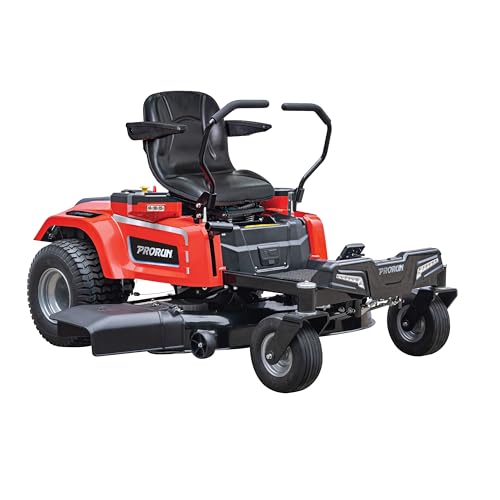
Pros
- High-efficiency brushless motors maximize power output and durability over traditional motors
- Up to 2 acres runtime with three included 10.0 Ah batteries supports substantial mowing sessions
- Zero-emission operation with gas-equivalent 20 HP power for quieter environmentally friendly use
- Six-port auto-switchover battery system provides flexible extended runtime options
- Durable 42-inch steel deck plus included mulch and towing kits add immediate functionality
Cons
- Runtime is limited to approximately 70 minutes or 2 acres which may require recharging for larger properties
- Fully battery-dependent design means performance relies on charge levels and spare battery availability
- 42-inch deck size may require more passes on expansive lawns compared to wider commercial models
The PRORUN PZT60V42 is a fully electric 60V zero-turn riding lawn mower built for residential and light commercial use. Its primary design centers on a robust 42-inch 14-gauge stamped steel twin blade deck powered by direct-drive brushless motors, giving an immediate impression of solid construction and modern battery-focused engineering. The mower arrives complete with three 10.0 Ah batteries, a charger, mulch kit, and towing kit for ready-to-work versatility.
In performance terms, four high-efficiency brushless motors deliver power equivalent to a 20 HP gas engine while producing zero emissions. The system supports up to 2.0 acres or 70 minutes of runtime, and six battery ports with auto switchover intelligently manage all PRORUN 60V battery sizes for continuous operation. A washout port on the steel deck further simplifies post-mow maintenance during real-world sessions.
Potential drawbacks include the finite 70-minute runtime window which can limit coverage on larger properties without spare batteries or recharge breaks. As a fully electric model, it also depends entirely on battery charge levels rather than continuous fuel refills, and the 42-inch deck width may demand extra passes compared with wider traditional options.
Overall the PRORUN PZT60V42 offers strong value for homeowners and small-property managers who want gas-like cutting power without emissions or noise. Those with medium-sized lawns seeking quiet efficient zero-turn performance and included accessories will benefit most from this electric mower.

Pros
- Strong 24HP FR730 engine power for demanding cutting conditions
- Wide 54-inch FAB deck reduces total mowing time
- Zero turn design delivers excellent maneuverability
- Fabricated deck supports durable everyday operation
Cons
- Sparse details beyond engine and deck leave other features unspecified
- Gas-powered FR730 engine needs regular fuel and maintenance
- Large 54-inch deck size may feel oversized on compact properties
The Husqvarna Z254F is a zero turn mower from the established Husqvarna brand in the riding lawn mowers category. It centers on a solid build that pairs a 24HP 726cc FR730 engine with a 54-inch FAB deck for straightforward residential grass care.
Performance stems directly from the listed specifications. The FR730 engine delivers the horsepower needed for steady operation across typical lawns while the wide FAB deck completes passes efficiently. Zero turn handling improves control in real yard layouts based on the model design.
Considerations arise from the limited data available. Secondary elements such as comfort features fuel capacity or extras receive no mention and the gas engine format involves routine upkeep. The large deck suits open areas better than confined spaces.
The Husqvarna Z254F provides the most value for owners of medium or large properties who want reliable engine power and a broad cutting width. Users with smaller lots or those seeking extensive accessory options should weigh the core specs carefully before purchase.
Does Home Depot repair lawn mowers?
People ask this because Home Depot sells walk-behind mowers, riding mowers, and outdoor power equipment, and it is easy to assume the seller also fixes what it sells. That is not how the chain is organized. Home Depot is a home-improvement retailer. Lawn mower repair, when it happens at all, is a local exception rather than a standard store service you can count on in every market.
A dedicated small-engine shop exists to diagnose engines, fuel systems, decks, belts, and transmissions. A big-box store exists to stock products, answer product questions, and complete a sale, return, or special order. Those two businesses can share a parking lot in a customer’s mind, but they do not share the same tools, staffing, or liability model. If you arrive with a gas mower that will not start, you should not expect a uniform drop-off counter, a published diagnostic menu, or a technician who will open the engine on the spot.
Is lawn mower repair a standard service everywhere?
No. Full in-house repair of customer-owned lawn mowers is not a uniform nationwide Home Depot service. Store-to-store variation is the rule. One location may have an associate who can point you to a blade, belt, or spark plug. Another may assemble a newly purchased walk-behind mower. A third may tell you, correctly, that it does not accept machines for repair. None of those answers is a national policy you can treat as permanent. To compare alternative configurations, check our hands-on review of jbl partybox club 120 vs sony srs xv500. For complementary hardware performance, examine our breakdown on riding lawn mower specifications.
That variation comes from ordinary retail realities: staffing, season, available bench space, local demand, and whether anyone on site is trained or authorized to work on outdoor power equipment. It also comes from the machine itself. A battery walk-behind with a missing accessory is a different request from a riding mower with a failed transmission. Treating “Home Depot” as one repair shop produces conflicting answers because the company is not organized that way. To compare alternative configurations, check our hands-on review of jbl partybox club 120 vs sony srs xv500.
What a typical store does instead of taking drop-off repairs
In practice, most customer visits that start as a repair question end as a parts, product, or referral conversation. Associates can often help you find consumable parts if you have a brand and model number. The store and website sell replacement mowers if the machine is not worth saving. If the unit is still under a manufacturer warranty, the useful next step is usually the brand’s authorized service network, not a retail aisle. If the unit is new enough and still eligible, a return or exchange conversation may be more realistic than a repair request. Those paths are related to lawn mower repair, but they are not the same as leaving your mower for shop work. Users looking for related component recommendations can explore our z890 vs x870e motherboard breakdown.
You may also hear different answers from different people in the same building. Garden, tool rental, and the services desk each see a different slice of outdoor equipment. That is why a casual “do you fix mowers?” question can produce a yes, a no, and a maybe in one afternoon. The reliable version of the question is narrower: will this store accept this specific machine for diagnosis or repair, or is help limited to parts, assembly, warranty direction, or a referral?
In-house repair vs. parts, assembly, warranty, and referrals
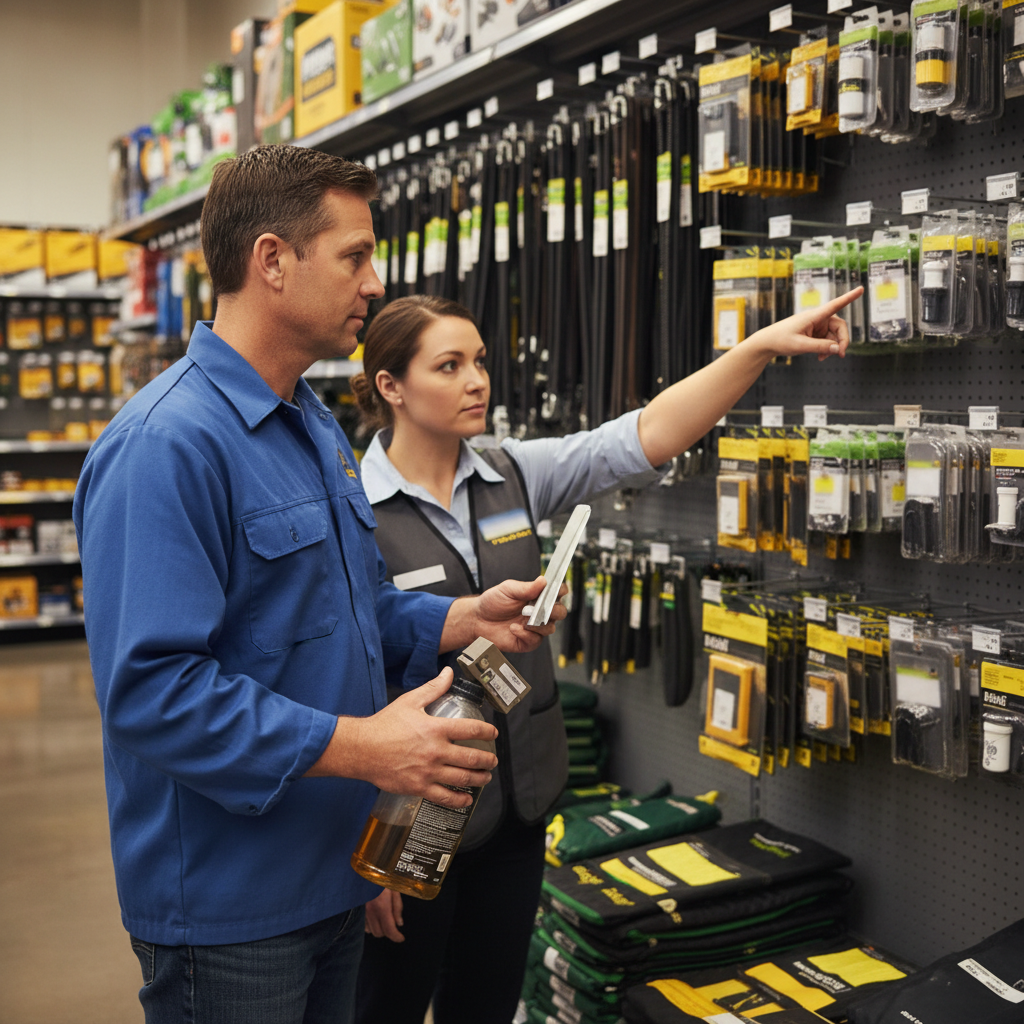
The main confusion in this question is language. Shoppers use “repair” to mean anything that gets the lawn cut again. Retailers use much narrower categories. Separating those categories keeps you from wasting a trip and from assuming a purchase includes service that was never part of the sale. Before finalizing equipment decisions, refer to our comprehensive marshall stanmore iii vs harman kardon onyx studio 8 comparison.
Selling the mower is not the same as fixing it
If a store sells the mower, that does not mean it will fix it. Buying a walk-behind, riding, gas, electric, or battery mower at Home Depot does not automatically create an in-store repair relationship. The receipt documents a retail transaction. The manufacturer warranty, if any, is a separate contract between you and the brand. Any extra retail protection plan is another document again. None of those papers, by themselves, turn the store into an authorized service center. Users looking for related component recommendations can explore our z890 vs x870e motherboard breakdown.
Parts help and assembly are not shop repair
Help finding a compatible blade, belt, filter, spark plug, battery, or bottle of oil is useful, and it is one of the more common ways Home Depot supports lawn mower owners. It is still a parts-counter interaction. You leave with a component, not with a serviced machine. The same distinction applies to assembly. Setting up a newly purchased mower, attaching a handle, installing a battery, or checking that a unit comes out of the box ready to use is not the same as diagnosing a customer-owned mower that already failed in the yard.
Assembly, delivery, and haul-away, when offered, are location-dependent services tied to a new purchase. They should be confirmed before you visit or place an order. They should not be treated as proof that the same team will later rebuild a carburetor, weld a deck, or replace a transaxle. Before finalizing equipment decisions, refer to our comprehensive marshall stanmore iii vs harman kardon onyx studio 8 comparison.
Warranty direction and referrals are often the real service
When the problem is covered, or when the work is specialized, Home Depot is more likely to send you toward a brand service center or an independent shop than to accept the machine. That is not a brush-off in every case. Gas engines, fuel systems, decks, and riding-mower drivetrains need tools and training that a retail floor is not built around. Battery packs and control electronics on electric or battery mowers often need manufacturer procedures. A referral can be the correct answer even when the store sold you the unit.
Tool rental is not a public repair shop
Some shoppers ask at the tool rental counter because that area handles equipment that looks similar to a homeowner mower. A store’s tool rental operation mainly supports rental equipment. It should not be assumed to be a public small-engine repair shop. Rental staff may know local vendors or be able to say whether anyone in the building works on outdoor power equipment. They may also say no. Either way, rental maintenance is an internal function. It is not a standing invitation to drop off your own lawn mower. For broader ecosystem context, read through our operational guide on dyson v8 cyclone vs bissell featherweight stick.
Services Home Depot more commonly offers around lawn mowers
Even when full repair is unavailable, Home Depot can still be a practical stop. The reliable offerings are retail offerings: parts, accessories, a replacement machine, and sometimes limited setup help on a new purchase. Setting expectations around those services is more useful than hunting for a hidden shop that may not exist.
Replacement parts and consumables
Many stores and the website sell common consumables and accessories. Shoppers routinely look there for a mower blade, drive belt, air filter, fuel filter, spark plug, engine oil, string-trimmer line, collection bags, mulch plugs, and batteries for cordless models. Availability depends on brand, season, and whether the part is a high-volume item or a special-order component. A walk-behind gas mower’s basic wear items are more likely to be on a peg hook than an obscure riding-mower transmission part.
If you have the model number from the mower’s identification label, staff can sometimes help match a compatible part. Bring the brand, the exact model, and a photo of the label if the machine cannot come with you. “A 21-inch gas mower” is not enough. Two machines that look identical on the sales floor can use different blades, belts, or plugs. A correct match matters for cutting performance and for safety. A wrong blade or a poorly fitted battery is not a harmless substitution. For troubleshooting and reliability insights, consult our in-depth bissell crosswave hydrosteam vs shark stainforce report.
New-unit assembly and setup
Some locations assemble or set up newly purchased walk-behind or riding mowers. That help, if it exists, is a purchase add-on or an in-store service tied to inventory the store just sold. It is not a promise that every crate will be opened and every riding mower will be fueled, charged, and demonstrated. Ask before you buy if you need the machine ready to mow the same day, if you cannot lift a boxed walk-behind, or if a riding mower needs delivery. Do not assume the same team will later accept that mower back as a repair job.
Replacement instead of a fix
When the machine is old, parts are scarce, or the failure is large, the store’s most concrete offer may be a replacement mower. That can be the right outcome, but it is a product decision, not a repair estimate. Compare the condition of the deck, the age of the engine or battery system, and whether the mower still has a usable cutting width and drive system. A retailer can show you what is in stock. It cannot tell you, as a shop would, whether your current crankshaft, deck shell, or transaxle is economically savable. For that judgment you still need a technician or a clear-eyed look at how far the damage goes.
How mower type and the problem change your options
Not every lawn mower is the same service problem. Power source, size, and the failed system matter more than the store logo on your receipt. Mapping the machine and the symptom to a realistic next step keeps you from asking a retail associate to do specialist work, and it keeps you from driving across town for a part that was on the wall the whole time.
Walk-behind electric and battery mowers
Walk-behind electric or battery mowers are often simpler mechanically than gas models: fewer fuel-system parts, no carburetor, and in many designs a more compact deck. That does not make them easier for a retail store to repair. Battery packs, chargers, and control boards are frequently manufacturer-service items. A store may sell a replacement battery or charger if your model is still supported. It is much less likely to run brand-specific diagnostics or open a sealed pack. If the mower is dead, intermittent, or throwing an error state you cannot clear with the manual’s basic checks, the brand support channel is usually the better first call.
Do not assume a cordless mower is “just a battery swap.” A damaged, swollen, wet, or overheated pack needs specialist handling. Buying a new battery at Home Depot does not make a homemade electrical bypass safe, and it does not restore a mower whose deck motor or safety interlock has failed.
Gas walk-behind mowers
Gas walk-behind mowers create the classic small-engine workload: stale fuel, fouled spark plugs, dirty filters, broken pull cords, bent blades, and worn belts. Some of those issues are parts-counter issues if you already know the failed part and are comfortable with basic owner-manual maintenance. Engine internals, carburetors, flywheels, and anything that requires disassembly beyond routine service are specialist shop work. A store that sells the spark plug is not volunteering to rebuild the engine that uses it.
Riding mowers and zero-turn machines
Riding mowers and zero-turn machines are less likely to be serviced inside a retail store. They are large, heavy, and mechanically dense. Deck spindles, hydrostatic transmissions, steering linkages, and electrical systems on a rider are not countertop jobs. Even a store that will discuss a walk-behind blade or a battery may have no way to accept a tractor. If the problem is a loose collection bag or a missing pin, you may still get parts help. If the problem is no-move, no-cut, smoke, hydraulic leak, or a damaged deck, plan on a small-engine shop or a brand-authorized dealer.
Which problems stay at the parts counter
A simple accessory swap is different from engine, deck, or transmission failure. Fresh oil, a new air filter, a known-good spark plug, a replacement mulch plug, or a correctly matched blade can be a parts errand when the rest of the machine is healthy and the owner’s manual describes that maintenance. No-start after winter storage, fuel leaks, metal-on-metal deck noise, a wobbling blade, a broken crankshaft, a rider that will not drive, or a battery pack that will not charge are not equivalent errands. The first group may be solved with a labeled part. The second group needs inspection by someone who works on outdoor power equipment for a living.
Buying a part at Home Depot does not make a do-it-yourself engine or blade job safe, and it does not keep a warranty intact if the brand requires authorized service. Use the manual for owner-level maintenance only. Stop when the next step is disassembly of the engine, fuel system, blade mounting hardware you cannot secure correctly, or any safety interlock.
How to confirm what your local store can do
Because offerings change by location, the only dependable process is to ask that specific store about that specific machine. A general web search or a comment from another city will not tell you whether your store accepts drop-offs this week. Call or visit with enough detail that the person on the other end can give a yes, a no, or a clear “parts only.”
What to ask
Ask direct questions and do not accept a vague “we can probably look at it.” Useful questions include:
- Do you accept customer-owned lawn mowers for diagnosis or repair, or is help limited to parts?
- If you do not repair them, can you identify a compatible blade, belt, filter, spark plug, or battery from this model number?
- If this is a newly purchased unit, do you offer assembly, delivery, or haul-away, and what do I need to arrange in advance?
- If the mower may still be under warranty or a protection plan, who should I contact from here?
- If you cannot take the machine, do you refer customers to a local small-engine shop or a brand service center?
The goal is a clean split between drop-off repair and parts-only help. If the answer is parts only, you can decide whether to buy the part, call the manufacturer, or go straight to a shop. If someone says the store might help, ask who actually accepts the machine and whether you should bring it in now or wait for a named associate. An informal maybe is not a work order.
Details to have ready
Have the brand, model number, and power type ready: gas, corded electric, or battery. Note whether it is a walk-behind mower or a riding mower. Add the purchase date if you have it, where it was bought, and whether you still have the receipt or any protection-plan paperwork. Describe the symptom in one or two sentences: will not start, starts then dies, cuts poorly, blade will not engage, battery will not charge, deck is damaged, rider will not move. Mention any recent work, winter storage with old fuel, impact with a hidden object, or water exposure. Those details change the path even when the store cannot touch the machine.
Who to ask in the store
If the first person is unsure, it is reasonable to ask garden, tool rental, or the services desk. None of those teams can be described as the official owner of lawn mower repair nationwide, and you should not expect a dedicated outdoor-power department in every building. Still, those counters are where mower inventory, rental equipment, and special-order or service questions tend to land. If two departments disagree, believe the narrower answer: the person who can name a process beats the person who is being polite.
When to contact the manufacturer in parallel
Contact the manufacturer or a local small-engine shop in parallel when the mower is under warranty, when it is a battery or electric model with a suspected pack or control issue, when the machine is a rider, or when the store has already said it does not repair customer equipment. Waiting for a retail callback is optional. Getting on a shop schedule during peak mowing season is not. A model number and a short symptom list are enough to start both conversations.
Warranties, protection plans, and brand service centers
A Home Depot purchase does not automatically include in-store repair. Product warranties are typically manufacturer terms. Authorized service is defined by the brand, not merely by where the mower was sold. That distinction is the one that prevents the most wasted trips.
Who honors the warranty
If you bought the mower at Home Depot, the brand still usually governs covered repairs. The store may help you understand a return window on a newly purchased, unused, or clearly defective unit, but that is a retail policy question, not a repair shop function. Keep the receipt, register the product if the brand asks you to, and read the warranty booklet that came with the machine. Covered defects, wear items, and maintenance exclusions are brand-specific. Do not expect a store associate to recite those terms from memory or to approve a claim the manufacturer has not accepted.
What an authorized service center is
An authorized service center is a shop the manufacturer recognizes to diagnose and repair that brand under its rules. Authorization matters because it can affect whether warranty work is accepted, whether genuine parts are used, and whether software or battery procedures are available. Home Depot’s role as a retailer does not, by itself, make every store an authorized service center for the brands on its shelves. If you need warranty service, ask the manufacturer how to locate an authorized location. If you need out-of-warranty work, an independent small-engine shop may still be the practical choice, especially for gas walk-behind and riding mowers.
Retail protection plans
If your receipt includes an extra retail protection plan, treat that document as something you must read rather than as a verbal promise that the store will fix the mower. Plans differ in what they cover, what they exclude, and how a claim is filed. Some point you to a third-party administrator. Some interact with the manufacturer warranty instead of replacing it. Do not assume a protection plan creates a drop-off bench at the store where you bought the unit. Check the paperwork, keep claim numbers if you open a file, and ask who actually performs the work if a claim is approved.
When a return or exchange is more realistic
A return or exchange is more realistic than a repair request when the mower is newly purchased, unused or barely used, and still inside the store’s return conditions. It is less realistic when the machine has a season of wear, missing parts, impact damage, or stale fuel poured into a gas engine. Stores are not obligated to convert every unhappy mower into a refund. If the unit is outside retail return rules, shift the conversation to manufacturer warranty, a protection plan if you bought one, or an independent repair estimate.
If your store cannot repair the mower
When the local store cannot take the machine, the task is not finished. You still need a path that matches the mower type and the failure. The usual alternatives are a brand-authorized service center, an independent small-engine shop, and the manufacturer’s support channel. Those options overlap, but they are not interchangeable.
Who usually repairs gas walk-behind and riding mowers
Independent small-engine shops are a common path for carburetor, engine, deck, and transmission work. Outdoor power equipment dealers that sell the same brand you own are another. These businesses are set up for fuel systems, blades, spindles, belts, and the larger mechanical problems that appear on gas walk-behind and riding mowers. Ask whether they work on your brand and size of machine before you trailer a rider across town. Peak spring demand can mean a wait, which is another reason not to spend days hoping a retail store will make an exception.
When manufacturer support should come first
Manufacturer support is often the better first call for battery or electric models, especially if the issue looks like a pack, charger, control module, or stored error condition. It is also the better first call whenever the machine may still be under warranty. The brand can tell you whether a part is available, whether a recall or service bulletin exists, and which shops are authorized. That information is more reliable than guessing from a sales-floor display.
What to gather before a second opinion
Before you get a second opinion, gather the model and serial numbers, a photo of the identification label, the purchase date, any warranty or protection-plan documents, and a short history of the symptom. Note maintenance you already performed and parts you already replaced. If the deck is bent or the blade is damaged, photograph that too. A shop can waste less time, and you can compare advice more fairly, when everyone is looking at the same machine rather than a vague description of “the mower that will not start.”
Repair versus replace, without a price rule
There is no honest dollar cutoff that applies to every lawn mower. Think in terms of age, parts availability, the extent of engine or deck damage, and safety. A structurally sound walk-behind with a known wear part is a different decision from a cracked deck, a thrown rod, a rider with a failed transmission, or a battery platform the brand no longer supports. Safety matters as much as convenience. A mower that cannot hold a blade securely, that leaks fuel, or that has defeated interlocks is not a candidate for one more season of improvisation. Replacement at Home Depot may be convenient when you already need a new machine, but convenience is not the same as a finding that repair would have been cheaper or faster.
Safety limits if you are left with parts or DIY
If no shop will take the mower immediately, it is tempting to treat the parts aisle as a workshop. Some owner-manual maintenance is ordinary. A great deal of lawn mower work is not. Blade, fuel, and electrical jobs can be dangerous if treated as casual do-it-yourself projects. The goal here is not a repair manual. It is a boundary line.
Jobs that are unsafe to improvise
Stop and use a qualified shop when the repair involves the engine internals, the fuel system beyond basic owner-manual fuel handling, the blade and its mounting hardware if you cannot follow the manufacturer’s procedure with the correct parts, the deck structure, the transmission, or any safety interlock. Do not bypass blade-stop features, seat switches, or handle interlocks to “see if it runs.” Do not jury-rig a battery pack, charger, or power cord. Do not grind or rebalance a damaged blade unless you have the skill and equipment the job requires. A spinning mower blade stores enough energy to cause severe injury even after the engine or motor is off, because the edge stays sharp and the assembly can move if the machine is started or the blade is struck.
Basic precautions around blades, fuel, and batteries
Before any inspection, prevent the machine from starting. On a gas mower that usually means staying away from the starter, keeping hands clear of the blade path, and isolating ignition as the manufacturer directs, which often includes the spark plug lead. Fuel is flammable. Work outdoors or in a well-ventilated area, keep ignition sources away, and clean spills instead of ignoring them. On electric and battery mowers, remove the battery or unplug the cord before you look under the deck. Damaged, swollen, wet, or hot lithium-ion packs need specialist handling; do not puncture them, put them in household trash, or leave them on a combustible surface while you “see what happens.”
Follow the applicable manual and labels rather than memory or a generic video. Manufacturers locate drain points, blade hardware, and isolation steps differently. If the manual tells you a task is a dealer or authorized-service item, treat that as a safety instruction, not as optional fine print.
Do not bypass safety features
Safety features exist because a lawn mower can start, throw debris, or keep a blade moving after the operator lets go. Tying down a bail, defeating a chute interlock, or running a rider with a failed seat switch turns a stalled repair into a new hazard. If the store cannot repair the mower and a shop cannot see it immediately, park the machine, control fuel and batteries, and wait for qualified service. An uncut lawn is recoverable. An improvised repair that removes a guard or forces a damaged blade back onto a bent crankshaft is not a reasonable substitute for lawn mower repair.
Mechanical safety standards, operational tolerances, and protective gear guidelines align with benchmark specifications established by the American National Standards Institute (ANSI).
Quick answers before you visit
Use this short list only as a recap of the distinctions above, then confirm the details with your store or the brand.
- Home Depot sells lawn mowers and replacement parts; it is not a uniform full-service repair network.
- Ask your local store whether it accepts drop-off repair or only parts, assembly, and referrals.
- Garden, tool rental, and the services desk are reasonable places to ask, but none is a guaranteed repair shop.
- Gas engines and riding mowers usually need a small-engine shop or authorized service center.
- Electric and battery problems often belong with the manufacturer, especially packs and electronics.
- A manufacturer warranty and any protection plan are documents to read, not proof of in-store repair.
- If you are left with a part and no shop, stay inside the owner’s manual and stop before engine, blade, fuel-system, or interlock work.
The practical answer is therefore local and specific. Home Depot can often help you keep a mower supplied with parts or replace the machine. Lawn mower repair itself still belongs, in most cases, to the people whose business is small engines, decks, and brand service—not to every store that happens to sell the mower.
For more hands-on benchmarks and buying recommendations, consult our guides on heavy-duty chainsaw buyer guide.