

Quick Answer: How Do Self Propelled Mowers Work?
A self-propelled walk-behind mower sends engine or electric-motor power to one or more wheels through a drive system you engage from the handle, so you mainly steer and set speed instead of pushing the mower’s full weight. A push mower still uses powered blades to cut, but you supply all of the rolling force. The user still walks behind the…

Pros
- Powerful 80V brushless motor delivers 32HP gas-equivalent performance with quiet fume-free operation and no engine maintenance.
- Complete kit includes four 6.0Ah batteries and 600W charger for substantial runtime up to 1.5 acres.
- SmartCut technology and 42-inch heavy-duty steel deck ensure consistent cuts without bogging in tough conditions.
- Versatile towing up to 350 lbs and optional cargo hauling plus comfort features like high-back seat and LED lights.
- Strong 4-year limited warranty and full compatibility with the Greenworks 80V tool ecosystem.
Cons
- Rear utility cargo bed for 200 lb hauling is sold separately and not included in the kit.
- Runtime of up to 1.5 acres varies with conditions and may require recharging or battery swaps on larger properties.
- As a fully cordless model continuous operation depends on battery levels unlike gas engines with unlimited runtime.
The Greenworks 80V 42" CrossoverT Cordless Riding Lawn Tractor is a ready-to-mow zero-emission tractor designed for homeowners managing medium to large lawns. It features a reinforced 42-inch stamped steel deck of 12-gauge construction along with premium comfort elements such as a high-back padded seat with foldable armrests. The overall build emphasizes durability and user convenience right out of the box with the included battery and charger set.
Performance centers on the 80V TruBrushless motor that provides 32HP gas-equivalent power with instant torque and quiet fume-free operation. SmartCut technology senses grass conditions and automatically adjusts power to maintain a consistent cut even in tall thick or wet areas. The four 6.0Ah batteries support runtime for up to 1.5 acres depending on conditions while dual LED headlights and a 7-position deck height range from 1.5" to 4.5" add practicality. Front and rear attachments further allow towing up to 350 lbs for added yard utility.
Key considerations include that the rear utility storage bin capable of hauling 200 lbs is sold separately so full cargo functionality requires an extra purchase. Runtime remains condition-dependent and may fall short for properties significantly larger than 1.5 acres without using the 600W charger or swapping batteries. The cordless design prioritizes ease and low maintenance but trades off the continuous runtime of traditional gas models.
This tractor delivers strong value for eco-conscious owners of residential properties who want gas-like power without the emissions noise or upkeep. It suits those who already use or plan to expand into the Greenworks 80V family of tools and who appreciate the 4-year limited warranty. Users with exceptionally large or commercial-scale lawns should evaluate battery logistics carefully before purchase.

Pros
- Delivers strong 21 horsepower equivalent power comparable to gas riding mowers.
- Provides up to 1.5 acres of runtime on a full charge with the six included batteries.
- Features low-maintenance dual brushless motors without belts for greater durability.
- Offers versatile 12-position cutting height adjustment from 1.5 to 4.5 inches.
- Includes digital controls for blade settings, drive speeds, and cruise control.
Cons
- Limited to 1.5 acres of cutting per charge without purchasing additional batteries for bigger lawns.
- Requires recharging time for the six 56V batteries after each use session.
- Relies solely on battery power with no hybrid or gas backup option for extended operation.
The EGO Power+ TR4204 is a cordless electric riding lawn mower built as a modern tractor alternative for residential use. It features a robust 42-inch stamped steel deck and arrives ready to go with six 56V 6.0Ah batteries plus a charger, creating an immediate impression of convenience and solid construction free from gas engine complexity.
Performance shines through its equivalent 21 horsepower output and top speed of 6 MPH, allowing efficient coverage of up to 1.5 acres on a single charge. Dual brushless cutting motors operate without belts for added durability and less upkeep, while the digital display lets users select three blade settings, three drive speeds, and cruise control. The 12 adjustable heights ranging from 1.5 to 4.5 inches combined with anti-scalp wheels deliver precise results across varied terrain.
Drawbacks center on battery dependency, as larger properties beyond 1.5 acres require extra batteries and recharging intervals can interrupt workflow. The fully electric design eliminates fuel storage needs but demands access to power sources between sessions.
This mower suits homeowners with medium to large yards who value quiet, emission-free operation and reduced maintenance. Those seeking expandable battery capacity for bigger areas will find the EGO Power+ TR4204 a strong long-term investment in cordless lawn care.
Pros
- High-efficiency brushless motors maximize power output and durability over traditional motors
- Up to 2 acres runtime with three included 10.0 Ah batteries supports substantial mowing sessions
- Zero-emission operation with gas-equivalent 20 HP power for quieter environmentally friendly use
- Six-port auto-switchover battery system provides flexible extended runtime options
- Durable 42-inch steel deck plus included mulch and towing kits add immediate functionality
Cons
- Runtime is limited to approximately 70 minutes or 2 acres which may require recharging for larger properties
- Fully battery-dependent design means performance relies on charge levels and spare battery availability
- 42-inch deck size may require more passes on expansive lawns compared to wider commercial models
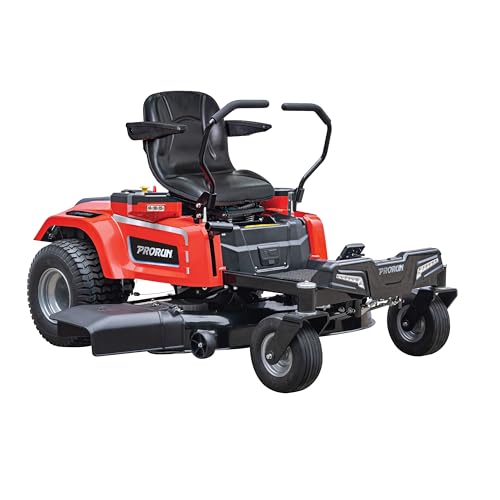
The PRORUN PZT60V42 is a fully electric 60V zero-turn riding lawn mower built for residential and light commercial use. Its primary design centers on a robust 42-inch 14-gauge stamped steel twin blade deck powered by direct-drive brushless motors, giving an immediate impression of solid construction and modern battery-focused engineering. The mower arrives complete with three 10.0 Ah batteries, a charger, mulch kit, and towing kit for ready-to-work versatility.
In performance terms, four high-efficiency brushless motors deliver power equivalent to a 20 HP gas engine while producing zero emissions. The system supports up to 2.0 acres or 70 minutes of runtime, and six battery ports with auto switchover intelligently manage all PRORUN 60V battery sizes for continuous operation. A washout port on the steel deck further simplifies post-mow maintenance during real-world sessions.
Potential drawbacks include the finite 70-minute runtime window which can limit coverage on larger properties without spare batteries or recharge breaks. As a fully electric model, it also depends entirely on battery charge levels rather than continuous fuel refills, and the 42-inch deck width may demand extra passes compared with wider traditional options.
Overall the PRORUN PZT60V42 offers strong value for homeowners and small-property managers who want gas-like cutting power without emissions or noise. Those with medium-sized lawns seeking quiet efficient zero-turn performance and included accessories will benefit most from this electric mower.

Pros
- Strong 24HP FR730 engine power for demanding cutting conditions
- Wide 54-inch FAB deck reduces total mowing time
- Zero turn design delivers excellent maneuverability
- Fabricated deck supports durable everyday operation
Cons
- Sparse details beyond engine and deck leave other features unspecified
- Gas-powered FR730 engine needs regular fuel and maintenance
- Large 54-inch deck size may feel oversized on compact properties
The Husqvarna Z254F is a zero turn mower from the established Husqvarna brand in the riding lawn mowers category. It centers on a solid build that pairs a 24HP 726cc FR730 engine with a 54-inch FAB deck for straightforward residential grass care.
Performance stems directly from the listed specifications. The FR730 engine delivers the horsepower needed for steady operation across typical lawns while the wide FAB deck completes passes efficiently. Zero turn handling improves control in real yard layouts based on the model design.
Considerations arise from the limited data available. Secondary elements such as comfort features fuel capacity or extras receive no mention and the gas engine format involves routine upkeep. The large deck suits open areas better than confined spaces.
The Husqvarna Z254F provides the most value for owners of medium or large properties who want reliable engine power and a broad cutting width. Users with smaller lots or those seeking extensive accessory options should weigh the core specs carefully before purchase.
What self-propelled means on a walk-behind mower
On a walk-behind lawn mower, self-propelled means the machine can roll itself when you engage a drive system. Power from a gasoline engine or an electric motor is sent to the drive wheels. You still walk behind the deck, keep both hands on the handle, and steer. The difference is that you are not solely responsible for shoving the mower’s mass through grass, over seams, and up small grades.
A conventional push mower is different in one important way. Its engine or motor still spins the cutting blade. That is why the grass is cut even when you are doing all the pushing. What a push mower does not do is apply powered force at the wheels. If the turf is thick, wet, or uphill, the extra work is yours. If you stop walking, the mower stops rolling unless gravity takes over.
Blade power and wheel drive are related machine functions, not the same thing. Both push and self-propelled walk-behind mowers typically cut with a powered blade. Self-propulsion is an extra path that moves the chassis. You can have a running blade on a machine that is not driving its wheels, and on many designs you can drive the wheels while the blade is disengaged, depending on how that model’s controls are arranged. Always treat the deck as hazardous whenever the power source is running, even if you think the blade is off. For broader ecosystem context, read through our operational guide on jbl partybox club 120 vs sony srs xv500.
This article is about walk-behind self-propelled mowers, including common gas and battery or corded electric layouts. Riding mowers, zero-turn machines, and robotic mowers propel themselves too, but they are a different class of equipment with different controls, weight, and safety rules. They are outside the scope here. For broader ecosystem context, read through our operational guide on jbl partybox club 120 vs sony srs xv500.
Self-propulsion does not automatically make every yard easier, and it does not mean the mower is always heavier, faster, or simpler to handle. Terrain, grass condition, drive layout, and how well you match walking speed to the machine all matter. The useful idea is narrower: when the drive is engaged, the mower can supply the rolling force while you remain the operator.
How power reaches the drive wheels
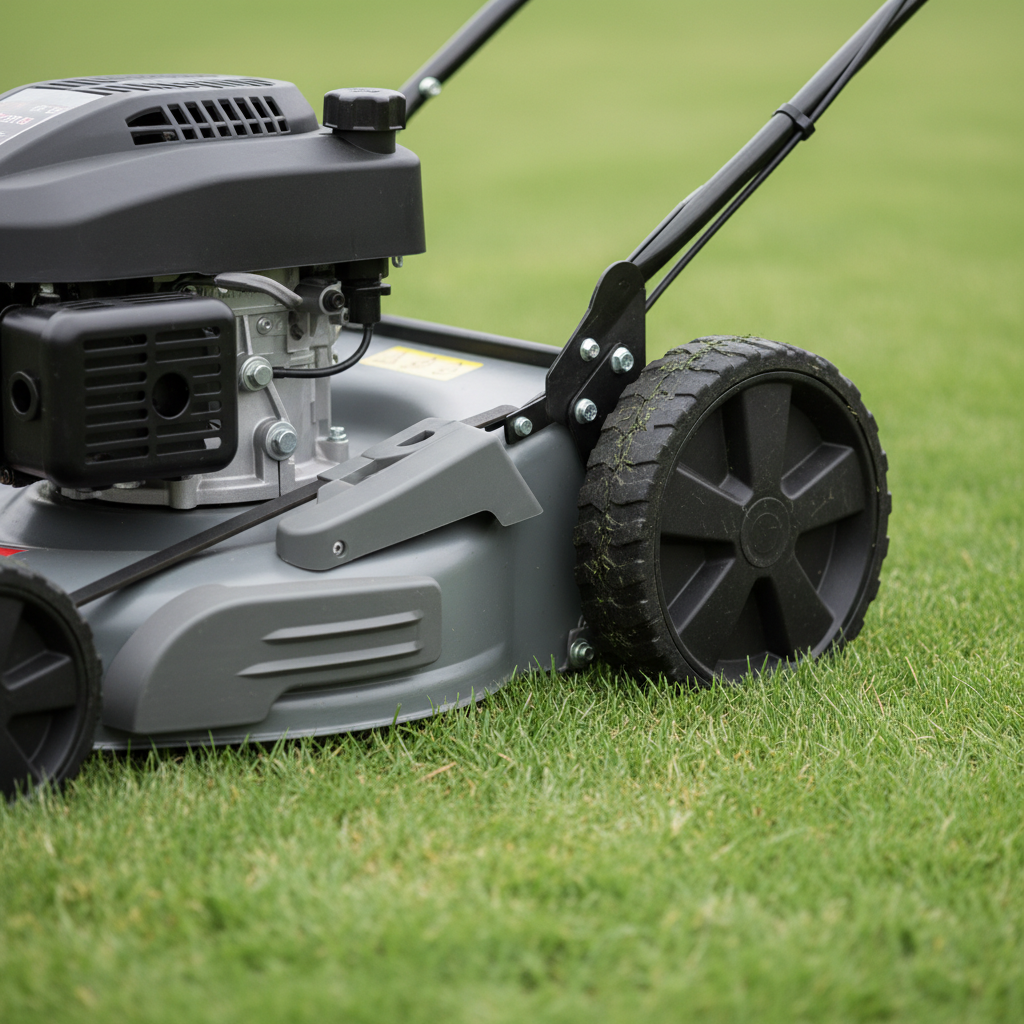
Energy for self-propulsion starts at the same kind of source that runs the rest of the mower: a gasoline engine or one or more electric motors. From there, a drive system reduces speed, multiplies force, and delivers rotation to an axle or to individual driven wheels. The exact hardware varies by model. What stays consistent is the idea of a controllable path between the power source and the turf.
A typical path looks like this at a high level: For troubleshooting and reliability insights, consult our in-depth z890 vs x870e motherboard report.
- A power source that is already running—the engine or motor.
- An engagement device, such as a mechanical clutch, a tensioned belt, a cable-operated linkage, or an electronic motor controller.
- Speed reduction or a transmission so wheel speed matches a walking pace instead of engine or motor speed.
- Driven wheels, either a pair on one axle or more than one axle on all-wheel designs.
When you squeeze or hold the drive control, that engagement device connects the path. The wheels begin to turn under power. When you release a spring-loaded control, the path opens again. The engine or motor can keep running, and the blade may still be spinning, but powered wheel motion stops. That is why a self-propelled mower can idle in place while you empty the bag, clear a stick, or line up the next pass—provided you have fully released drive and the machine is stable on the ground.
Wheel drive is not the same system as the one that spins the blade, even though both may take energy from the same engine or battery pack. Blade drive is meant to keep a cutting disc at a high rotational speed under the deck. Wheel drive is meant to turn large, relatively slow wheels. Designers therefore use reduction, belts, gears, or dedicated motors so those two jobs can happen at very different speeds. On some machines the two paths share pulleys or housings; on others they are more separate. Do not assume they are fully independent on every model. Treat both as live whenever the mower is powered. Readers comparing setup options can review our technical analysis on marshall stanmore iii vs harman kardon onyx studio 8.
Gas machines usually tap a running engine. A belt, gear train, or similar takeoff can send a fraction of that rotation into the drive hardware. Electric machines may use one or more motors aimed more directly at the wheels, or they may share the mower’s electric drive system in another arrangement. Neither description is universal. If you need the exact layout for service, the model’s manual and exploded parts views are the reliable source, not a generic diagram.
Front-wheel, rear-wheel, and all-wheel drive
Walk-behind self-propelled mowers are often described by which wheels receive drive power. The labels match the idea you already know from cars, but the handling consequences are specific to a machine you walk behind and periodically lift or swing at the end of a pass. For complementary field maintenance guidelines, examine our breakdown of dyson v8 cyclone vs bissell featherweight stick.
Front-wheel drive
Front-wheel drive (FWD) sends power to the front wheels. Those wheels both roll the mower and, to a large extent, determine how it behaves when you change direction. A common technique on FWD machines is to lift the front slightly at the end of a strip so the mower pivots on the rear wheels. That can make a tight turn easier. It also unloads the driven wheels. If you keep the drive engaged hard while the front is light, the tires may spin, hop, or pull the handle in a way you did not intend.
Rear-wheel drive
Rear-wheel drive (RWD) sends power to the back wheels. Your body weight at the handle often adds load over those tires, which can help them bite in grass that is long, damp, or on a mild slope. Turning feel is different from FWD. The driven wheels stay planted when you lift the front to pivot, which some people find predictable and others find less willing to swing. If the rear tires lose grip, the mower may sit and spin instead of climbing.
All-wheel drive
All-wheel drive (AWD) on a walk-behind mower means more than one pair of wheels can receive drive power. That puts force through more contact patches, which can help when one axle would otherwise slip. It does not cancel physics. Wet turf, loose soil, worn tires, a steep grade, or a turn that unloads one side can still break traction. AWD also does not remove the need to ease off the drive in a tight pivot. Powering extra wheels while you try to twist the handle can make the mower feel stubborn or can scuff the lawn. To evaluate matched hardware tolerances, consult our detailed overview of bissell crosswave hydrosteam vs shark stainforce.
No layout is automatically “best.” Moisture, slope, tire condition, grass height, and how you turn often matter as much as which axle is driven. A well-used FWD mower on dry, flat turf can feel easy. The same layout on slick clippings can struggle if you keep lifting the front. RWD can feel planted until the rear tires are on a wet downhill and you are asking the machine to hold you back—something a typical walk-behind drive is not designed to do like a vehicle’s brakes. Use the layout as a clue about feel, not as a promise about hills or weather.
How the operator engages drive and changes speed
Most walk-behind self-propelled mowers put drive control on the handle so you can engage wheels without taking a hand off the machine. The exact lever shape is not standardized. Common patterns include a drive bail or bar you hold against the handle, a paddle or lever you squeeze, or a combination of a hold-to-run control and a separate speed selector.
Starting powered motion is usually a two-part idea, not one mystery switch:
- The engine or electric motor must already be running, following that model’s starting method and safety interlocks.
- You then hold or move the drive control so power is allowed to reach the wheels.
Those are not the same as starting the power source, and they are not the same as engaging the blade. Many mowers use a separate blade-control bail or a blade-stop handle. You might walk the machine with drive on and the blade off when crossing a driveway, or run the blade while the drive is released so you can ease the deck into a tight corner by hand. Read the symbols on your handle. Do not assume a neighbor’s mower uses the same bar for the same job.
Speed control also varies. Some models are effectively single speed: engage drive and the mower walks at one designed pace. Others are variable speed. Variable designs may use a selector on the handle, a sliding lever, a thumb control, or a drive bar that changes output the harder you squeeze. The point of variable speed is to match a comfortable walk, not to race the lawn. Set a pace you can keep with a relaxed grip. If you are jogging to keep up, or leaning hard to hold the mower back, the setting is wrong for that pass.
Releasing a spring-loaded drive control typically disengages wheel drive. The mower should stop adding powered roll even if the engine or motor is still running. That is a basic operator habit: if the machine is pulling you, if a child or pet enters the yard, or if you need to clear a jam, let go of the drive control first and then deal with the rest of the shutdown sequence in the manual. Do not rely on “it will just slow down” if you keep the bar held.
Some electric models replace a mechanical clutch feel with a more instant motor response. The handle action can still be a hold-to-run control plus a speed setting. The principle for the person walking behind stays the same: nothing moves under power until you ask, and powered motion should cease when you release the control that authorizes it.
Gas mechanical drives versus electric-motor drives
Gasoline self-propelled mowers generally take rotation from a running engine and send it through mechanical hardware. That hardware can include a belt, pulleys, a clutch or tensioner, gears, a cable, and some form of transmission or reduction. The engine is already turning to spin the blade, so designers often borrow a portion of that motion for the wheels. You still decide when that portion is connected. Idling the engine with the drive released should leave the mower free enough to hold or roll by hand, within the limits of grass and ground slope.
Battery and corded electric mowers can propel themselves in more than one way. Some use dedicated wheel motors. Others integrate propulsion into a broader electric drive system. Frame that as design variation, not as a single architecture. What you will notice as an operator is often the control feel: less belt grab, more of a motor coming on when the handle control closes a circuit or tells a controller to apply torque. The walking task does not change. You still engage drive, match speed, steer, and release the control to stop powered roll.
Both families still need a way to slow wheel speed to a walk and a way to disconnect drive. Gas models tend to do that with clutches, variable pulleys, gear selections, or similar mechanical means. Electric models may do more of the work in the motor controller. Neither approach is a quality ranking. A worn belt on a gas mower and a low battery on an electric mower can produce the same user complaint: the blade cuts, but the machine will not pull.
Heat, fuel, exhaust, and engine oil are gas-specific realities around the same drive path. Battery packs, chargers, and electrical connectors are the electric-specific realities. The person behind the handle is still managing a powered deck and a powered set of wheels. The habit that transfers is attention to the controls and to when energy is allowed to reach spinning parts.
Walking with the drive instead of fighting it
Self-propulsion works best when you treat the mower as something you accompany, not something you shove or restrain. Choose a walking speed that matches an easy stride. On a variable-speed model, start slower than you think you need, then bring the setting up until the handle is light in your hands. If the mower constantly tows you forward, reduce speed or ease your grip on the drive control. If you are still pushing most of the weight, confirm the drive is actually engaged and that the speed control is not at its lowest or off position.
Keep a firm grip without wrestling the handle. The machine should track mostly where the front of the deck is pointed. Small steering inputs are enough on open ground. At the end of a pass, plan the turn before you arrive. Many people release or ease the drive, lift or lighten the appropriate end of the mower if the design allows it, swing the deck, set it down, and re-engage. Forcing a powered turn while all driven wheels are digging in can leave arcs in the turf and can yank the handle sideways.
FWD machines deserve a specific caution in tight spaces. If you lift the front to pivot, you have just taken weight off the drive tires. Either ease the drive or accept that the mower may stop pulling until the front is back on the grass. Trying to pivot while the front wheels are still driving hard is a common way to feel as if the mower is fighting you. RWD and AWD machines can feel the opposite in a tight turn: the driven wheels keep pushing while you are asking the chassis to rotate. Easing off drive for a moment is usually cleaner than muscling through.
If the mower pulls ahead, the speed setting may be too high for that strip, the grass may be thinner than the last pass, or you may be going downhill. Slow the drive. Do not rely on your arms as the primary brake. If the mower drags, the drive may be slipping, the speed may be too low, the bag or deck may be packed, or the turf may be so heavy that the wheels cannot get a clean bite. Stop, release the controls, and look at the obvious causes before you lean harder. If steering feels heavy, check whether you are turning against fully engaged drive, whether a wheel is bound with cord or mud, or whether you are trying to twist a machine that wants to go straight under power.
None of this is a promise that every user will feel less tired. Hills, thick growth, and long sessions still take effort. The mechanical point is simpler: use the drive for straight rolling force, and use your hands for guidance and for the moments when powered motion should pause.
Safety around blades, belts, heat, fuel, and batteries
A self-propelled walk-behind mower combines a spinning blade under the deck with a second set of moving parts that send power to the wheels. Both can injure. Hands and feet stay away from the deck opening, the discharge, and any visible belt, pulley, cable, or gear. Loose clothing, laces, and long hair belong clear of rotating hardware. The fact that the mower can roll itself does not make it safe to step away while it is running.
If grass, a stick, or a wire jams the blade or wraps a wheel, bring the machine to a full stop first. Release the drive control and the blade control. Shut down the engine or motor using the method in the operator’s manual. Wait until the blade and any belts have stopped. Disable ignition or disconnect the battery as the manufacturer instructs before you look underneath or pull debris. Never reach under a deck that might still be powered. Do not bypass blade-brake handles, operator-presence bars, or other interlocks to “make it easier to clear.”
Drive systems add pinch points. Belts and pulleys can pull a finger in. Cables and levers can move suddenly when a spring returns. Gears and axle hardware can trap skin against the frame. Inspect those areas only with the mower disabled, on a stable surface, and with enough light to see what you are touching. If a guard is missing, replace it rather than operating around the opening.
Gas models add burn and fire hazards. Engines, mufflers, and exhaust stay hot after shutdown. Fuel is flammable. Refuel outdoors, with the engine off and cool enough that spilled fuel will not hit a hot surface, following the can and mower labels. Keep sparks, cigarettes, and open flames away. Do not tip a fueled mower in ways the manual warns against; fuel and oil can spill into the air filter, the muffler, or the lawn.
Battery and corded electric models shift the caution to electrical energy. Use the charger and pack the mower was designed for. Keep connectors clean and dry within the limits the manual describes. Do not crush, open, or incinerate a pack. Store and charge where the manufacturer allows, away from extreme heat. On corded machines, keep the cord behind you and clear of the blade path. If a pack is damaged, swollen, or leaking, stop using it and follow the maker’s disposal guidance rather than improvising a repair.
Slopes deserve extra respect on any walk-behind mower, powered wheels or not. Mow across a slope only if your manual allows that technique for your machine, and avoid wet grass that can take your feet or the tires out from under the deck. A self-propelled drive can pull you into a situation as easily as it can help you through ordinary turf. If a grade feels uncertain, choose a different tool or a different day.
If the engine or motor runs but the mower will not drive
A common confusion is a mower that cuts grass but will not self-propel. That often means the blade path has energy while the wheel path does not. Before you assume a major failure, check operator-level items you can see without dismantling the machine.
- Hold the drive control fully, the way the handle graphics show. A partial squeeze on some variable designs produces little or no roll.
- If there is a separate speed selector, confirm it is not at its lowest stop or an off position.
- On battery models, confirm the pack is charged, seated, and allowed to run propulsion—not only a low-power accessory mode, if your model has modes.
- Look at the wheels and axle area for packed mud, twine, or a stick locking a tire. Clear debris only after shutdown and disable steps in the manual.
- If a drive cable is visible without removing covers, see whether it is obviously disconnected, unhooked at a lever, or so slack that moving the handle control does nothing at the other end. Do not force fittings or invent free-play settings.
Do not reach under a running deck to feel for a belt. Do not remove guards while the engine or motor can start. If the simple checks fail, stop. Worn belts, failed clutches, internal transmission problems, and wheel-motor faults are service jobs. Use the operator’s manual for model-specific checks, and take the mower to a qualified technician when the fix would require disassembly, special tools, or work around fuel and electrical systems. Guessing at fluid types, belt sizes, or cable measurements is how small problems become unsafe ones.
If drive works in a straight line but vanishes on a turn or a slope, think about traction before you think about a broken transmission. Unloaded FWD tires, slick rear tires, or a wheel wrapped in cord can mimic a drive failure. Clean the tires, try a drier strip, and ease your turning technique. Persistent loss of drive after those checks still belongs with the manual or a shop.
Mechanical safety standards, operational tolerances, and protective gear guidelines align with benchmark specifications established by the American National Standards Institute (ANSI).
Putting the pieces together
A self-propelled walk-behind mower is still a machine you walk behind. What changes is the source of rolling force. An engine or electric motor feeds a drive system. You authorize that system from the handle, choose a walking pace on single-speed or variable-speed controls, and steer a chassis that may be driven at the front, the rear, or more than one axle. Releasing the drive control typically stops powered wheel motion even if the mower is still running. Blade cutting remains a separate hazard and a separate control on many designs.
Once you see that path—power source, engagement, reduction, driven wheels—the rest of the experience is technique and caution. Match speed to your stride. Ease drive in tight turns instead of fighting the tires. Keep hands away from belts, blades, hot engine parts, fuel, and battery hardware unless the mower is fully shut down and disabled as the manufacturer instructs. Used that way, self-propulsion is not a different kind of lawn care so much as a second, controllable use of the same energy that already spins the blade.
For more hands-on benchmarks and buying recommendations, consult our guides on heavy-duty chainsaw buyer guide, as well as high-CFM commercial leaf blower guide.









