

Quick Answer: Who Makes the Best Zero Turn Mower?
No single manufacturer builds the best zero-turn mower for every property. Commercial landscapers consistently favor Scag, Hustler, and Exmark for their heavy-gauge fabricated steel decks and serviceable hydraulic wheel pumps. For residential properties between one and five acres, Toro, Ariens, and John Deere offer the best balance of cut quality, operator comfort, and regional dealer support. Selecting the optimal machine requires matching your acreage, yard slope, and transmission requirements with a dependable local servicing dealer.
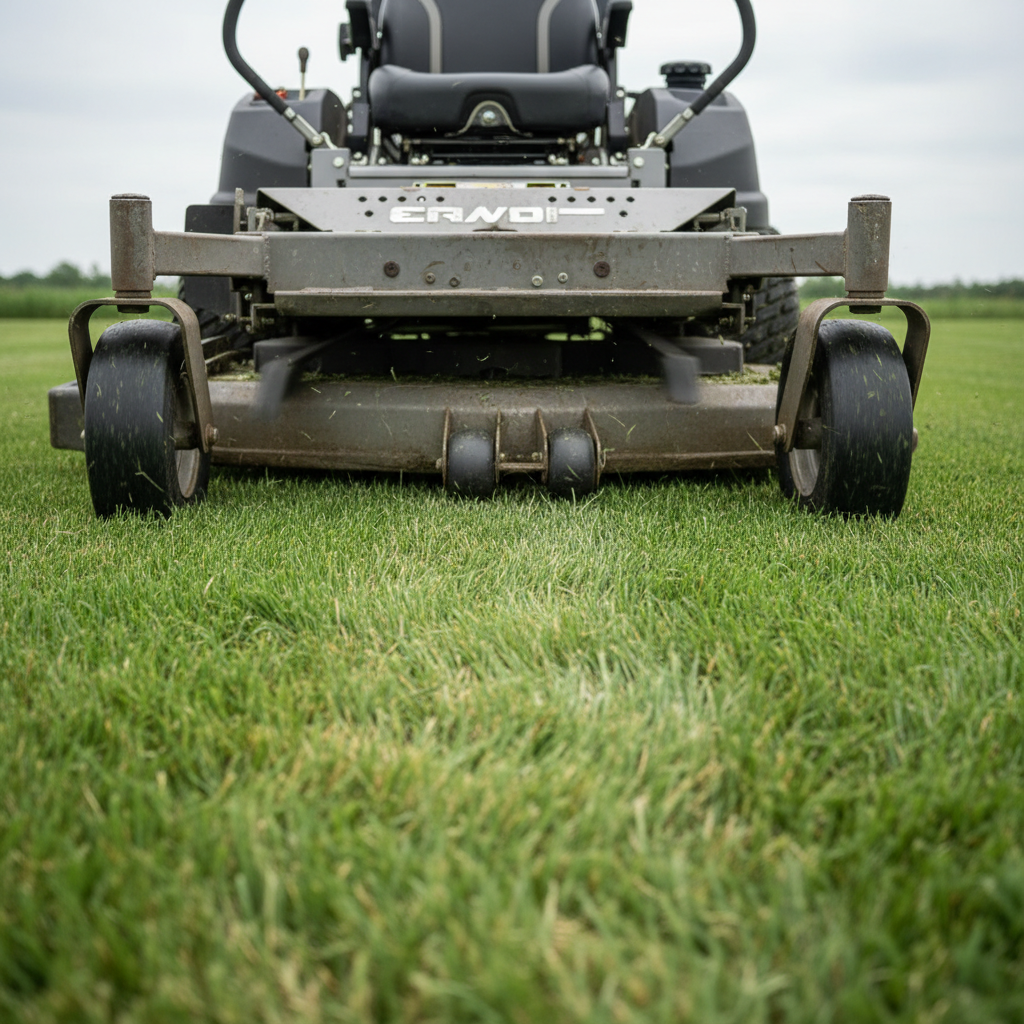
Leading Zero-Turn Mower Brands by Category
The outdoor power equipment industry separates zero-turn radius (ZTR) manufacturers into distinct market tiers ranging from entry-level residential units to industrial commercial machines. Understanding which companies lead each tier helps buyers invest in equipment engineered for their specific acreage and terrain.
In the commercial landscaping sector, brands such as Scag Power Equipment, Exmark, and Hustler Turf Equipment represent the industry benchmark. Scag, manufactured in Mayville, Wisconsin, is widely recognized for its Velocity Plus cutter decks and rigid tubular steel frames. Hustler Turf, engineered in Hesston, Kansas, invented the twin-lever zero-turn steering concept in 1964 and remains famous for its low center of gravity. Exmark, a division of The Toro Company based in Beatrice, Nebraska, commands substantial market share among full-time contractors due to its signature UltraCut deck geometry.
For residential acreage and prosumer applications, manufacturers like Toro, Ariens, and John Deere deliver exceptional cutting performance. While standard gas riding lawn mowers rely on front-wheel steering linkages and slower ground speeds, zero-turn platforms enable operators to pivot in place and complete large mowing jobs in a fraction of the time.
Commercial vs. Residential Construction Standards
When comparing manufacturers, the primary distinction lies in build standards rather than brand names alone. Commercial machines feature heavy-duty fabricated decks welded from 7-gauge or 10-gauge structural steel, reinforced with leading-edge bullnoses that deflect obstacles. In contrast, entry-level residential mowers utilize 11-gauge or 12-gauge stamped steel decks, which are lighter and more susceptible to warping if an obstruction is struck at speed.
Hydrostatic drive assemblies are another critical differentiator. Residential zero-turn mowers typically utilize integrated transaxles such as the Hydro-Gear EZT or ZT-2200 series. These units feature sealed hydraulic systems with non-serviceable internal reservoirs designed for 300 to 500 operating hours. Commercial models employ robust Hydro-Gear ZT-3400 transaxles or separate Parker hydraulic pumps paired with individual wheel motors. These commercial configurations incorporate spin-on oil filters, allowing scheduled fluid changes that support lifespans exceeding 2,500 hours.
Operator ergonomics also separate manufacturers. For example, Toro riding lawn mowers frequently incorporate the proprietary MyRIDE suspended operator platform, decoupling the seat and foot pan from rough lawn impacts to prevent operator fatigue during extended cutting sessions.
Evaluating Engines and Cutting Decks
Modern zero-turn manufacturers assemble machines using specialized components sourced from leading suppliers. The final reliability of the machine relies heavily on how each brand integrates these core systems.
Engine selection is vital to long-term reliability. Premium zero-turn mowers are predominantly powered by commercial-grade engines including the Kawasaki FX series, Kohler Command PRO, or Briggs & Stratton Vanguard commercial lines. Residential models often feature consumer-grade Kawasaki FR engines. Commercial engines include heavy-duty canister air filters with dual-stage cyclonic filtration and high-capacity oil pumps that maintain consistent lubrication on slopes.
Deck airflow engineering dictates the finished appearance of your turf. A well-designed cutting chamber creates high vacuum velocity that lifts grass blades upright before cutting and discharges clippings evenly. Scag Velocity Plus decks, Toro TurboForce decks, and John Deere Accel Deep decks are widely praised for their clean grass dispersion in thick turf conditions.
Key Factors When Selecting a Zero-Turn Manufacturer
Before purchasing a zero-turn machine, evaluate the physical demands of your property and the practical realities of long-term equipment ownership:
First, evaluate property size and obstacles. Yards measuring under one acre with narrow fence gates require compact 34-inch to 42-inch cutting decks, whereas properties spanning two to five acres benefit significantly from 54-inch or 60-inch fabricated decks.
Second, inspect slope and terrain stability. Traditional zero-turn mowers steer through rear drive wheels, which can lose traction on steep declines. If your yard includes slopes exceeding 15 degrees, seek models featuring low centers of gravity, aggressive turf tires, and certified Roll-Over Protection Systems.
Third, prioritize authorized dealer accessibility over retail convenience. While consumers often browse seasonal riding lawn mowers clearance promotions at big-box home improvement stores, dedicated equipment dealerships assemble machines correctly, verify deck leveling, register factory warranties, and provide direct access to certified technicians and genuine parts.
Frequently Asked Questions
Which zero-turn mower brand lasts the longest?
Commercial brands like Scag, Hustler, and Exmark typically offer the longest operating lifespans, routinely exceeding 2,500 to 3,500 hours when properly serviced. Their longevity stems from thick 7-gauge fabricated steel decks, heavy-duty cast-iron spindles, and serviceable hydraulic wheel pumps. High-end residential mowers from Toro and Ariens can easily last 15 to 20 years for homeowners logging 50 hours annually.
Are commercial zero-turn mowers worth the extra cost for homeowners?
Homeowners managing three or more acres of rough, uneven ground often find commercial or prosumer mowers well worth the investment. Commercial mowers feature reinforced structural frames, serviceable Hydro-Gear transaxles, and superior vibration dampening. However, homeowners mowing a flat, manicured lawn under two acres rarely need the expense of an industrial machine.
What is the most reliable engine brand for a zero-turn mower?
Kawasaki V-twin commercial engines, specifically the FX and FS series, are widely regarded by landscape professionals as the most dependable zero-turn powerplants due to smooth torque delivery and heavy-duty filtration. Briggs & Stratton Vanguard commercial engines and Kohler Command PRO units also maintain outstanding reputations for durability.
What transmission should I look for in a zero-turn mower?
For residential mowing up to two acres, sealed Hydro-Gear EZT or ZT-2200 transmissions are dependable and cost-effective. For properties larger than two acres or yards with rolling slopes, look for serviceable transmissions such as the Hydro-Gear ZT-2800 or ZT-3100, which feature external spin-on filters and drain ports for periodic fluid changes.
How do I choose between a stamped and fabricated cutting deck?
Fabricated decks are constructed from thick plates of steel welded together, offering exceptional impact resistance against tree roots, rocks, and uneven terrain. Stamped decks are pressed from a single sheet of curved steel, which provides smooth aerodynamic airflow for clean bagging and mulching on manicured suburban lawns.
Technical Standards and Compliance
Mechanical safety standards, operational tolerances, and protective gear guidelines align with benchmark specifications established by the American National Standards Institute (ANSI).









