
Quick Answer: Can A Lawn Mower Overheat?
Yes. Gas and electric lawn mowers can overheat when heat cannot leave the engine or motor fast enough, or when the machine is working harder than its cooling system can handle. Blocked airflow, low oil, a packed deck, dull blades, heavy wet grass, and long hard runs are the usual triggers. Some warmth after mowing is normal. Smoke, a burning…

Pros
- Powerful 80V brushless motor delivers 32HP gas-equivalent performance with quiet fume-free operation and no engine maintenance.
- Complete kit includes four 6.0Ah batteries and 600W charger for substantial runtime up to 1.5 acres.
- SmartCut technology and 42-inch heavy-duty steel deck ensure consistent cuts without bogging in tough conditions.
- Versatile towing up to 350 lbs and optional cargo hauling plus comfort features like high-back seat and LED lights.
- Strong 4-year limited warranty and full compatibility with the Greenworks 80V tool ecosystem.
Cons
- Rear utility cargo bed for 200 lb hauling is sold separately and not included in the kit.
- Runtime of up to 1.5 acres varies with conditions and may require recharging or battery swaps on larger properties.
- As a fully cordless model continuous operation depends on battery levels unlike gas engines with unlimited runtime.
The Greenworks 80V 42" CrossoverT Cordless Riding Lawn Tractor is a ready-to-mow zero-emission tractor designed for homeowners managing medium to large lawns. It features a reinforced 42-inch stamped steel deck of 12-gauge construction along with premium comfort elements such as a high-back padded seat with foldable armrests. The overall build emphasizes durability and user convenience right out of the box with the included battery and charger set.
Performance centers on the 80V TruBrushless motor that provides 32HP gas-equivalent power with instant torque and quiet fume-free operation. SmartCut technology senses grass conditions and automatically adjusts power to maintain a consistent cut even in tall thick or wet areas. The four 6.0Ah batteries support runtime for up to 1.5 acres depending on conditions while dual LED headlights and a 7-position deck height range from 1.5" to 4.5" add practicality. Front and rear attachments further allow towing up to 350 lbs for added yard utility.
Key considerations include that the rear utility storage bin capable of hauling 200 lbs is sold separately so full cargo functionality requires an extra purchase. Runtime remains condition-dependent and may fall short for properties significantly larger than 1.5 acres without using the 600W charger or swapping batteries. The cordless design prioritizes ease and low maintenance but trades off the continuous runtime of traditional gas models.
This tractor delivers strong value for eco-conscious owners of residential properties who want gas-like power without the emissions noise or upkeep. It suits those who already use or plan to expand into the Greenworks 80V family of tools and who appreciate the 4-year limited warranty. Users with exceptionally large or commercial-scale lawns should evaluate battery logistics carefully before purchase.

Pros
- Delivers strong 21 horsepower equivalent power comparable to gas riding mowers.
- Provides up to 1.5 acres of runtime on a full charge with the six included batteries.
- Features low-maintenance dual brushless motors without belts for greater durability.
- Offers versatile 12-position cutting height adjustment from 1.5 to 4.5 inches.
- Includes digital controls for blade settings, drive speeds, and cruise control.
Cons
- Limited to 1.5 acres of cutting per charge without purchasing additional batteries for bigger lawns.
- Requires recharging time for the six 56V batteries after each use session.
- Relies solely on battery power with no hybrid or gas backup option for extended operation.
The EGO Power+ TR4204 is a cordless electric riding lawn mower built as a modern tractor alternative for residential use. It features a robust 42-inch stamped steel deck and arrives ready to go with six 56V 6.0Ah batteries plus a charger, creating an immediate impression of convenience and solid construction free from gas engine complexity.
Performance shines through its equivalent 21 horsepower output and top speed of 6 MPH, allowing efficient coverage of up to 1.5 acres on a single charge. Dual brushless cutting motors operate without belts for added durability and less upkeep, while the digital display lets users select three blade settings, three drive speeds, and cruise control. The 12 adjustable heights ranging from 1.5 to 4.5 inches combined with anti-scalp wheels deliver precise results across varied terrain.
Drawbacks center on battery dependency, as larger properties beyond 1.5 acres require extra batteries and recharging intervals can interrupt workflow. The fully electric design eliminates fuel storage needs but demands access to power sources between sessions.
This mower suits homeowners with medium to large yards who value quiet, emission-free operation and reduced maintenance. Those seeking expandable battery capacity for bigger areas will find the EGO Power+ TR4204 a strong long-term investment in cordless lawn care.
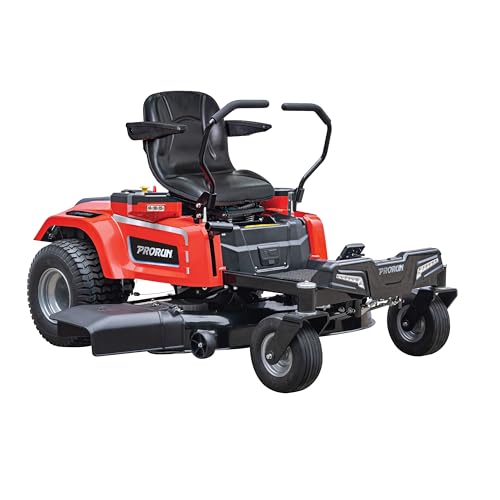
Pros
- High-efficiency brushless motors maximize power output and durability over traditional motors
- Up to 2 acres runtime with three included 10.0 Ah batteries supports substantial mowing sessions
- Zero-emission operation with gas-equivalent 20 HP power for quieter environmentally friendly use
- Six-port auto-switchover battery system provides flexible extended runtime options
- Durable 42-inch steel deck plus included mulch and towing kits add immediate functionality
Cons
- Runtime is limited to approximately 70 minutes or 2 acres which may require recharging for larger properties
- Fully battery-dependent design means performance relies on charge levels and spare battery availability
- 42-inch deck size may require more passes on expansive lawns compared to wider commercial models
The PRORUN PZT60V42 is a fully electric 60V zero-turn riding lawn mower built for residential and light commercial use. Its primary design centers on a robust 42-inch 14-gauge stamped steel twin blade deck powered by direct-drive brushless motors, giving an immediate impression of solid construction and modern battery-focused engineering. The mower arrives complete with three 10.0 Ah batteries, a charger, mulch kit, and towing kit for ready-to-work versatility.
In performance terms, four high-efficiency brushless motors deliver power equivalent to a 20 HP gas engine while producing zero emissions. The system supports up to 2.0 acres or 70 minutes of runtime, and six battery ports with auto switchover intelligently manage all PRORUN 60V battery sizes for continuous operation. A washout port on the steel deck further simplifies post-mow maintenance during real-world sessions.
Potential drawbacks include the finite 70-minute runtime window which can limit coverage on larger properties without spare batteries or recharge breaks. As a fully electric model, it also depends entirely on battery charge levels rather than continuous fuel refills, and the 42-inch deck width may demand extra passes compared with wider traditional options.
Overall the PRORUN PZT60V42 offers strong value for homeowners and small-property managers who want gas-like cutting power without emissions or noise. Those with medium-sized lawns seeking quiet efficient zero-turn performance and included accessories will benefit most from this electric mower.

Pros
- Strong 24HP FR730 engine power for demanding cutting conditions
- Wide 54-inch FAB deck reduces total mowing time
- Zero turn design delivers excellent maneuverability
- Fabricated deck supports durable everyday operation
Cons
- Sparse details beyond engine and deck leave other features unspecified
- Gas-powered FR730 engine needs regular fuel and maintenance
- Large 54-inch deck size may feel oversized on compact properties
The Husqvarna Z254F is a zero turn mower from the established Husqvarna brand in the riding lawn mowers category. It centers on a solid build that pairs a 24HP 726cc FR730 engine with a 54-inch FAB deck for straightforward residential grass care.
Performance stems directly from the listed specifications. The FR730 engine delivers the horsepower needed for steady operation across typical lawns while the wide FAB deck completes passes efficiently. Zero turn handling improves control in real yard layouts based on the model design.
Considerations arise from the limited data available. Secondary elements such as comfort features fuel capacity or extras receive no mention and the gas engine format involves routine upkeep. The large deck suits open areas better than confined spaces.
The Husqvarna Z254F provides the most value for owners of medium or large properties who want reliable engine power and a broad cutting width. Users with smaller lots or those seeking extensive accessory options should weigh the core specs carefully before purchase.
What overheating means on a lawn mower
A lawn mower is supposed to get warm. Cutting grass takes energy. In a gas engine that energy comes from combustion and from friction inside moving parts. In an electric motor it comes from current flowing through windings, controllers, and a battery pack. The blade spindle, belts, and the mower deck also pick up heat from work and from contact with grass and sun-heated ground. After a normal session, the muffler, exhaust, engine shroud, motor housing, and the underside of the deck can be uncomfortable or unsafe to touch. That is ordinary operating heat, not automatically a breakdown.
Overheating is different. It means the machine is making more heat than its cooling path can shed, or that heat is trapped against metal, plastic, oil, or packed clippings. You will not get a useful answer from a single temperature number that applies to every consumer mower. The practical test is change: the machine is hotter than it is after a comparable job, or heat shows up with a burning smell, smoke, fading power, an unexpected shutdown, melting or discolored plastic, or parts that feel unsafe to approach. For additional operational safety benchmarks, see our published testing notes on jbl partybox club 120 vs sony srs xv500. For complementary hardware performance, examine our breakdown on riding lawn mower specifications.
That definition holds across formats. A walk-behind mower and a riding mower can both overheat. So can a gas model, a corded electric, and a battery machine. What changes is the heat source and which openings must stay clear. The rest of this article stays at that general consumer level. It is not a diagnosis of one brand or a confirmed failure sitting in your garage.
How gas engines overheat
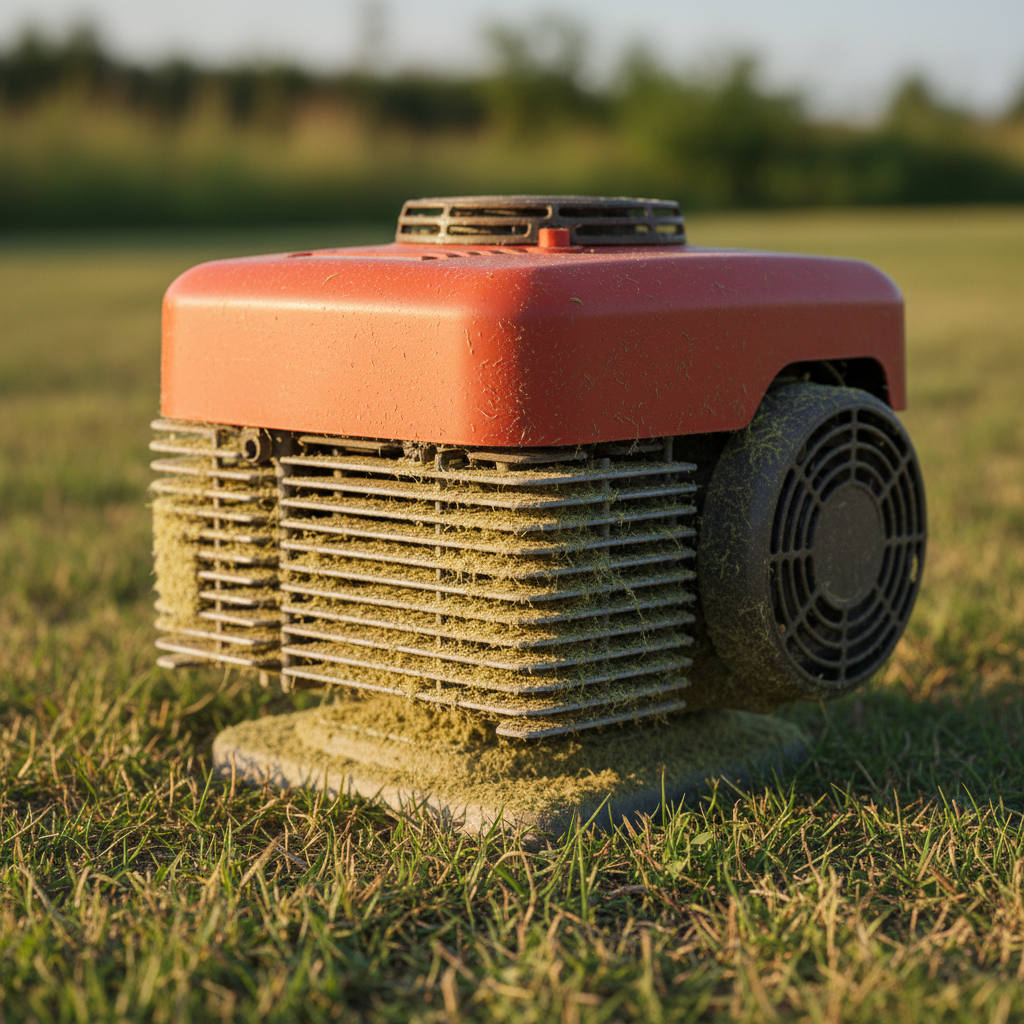
Most consumer gas walk-behind mowers, and many riding mowers, use an air-cooled engine. A few larger machines are liquid-cooled, but the typical home mower depends on air moving over metal. Fuel burns in the cylinder. Pistons, bearings, and gears create friction. That heat has to travel into the cylinder head and block, then into cooling fins, then into a stream of air.
Cooling fins, the flywheel fan, and the engine shroud
An air-cooled engine is only as good as its airflow. A flywheel fan usually pulls or pushes air under the engine shroud and across the cooling fins. The shroud is not just a cover. It directs that air where it is needed. Grass, leaves, chaff, and oily dust packed into the intake, the shroud, or the fins act like a blanket. Heat stays in the metal instead of leaving with the air. A missing, cracked, or poorly seated shroud can also send cooling air the wrong way.
This is why a mower that ran fine in spring can run hot in midsummer after weeks of damp, fine clippings. The engine may still start and cut. Internally it can already be hotter than it should be.
Oil, the air filter, and lubrication
On a four-stroke gas engine, engine oil lubricates and helps carry heat away from the piston, bearings, and other internal surfaces. Low oil is a major overheating and damage risk. Oil that has broken down after hard use, or oil that was badly overfilled, can also interfere with cooling and lubrication. Check the level only after the machine is cool and sitting on level ground, using the dipstick method described in that model’s owner’s manual. There is no single oil type or fill quantity that is correct for every mower.
A dirty air filter can make a gas engine run richer than it should. Extra fuel and incomplete combustion raise temperature and can foul other parts. The filter does not create heat by itself. It changes how the engine burns fuel and how hard the engine works for the same cut.
Two-stroke engines still found on some older or lighter machines depend on oil mixed with the fuel for lubrication. Poor lubrication, a mix that does not match that engine, or a neglected air path can raise temperature. Do not guess at a mix ratio from memory or from another tool. Use only what the manufacturer specifies for that engine.
Restricted exhaust or a damaged muffler can keep hot gases from leaving as designed. That is a possible contributor after a cool inspection, not a conclusion you can draw from heat alone. Combustion plus blocked airflow is the usual story. Severe overheating can later show up as scored parts, a seized piston, a warped head, or a failed gasket, but those are outcomes a technician confirms. Heat by itself does not name the failed part.
How electric and battery mowers overheat
A mower can overheat even if it has no gas engine. An electric motor turns current into rotation, and that process produces heat in the windings, bearings, and nearby power electronics. The harder the blade works, the more heat those parts make. Grass packed into motor vents or around the housing traps that heat. A stalled blade, a deck jammed with wet grass, a steep grade, or a long continuous cut all increase load.
A battery pack can also run hot. High-load discharge while cutting thick turf, and some fast-charging sessions, both generate heat inside the pack. High ambient temperature makes it harder for that heat to leave. A warm pack after hard use is not automatically a defect. A pack that is unusually hot, swollen, leaking, smoking, or smelling of electrical burning is a stop-and-isolate situation, not something to keep using. Before finalizing equipment decisions, refer to our comprehensive dyson v8 cyclone vs bissell featherweight stick comparison.
Many cordless and some corded designs include a thermal cutoff or similar protection. The machine may reduce power or shut down, then work again after it cools. That behavior is common. It is not universal, and it is not proof that a given model is immune to damage. If the mower quits and later restarts, treat the shutdown as a warning that load, airflow, or ambient heat was too high. It is not a reason to disable protection, rewire the motor, or open the pack. Those steps create shock and fire risk and belong with a qualified technician or the manufacturer’s service process.
Walk-behind versus riding mowers
Walk-behind and riding mowers overheat for many of the same reasons: blocked airflow, a packed deck, a dull blade, heavy wet grass, and, on gas models, low or degraded oil. The difference is how long the machine runs, how much grass it moves, and which extra parts can get hot. For broader ecosystem context, read through our operational guide on bissell crosswave hydrosteam vs shark stainforce.
A riding mower often stays on the lawn longer and uses a wider deck. It may add belts, pulleys, a larger exhaust path, and more sheet metal that holds heat. A slipping belt can make the engine work while the blade does less useful cutting, which still produces heat and can glaze the belt. Operators also sit closer to a large hot deck and muffler for a longer stretch of time.
On both formats, the “engine” is not the only burn hazard. The deck, muffler, exhaust, and engine covers can injure skin even when the machine is not failing. Neither a push mower nor a rider is exempt from overheating. A smaller walk-behind can still overheat quickly if the shroud is packed or the oil is low. A large rider can still overheat if it is forced through tall, wet grass for an entire afternoon with a clogged deck.
Common causes
Overheating is more likely when cooling is blocked or when the machine is asked to do more work than a clean, sharp setup can handle. Heat after a session is a clue, not a complete diagnosis. Several of the items below can be present at once.
Conditions that raise load and temperature
- Tall, wet, or dense grass, especially with a low deck setting and wide passes.
- A dull or damaged blade that tears grass instead of slicing it.
- A mower deck packed with clippings, which both overloads the blade and holds heat against the housing.
- Long uninterrupted runs on a hot day, when the air that should cool the engine or motor is already warm.
- Steep slopes or thick thatch that keep the blade in heavy contact for a long time.
Hot weather alone can contribute because it reduces how fast air carries heat away. By itself, a warm afternoon does not usually overheat a clean, properly oiled machine on a reasonable cut. Combined with a dirty shroud, dull blade, or soaked lawn, it often is enough.
Blocked airflow and neglected maintenance
- Grass, mud, or oily dust covering cooling fins, the flywheel fan intake, the engine shroud, or motor vents.
- Low or degraded oil on a four-stroke gas engine.
- A heavily dirty or oil-soaked air filter that makes a gas engine run rich and hot.
- Clippings left packed against the engine or motor after storage.
These are the checks most owners can make after the machine is cool. They are also the issues that most often explain a first episode of unusual heat.
Possible deeper problems
Other issues can contribute, but heat alone does not prove them:
- Oil that is the wrong type for the climate, or oil that was overfilled.
- A restricted exhaust path or a crushed, rusted, or debris-clogged muffler.
- A failing cooling fan.
- Slipping belts on a riding mower.
- Electrical faults that add resistance and heat in a motor, controller, or wiring.
Treat debris, oil level, the air filter, blade condition, and cutting height as maintenance first. Persistent heat after those items are corrected is when internal engine damage or a failing motor or pack becomes a stronger possibility.
Warning signs to take seriously
Use your senses during the job and in the first minutes after shutdown. A single sign rarely names a single failed part. A cluster of signs is a reason to stop.
- A burning smell of grass, oil, plastic, or electrical insulation.
- Visible smoke from the engine, motor, belt, or deck area.
- Steam if moisture hits a hot surface. Steam is not the same as oily or electrical smoke, but it still means something is hotter than it should be in that spot.
- Paint discoloration, warped plastic, or melting near the shroud, motor housing, or battery bay.
- Sudden loss of power, or a blade that bogs down in grass that used to cut easily.
- Unusual knocking, grinding, or a new rattle from the engine or spindle.
- An automatic shutdown on an electric or battery model, especially if it repeats.
- An engine, motor housing, or deck that is far hotter than after a normal session of similar length.
A hot muffler and exhaust are expected. Heat there, by itself, is not proof of failure. Do not rest a hand on the muffler to “check” it. Smoke from the engine area, oil leaking onto hot parts, and an electrical burning smell are reasons not to keep running the machine so you can finish the yard.
Safe immediate steps if the mower is unusually hot
Do not finish the lawn if the machine is unusually hot or showing the warning signs above. The goal is to stop heat production, keep people away from hot metal, and keep dry debris and fuel away from the exhaust.
- Disengage the blade.
- Stop forward motion.
- Shut the engine or motor off using the normal control, not a workaround.
- Remove the key on machines that have one.
- Unplug a corded mower. Remove the battery if the design allows and you can do it without touching hot parts or forcing a damaged pack.
Move people and pets away. Let the machine cool outdoors on mineral ground or another nonflammable surface, clear of dry clippings, mulch, leaves, and fuel containers. If you can relocate it without grabbing the muffler, deck edge, or shroud, do so. If you cannot, leave it where it is and keep the area clear.
Do not refuel a hot gas mower. Do not pour water on a hot engine to speed cooling. Do not disable safety switches. Do not reach under the deck while any residual motion or heat remains. Do not throw a cover over the machine or park it against a wall of dry debris. A muffler, deck, and engine cover can burn skin. Dry clippings against a hot exhaust are a fire concern even after the engine or motor is off.
If you see active flames, or if fuel or oil is on a surface that is already burning, get people away and follow local emergency guidance. Do not try to “save” the machine first.
After it has cooled: basic checks
Wait until parts are cool enough to touch before any inspection. Follow the owner’s manual for how that model should be disconnected, tipped, or cleaned. The checks below are external. They are not a rebuild procedure.
- Clear the deck and discharge chute of packed grass once the machine is cool and powered down as the manual requires.
- Remove packed grass from the engine shroud, cooling fins, and motor vents. Do not bend the fins.
- On a four-stroke, check oil on level ground with the dipstick method in the owner’s manual. Do not assume a universal oil type or capacity.
- Look at the air filter for heavy dirt or oil soaking.
- Inspect for obvious leaks, damaged wires, melted insulation, or a crushed muffler.
A short test cut is reasonable only if the cooling paths are clear, oil looks adequate, there is no leak or burning smell, and the machine sounds normal. If unusual heat or smell returns quickly, stop. Repeated “just one more pass” testing is how a cooling problem becomes internal damage.
Do not remove the cylinder head, run compression tests unless you are qualified and following the service literature, bypass a thermal cutoff, or work on fuel systems or high-current electrical circuits. Those jobs need a qualified small-engine or outdoor-power technician.
When overheating may mean a serious fault
Continuing to mow while a gas engine is overheating can score cylinders, damage bearings, or seize internal parts. An overheating electric motor or battery pack can damage insulation, bearings, or the pack itself. Some of that harm is not obvious until the next start, when the engine will not turn or the motor trips again under light load.
Stop DIY cleaning and get professional help, using the model’s owner’s manual as the specification source, if any of the following apply:
- Overheating returns after the deck, shroud, fins, and vents are clean and a proper cool oil check looks adequate.
- You hear knocking that was not there before.
- You find metal flakes or glitter in the oil.
- An electric mower repeats thermal shutdowns under ordinary grass.
- Wiring is melted or a battery pack is swollen, leaking, or smells burned.
- Fuel or oil is reaching hot surfaces.
Do not assume a blown head gasket, warped head, or seized piston from heat alone. Do not treat an internet oil capacity, mix ratio, or “always costs this much” figure as a fact for your machine. Warranty language also varies by manufacturer and by cause. The manual and a qualified technician are the right sources for those details.
Even after shutdown, exhaust parts can stay hot long enough to burn skin or ignite nearby dry debris. Give the machine space until it is fully cool.
How to lower the chance of overheating
Prevention is mostly about keeping heat moving out and keeping the cutting load reasonable. These habits reduce risk. They do not guarantee a mower will never run hot, and there is no universal number of minutes a machine can run before it overheats.
- Before a long mow, look at the shroud, cooling fins or motor vents, and the deck. On four-stroke gas models, check oil while the machine is cool and level.
- Keep blades sharp enough to cut rather than tear. A blade that is badly out of balance can add vibration and load; have it serviced the way the manual describes.
- Raise the deck or take narrower passes in tall or wet grass instead of forcing one low, wide cut.
- Pause on very hot days if the machine is laboring, smoking slightly from packed grass, or losing power.
- Replace a dirty air filter rather than running with it clogged.
- Use the oil type and level the manufacturer lists for that machine and climate. Do not treat additives as a universal fix.
- Store the mower so clippings are not left packed against the engine or motor.
Oil-change intervals, blade-replacement schedules, and fuel specifications belong in the owner’s manual for that model. Following those instructions matters more than any generic calendar rule.
Common Questions on Can A Lawn Mower Overheat Answered
Is it normal for a lawn mower to feel hot after use?
Yes. The muffler, exhaust, deck, and engine or motor housing are often too hot to handle after ordinary mowing. That warmth becomes a problem when it is paired with smell, smoke, fading power, shutdown, or heat that is clearly worse than after a similar job.
Can hot weather by itself overheat a mower?
High ambient heat makes cooling less effective, but it is rarely the only factor. Unusual heat usually appears when weather combines with blocked airflow, low oil, a packed deck, a dull blade, or a heavy wet cut.
If an electric mower shuts off and works later, is it broken?
Not necessarily. Many designs reduce power or shut down when the motor, controller, or battery pack gets too hot, then recover after a rest. Treat that as a warning to clear vents, reduce load, and let the machine cool. Repeated trips under easy conditions still need professional attention.
Should you change the oil right after an overheat?
Not while the machine is hot, and not as a substitute for finding why it overheated. After a full cool-down, check the level and look for a burnt smell, a milky appearance, or metal debris. If the oil looks contaminated or the engine ran very hot, follow the manual or ask a technician whether a change is appropriate for that model.
Technical Standards and Compliance
For more hands-on benchmarks and buying recommendations, consult our guides on heavy-duty chainsaw buyer guide, as well as high-CFM commercial leaf blower guide.
Mechanical safety standards, operational tolerances, and protective gear guidelines align with benchmark specifications established by the American National Standards Institute (ANSI).