

Quick Answer: Can You Use Fix A Flat On Lawn Mower Tires?
Yes, a Fix-a-Flat-type aerosol tire sealant can sometimes seal a small puncture in a pneumatic lawn mower tire, but only if the tire still has an air chamber, can still be inflated, and the leak is in the tread. It will not work on solid or foam-filled no-flat tires, and it is unreliable on many tube-type tires. Any seal is…

Pros
- Powerful 80V brushless motor delivers 32HP gas-equivalent performance with quiet fume-free operation and no engine maintenance.
- Complete kit includes four 6.0Ah batteries and 600W charger for substantial runtime up to 1.5 acres.
- SmartCut technology and 42-inch heavy-duty steel deck ensure consistent cuts without bogging in tough conditions.
- Versatile towing up to 350 lbs and optional cargo hauling plus comfort features like high-back seat and LED lights.
- Strong 4-year limited warranty and full compatibility with the Greenworks 80V tool ecosystem.
Cons
- Rear utility cargo bed for 200 lb hauling is sold separately and not included in the kit.
- Runtime of up to 1.5 acres varies with conditions and may require recharging or battery swaps on larger properties.
- As a fully cordless model continuous operation depends on battery levels unlike gas engines with unlimited runtime.
The Greenworks 80V 42" CrossoverT Cordless Riding Lawn Tractor is a ready-to-mow zero-emission tractor designed for homeowners managing medium to large lawns. It features a reinforced 42-inch stamped steel deck of 12-gauge construction along with premium comfort elements such as a high-back padded seat with foldable armrests. The overall build emphasizes durability and user convenience right out of the box with the included battery and charger set.
Performance centers on the 80V TruBrushless motor that provides 32HP gas-equivalent power with instant torque and quiet fume-free operation. SmartCut technology senses grass conditions and automatically adjusts power to maintain a consistent cut even in tall thick or wet areas. The four 6.0Ah batteries support runtime for up to 1.5 acres depending on conditions while dual LED headlights and a 7-position deck height range from 1.5" to 4.5" add practicality. Front and rear attachments further allow towing up to 350 lbs for added yard utility.
Key considerations include that the rear utility storage bin capable of hauling 200 lbs is sold separately so full cargo functionality requires an extra purchase. Runtime remains condition-dependent and may fall short for properties significantly larger than 1.5 acres without using the 600W charger or swapping batteries. The cordless design prioritizes ease and low maintenance but trades off the continuous runtime of traditional gas models.
This tractor delivers strong value for eco-conscious owners of residential properties who want gas-like power without the emissions noise or upkeep. It suits those who already use or plan to expand into the Greenworks 80V family of tools and who appreciate the 4-year limited warranty. Users with exceptionally large or commercial-scale lawns should evaluate battery logistics carefully before purchase.

Pros
- Delivers strong 21 horsepower equivalent power comparable to gas riding mowers.
- Provides up to 1.5 acres of runtime on a full charge with the six included batteries.
- Features low-maintenance dual brushless motors without belts for greater durability.
- Offers versatile 12-position cutting height adjustment from 1.5 to 4.5 inches.
- Includes digital controls for blade settings, drive speeds, and cruise control.
Cons
- Limited to 1.5 acres of cutting per charge without purchasing additional batteries for bigger lawns.
- Requires recharging time for the six 56V batteries after each use session.
- Relies solely on battery power with no hybrid or gas backup option for extended operation.
The EGO Power+ TR4204 is a cordless electric riding lawn mower built as a modern tractor alternative for residential use. It features a robust 42-inch stamped steel deck and arrives ready to go with six 56V 6.0Ah batteries plus a charger, creating an immediate impression of convenience and solid construction free from gas engine complexity.
Performance shines through its equivalent 21 horsepower output and top speed of 6 MPH, allowing efficient coverage of up to 1.5 acres on a single charge. Dual brushless cutting motors operate without belts for added durability and less upkeep, while the digital display lets users select three blade settings, three drive speeds, and cruise control. The 12 adjustable heights ranging from 1.5 to 4.5 inches combined with anti-scalp wheels deliver precise results across varied terrain.
Drawbacks center on battery dependency, as larger properties beyond 1.5 acres require extra batteries and recharging intervals can interrupt workflow. The fully electric design eliminates fuel storage needs but demands access to power sources between sessions.
This mower suits homeowners with medium to large yards who value quiet, emission-free operation and reduced maintenance. Those seeking expandable battery capacity for bigger areas will find the EGO Power+ TR4204 a strong long-term investment in cordless lawn care.

Pros
- High-efficiency brushless motors maximize power output and durability over traditional motors
- Up to 2 acres runtime with three included 10.0 Ah batteries supports substantial mowing sessions
- Zero-emission operation with gas-equivalent 20 HP power for quieter environmentally friendly use
- Six-port auto-switchover battery system provides flexible extended runtime options
- Durable 42-inch steel deck plus included mulch and towing kits add immediate functionality
Cons
- Runtime is limited to approximately 70 minutes or 2 acres which may require recharging for larger properties
- Fully battery-dependent design means performance relies on charge levels and spare battery availability
- 42-inch deck size may require more passes on expansive lawns compared to wider commercial models
The PRORUN PZT60V42 is a fully electric 60V zero-turn riding lawn mower built for residential and light commercial use. Its primary design centers on a robust 42-inch 14-gauge stamped steel twin blade deck powered by direct-drive brushless motors, giving an immediate impression of solid construction and modern battery-focused engineering. The mower arrives complete with three 10.0 Ah batteries, a charger, mulch kit, and towing kit for ready-to-work versatility.
In performance terms, four high-efficiency brushless motors deliver power equivalent to a 20 HP gas engine while producing zero emissions. The system supports up to 2.0 acres or 70 minutes of runtime, and six battery ports with auto switchover intelligently manage all PRORUN 60V battery sizes for continuous operation. A washout port on the steel deck further simplifies post-mow maintenance during real-world sessions.
Potential drawbacks include the finite 70-minute runtime window which can limit coverage on larger properties without spare batteries or recharge breaks. As a fully electric model, it also depends entirely on battery charge levels rather than continuous fuel refills, and the 42-inch deck width may demand extra passes compared with wider traditional options.
Overall the PRORUN PZT60V42 offers strong value for homeowners and small-property managers who want gas-like cutting power without emissions or noise. Those with medium-sized lawns seeking quiet efficient zero-turn performance and included accessories will benefit most from this electric mower.

Pros
- Strong 24HP FR730 engine power for demanding cutting conditions
- Wide 54-inch FAB deck reduces total mowing time
- Zero turn design delivers excellent maneuverability
- Fabricated deck supports durable everyday operation
Cons
- Sparse details beyond engine and deck leave other features unspecified
- Gas-powered FR730 engine needs regular fuel and maintenance
- Large 54-inch deck size may feel oversized on compact properties
The Husqvarna Z254F is a zero turn mower from the established Husqvarna brand in the riding lawn mowers category. It centers on a solid build that pairs a 24HP 726cc FR730 engine with a 54-inch FAB deck for straightforward residential grass care.
Performance stems directly from the listed specifications. The FR730 engine delivers the horsepower needed for steady operation across typical lawns while the wide FAB deck completes passes efficiently. Zero turn handling improves control in real yard layouts based on the model design.
Considerations arise from the limited data available. Secondary elements such as comfort features fuel capacity or extras receive no mention and the gas engine format involves routine upkeep. The large deck suits open areas better than confined spaces.
The Husqvarna Z254F provides the most value for owners of medium or large properties who want reliable engine power and a broad cutting width. Users with smaller lots or those seeking extensive accessory options should weigh the core specs carefully before purchase.
When a sealant can and cannot work
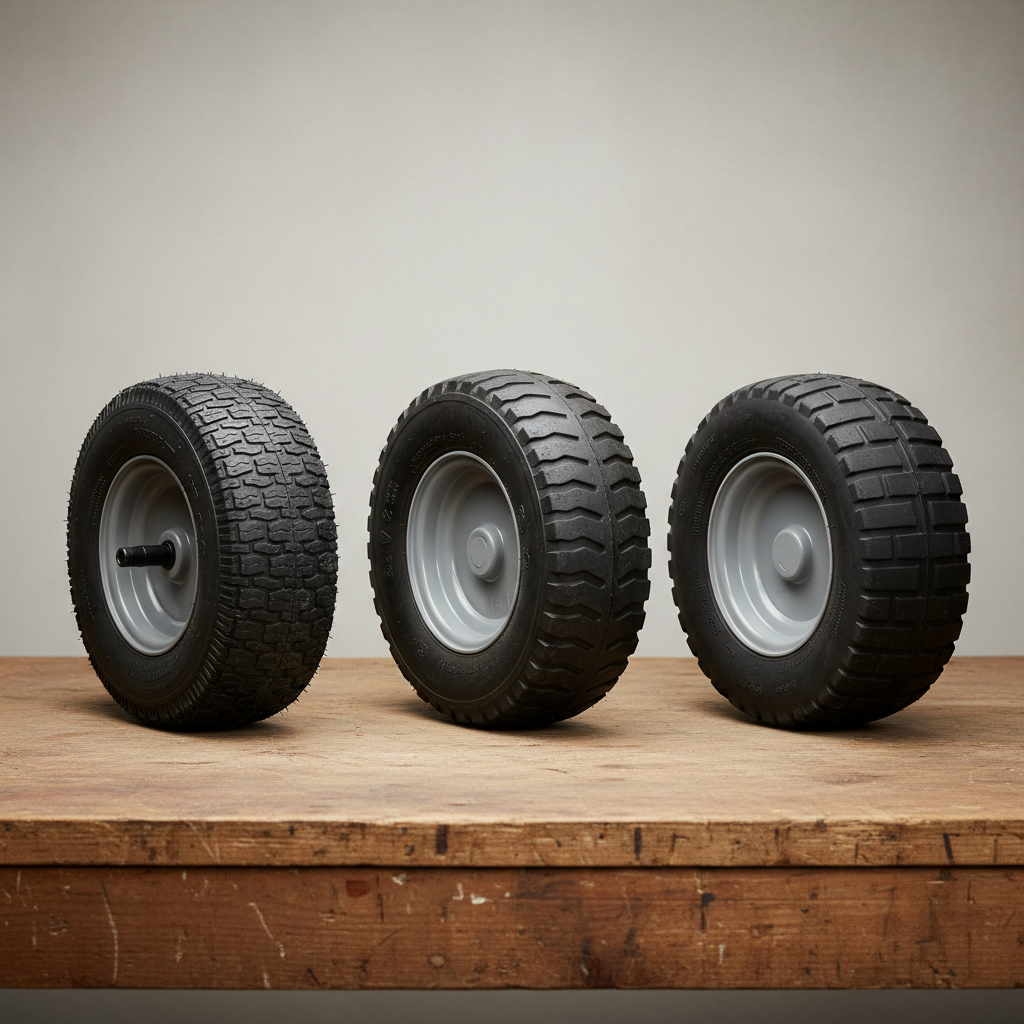
Consumer aerosol sealants such as Fix-a-Flat are made for air-filled pneumatic tires. They inject a liquid or foam sealant plus propellant so the mixture can coat the inner liner or tube and plug a small hole while adding some pressure. That design only makes sense if there is a closed air chamber to pressurize and a small puncture for the sealant to find.
On a typical walk-behind or riding mower, that means the product is only in play when you have a pneumatic tire that still seats on the rim and can hold at least some air. The mower type itself does not decide the outcome. A walk-behind and a rider can both use pneumatic, foam-filled, or solid tires. What matters is the tire construction, the size and location of the leak, and whether the carcass is still sound.
Constructions that may accept an aerosol sealant
A tubeless pneumatic tire is the closest match to what these cans are built for. If a nail, thorn, or similar object has left a small hole in the tread, and the bead is still seated, sealant sometimes coats the inner liner and slows or stops the leak long enough to finish a job or move the machine.
A tube-type pneumatic tire is only a maybe. Sealant sometimes reaches a hole in the inner tube and plugs it. Just as often it fails to coat the tube evenly, pools in one spot, clogs the valve core, or leaves a sticky film that makes a later tube change messy. If you already know the tire uses a tube, a new tube is usually cleaner than hoping the spray finds the puncture.
Constructions that make sealant useless
Solid rubber tires have no air chamber. There is nothing to inflate and nothing for sealant to coat. Foam-filled, or no-flat, tires are packed with foam or a similar filler. They may still have a valve stem or a plugged stem from the factory, but they do not rely on air pressure the way a pneumatic tire does. Depressing the valve, if one is present, will not make the tire go soft in the same way, and spraying sealant into that stem will not repair the filler. In both cases the can cannot help.
Skip sealant as well when the tire is shredded, off the bead, dry-rotted, or fitted with a broken valve. Those are not small tread punctures, and an aerosol product cannot rebuild rubber or reseat a tire that has come off the rim. Before finalizing equipment decisions, refer to our comprehensive z890 vs x870e motherboard comparison.
No consumer sealant brand should be treated as approved for every mower tire. Compatibility depends on the tire in front of you, not on a universal claim. Read the can and, when construction is unclear, check the tire sidewall and the mower owner’s manual before you spray anything.
How lawn mower tires differ from car tires
People reach for Fix-a-Flat because they associate it with a roadside car repair. The basic idea is the same: coat the inside of an air-filled tire and plug a small hole while restoring some pressure. The match with lawn mower tires is only partial. For broader ecosystem context, read through our operational guide on marshall stanmore iii vs harman kardon onyx studio 8.
Automotive formulas are generally optimized for passenger-car speeds, bead seating, and often tubeless construction. Lawn mower tires usually run at much lower speed and much lower pressure. Many use an inner tube. Valve stems can be smaller, older, or a different style than the ones a car can was designed around. Equipment also sits unused for weeks or months, so any liquid left inside can settle, dry, or leave a skin instead of staying evenly distributed the way it might in a car that is driven every day.
Lower speed and turf use cut both ways. You are not asking the tire to survive highway heat the way a car tire must, so a marginal plug sometimes lasts through a mowing session. At the same time, mower tires flex over roots, curbs, and uneven ground, sit in heat and sun, and may already be aged. A seal that looks fine in the garage can open again the first time the tread is loaded. Residue and valve issues also matter more on small equipment. A clogged valve core on a mower wheel is inconvenient to service, inexpensive gauges get gummed up quickly, and the inside of a small tire has less surface area, so leftover sealant is concentrated and messy when you later need a proper repair.
None of that makes aerosol sealant universally unsafe on a mower or guaranteed on any mower. It only means a product people think of as a car fix is, at best, a short-term workaround on the right kind of pneumatic equipment tire. For troubleshooting and reliability insights, consult our in-depth dyson v8 cyclone vs bissell featherweight stick report.
How to tell what kind of mower tire you have
Identify the tire before you buy or spray a can. The sidewall, the valve, and how the tire feels will usually tell you enough. If markings are worn off, use the owner’s manual or a tire shop rather than guessing.
Pneumatic, foam-filled, and solid
- A pneumatic tire has a working valve stem and can be inflated. It will go soft if it leaks or if you depress the valve core and let air out. The sidewall often lists an inflation pressure.
- A foam-filled tire may still show a valve or a plugged stem, but it stays firm when the valve is depressed. The tire often feels uniformly hard rather than airy, and it does not flatten the way a leaking pneumatic tire does.
- A solid tire has no air chamber and usually no working valve. It will not take air and will not go flat from a puncture in the ordinary sense.
If there is no valve at all and the tire has never been inflatable, treat it as solid. If there is a stem but the tire never loses firmness and never accepts a meaningful charge of air, treat it as foam-filled. In either case, put the sealant away.
Tube-type versus tubeless
Many walk-behind and riding-mower tires are pneumatic; some of those use inner tubes and some are tubeless. You cannot assume one or the other from the mower brand alone. Clues include the rim design, how the valve is mounted, and what you see if the tire is already unseated. A tube-type valve is often the only air path, and the tube becomes visible once the bead is broken. A tubeless setup relies on the tire sealing against the rim.
Do not cut or destroy a serviceable tire just to inspect it. If you cannot tell from the rim, valve, and sidewall, look up the tire markings or have a small-engine shop confirm the construction. That matters because sealant is a weaker bet on a tube and because a later repair is usually a new tube rather than a patch of the outer tire.
When identification says skip sealant
If the tire is already completely flat and off the bead, if the sidewall is cracked or crumbling, or if the valve stem is broken, bent, or missing its core, sealant is the wrong tool. A can cannot reseat a dropped bead or replace a damaged valve. Completely flat tires also make it harder to get sealant where it needs to go. At that point, plan on removing the wheel for a tube, a mechanical repair, or a new tire.
What a sealant can realistically fix
Aerosol sealants are aimed at small punctures in the tread of a tire that can still be inflated. A thorn, staple, or nail through the crown of the tread is the scenario they are meant to address. Even then, success is not assured, and a seal that holds in the driveway may not hold after the next pass over rough ground.
They generally cannot:
- Reseat a tire that has come off the rim
- Rebuild dry-rotted or cracked rubber
- Close a sliced or torn sidewall
- Repair a leaking, cracked, or broken valve stem
- Stop a bead leak caused by corrosion, a bent rim, or a damaged bead
- Fill a large gash or a hole that has torn the cords
The cause of the leak matters. A sharp object through otherwise healthy tread is the only case where sealant has a realistic chance. Rim damage, a bent wheel, porous aged rubber, and weather-checked sidewalls are structural or sealing problems. Spraying more product will not restore brittle rubber or a distorted rim.
Even a successful seal is usually a short-term way to finish mowing or get the machine to a shop. It is not a permanent repair and not a promise that the tire will stay sound for the rest of the season. Do not treat a sealed mower tire as safe at any particular speed or on any particular slope. Inspect it before each use and replace the temporary fix with a proper repair as soon as you can.
How to use an aerosol sealant on a pneumatic mower tire
Use these steps only after you have confirmed the tire is pneumatic, the carcass looks serviceable, and the leak appears to be a small tread puncture. Treat them as general practice, not as the official directions for any one can. The label on the product you buy and the pressure molded on the tire sidewall always take priority.
Before you spray
- Park on level ground and stop the engine. Allow hot exhaust, belts, and decks to cool.
- On a riding mower, chock the remaining wheels or otherwise stabilize the machine so it cannot roll.
- Read the tire sidewall for construction clues and the rated inflation pressure. Read the sealant can for compatibility notes and the valve orientation it specifies.
- Locate the puncture if you can. If a nail or thorn is still in the tread, remove it so the hole can close around the sealant. Do not keep operating a tire with a large object still embedded.
- Inspect the valve stem. A cracked, broken, or badly corroded stem is a reason to stop and replace parts instead of injecting sealant.
- Wear gloves and eye protection. Keep the aerosol can away from heat, sparks, and open flame.
Injecting and spreading the sealant
Attach the can to a clean valve. Inject with the valve in the orientation the product label specifies. After the can is empty, roll the mower a short distance or slowly rotate the tire so the sealant can spread around the inner liner or tube instead of sitting in one puddle. If the can did not restore enough air, reinflate to the pressure marked on the tire sidewall or listed in the current owner’s manual. Do not exceed that figure, and do not invent a universal mower-tire pressure.
Do not copy automotive “drive at a given speed” instructions onto a lawn mower. Mowers are not designed for that kind of follow-up, and a soft tire on a rider is a control problem, not a reason to go faster. A slow roll or rotation to distribute sealant is enough.
Checking whether it actually sealed
Recheck the tire after a short period in the garage or driveway, then again after the next use. Listen for hissing, look for fresh sealant weeping from the tread or the valve, and feel whether the tire has gone soft. A tire that stays up overnight but falls after mowing did not receive a reliable seal. A tire that is still collapsing, folding, or coming off the bead should not be used. Stop and move to a mechanical repair rather than adding can after can.
When a plug, patch, tube, or new tire is the better option
Skip sealant entirely when the tire is foam-filled or solid, the carcass is cracked or dry-rotted, the sidewall is cut, the tire will not stay on the rim, the puncture is large, the valve is damaged, or the machine is used on slopes where a sudden deflation would be dangerous. In those cases the can cannot restore a safe tire, and delaying a real repair only adds mess.
Plug, patch, or new tube
A plug or an internal patch can be appropriate for a small tread puncture in a serviceable tubeless tire, provided the person doing the work can demount or otherwise access the tire safely and can follow a proper repair method. Plugs are a tread-area repair, not a sidewall repair. An internal patch, done with the tire off the rim and the inner surface cleaned, is generally a more controlled repair than a string plug inserted from the outside, but either one still depends on healthy rubber around the hole.
A new tube is often the cleanest fix for a tube-type mower tire. You replace the leaking chamber instead of trying to coat it from the valve. That also lets you inspect the inside of the tire for the object that caused the puncture so it does not immediately ruin the new tube.
When replacement is the sensible fix
Fit a new tire when the tread is worn through, the rubber is brittle or weather-checked, cords are showing, the bead is damaged, or previous sealant has turned the inside into a sticky mess that you cannot clean well enough for a trustworthy patch. Aged mower tires fail from dry rot as often as from a single puncture. Putting sealant into a cracked carcass wastes time and can hide how far the damage has gone.
You can use sealant as a temporary bridge and still do a proper repair later, but dried residue can interfere with a patch and can hide the true leak. A later tube change or internal repair may require cleaning the rim and tire or discarding the old tube. If the inside is heavily coated, replacement is often simpler than trying to salvage every part.
Do not stack more sealant into a small equipment tire in hopes of matching the reliability of a new tube or tire. Extra product adds weight and mess without fixing a structural failure.
Safety, mess, and equipment caveats
A sealed tire can still lose air suddenly. On a walk-behind mower that usually means an awkward stop and a machine that is hard to push. On a riding mower, a tire that drops on a slope, near a ditch, or close to a drop-off can make the machine hard to control. Treat any sealant fix as provisional. Inspect the tire before each use, stay off steep slopes until the tire has a proper repair, and stop if the tire begins to fold or wander.
Sealant is sticky. It can stain concrete, clothing, and deck surfaces, coat the inside of the rim, and cling to the tube or liner. When you later break the bead, expect a cleanup job. It can also clog valve cores and inexpensive pressure gauges. If a gauge or compressor fitting starts to stick after you have used sealant, clean or replace that part rather than forcing it. Some people dedicate a cheap gauge to sealed tires so their regular gauge stays clean.
Handle the aerosol can as you would any pressurized household product. Use gloves and eye protection, work in a ventilated area, keep the can away from heat and open flame, and do not puncture or incinerate it. For leftover product and empty cans, follow the label and local household-hazardous-waste guidance. Do not assume any formula is non-toxic, biodegradable, or harmless in runoff simply because it is sold for consumer tires.
If you are not comfortable removing a mower wheel, breaking a bead, or judging whether a carcass is still safe, a small-engine shop or tire shop is the better next step. Forcing a bead with starting fluid, ether, or open flame is dangerous and is not a repair method to attempt at home.
If the tire will not hold air after sealant
If the tire is still soft after one can, the usual explanations are straightforward. The hole may be too large or in the sidewall. The tire may be tube-type, and the sealant never reached the puncture. The bead may be leaking. The valve core may be clogged or loose. The carcass may be porous from age. Weeping sealant at the hole or at the valve is a sign the product is escaping rather than forming a plug.
One additional attempt can be reasonable if the first application never had a chance to spread: rotate the tire, reinflate to the sidewall rating, and recheck. Repeated cans are a poor idea. They will not close a sidewall cut, reseat a damaged bead, or restore dry-rotted rubber, and they make the next repair harder.
A tire that holds overnight but goes flat after mowing is telling you the seal cannot take load and flex. Stop adding product. If you can remove the wheel safely, inspect for a tube, look for rim damage, and decide between a new tube, a proper tubeless repair, or a new tire. If you cannot remove the wheel safely, or if the tire has come off the rim, take the wheel to a small-engine or tire shop. Do not keep mowing on a visibly collapsing tire, and do not exceed the pressure molded on the sidewall in an attempt to force a seal.
Bottom line
Fix-a-Flat and similar aerosol sealants can sometimes help a pneumatic lawn mower tire with a small tread puncture that still holds air. They cannot help solid or foam-filled tires, they are a weak match for many inner tubes, and they will not fix sidewall damage, bead leaks, broken valves, or aged, cracked rubber. Use a can only as a short-term workaround on the right tire, then move to a plug, patch, new tube, or replacement so the machine stays controllable the next time you mow.
Technical Standards and Compliance
Mechanical safety standards, operational tolerances, and protective gear guidelines align with benchmark specifications established by the American National Standards Institute (ANSI).









