

Quick Answer: Does Lowes Rent Lawn Mowers?
Many Lowe’s locations rent lawn mowers through an in-store tool and equipment rental desk, but that is not a promise every store can fulfill today. Participation, machine type, and same-day stock change by location and season. Treat rental as a local service you confirm with that store’s rental desk before you drive over. Buying a mower from the outdoor-power aisle…
Does Lowe’s Rent Lawn Mowers?
Lowe’s is a home-improvement retailer that has offered tool and equipment rental at many participating stores. Outdoor power equipment is the kind of category that program can include, and lawn mower rental is a request those desks hear often. The accurate answer is therefore a qualified yes: a nearby Lowe’s may rent a mower, and some stores do so regularly. It is not accurate to say the chain always rents lawn mowers, or that no Lowe’s does.
Three things break the national-sounding question into a local one. First, not every store operates a rental desk. Floor space, staffing, and local demand decide whether that department exists at all. Second, desks that do rent tools do not carry identical fleets. One location may keep a couple of walk-behind mowers on the lot; another may focus on construction tools and have nothing for the lawn. Third, even a store that normally rents mowers can be out of units because of reservations, seasonal rush, or a machine that is in service. For complementary hardware performance, examine our breakdown on our comprehensive riding lawn mower guide.
Rental also is not the same as shopping the outdoor-power department. Retail mowers sit on the sales floor for customers to buy and take home as their own. Rental units are store-owned machines checked out for a defined period and returned. A sales associate who can sell you a new mower may have no control over the rental fleet, and a rental desk may have a machine that is not the same model as anything on the shelf. If your goal is temporary use, ask about tool rental. If your goal is ownership, you are in a different transaction.
What Lowe’s Tool Rental Usually Means
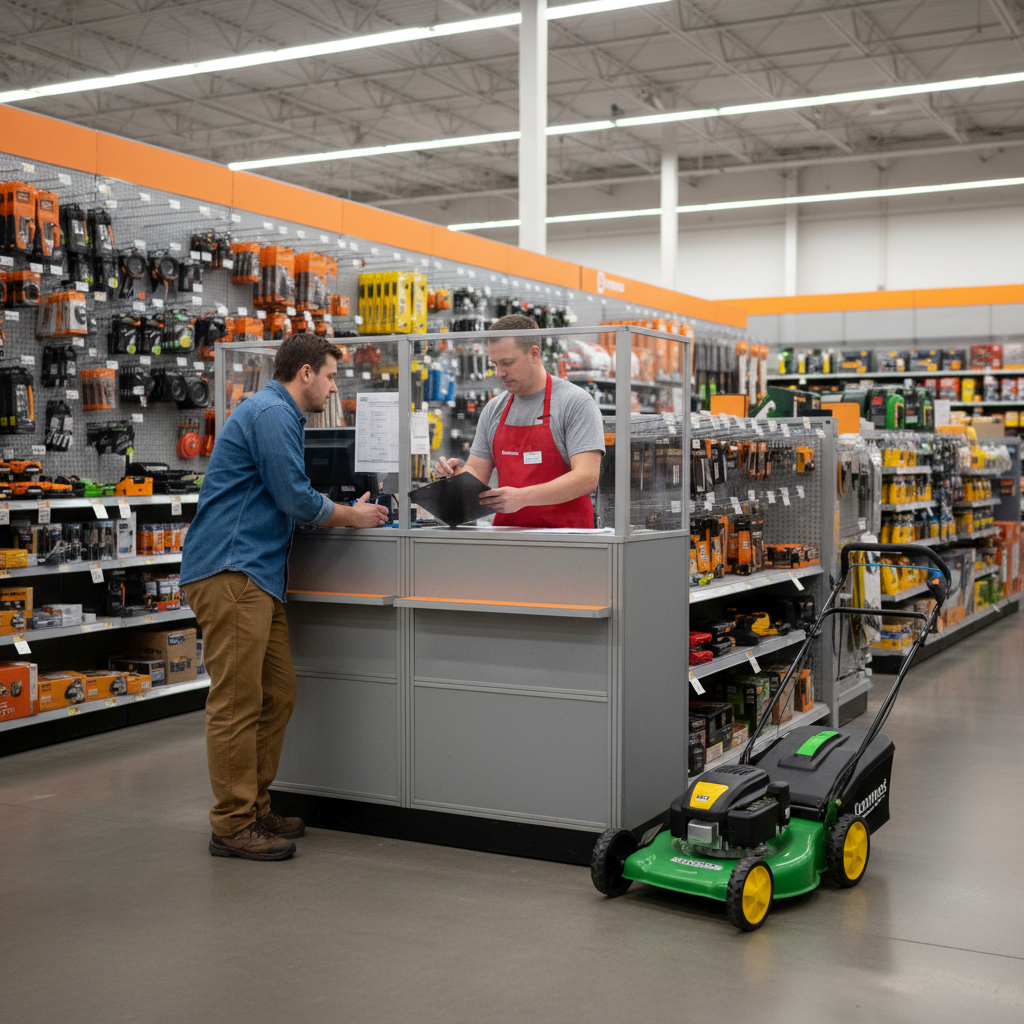
In a typical home-center setup, tool rental is a dedicated counter or small department inside a participating store. You talk to that desk, identify the equipment, complete a rental agreement for a set period, take the machine, and bring it back. The pool of equipment is finite. What you see, or what staff can promise, is whatever that store currently owns, has serviced, and has not already promised to someone else. Users looking for related component recommendations can explore our jbl partybox club 120 vs sony srs xv500 breakdown. For complementary hardware performance, examine our breakdown on weed eater.
That model explains why two Lowe’s stores a few miles apart can give different answers. One store may have invested in outdoor equipment because nearby customers ask for it every spring. Another may have a smaller lot, a different mix of contractors, or no rental operation. Hours for the rental desk can also differ from general store hours; the only way to know when that counter is staffed is to ask that location. Do not assume a rental you used in another city, or even at the same store last year, is still on the lot.
The same desk may rent other outdoor equipment when it is in the fleet, string trimmers, aerators, tillers, or similar yard machines. Treat that as a reason to ask what outdoor equipment the desk currently rents, not as a catalog you can count on. Staff can tell you what is actually available. They cannot convert the regular merchandise aisles into rental inventory just because a mower is on display for sale.
Contracts, holds, identification, and return conditions are set at the store or under that location’s rental process. Those details are not identical everywhere, and they are not something a general article can fill in as Lowe’s nationwide policy. Plan to read the agreement at pickup rather than assuming the rules you remember from another rental company, or from a different Lowe’s, still apply.
Walk-Behind, Riding, and Other Mower Types
When you call or visit, name the machine you need. “A lawn mower” is too vague for a desk that may stock one type and not another. The useful split for most yards is walk-behind versus riding, with a few extra details that change whether a unit is even realistic to take home.
Walk-behind and self-propelled mowers
A walk-behind mower is the machine you push or guide from behind. Some are push-only; others are self-propelled, which means the drive helps move the mower so you mainly steer and control speed. Smaller yards, tight side lots, and customers who cannot haul a large machine more often need this class. If the desk rents mowers at all, a common walk-behind is the type most worth asking about first, because specialty or oversized units are less consistently stocked. That is a stocking pattern, not a guarantee that a walk-behind is sitting on the lot today.
Riding and wide-area machines
A riding mower is a sit-down machine meant for larger lots. Wide-area or other specialty units, when a store has them, serve a similar need: more ground in less time, at the cost of size, weight, and transport. Riding mowers and specialty equipment are less consistently part of a rental fleet than ordinary walk-behinds. Never assume a rider is available because the store sells riders, or because another Lowe’s rented one. Ask directly, and be ready for a no.
Yard details that change the request
Describe the job in plain terms so staff can tell you whether anything they have is a fit:
- Approximate lot size and how overgrown the grass is, so they are not guessing between a compact walk-behind and something larger.
- Terrain and obstacles: slopes, trees, fences, garden beds, and tight gates matter more than brand names.
- Whether you can transport the machine. A walk-behind may fit in an SUV or pickup with the deck secured; a rider often needs a truck, trailer, ramps, and a plan for weight and tie-downs.
- Storage and unloading at home. If you cannot get a large machine off a trailer safely, a smaller rental is the honest choice, or a lawn service instead.
- Power and fuel preferences only as questions. Do not assume the fleet is gas, battery, or a specific deck size. Ask what they actually have and what fuel or charging the unit requires.
Do not shop this conversation as a product review. The rental desk is not promising cut quality, acres per hour, or runtime. You are matching a finite machine to a yard and a vehicle. If staff cannot describe what they have in enough detail for you to transport and use it safely, look elsewhere rather than guessing.
How to Confirm Availability at a Specific Store
The only reliable confirmation is the rental desk at the exact store you plan to use. Another city’s Lowe’s, an old visit, or a general assumption about the brand will not tell you whether a mower is on the lot this afternoon. For troubleshooting and reliability insights, consult our in-depth dyson v8 cyclone vs bissell featherweight stick report.
Start with the official store information, then call the desk
Use Lowe’s official site or app store locator to identify the location, hours, and any rental notes the company publishes for that store. Treat those notes as a starting point. Website or app flags can lag. They may show that a store participates in tool rental without proving a mower is available, reserved, or in working order. They also may omit a desk that staff still operate, or list a category that is temporarily empty.
Next, call that store and ask to be transferred to the tool rental desk, not a general cashier and not the outdoor-power sales floor. Cashiers and sales associates can be helpful, but equipment questions belong with the people who check units in and out. If the store has no rental desk, that call is already your answer. If it does, ask whether a walk-behind or riding mower (whichever you need) is available for your date and time window. Readers comparing setup options can review our technical analysis on bissell crosswave hydrosteam vs shark stainforce.
Visit when the phone answer is unclear
A visit is useful when the phone line is busy, when you need to see whether the machine will fit your vehicle, or when online information disagrees with what you were told. Speak with the rental desk in person. Only that desk can confirm a unit is on the lot, already reserved, or down for service. If the website says yes and the desk says no, believe the desk.
Allow extra time in peak lawn season
Spring and early summer are commonly busier for lawn equipment. Same-day walk-in stock is less certain then, and a machine that looks free in the morning may be spoken for by afternoon. Check early for the day you actually need the mower. Do not invent a required reservation window, some desks may hold a unit, others may work first-come, first-served, and do not assume an app checkout will lock a mower without the store confirming it.
If you cannot reach the rental desk, try once more at a different time rather than treating silence as availability. A wasted trip usually costs more than a second phone call.
What to Ask Before You Reserve or Drive Over
A complete call ends with a yes or no plus logistics, not a maybe. Give the desk your date, time window, yard size, and transport limits. Then work through questions. Frame every fee, ID rule, age rule, and fuel rule as something that store must answer. Policies vary, and filling them in from memory is how people arrive unprepared.
Availability and timing
- Is a walk-behind or riding mower available for my date and pickup time?
- Can I reserve it, or is pickup first-come, first-served?
- What rental periods do you offer, hourly, several hours, a full day, overnight, or weekend? Ask which periods exist; do not assume a standard package.
- What is the latest return time that still counts as on time, and what happens if I am late?
- If this unit is already reserved or in service, is a backup machine available?
Cost structure without guessing the numbers
- What does the quoted rate include, and what is extra?
- Is a deposit or payment hold required, and when is it released?
- What payment methods does this desk accept?
- Are there separate charges for fuel, cleaning, delivery (if offered), or a damage waiver? Ask whether a waiver is optional and what it does and does not cover. Do not treat any dollar figure you heard elsewhere as this store’s price.
Pickup, return, fuel, and transport
- Must I return the mower clean, and what does “clean” mean at this desk?
- If it is a gas model, must I return it fueled, and with what fuel type? If it is battery-powered, what charging rules apply before return?
- Will this machine fit in my vehicle, or do I need a truck, trailer, or ramps?
- Are tie-down points or a loading area available at the store?
- Who inspects the unit with me at checkout and return, and should I photograph existing wear?
Who can rent and what the contract expects
- What identification or payment credentials does this store require?
- Are there age, license, or training requirements at this location? Do not assume a national minimum; ask.
- What happens if the unit is damaged, fails during the rental, or cannot be started when I get home?
- Am I allowed to let someone else operate it?
- Can I get a walk-through of controls, safety features, and shutdown before I leave the lot?
Write down the associate’s name, the promised pickup window, and the machine type they described. If anything in the contract at pickup disagrees with the phone call, stop and resolve it before you load the mower. A reservation that exists only as a verbal “we should have one” is not the same as a held unit.
Renting a Mower vs Buying One at Lowe’s
Renting and buying solve different problems. Renting can fit a one-time cleanup, a short stay in a house you do not own, a gap while your own mower is being repaired, or a chance to see whether a size class is manageable on your lot. Buying can fit regular weekly mowing, because you will need the machine again and again and you want it waiting in your shed.
There is no honest break-even formula that applies to every yard and every store. Rental rates, deposit rules, and retail prices change, and the “right” path also depends on storage, transport, and how much you dislike maintaining a machine. Skip any rule of thumb that says a rental pays for itself after a set number of uses. Compare the quote you actually receive with the price of a basic mower you would be willing to own, then decide.
The equipment is not automatically the same. Floor models for sale are retail inventory. Rental units are a separate fleet. A sales associate may not know what the rental desk has, and the rental desk may not match a unit to a specific shelf SKU. Do not expect Lowe’s to apply rental fees to a later purchase, to run a try-before-you-buy program, or to transfer a rental mower from another store. If someone offers a local exception, get it in writing on the contract. Otherwise, treat rental and purchase as two closed transactions.
If you are leaning toward ownership, shop the outdoor-power department on its own terms: lot size, your ability to maintain the machine, and whether you can get it home. That is a buying decision, not a continuation of the rental question, and it does not require ranking brands or treating a rental unit as a demo for a particular model.
If Your Store Does Not Rent Mowers
A no is common and useful. It can mean the store has no rental desk, the desk does not carry lawn equipment, or the only units are the wrong type, reserved, or out of service. Do not wait for a rain check, an inter-store transfer, or a shipped rental mower unless that specific store volunteers a process and writes it down. Those workarounds are not something to count on as chain policy.
Call one or two other nearby Lowe’s stores and ask for their tool rental desks. Participation is local, so a second store can succeed where the first cannot. Keep the same specific request: walk-behind or rider, date, and transport limits. If none of them rent the type you need, step outside the chain rather than repeating the same call all afternoon.
Other legitimate paths exist in general terms. Independent rental yards and some landscape-equipment dealers rent walk-behind or riding mowers. Some other home centers operate tool rental as well, but availability is just as local, never treat another brand as a guaranteed backup. Community tool libraries, where they exist, sometimes include a mower. Borrowing from a neighbor, hiring a lawn service for a one-time cut, or buying a basic walk-behind you are prepared to store and maintain are all valid alternatives. None of those options is an endorsement, and none of them should send you to unofficial coupon or inventory-scraper sites.
Choose the path that matches the job. A single overgrown lot before a move-out is a different problem from weekly mowing for years. If transport is the blocker, no truck for a rider, no way to lift a walk-behind, hiring the work done is often simpler than forcing a rental you cannot haul safely.
Limits, Safety, and Rules That Vary by Store
Beyond the rental fee, plan for time, transport, fuel or charging, cleaning, and the possibility that the machine is not ready when you arrive. The renter is typically responsible for using the equipment as instructed, securing it for the drive, and returning it in the condition the contract requires. Read that contract at the store. Late returns, missing parts, stained decks, and damage are handled locally. So are identification, deposits, and any optional damage waiver. None of those items should be treated as a single nationwide Lowe’s rule.
Mowers have moving blades. Gas models add fuel, hot surfaces, and exhaust. Those are ordinary, serious hazards. Before you leave the lot, review the unit’s labels and any walk-through the desk provides. Wear sturdy closed-toe shoes and eye protection. Clear the yard of sticks, stones, toys, and debris that can become projectiles. Keep children and pets inside and well away from the cutting area. Do not disable guards or other safety features. Do not operate a machine on terrain or in conditions the labels warn against. If you are not comfortable with slopes, wet grass, or a machine you have never used, stop and hire the work or get instruction from someone qualified, do not improvise.
This article is not an operator’s manual. It does not provide startup sequences, blade-service steps, fuel-mix recipes, or a claim that any rental is inspected to a named standard. Follow the labels on that specific machine and the instructions the store gives you. If staff cannot explain basic operation, or if the mower looks unsafe, damaged guards, leaking fuel, missing parts, frayed cables, refuse it and ask for another unit or cancel. You are not obligated to take a machine you do not trust.
Legal questions about insurance, liability, and local ordinances are also local. A rental contract may spell out some of that relationship between you and the store; it does not replace whatever rules apply to your property, HOA, or municipality. If you need a legal or insurance answer, ask your insurer or a qualified professional. Do not treat a general explainer as certification that a unit is safe, legal, or covered.
The practical close is the same as the opening. Many Lowe’s stores can rent a lawn mower through a tool rental desk, and many cannot help you on the day you need one. Confirm with that store, ask for the machine type that matches your yard and vehicle, read the agreement, and keep rental separate from a retail purchase. If the answer is no, try another nearby Lowe’s or a different legitimate option rather than assuming the chain will fill the gap.
Technical Standards and Compliance
For more hands-on benchmarks and buying recommendations, consult our guides on heavy-duty chainsaw buyer guide, as well as high-CFM commercial leaf blower guide.
Mechanical safety standards, operational tolerances, and protective gear guidelines align with benchmark specifications established by the American National Standards Institute (ANSI).









