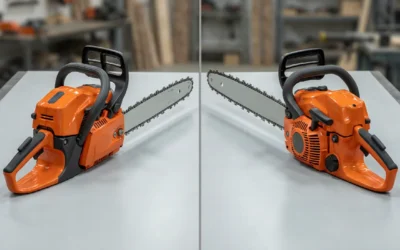
Yes, you can install a larger bar on a chainsaw, but the feasibility depends on several critical factors. Your saw’s engine must have sufficient power to handle the increased load, the chain pitch must match your saw’s specifications, and the bar mounting hardware must be compatible. Installing an oversized bar on an underpowered saw can degrade performance, increase vibration, reduce cutting speed, and create safety hazards.
Compatibility Requirements for Larger Bars
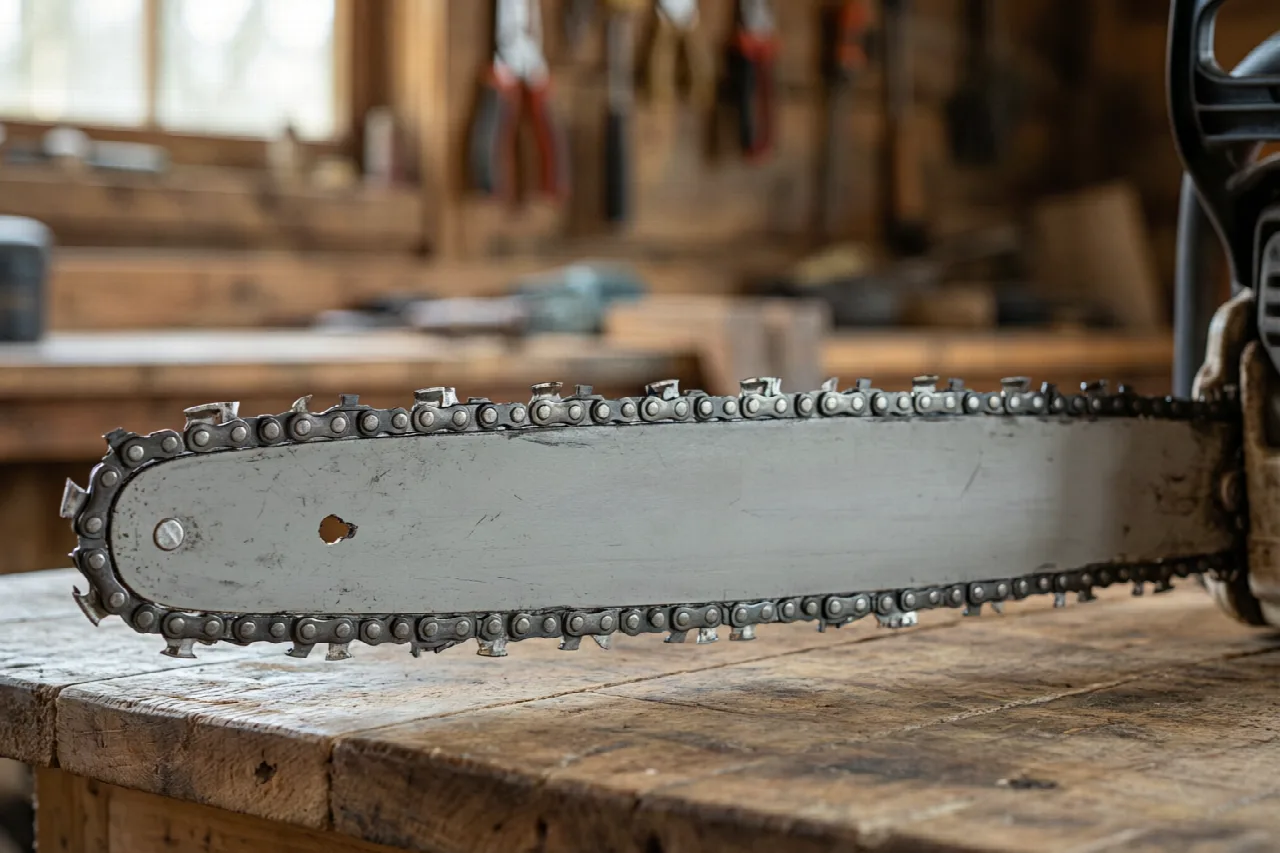
Before upgrading to a bigger bar, you need to understand the technical specifications that determine whether a larger bar will actually work on your chainsaw.
Chain pitch is the distance between the drive links on your chain, measured in inches. Common pitches include 0.325 inches, 0.375 inches, and 0.404 inches. Your new bar must match your saw’s existing chain pitch—you cannot mix pitches. The pitch is stamped on your current bar and chain, so check before purchasing a replacement.
Bar length is measured in inches from the tip to where it mounts on the saw body. Standard lengths range from 8 inches for small pruning saws to 36 inches or more for professional felling saws. Longer bars provide greater reach and cutting capacity but require more engine power and create a heavier, less maneuverable tool.
Mounting systems vary by manufacturer. Most chainsaws use a sprocket nose or roller nose design. Your new bar must have the same mounting system as your saw’s engine. Bars from different manufacturers rarely fit the same saw, so verify compatibility with your specific model before ordering.
Check your owner’s manual for the maximum recommended bar length for your saw model. Manufacturers specify this based on engine displacement and power output. Exceeding the recommended maximum can void your warranty and create safety risks.
Engine Power and Performance Limits
The relationship between engine power and bar size is fundamental. Larger bars mean longer chains and more material to cut through, which requires more engine power to maintain cutting speed.
Engine displacement, measured in cubic centimeters (cc), indicates the size and power of your saw’s motor. A 40cc saw has less power than a 55cc saw. Generally, saws with lower displacement are designed for lighter tasks and smaller bars. Installing a bar significantly larger than the original can overload the engine, causing it to stall, bog down, or run inefficiently.
Most manufacturers publish maximum bar sizes for each model. A typical 40cc chainsaw might safely handle a 14 to 16-inch bar, while a 55cc saw can manage 18 to 20 inches. Exceeding these limits puts excessive strain on the engine, sprocket, and bearings, potentially causing premature wear or damage.
If you install a bar too large for your saw’s power, you may experience slow cutting speed, engine bogging, increased fuel consumption, and difficulty starting. The saw becomes harder to control and tire you more quickly. In some cases, the engine cannot generate enough torque to turn the chain, rendering the upgrade ineffective.
To determine the maximum bar size for your model, consult the owner’s manual or contact the manufacturer. This specification is based on their testing and represents the safe upper limit for that particular saw.
Safety and Handling Considerations
A larger bar affects how you handle and control the chainsaw. Longer bars shift the weight distribution forward, making the saw harder to maneuver and increasing fatigue during extended use. This is particularly relevant if you’re upgrading a compact or lightweight model.
Larger bars also increase the momentum of the chain, which can amplify kickback risk if the tip contacts an obstacle. Kickback occurs when the chain snags, causing the saw to jerk suddenly toward the operator. A longer, faster-moving chain makes kickback more violent and harder to control.
Cutting speed and efficiency may actually decrease with an oversized bar on an underpowered saw. If the engine cannot maintain chain speed under load, you’ll cut more slowly and have to push harder, increasing the risk of stalling or losing control.
Safety gear becomes even more critical with a larger bar. Wear eye protection, hearing protection, cut-resistant chaps or pants, steel-toed boots, and a helmet with a face shield. Follow all manufacturer safety guidelines and never operate a chainsaw while fatigued or impaired.
Chain and Sprocket Considerations
When you install a larger bar, you must also install a longer chain to fit around it. A longer chain has more links and greater total length. Verify that your current chain pitch matches the new bar’s pitch before ordering a replacement chain.
The sprocket, which drives the chain, may need replacement depending on how much larger the new bar is. Some saws allow modest bar increases without sprocket changes, but larger upgrades may require a new sprocket. Check your saw’s specifications or contact the manufacturer to confirm.
Chain length is determined by the bar length and the sprocket size. You must measure or calculate the correct length to ensure proper tension. A chain that is too loose will derail; one that is too tight will strain the engine and wear components prematurely. Your owner’s manual or the bar manufacturer should provide the correct chain length for your specific bar and sprocket combination.
Proper chain tension is maintained by adjusting the bar mounting bolts and using the saw’s tensioning mechanism. After installing a new chain, check tension frequently during the first few uses, as new chains settle and may require readjustment.