

Quick Answer: Choosing the Best Lawn Mower Pull Cord Wont Pull
A lawn mower pull cord that won’t pull is usually caused by a locked engine, a tangled or broken recoil spring, a jammed starter mechanism, or a seized blade. First, check that the blade is not jammed by debris and that the engine is not locked by removing the spark plug and pulling the cord to see if the engine…

Pros
- Large-size design named in product title
- Sharpening and balancing functions listed
- Listed as a new upgraded version

Pros
- Adjustable 15-to-45-degree range in title
- Sharpening and balancing functions listed
Pros
- Includes replacement gaskets and a 98079-55846 spark plug
- Matches Honda HRR216 and HRS216 lawn mower models
- Designed around the 16100-Z8B-901 carburetor specification
Cons
- Restricted to select Honda GCV160 mower applications
- Installation requires basic mechanical tools and skills
First, Rule Out a Locked Engine or Jammed Blade
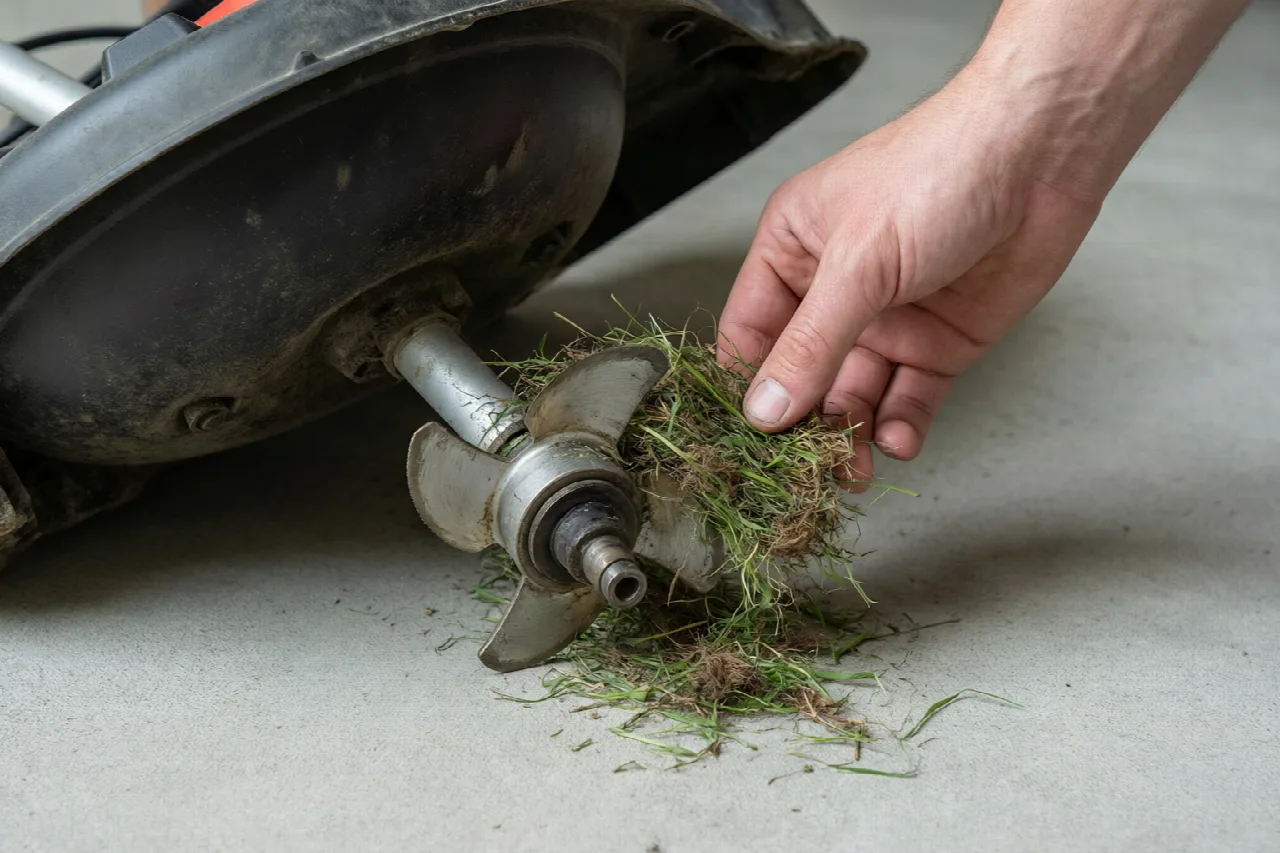
Before assuming the pull cord mechanism is faulty, determine whether the resistance comes from the engine itself or the starter mechanism. Stop the mower immediately and disconnect the spark plug wire to prevent accidental starting. Tip the mower onto its side to inspect the blade for grass clippings, sticks, or other debris wrapped tightly around the shaft. Remove any obstruction with your hands or a tool, then tip the mower back upright.
Next, remove the spark plug entirely from the engine head. This disconnects the spark and allows the piston to move freely without compression resistance. With the spark plug removed, attempt to pull the starter cord gently. If the cord now pulls smoothly and the engine turns over, the problem is likely not the cord mechanism itself. If the cord still will not move or feels extremely stiff, the starter assembly or recoil spring is jammed or broken. A locked engine, one that will not turn over even with the spark plug removed, indicates internal corrosion, a seized piston, or foreign material in the cylinder, and typically requires professional service or engine replacement.
Inspect the Pull Cord and Recoil Spring
A pull cord can fail in several ways. The rope may become tangled inside the starter housing, twisted around the recoil spring, or caught under internal parts. If the cord pulls out but does not rewind smoothly, the recoil spring is likely broken or detached. The recoil spring is a tightly wound metal ribbon under tension that retracts the cord after each pull; when it fails, the cord cannot return to its resting position and may tangle on the next pull attempt.
Inspect the cord for visible damage such as fraying, separation, or breaks. A frayed or partially broken cord may still pull but will not last long. If the cord is visibly damaged, it must be replaced. To replace a pull cord, you must first remove the starter housing (typically held by three or four bolts) and unwind the old cord from the recoil spring drum. The recoil spring will be under tension; wear gloves and work carefully to avoid injury. Wind new rope around the drum in the same direction as the original, then reassemble the housing. If the recoil spring itself is broken or has lost tension, the entire spring must be replaced, which requires removal of the starter assembly and careful disassembly.
Check the Starter Mechanism
The starter mechanism consists of the pull cord, recoil spring, starter drum, and pawls, small clips that engage the crankshaft when you pull the cord to turn the engine over. Any of these components can wear, break, or become misaligned, preventing the cord from engaging properly. If the pull cord moves but the engine does not turn over, the pawls may not be catching the crankshaft, or the starter drum may be cracked or stripped.
To inspect the starter assembly, remove the housing bolts and carefully separate the housing from the engine. Look for cracks in the plastic or metal housing, wear marks on the drum where the pawls contact it, or springs that appear bent or detached. If the drum is cracked, the entire starter assembly typically must be replaced rather than repaired. If the pawls are worn or broken, they can sometimes be replaced individually, though this requires disassembly expertise. Ensure all bolts are tight when reassembling; loose mounting bolts can cause vibration that damages internal components.
Safety and Prevention
Before working on the starter mechanism, always disconnect the spark plug wire and move the mower away from fuel sources or ignition hazards. The recoil spring is under high tension and can cause injury if it unwinds suddenly during disassembly. Wear heavy gloves and eye protection, and if you are unfamiliar with small-engine repair, consider consulting a professional rather than risking injury.
To prevent future pull cord failures, perform regular maintenance: drain fuel from the mower before long storage to prevent carburetor varnish that can lock the engine, check the spark plug and air filter annually, and store the mower in a dry location away from moisture and corrosion. Before storing the mower for winter, run it to clear the carburetor, or add fuel stabilizer to the gas tank and run the engine to circulate treated fuel through the system. Proper storage dramatically extends the life of the starter mechanism and prevents the locked-engine problem that makes the cord difficult to pull. To evaluate matched hardware tolerances, consult our detailed overview of marshall stanmore iii vs harman kardon onyx studio 8.
When to Seek Professional Repair
If the spark plug is removed and the engine still will not turn over, the starter mechanism is severely damaged or the engine is seized. At this point, professional diagnosis is warranted because you may risk injuring yourself by forcing the cord or damaging the engine further. A small-engine repair shop can assess whether the starter assembly can be repaired or must be replaced, and whether the engine itself is viable.
If the pull cord housing is cracked, the starter drum is stripped, or the recoil spring has broken, replacement parts are often available as an assembly rather than individual components. Repair labor can cost $75 to $150 or more, depending on the part and shop rates. If your mower is aging or the repair cost approaches half the value of the mower, replacement may be more economical. A new mower typically costs $200 to $500 or more, so weigh repair costs carefully, especially if the mower is otherwise functional. When planning workspace deployment, consider the engineering criteria outlined in our dyson v8 cyclone vs bissell featherweight stick guide.
Technical Standards and Compliance
For further specifications and verified tests, explore our breakdown of how to mow lawn with stripes.
Mechanical safety standards, operational tolerances, and protective gear guidelines align with benchmark specifications established by the American National Standards Institute (ANSI).









